
Titles are given to leaders/heros who have looked adversity in the eye and called its bluff. The saying goes, ‘Hard times create strong men, strong men create good times, good times create weak men, and weak men create hard times’.
But what if those hard times created a woman, and she created good times, good times that earned her a title that translates to ‘Elder Sister’.
Sharayu Daftary, a devoted Jain leader, philanthropist, and industrialist, broke barriers throughout her life, and here's what makes her unique.
Origin.
Sharayu Daftary was born in 1933 in Mumbai, India, to Lalchand and Lalitabai Hirachand. She married Arvind Daftary, and they had three daughters: Czaee Shah, Gauri Pohomal, and Kavita Khanna (Alchetron, 2026).
Her family was a rich Mumbai business family and a major force in the industrial sector, and scions of the Walchand Group, founded by her brother, Walchand Hirachand, one of the pioneers of Indian industry.
Her family's business went on to create several other businesses in India, such as Hindustan Aeronautics Limited, Premier Automobiles, and Hindustan Construction Ltd, becoming one of the first companies in India to achieve that in its field (PeoplePill, n.d.).
Her economics degree from Elphinstone College, Mumbai, helped her also become a pioneer in India’s industrial field, as were her family, and she went on to become the first woman president of the Automotive Components Manufacturers Association (ACMA), and the first woman to sit on an executive committee of the Federation of Indian Chambers of Commerce and Industry (FICCI).
She was also the former president of the Indian Merchants’ Chamber and the first elected president of the union. (PeoplePill, n.d.).
Sharayu had what is called an easy life growing up: a rich family that could get her all she needed to live comfortably; she was practically set for life. Until she wasn't.
The root cause of her success.
In 1958, she was 25 years old, with only 200,000 and five workers, which she used to start what would be a multi-million company to serve the nation for generations to come (Alchetron, 2026).
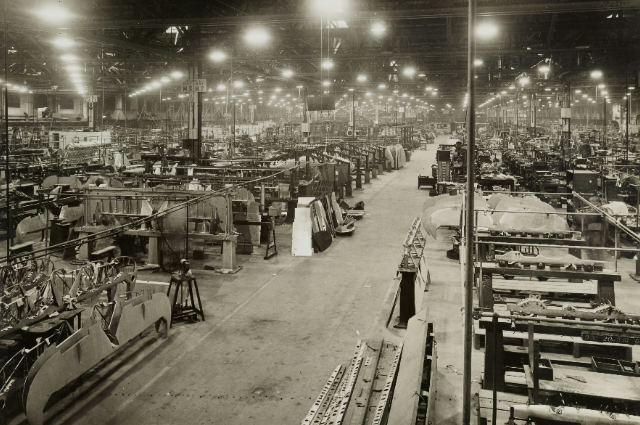
Sharayu came from a lineage whose tradition did not allow women entry into family businesses. This pushed her to start her own company, Bharat Radiators Limited.
A 68-year-old company incorporated on 29th January, 1958. It is solely engaged in manufacturing machinery and equipment and is a private limited company (The Economic Times n.d.).
In her biography, published in The Voice of Malabar Hills, Sharayu talked about her religion. “From my childhood, by education and example, I have been guided by the five principal tenets of Jainism - ahimsa, satya, asteya, aparigraha, and brahmacharya (being non-violent, honest, abstaining from talking about anything that does not belong to you, being content and observing fidelity). She was awarded the Jain Ratna Award, which honoured her lifetime commitment to Jainism and its values (The Voice of Malabar Hills, 2023).
She later became the editor of the Jain Bodhak, a fortnightly started by her grandfather, and in 2004, the President awarded the Padma Shri to her for her contributions to Indian society (Institute of Jainology, 2025).
Tai Title
The late industrialist was well known as ‘Tai’ in Marathi, which is translated into English to mean ‘Elder sister’. In the late 50s, a woman working to build her own company was considered a huge feat (it still is, for anyone); she was a role model to women in the nation.
She built her business, Bharat Radiators, and guided it with business acumen and a humane approach. She would work with the machines in a Sari, never growing out of her culture or womanhood. Her values, as stated earlier, were strongly reflected in her work, and this shone through to her workers (The Voice of Malabar Hills, 2023).
During her lifetime, Sharayu had been in several interviews, and in one of them, as written by The Voice of Malabar Hills, she spoke rightly.
In an interview, she testified that her company had gone 32 years with no strike, go-slow, or loss of manpower. She further explained that rather than appointing quality control inspectors, she had exercised her faith in her workers, giving them specifications for the materials she needed, and trusting in their judgement to be their own inspectors in the production unit (The Voice of Malabar Hills, 2023).
In doing this, Sharayu built lasting relationships with her workers, as well as their self-esteem. Her lifestyle was a blend of rigorous work, homely responsibilities, and women's empowerment, which she handled quite well.
She became the embodiment of that title and led many women to become motivated to run their own businesses.
References:
- Alchetron. (2026, April 25). Sharayu Daftary. https://alchetron.com
- Institute of Jainology. (2025, May 2). ISJS pays tribute to Sharayu Daftary (1933–2025) [Obituary]. ISJS Newsletter. https://isjs-newsletter.in
- PeoplePill. (n.d.). Sharayu Daftary: Indian industrialist. https://peoplepill.com
- The Economic Times. (n.d.). Bharat Radiators Private Limited: Company details. https://m.economictimes.com
- The Voice of Malabar Hills. (2023, April). We are happy to write about Mrs Sharayu Daftary. https://thevoiceofmalabarhills.com