
A class of 177 students took an exam and were judged by the following criteria: written, oral, crafts, practicals, and general studies. Every student came prepared; no one wanted the last spot, but there’s always a student who doesn’t match up with the others. India is that student.
In the 2026 Environmental Performance Index Assessment, India ranked 176th out of 177 countries that were assessed. With an overall score of 22.46 out of 100, India. It had previously been in similar positions in the last EPIs conducted; in 2022, it ranked 180th, and in 2024, 176th among 180 countries. (The Wire, 2026).
The Environmental Performance Index is a global index that rates countries based on indicators and specific issue categories on environmental health (issue category: air quality, indicator: particulate matter levels), which accounts for 25% of the results; ecosystem vitality, which is how well natural resources are being managed, makes up 45% (indicators: tree cover loss, pesticide pollution risks and marine habitat protection); and mitigating climate change (indicators: emissions of carbon dioxide and methane) makes up 30%. The index is conducted every two years by scientists from institutions, including Yale and Columbia (EPI, 2026).
They compile data from satellite imagery on several indicators and specific issues under policy objectives (EPI, 2026 methodology).
In this year's report, 177 countries were tested on 47 environmental indicators and 12 issue categories. India ranked second lowest amongst these countries, slightly above Laos. Its rank in the specific categories includes: 174th in Environmental health, 171st in ecosystem vitality, and 130th in climate change policies (The Wire, 2026). The report raises the question: Is India unfit for people to live in? Or are these reports baseless, with no practical scientific evidence?
In 2022, the Indian government issued a statement a few days after the rankings were posted, claiming that the Index was based on ‘surmises and unscientific methods’. They said that they could not accept the conclusions the EPI based its findings on, including the change in the methods they use to source its results (Business Standard, 2022).
They listed their concerns that the EPI was not taking into consideration India's historical data on low emissions and that the ranking of some environmental categories' importance has changed. Regardless of their claims, the EPI responded that their conclusions were derived from the current state of the country as it relates to the environment's health, not its historical data.
They also added that their findings were based on the data they got from the Global Burden of Disease and India's death rate trajectory, which accounted for the premature death of millions of Indians due to their low air quality (Down to Earth, 2022).
What this report means for India.
The EPI report stated that India, whose per-capita emissions remain relatively low but are growing rapidly, faced an acute development-versus-pollution tension as hundreds of millions of people gain access to modern energy services but at the price of serious urban air pollution and spiking greenhouse gas emissions.
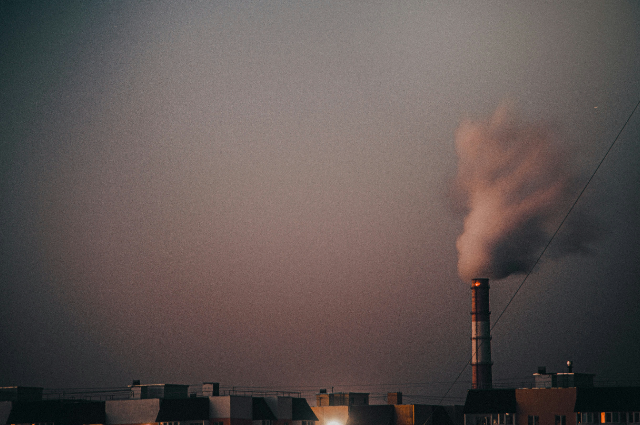
The rise in greenhouse gas emissions has increased by up to 32% over the last decade, making India the third-largest greenhouse gas emitter. This was also attributed to the air quality performance because of its continual dependence on coal power, hence a decrease in the biodiversity of flora and habitat conservation. (National Herald India, 2026).
Its score in the Marine Protected Areas was also low, at -51.77, and a regional marine trophic index of -10.27. In a report by The Wire, Zachary Wendling, research director for the EPI at the Yale Centre for Environmental Law and Policy, said the indicator could suggest that fishing activity was increasingly shifting towards species lower down the food chain after higher-level fish stocks were overexploited. (National Herald India, 2026).
He further explained that among scientists and economists, there were alternative explanations for the metric; for example, a fishing fleet may switch effort to catching a lower trophic level not because higher-level species are scarce but because lower-level species are more profitable.
India's 10-year positive streak.
Despite its relatively low ranking and scores in the index, India’s 10-year period showed positive growth. With +7.47, it is above several countries, including Romania (0.91) and the Dominican Republic (-3.04), which ranked top in the index. This explains India’s improvement over the years, and as Wendling indicated in The Wire, although the emissions were high, the rate of increase in some pollutants had decreased. The emissions that also make up the greenhouse gases could still be on the high side, but they have not been rising as quickly as before (The Wire, 2026).
Back to the question: Is India unfit to live in, or are the findings baseless? The answer is neither.
The data behind the premature deaths in the country are true, as stated in the Global Burden of Disease numbers (Down to Earth, 2022), but the ten-year positive streak of +7.47 and pollutants rising more slowly than before is proof that the country is improving.
Both are true, and the ranking might have revealed them, but a single number can not hold both harm and improvement in one place, so it averages them. What's important is to look at the fuller picture when comparing.
References:
- The Wire (2026) https://m.thewire.in
- National Herald India (2026) https://www.nationalheraldindia.com
- Business Standard (2022) https://www.business-standard.com
- Down to Earth (2022) https://www.downtoearth.org.in
- EPI 2026 (official index page) https://epi.yale.edu
- EPI 2026 Methodology (for the satellite imagery/data collection line): https://epi.yale.edu