
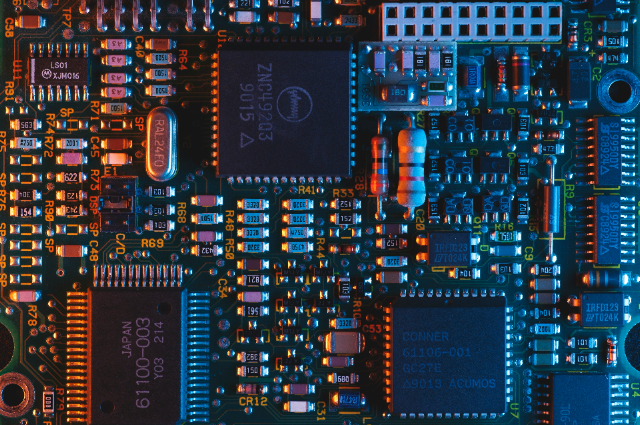
Before COVID-19, the average Nigerian could buy a very good smartphone with at least 4GB RAM and 64GB ROM for a sum of 50,000 NGN. Right after COVID-19, the prices skyrocketed to almost two times the price for that phone's storage and even more for others, all because of AI servers.
From 2020 to 2023, global chip, DRAM, and NAND flash integrated circuits were used, but the post-pandemic period caused a disruption in production. This shortage drove the reallocation of manufacturing capacity towards AI data centre development, creating a vacuum in consumer and enterprise markets for integrated circuits. (CSIS, 2026).
RAM is the short form for random access memory chips.
DRAM: Dynamic random access memory is a type of random access semiconductor memory that stores each bit of data in a memory cell. Specifically used in laptops, personal computers, and phones. NAND flash uses a grid of floating-gate transistors that are connected to resemble a NAND gate. The transistors correspond to a given bit of several words, connected in series, and the bitline is pulled low if all the word lines are pulled high. It provides long-term storage even when a device is powered off. (CSIS, 2026).
The current chip storage being used in phones today, called High-Bandwidth Memory (HBM), is nicknamed RAMmageddon or Rampocalypse, and it is the reason why phones cost more.
In simpler terms, phones cost more because AI companies pay more.
Take this analogy:
A baker buys her flour and sugar to make brownies from the same dealer as a few other bakers on the street. Then all of a sudden, demand for cupcakes and doughnuts skyrockets, and because the dealer supplies sprinkles and other condiments as toppings, he focuses on that, selling leftovers (Flour and sugar) to this baker.
In turn, because of the price she buys the flour and sugar for, and the demand she has for her brownies as well as the cupcakes and doughnuts that are not in her bakery, she increased her price so she can afford to add the new demands to her products.
It's the same with our phones.
The factories making the cheaper and more affordable storage chips are being bought out by bigger tech companies, which in turn invest the memory into AI. They also help create the AI data centre, using the same materials, and since AI companies pay better and upfront for years due to its rapid growth in Generative AI/Large Language Models, they focus on creating the AI, and the companies that produce our phones, laptops, and so on are left to fend off what's remaining. (Tom's Hardware, 2026).
This increases phone prices.
A Tom's Hardware article specifically explains why companies like Samsung and SK hynix both control 78% of the global DRAM market. In the article, Samsung had released its quarterly earnings report, and significant shortages in the company’s memory were going to continue through 2027. This was the same with the rival company, SK hynix.
It makes you wonder: if two big phone companies release news of shortages in their phone storage, shouldn't you worry?
The answer is yes, because these storages were going to AI due to the demand for high-bandwidth memory (HBM). Modern AI systems need high-speed memory to function.
With high speed, AI can think faster and implement its tasks appropriately. So, when you next use any LLM, remember that your phone costs more so you can have it.
As stated earlier, the chips are created by the above companies with the infrastructure to do so, and they sell them to the highest bidder. Since the demand is high, in October 2025, OpenAI signed letters of intent with Samsung and SK hynix to supply memory components for its AI infrastructure (Reuters/The Register, Oct 2025; The Deep Dive, 2026).
There's no saying whether this will increase drastically as time goes by or even reduce, but it has greatly affected consumers. It has been stated that additional capacity will be added to phones, but this won't be until 2027 (Android Authority). SK hynix is to begin production in 2026, while Micron is expected to start operations in mid-2027 (BISI, 2026).
Phone prices will likely increase soon when more storage is added, and as consumers, our target should be getting a good enough storage phone in the range of 128/256GB. For phone prices to reduce drastically, new factories would have to come online to begin manufacturing the DRAM and NAND Flash chips because AI is growing faster and there's no deadline for when it will slow down.
References:
- CSIS — The United States' Accelerating Memory Chip Crunch: Implications for Tech and AI Leadership (2026)
https://www.csis.org - Tom's Hardware — Samsung and SK hynix warn AI-driven memory shortages could last until 2027 and beyond (April 2026)
https://www.tomshardware.com - Reuters (via AOL) — Samsung, SK Hynix set to supply chips to OpenAI's Stargate project (Oct 2025)
https://www.aol.com - The Register — Samsung and SK Hynix to feed OpenAI's megaproject (Oct 2, 2025)
https://www.theregister.com - Android Authority — What does the RAM shortage mean for smartphones in 2026? (Jan 2026) https://www.androidauthority.com
- Bloomsbury Intelligence and Security Institute (BISI) — Global RAM Shortage and Price Hikes (Feb 2026)
https://bisi.org.uk. . .