
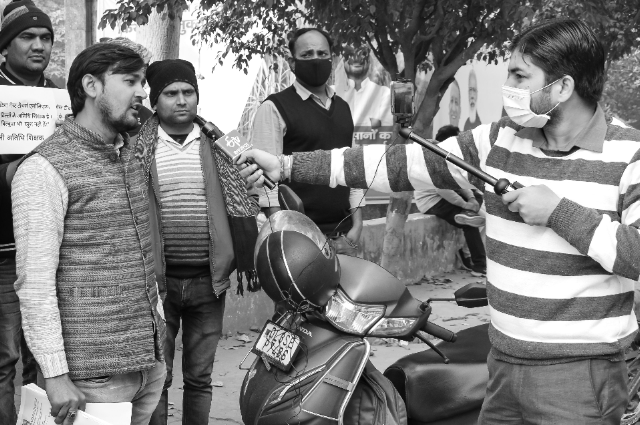
Journalism is a part of democracy. It plays a role in public affairs by telling people things, teaching them things and making sure people in power are responsible. Journalism is like a watchman in a democracy. It makes sure people know what their government and other powerful groups are doing. It makes sure things are open and that people are held accountable. Public affairs are things that affect people, like government rules, social problems, money matters, and what happens between countries. Journalism helps people understand these things. It provides information and insights so that people can learn about affairs and get involved.
Journalism is the force that makes sure people in power are accountable. It does not have any power of its own, no army, no lot of money and no seat at the government table. Its power comes from people believing in it and from the protection of free speech. That is why people in power are often more afraid of journalism than they are of the voting booth. When the election ends, even then the free press is always watching.
What makes journalism special is that it brings us closer to what is happening right now. History tells us what has already happened,d and we can study it and talk about it. Journalism brings us a story that is not finished yet. It shows us what is happening today, the choices we are making today, the mistakes we are making today, and the chances we have today. It does this at the moment when people still have the chance to act. In this way, the press does more than just inform; it keeps the door open for action.
For example,e consider what happened in the 1970s. Two reporters at The Washington Post, st Bob Woodward and Carl Bernstein, started investigating a break-in at the Democratic National Committee building in the Watergate area. At first it seemed like a small crime story. It slowly uncovered a big network of spying, secret surveillance and a cover-up that went all the way to the top of the White House. Their reporting did not forcibly remove the president from office. They just kept presenting the real facts week after week. Congress finally acted; the courts finally did. Richard Nixon left his position. The vote had put him in office. Journalism helped push him out. The story was not over when it was written; it was still happening, and people still had the chance to demand changes.
This is the difference journalism makes. It turns events into matters that require attention now. A drought in another place, a problem in a government office,e a war being planned in secret these are all issues that seem distant until reporters make them real. They bring them to the public. Once people know, they can take action. They can vote, protest, take measures or simply stop ignoring the problem. Without this flow of information, democracy becomes a game. People cannot control things if they do not see them.
The role of journalism is still very fragile. Unlike the three branches of government, the press does not have legal protection. Its freedom can be compromised by regulations, financial issues, fear of speaking out or a loss of trust. When journalism is weak,k understanding the present becomes harder. It is easier for those in power to manipulate the situation. People are left with words and various messages instead of real facts.
A good journalist is good at telling stories. They take the facts. Weave them into narratives that resonate with people. This is important because people care about things that evoke emotions. They feel things like anger, compassion or fear. They remember things they can connect with. So journalism is like telling a story. Instead of selling a product,ct it sells a perspective on the world. The significant difference is that good journalists only state things they can prove are true. They use emotions to help people grasp the truth.
When the government or the military or the courts make statements, they usually just provide facts and figures. This approach does not always succeed. People already have notions about the story. If a narrative is compelling, it can be difficult to change people's minds even if the facts contradict their beliefs. This is because individuals often form their feelings about something before they even think about it. This is why journalism is so powerful. It is also a profession. Journalists have the ability to evoke emotions. They must use that power to help people comprehend what is actually happening, without misleading them into believing falsehoods.
The real truth is simple: power is more afraid of the pen than of the vote. The pen can operate between elections. It can reveal what those in charge would rather keep secret. It can do this while the public still has time to take action. Journalism does not govern; it helps the governed hold those in charge. That is why free countries protect journalism. That is why unfree countries strive to control or suppress journalism. The present remains open. Journalism is one of the things that keeps it that way. Journalism is important. That is why it is so important to protect it. Journalism is the thing that makes sure people in power are accountable. That is why it is so important to have a free press.
References: