
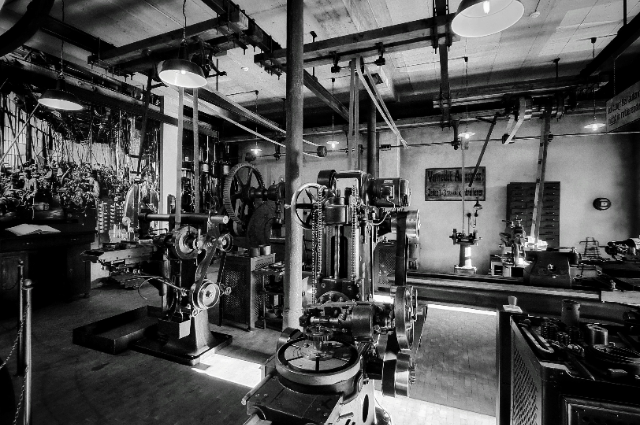
When women in business leadership are discussed today, it is easy to forget that some women entered India's industrial world decades before such leadership was a common subject of discussion. Sharayu Daftary was one of them. Born in Mumbai in 1933, she came from the influential Walchand industrial family, but her family background did not automatically grant her a place in the business. According to biographical accounts, she was not allowed to enter the family business due to the traditional belief that women should not be involved in it. Instead of accepting that limitation, however, she set up a business of her own. At just 25 years old, in 1958, she founded Bharat Radiators Limited with an initial capital of ₹200,000 and only five workers.
Bharat Radiators would form the bedrock of Daftary's professional life and was involved in manufacturing connected with the automotive industry. Corporate records show that Sharayu Daftary was appointed as a director of Bharat Radiators in January 1958, the same year the company was incorporated. The company is still listed as an active private company and continues to demonstrate that the business she set up has survived well since its early years.
What makes the beginning of her career particularly interesting, however, is the period in which it began. India was still in the early stages of industrial development after independence, and manufacturing was overwhelmingly male-dominated. Daftary did not enter an already established corporate position: she had to set up a manufacturing business and then gain credibility within larger industry organisations. Her hands-on approach at Bharat Radiators gave her a vital grounding in production and management, which later served her well as she took on increasingly wider industry roles.
Her managerial outlook was also far removed from the image of a distant business owner. In an interview published by Jain Samaj, Daftary spoke about the importance of trusting workers over constant supervision. She explained that rather than appointing people just to inspect material quality, she gave workers the specifications for materials and expected them to take responsibility for their own work. She believed that this enhanced their confidence and skills, and an earlier profile published in Jain Spirit also noted her saying that Bharat Radiators had gone for 32 years without a strike, go-slow or loss of manpower.
Her relationships with workers, therefore, formed an important part of her managerial philosophy. Later accounts of her life also show that she maintained close ties with the shop floor and was known to workers as “Tai,” a Marathi term commonly used to respectfully refer to an older sister. In her later life, however, Daftary's fame stretched far further than just the shop floor, and she had the reputation of being a pioneering businesswoman who had gained influence in numerous business organisations.
Her first major institutional breakthrough came in 1971 when she became president of the Automotive Component Manufacturers Association of India, or ACMA. She served as president during 1971–72. ACMA's own historical records list her directly as one of its presidents, between P. V. Shah, who served from 1970–71, and M. S. Shastri, who followed her from 1972–73. This makes her presidency particularly notable as she was the first woman to hold the position.
Daftary's ACMA presidency was not the only institutional barrier she crossed, however. In 1981, she became the first elected woman president of the Indian Merchants' Chamber in Mumbai. The organisation had been set up in 1907 and represented a broad section of the business community. She later served as president of the organisation again in 2000. Her career, therefore, shows a pattern that went beyond one isolated achievement: she was able to make her mark on major business institutions at a time when women were still rare in senior leadership positions, and continued to do so across several decades.
She also became the first woman to serve on the executive committee of the Federation of Indian Chambers of Commerce and Industry, or FICCI. FICCI is one of India's major business organisations, so having a woman on its executive committee placed Daftary in the national discussions on industry and commerce. Her professional life therefore transitioned from managing one manufacturing company to participating in institutions that represented much larger sections of Indian industry.
Daftary's contributions were not limited to her work in business, however. She was a practising Jain and became heavily involved with Jain community organisations. She served as president of the Dakshin Bharat Jain Sabha and worked as editor of Jain Bodhak, a fortnightly publication related to Jain thought and community organisation. Her involvement with Jainism was not merely ceremonial, however, and in a detailed profile published by Jain Samaj, she spoke about how the principles she learned through Jainism informed her approach to business, workers and personal life.
Her understanding of Jainism was also related to her views on gender. In her writings and interviews, Daftary argued that equality between men and women should not be seen as a modern concession. She maintained that dignity, freedom of thought and opportunities for
women were already compatible with the principles of Jainism. This is particularly interesting as she was simultaneously discussing gender equality while drawing on a religious and cultural tradition that had been part of her life since childhood.
Family was an equally important part of Daftary's life. She was married to Arvind Gaurishankar Daftary, who supported her professional aspirations, and the couple had three daughters. Her career therefore challenged the notion that professional success and family responsibilities necessarily came at a cost to each other. She continued to develop her industrial career while also being deeply involved in family and community life.
Recognition for her contributions to Indian industry eventually came at the national level, as the Government of India awarded Sharayu Daftary the Padma Shri for her contribution to
trade and industry in 2004. By then, she had already spent more than four decades involved in the creation of Bharat Radiators and participating in major business institutions. The award therefore came after a long period of industrial and institutional groundwork, rather than marking the beginning of her career.
Daftary continued to remain active in a variety of public and community roles well into her later years. She was associated with Jain education and writing, spoke about management and women's empowerment, and was ever connected to the business world. Her career was also an illustration of how leadership can develop across multiple roles and responsibilities. She was simultaneously an entrepreneur, manufacturer, industry representative, community leader and writer on Jain philosophy.
Sharayu Daftary passed away in May 2025 at the age of 91. The Institute of Jain Studies described her as an industrialist, philanthropist and Jain leader, highlighting both her contributions to Indian industry and her role in the Jain community. Her passing was an opportunity to reflect on a career that had begun in 1958, when she set up Bharat Radiators with five workers and ₹200,000 in capital.
Her legacy is therefore much more than several institutional milestones: becoming the first woman president of ACMA in 1971, the first elected woman president of the Indian Merchants' Chamber in 1981 and the first woman on FICCI's executive committee were all significant, but built upon the early decision to set up her own place in manufacturing. Daftary's determination to develop a career in an industry that was largely male-oriented marked her out as a pioneer. Her contributions to the Indian business community were further underlined by her extensive participation in business organisations and institutions.
Her legacy is also reflected in the combination of professional independence and personal outlook that marked her career. She did not separate her industrial activities from her personal beliefs and responsibility. Her experience shows us that leadership can be developed across a career, rather than just at one dramatic moment or within one organisation.
References:
- Automotive Component Manufacturers Association of India (ACMA) — Past Presidents, including Sharayu Daftary, 1971–72. ACMA Annual Report — Past Presidents
- Jain Samaj — “Sharayu Daftary: Founder, Bharat Radiators Ltd.” — detailed interview/profile covering her business philosophy, Jain beliefs, workers and views on gender equality. Jain Samaj profile of Sharayu Daftary
- Institute of Jain Studies — Obituary for Sharayu Daftary (1933–2025). Institute of Jain Studies obituary
- Jain Spirit — “Sharayu, A Woman,” 2001 — contemporary profile discussing Bharat Radiators, her management approach and institutional achievements. Jain Spirit profile
- Bharat Radiators Private Limited — company records — incorporation and director information. Bharat Radiators company information