
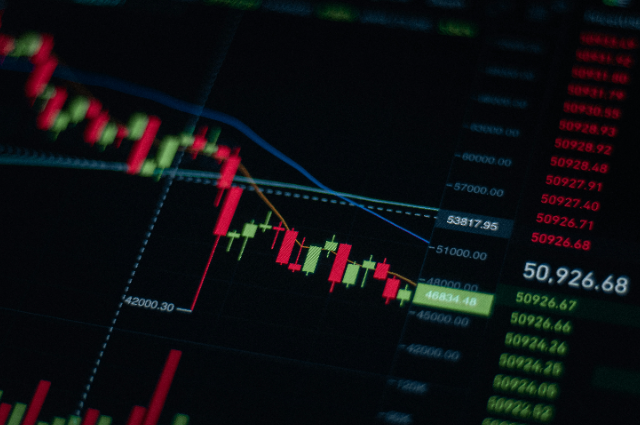
The Indian rupee hit a new low against the dollar during 2026. A depreciating rupee against the dollar was already the norm before 2026, but its devaluation reached record-breaking levels in May of this year. The currency fell to ₹96.18 against the US dollar in May 2026. The devaluation was triggered by a surge in energy prices, global bond yields, foreign portfolio disinvestment, and concerns about India’s external value. The price of the Indian currency against the dollar was around ₹96 in September 2026, with Reuters noting that the currency closed at around ₹95.82 per dollar on 21 September. Traders were waiting for the currency to reach ₹96 per dollar.
A currency war is not a novelty in India as the country follows a long-term trend of depreciation against the dollar. According to the Reserve Bank of India, the yearly average exchange rate was ₹22.69 per dollar in 1991. It appreciated to ₹43.05 per dollar in 1999. Since then, the Indian currency has gradually depreciated against the dollar, crossing the threshold of ₹60 per dollar in the early 2010s, ₹80 per dollar in the mid-2010s, and currently approaching ₹96 per dollar in 2026. Such a trend is explained by India’s inflation, trade balance, capital account surplus, oil demand, and ties to the global economy.
At the same time, it is hard to say that the rupee depreciates consistently by 4-5% per annum. A report on the “INR/USD Exchange Rate Analysis since 1993: Volatility and Outlook” suggests that the average year-on-year depreciation stands at 3.58% between 1994 and the end of 2025. Meanwhile, the report authors highlight that the INR appreciated against the USD in eight of the observed years. Thus, on average, the depreciation of the rupee against the dollar is consistent, but the value of the INR occasionally crosses the threshold of ₹100 per dollar.
The currency war between India and the US erupted in 2025, as the Trump administration imposed tariffs on 50% of Indian goods in August 2025. The 50% import levy consisted of 25% average tariffs and an additional 25% duty related to India’s oil purchases from Russia. Reuters notes that tariffs affected Indian exports of clothing, gems and jewellery, footwear, sporting goods, furniture, and chemicals. The imposition of trade barriers challenged India’s current account surplus and foreign exchange reserves, applying additional pressure on the rupee.
The devaluation of the Indian currency in 2026 should be put in context, as other factors account for the volatility of the INR. Energy prices are among the primary drivers of currency fluctuations in India. Since India relies on energy imports, rising oil prices tend to increase the current account deficit, prompting the central bank to tighten monetary policy. The surge in oil prices in 2026, driven by the geopolitical confrontation with Iran, has put additional pressure on the rupee this year. Reuters reports that foreign investors sold off more than $23 billion in Indian stocks and bonds since March, contributing to the demand for the dollar.
In addition, the Reserve Bank of India has been actively intervening in the foreign exchange market to prevent the rupee from depreciating sharply against the dollar this year. In particular, the central bank sold the dollar in August 2026 to keep the currency within the threshold of 100 points. Reuters notes that the central bank continues to utilise foreign exchange swap deals and liquidity management tools in September 2026 as the RBI watches oil prices and global interest rates. Thus, the actions of the Reserve Bank of India have cushioned the impact of capital flows and oil prices on the INR.
However, a more surprising insight concerns the value of the Indian rupee against the Pakistani rupee. On average, one Indian Rupee (INR) exchanged for 3.31 Pakistani rupees (PKR) in May 2025. As of September 2026, one INR equals 2.89 PKR on average. Therefore, the value of the INR against the PKR halved by 13% on average between May 2025 and September 2026. In other words, even though one INR was still exchanged for more than one PKR in September 2026, the purchasing power of the INR decreased remarkably against the PKR since May 2025.
The INR-PKR exchange rate history is particularly interesting given the crisis of the Pakistani Rupee in 2023. Reuters notes that the PKR hit its lowest level in early 2023 after the liberalisation of exchange controls and was at its weakest in early 2023 as Pakistan struggled to secure funding from the International Monetary Fund (IMF). IMF data suggests that the PKR depreciated by almost 40% against the dollar during FY2022/23.
Since then, the Pakistani currency has gradually gained strength against the dollar, supported by Pakistan’s IMF programme and a tightening of monetary policy by the State Bank of Pakistan (SBP). The IMF’s 2026 Annual Report highlights that the Pakistani Rupee remained stable at around 280 PKR per dollar while Pakistan continued to accumulate reserves. In May 2026, the IMF approved another allocation of around $1.32 billion under Pakistan’s Stand-by Arrangement.
Such a scenario does not necessarily suggest that Pakistan has overtaken India as an emerging market economy. The INR-PKR exchange rate dynamics concern the relative value of two currencies against the third, namely the US dollar. In this light, a devaluing INR and PKR can indicate that both currencies weaken against the dollar on average. Therefore, the two currencies depreciated against the dollar at different rates, with the INR crossing the threshold of ₹100 per dollar while the PKR remained around 280 PKR per dollar. Thus, the INR-PKR exchange rate history serves as an example of how different currencies weaken against the dollar at varying rates.
The question of why the INR depreciates against the dollar despite India’s economic growth remains relevant. First and foremost, India's heavy reliance on energy imports makes the Indian economy vulnerable to volatile oil prices. At the same time, foreign capital outflows apply additional pressure on the INR. If foreign investors sell Indian stocks and bonds, they will exchange INR for foreign currencies (such as the PKR and USD), increasing the supply of INR and, thus, decreasing its value. Finally, global interest rates are another factor affecting the value of the INR. If the US Federal Reserve raises interest rates, it becomes more attractive for investors to purchase dollar-denominated assets.
A weaker INR is not inherently associated with negative economic outcomes. For instance, a depreciating INR makes Indian exports cheaper in foreign currency, thus increasing demand for them. Nevertheless, if the production costs for Indian manufacturers are not adjusted downwards, the margin for Indian exporters may decrease as firms would sell cheaper goods in the foreign market but receive fewer rupees for them. According to India’s Economic Survey, such a phenomenon partially offsets the impact of India’s trade barriers on the exporters’ profits. Concurrently, the weakening of the INR increases the price of foreign goods in local currency. Indian consumers are thus presented with the prospect of higher prices for imported gadgets, cars, and other goods.
A comprehensive assessment of the INR value requires a review of the INR trend over a longer period. Comparing the value of the INR across the last three decades provides more insights into its performance this year. As mentioned previously, the INR crossed the threshold of ₹100 per dollar in 2026. According to RBI data, the exchange rate in 1991 was around ₹22.69 per dollar. The INR crossed the threshold of ₹43.05 in 1999 before gradually depreciating against the dollar since the early 2000s. The current situation of the INR against the dollar is thus a continuation of the long-term trend of INR depreciation against the dollar over the last thirty years. Nevertheless, there are additional nuances regarding the evolution of the INR during the last decade.
As noted by Amaltas Capital, the INR does not depreciate consistently by 4-5% per annum. The INR/USD Exchange Rate Analysis since 1993: Volatility and Outlook report demonstrates that year-on-year depreciation stood at 3.58% on average between 1994 and 2025. Over the same period, INR appreciated against the USD in eight cases on average. Therefore, while the overall trend was consistent with INR depreciation against the USD, there were instances when the INR crossed above the level of 100 INR per USD.
Finally, the trends of the INR-PKR exchange rate serve as another illustration of how the value of the INR evolves. As of September 2026, one INR equals 2.89 PKR on average, down from 3.31 PKR in May 2025. The INR thus weakened substantially against the PKR since the beginning of 2026. The relative strength of the PKR against the INR can be explained by the weaknesses of the PKR against the USD since early 2023 and the INR’s depreciation against the USD this year. The PKR has gradually gained strength against the USD since early 2023, crossing the threshold of 280 PKR per USD several months ago. Given the large spread between the INR and PKR, they both weakened against the USD but at different rates.
In conclusion, India’s currency chart depicts a scenario where the INR depreciates steadily against the USD with periodic surges. The recent episodes of INR depreciation in 2026 reflect the dynamics of capital flows, geopolitical tensions with the US, and energy prices. Nevertheless, the situation of the INR against the USD should be placed in the context of the long-term trends of the last three decades in order to fully understand why the INR continues to depreciate against the USD. While the INR reached record lows against the USD in 2026, the value of the INR against the PKR exemplifies the relative value of the INR against other currencies. Ultimately, the situation of the INR against the USD and other currencies should be evaluated based on a combination of factors associated with the exchange rate of the INR against the USD, the INR against the PKR and the INR against other regional currencies.
References:
- Reserve Bank of India (RBI). Table 138: Exchange Rate of the Indian Rupee vis-à-vis the SDR, US Dollar, Pound Sterling, D.M./Euro and Japanese Yen (Calendar Year – Annual Average). RBI – Historical Exchange Rates
- Reserve Bank of India (RBI). Historical Data – Exchange Rate Regime and Rupee Movements. RBI – Historical Exchange Rate Data
- Reuters. India rupee slips to record low near 96 per USD as energy risks deepen (May 14, 2026). Reuters – Indian Rupee Record Low
- Reuters. Rupee sees sharpest weekly drop in four months on oil worries (September 11, 2026). Reuters – Rupee and Oil Prices
- Reuters. Indian rupee eyes portfolio flows, oil prices; bonds face liquidity drain (September 21, 2026). Reuters – Indian Rupee September 2026
- Reuters. RBI bond sales, FX intervention help halve India's cash overhang (September 22, 2026). Reuters – RBI Intervention and Rupee
- International Monetary Fund (IMF). Pakistan: Third Review Under the Extended Arrangement Under the Extended Fund Facility and Second Review Under the Resilience and Sustainability Facility Arrangement (2026). The report notes that the Pakistani rupee remained broadly stable around PKR 280 per US dollar and that reserves had reached about $16 billion at end-December 2025. IMF – Pakistan 2026 Review