
A Day Trip Turns Fatal
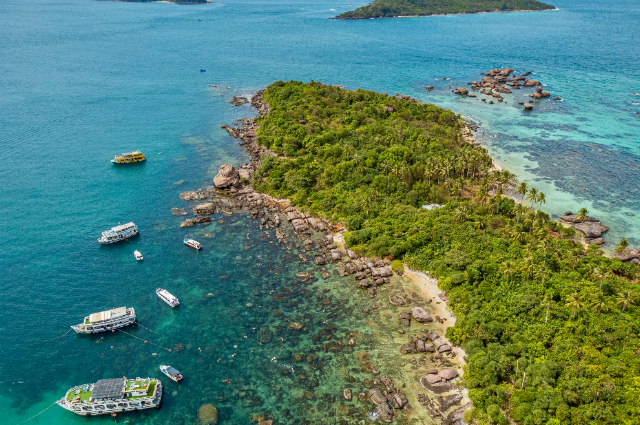
A routine island-hopping excursion off Vietnam’s southern coast turned into one of the deadliest tourism accidents involving Indian nationals in recent years. On Saturday afternoon, a speedboat carrying 32 Indian tourists and four Vietnamese crew members overturned less than half a kilometre from shore, shortly after leaving Hon May Rut Ngoai island near Phu Quoc, Vietnam’s largest island. Fifteen Indian nationals lost their lives in the capsize, and Vietnamese authorities moved quickly, detaining the vessel’s captain the very next day.
The 57-year-old captain was taken into custody on allegations of violating waterway transport safety regulations. He has been identified as Nguyen Hong Hai, a resident of Thuan Tien hamlet in An Giang province who was living temporarily in the Phu Quoc Special Zone at the time of his detention. Investigators questioned him after conducting a thorough on-site investigation, collecting evidence and recording eyewitness statements, and officials have indicated that strict action will follow against anyone found responsible under Vietnamese law.
Chaos in the Water
Eyewitness accounts paint a picture of a journey that unravelled within seconds. The party of tourists had split into three groups to travel between islands; the first boat had already set off while the other two were still docked when it capsized close to shore, according to one distributor who watched the accident unfold from the shoreline. Survivors described desperate calls for help as nearby vessels raced toward the overturned boat, though the rescue effort was complicated by conditions at sea.
State media reported that the captain had instructed passengers to wear life jackets before departure, but many were simply carrying them in their hands rather than wearing them when the boat flipped. Some passengers became trapped inside the hull and had to escape through the bow or through windows to reach the surface. Waves reaching up to ten feet hampered the rescue, and a nearby boat operator said he could not get close to the capsized vessel for fear his propeller would injure people in the water, instead throwing life buoys attached to ropes and pulling four survivors aboard within about ten minutes. Realising others remained trapped, he recorded a short video and alerted other boat operators, and within minutes nearly a dozen boats and rescue teams had converged on the scene. Jet skis proved more effective than larger boats at reaching survivors and ferried them ashore one by one.
Delayed Care and Mounting Casualties
Survivors and witnesses have also raised concerns about the response once victims reached land. One eyewitness said there was no emergency medical care available on shore when survivors were first brought in, and tourists along with tour company staff had to take turns performing CPR and administering oxygen to the injured. Seventeen injured passengers were eventually admitted to Phu Quoc Sun Hospital after two emergency resuscitation doctors and a nurse were dispatched to treat them.
Rescue teams, aided by nearby boat operators and jet ski riders, ultimately managed to pull 21 people from the water. Sixteen survivors were later discharged from the hospital and were returning to India, according to a statement from the Indian Embassy in Hanoi, while one passenger remained in critical condition in a Vietnamese hospital. The bodies of the deceased were being transported to Ho Chi Minh City ahead of being flown back to India once official formalities were completed.
Who Was on Board
All 15 victims were taking part in a company trip organised by Lava International, an Indian smartphone and consumer electronics manufacturer, for its employees, distributors and retail partners. The Indian Embassy in Vietnam said ten of the dead came from the southern state of Tamil Nadu, three from Andhra Pradesh and two from Kerala, underscoring how the tragedy has rippled through communities across southern India.
Weather, Oversight, and a Booming Tourism Trail
Vietnamese authorities have offered an early, if contested, explanation for the disaster. A report in the newspaper Tuoi Tre cited initial assessments by Vietnamese authorities suggesting the incident was unavoidable, caused by extreme weather conditions that shifted rapidly. State media quoted sailors involved in the rescue as saying there were high waves but no rain at the time, and that several other tourist boats were operating in the area when the accident occurred. Still, the captain’s arrest signals that Vietnamese investigators are not treating the incident as weather alone, and are examining whether safety protocols aboard the vessel were properly followed.
The tragedy lands at a delicate moment for Vietnam’s tourism industry, and for its fast-growing relationship with Indian travellers in particular. India has become one of Vietnam’s fastest-growing tourism markets, with the country welcoming about 750,000 Indian visitors in 2025, an increase of nearly 50 per cent over the previous year. Officials attribute that growth to an expanding network of direct flights between major Indian and Vietnamese cities, along with Vietnam’s liberal e-visa policy. Phu Quoc itself has seen a tourism boom in recent years, drawing more than 1.8 million foreign visitors last year alone. Yet boating accidents remain a recurring hazard in the country, where extreme weather, frequent flooding and inadequate vessel maintenance have contributed to previous tragedies. In the aftermath of Saturday’s capsize, several tourism companies operating in the area suspended their speedboat services between the islets.
What Comes Next
For the families of the victims, the coming days will centre on repatriation and mourning rather than the details of the investigation. The Indian Embassy in Hanoi has said it is coordinating closely with Vietnamese authorities to complete identification procedures, support the surviving passengers, and arrange for the remains of the deceased to be flown home. For Vietnam, the tragedy has reopened a familiar and uncomfortable conversation about maritime safety enforcement along one of its most popular and most rapidly growing tourist routes, one that officials will now have to answer for as the criminal investigation into the captain and his crew proceeds.
References:
- CBS News. “Speedboat capsizes off Vietnam, killing 15 tourists; police detain captain,” July 2026.
- WDEF News. “Speedboat capsizes off Vietnam, killing 15 tourists; police detain captain,” July 2026.
- English Bombay Samachar. “Vietnam Speedboat Tragedy: Captain Arrested As Probe Intensifies Into Accident That Killed 15 Indian Tourists,” July 2026.
- India TV News. “Vietnam Police detains captain after speedboat tragedy that killed 15 Indians in Phu Quoc,” July 12, 2026.
. . .