
A Crisis That Dwarfs 2021
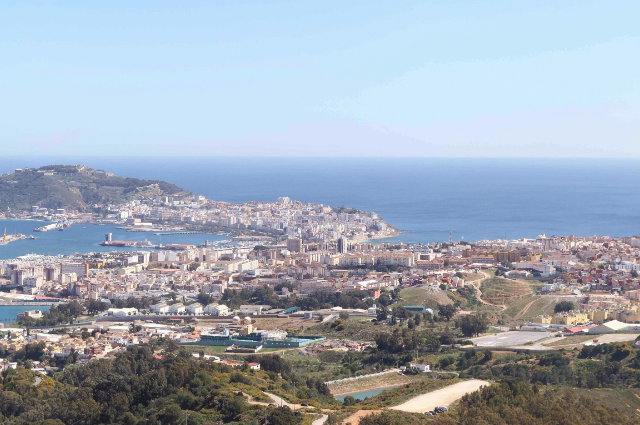
Ceuta, Spain’s small enclave on Morocco’s Mediterranean coast, has just experienced what officials are calling the largest migrant crossing the territory has ever recorded — one that has eclipsed even the widely remembered 2021 crisis within hours. Authorities estimate that around 60,000 migrants crossed into Ceuta over 24 hours as they rushed by sea and land from Morocco, with police reporting that many more people were still arriving even as the count climbed. Ceuta’s own regional government had only a day earlier put the more modest figure of 1,500 to 2,000 people entering over the preceding ten days — instantly overtaken by the scale of what followed.
The previous benchmark was the May 2021 border incident, in which around 8,000 people entered Ceuta within two days, many by swimming around the breakwaters, including numerous unaccompanied minors. This week’s crossing was, by even the most conservative estimates, several times that scale.
Rising Toll, Chaotic Scenes
The human cost has climbed just as sharply as the crossing numbers. At least 18 people initially died after huge crowds breached the border, with many drowning and others killed in a stampede to cross the breakwater fence at Tarajal beach, according to Rachid Sbihi, who leads a local workers’ association representing Civil Guard officers, who described it as a “serious humanitarian crisis.” As the crisis unfolded further, police sources later said the death toll had climbed to 67.
Regional President Jesus Vivas declared an “absolute humanitarian and social emergency” and called on Madrid to send troops to reassert control. On the ground, scenes were described as almost celebratory even amid the chaos — migrants walked through the streets thanking Spanish police and calling out “Bye bye Morocco, hello Spain,” while officers appeared to do little beyond directing arrivals toward the local reception centre. Migrant rights activist Zakaria Zarroqui told Reuters the surge echoed the scale of the 2021 crisis, adding that people were still flocking to Fnideq, Morocco, to attempt the crossing.
What Triggered the Surge
Prime Minister Pedro Sánchez travelled to Ceuta as the situation escalated, working to manage what has become the country’s biggest migrant crisis in years. Speaking after arriving, Sánchez pointed to confusion around a Spanish Supreme Court ruling, saying discussions with Moroccan authorities indicated that “trafficking mafias took a self-serving interpretation” of the ruling to encourage the mass crossing. Spain’s Foreign Ministry separately stressed the crisis had nothing to do with any recent regularisation of migrants, and was instead triggered by that same misreading of the court ruling, exploited by “mafias and criminal organisations”.
Deportations Resume, Despite Legal Hurdles
Spanish authorities said they would try to expel those who had entered illegally as quickly as possible, despite a court ruling that has placed some new restrictions on the special “border rejection” rules that normally allow for immediate expulsions. Images from the enclave in the days since have shown hundreds of migrants being walked back across the border into Morocco as Spain works to bring the numbers under control, even as new arrivals continued trickling in.
A Diplomatic Rupture Across Europe
The scale of the crisis has triggered a rare and public rift within the European Union. Italy announced a temporary suspension of the Schengen free-movement agreement with Spain, introducing what it called “targeted and selective” checks on non-EU travellers. The move was announced by Prime Minister Giorgia Meloni alongside Deputy Prime Ministers Antonio Tajani and Matteo Salvini, with Tajani writing that the suspension was “a necessary choice to safeguard the security of our citizens and defend the European borders,” warning that failing to manage the Union’s borders collectively risked “the threat of terrorism”. Finland also called for a full suspension of Spain’s participation in Schengen, arguing that countries which fail to protect Europe’s external borders cannot remain inside the free-travel area, with Denmark echoing similar calls.
France’s Interior Minister, Laurent Nunez, ordered extra checks along the countries’ shared border with Spain in response. Spain’s Foreign Minister, José Manuel Albares, condemned Tajani’s call for a Schengen suspension and summoned Italy’s ambassador to Madrid to demand an explanation.
Sánchez has pushed back forcefully against the criticism from fellow EU governments. Writing on social media, he argued that “solidarity and empathy are optional. Respect for European treaties and the facts is not,” citing Frontex figures showing Italy had actually recorded more irregular entries than Spain between 2021 and 2026. In a letter quoted widely across European media, he went further, condemning what he called the “selfish, polarising and unlawful reaction” from other EU countries, saying such an attitude was “driven by prejudice, fake news, ignorance or political interest”.
Practically, the friction has had limited effect on ordinary travel so far — Spanish and Italian citizens crossing between the two countries face no additional requirements under the Italian measure, according to Italian broadcaster RAI. Ceuta and Melilla already sit outside the core Schengen travel zone and face separate border controls, regardless of this week’s political dispute.
Politically Costly, Even Beyond the Border
Beyond the immediate humanitarian and diplomatic fallout, the crisis lands at an especially difficult moment for Sánchez domestically. Migration remains one of Europe’s most divisive political issues, with far-right parties opposed to immigration gaining ground across the continent and governments in many countries adopting increasingly tough policies. Sánchez’s Socialist government has pursued comparatively pro-immigration policies that already made it something of an outlier in Europe, and this week’s events are expected to pile further pressure on his administration — both from opposition parties at home and from EU counterparts abroad now openly questioning Spain’s ability to secure its own external border.
A Story Still Moving
As of this writing, Spanish authorities and the EU are still working through the practical and political consequences, with reinforced fencing and additional troops largely credited with slowing fresh arrivals since. Whether the pressure translates into formal EU action remains uncertain — triggering an actual Schengen suspension procedure would require action from the European Commission, and no such move appeared imminent as of the latest reporting. With deportations ongoing, death toll figures still being confirmed, and European capitals trading public accusations over responsibility, the Ceuta crisis remains an unfolding story rather than a closed one.
References:
- Euronews. “At least 60,000 migrants cross into Spanish territory of Ceuta from Morocco in a single day,” July 31, 2026.
- Al Jazeera. “At least 18 die as thousands cross from Morocco into enclave of Ceuta,” July 30, 2026.
- Wikipedia. “2026 Morocco–Spain border incident.”
- Yahoo News / AFP. “Italy suspends Schengen with Spain over Ceuta migrant crisis, more controls for Non-EU travellers,” July 31, 2026.
- Euronews. “Italy temporarily reintroduces border controls with Spain,” July 31, 2026.
- CNN. “Spanish leader slams ‘selfish’ EU response as death toll from Ceuta crossings climbs,” July 31, 2026.
- i24NEWS. “European leaders call for Spain’s Schengen suspension after Ceuta border collapse.”
- Euronews. “Could the EU kick Spain out of the Schengen area over the Ceuta crisis?,” August 1, 2026.