
A Finish That Came Down to the Wire
I’ll be honest, when I first saw India’s medal count settle at 39, my instinct was to compare it straight to Birmingham 2022’s haul of 61 and call it a step backwards. But the more I read into how Glasgow 2026 actually played out, the less fair that comparison felt. India finished fourth on the table with 13 gold, 17 silver, and nine bronze, and didn’t even lock in that position until the final day, when a strong surge — led largely by boxing — pushed the country up the standings right at the wire.
Here’s the thing that changes the picture for me: Glasgow ran a much smaller Games than Birmingham did. Nine sports got dropped entirely, including wrestling, badminton, table tennis, and hockey — and those four alone had handed India 25 of its 61 medals back in 2022. Once you factor that out, a 39-medal haul in a noticeably thinner competition doesn’t look like a decline at all. It looks like India held its ground.
Boxing Did the Heavy Lifting
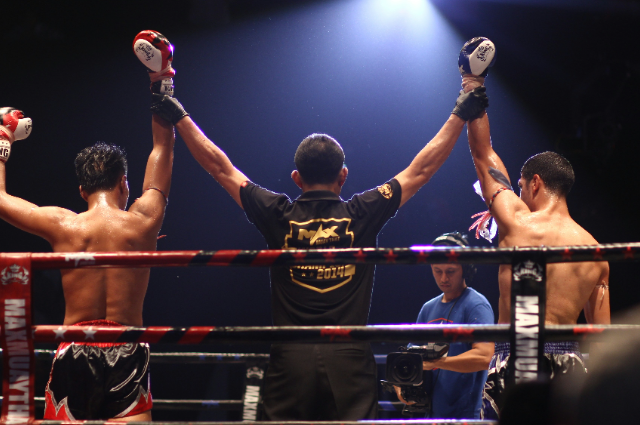
If I had to point to one sport that carried this campaign, it’s boxing, without much competition. The squad brought home 10 medals, seven of them gold — the most gold medals any single nation has ever won in boxing at one Commonwealth Games. Fighters like Preeti Pawar, Jaismine Lamboria, Sakshi Chaudhary, and Priya Ghanghas all delivered gold-medal performances, and Olympic medallist Lovlina Borgohain added a silver in the women’s 75kg category on top of that. I don’t think it’s an exaggeration to call this India’s most dominant boxing showing at a Commonwealth Games to date.
Judo had a quietly strong Games too — India’s best-ever judo performance at a single edition, with three medals including the country’s first-ever gold in the sport.
The Part of the Story I Found Most Compelling
Honestly, out of everything that happened in Glasgow, India’s para-sports campaign is the part that stuck with me the most. Para athletes delivered the country’s best-ever Commonwealth Games para performance, winning seven medals — three gold, two silver, two bronze. Sit with that number for a second: it matches India’s entire combined para-sports medal count from every previous Commonwealth Games combined, all in a single edition.
Para athletics did most of that work on its own, contributing six of the seven medals and ending a 20-year wait for an Indian podium finish in the sport at these Games. Sharmila Dhankar won India’s first-ever para-athletics gold at the Commonwealth Games in the women’s shot put F57, with Shilpa Shyla taking bronze in the same event. Dilip Gavit won gold in the men’s 100m T47 and set a Commonwealth Games record while doing it, and Mohammed Basil Morssinganakath added bronze in the same race. Soman Rana and Shubham Juyal rounded things out with a gold-silver finish in the men’s shot put F57.
Two Names Worth Remembering
A couple of individual stories jumped out at me even beyond the team totals. Gulveer Singh became the first Indian track and field athlete ever to win two individual medals at a single Commonwealth Games — silver in the 10,000m, bronze in the 5,000m, the latter making him India’s first-ever CWG medallist in that event. That’s the kind of achievement that’s easy to miss in a broader medal table but genuinely rare in the sport’s history.
Tejaswin Shankar’s story is the one I keep coming back to, though. He became India’s first-ever Commonwealth Games decathlon medallist, winning bronze while reportedly competing through an injury setback. He’d already won high jump bronze at Birmingham 2022 before switching his focus entirely to the decathlon, so this felt like a payoff years in the making. Elsewhere, Neeraj Chopra made his return to the Commonwealth Games podium with a javelin silver, coming back after missing all of Birmingham 2022 through injury.
What Comes Next
With Glasgow behind them, India’s attention now turns to Ahmedabad. The official handover happened right there at the Glasgow closing ceremony, kicking off preparations for the 2030 Games — the Commonwealth Games’ centenary edition. This will be India’s second time hosting, after New Delhi in 2010, where the country recorded its best-ever Commonwealth Games result: 101 medals and a second-place finish overall.
Not Everything Went Perfectly
I don’t want to make this sound like a flawless campaign, because it wasn’t. The smaller sports programme clearly weighed on the final medal count no matter how you slice it, and there were individual setbacks too — judoka Tulika Maan, for example, was ruled out before the Games even started after being provisionally suspended over anti-doping whereabouts failures. Still, when I add it all up — the record boxing haul, the best-ever para campaign by a wide margin, and a set of individual firsts nobody had achieved before — I think most people watching closely would call this a genuinely successful Games for India, smaller medal count or not.
My Take on the Whole Picture
Medal totals alone rarely tell you the full story, and I think this is a good example of exactly that. On the surface, 39 looks smaller than 61. But look at what actually happened underneath that number — a record-setting boxing squad, India’s best-ever para-sports campaign, and milestones from athletes like Gulveer Singh and Tejaswin Shankar that had never been reached before by any Indian competitor — and Glasgow starts to look less like a step back and more like a genuinely strong Games under tougher conditions. With Ahmedabad now officially on deck for 2030, I think India heads into its next hosting turn with real momentum behind it.
References:
- ESPN. “India finish Commonwealth Games 2026 in fourth place with 39 medals.”
- Olympics.com. “Commonwealth Games 2026: India medals tally and winners list - full table.”
- Outlook India. “Is Glasgow 2026 India’s Best Commonwealth Games Finish? Check The Final Medal Tally And Rankings,” August 3, 2026.
- Wikipedia. “India at the 2026 Commonwealth Games.”
- Udaipur Times. “India Finish Fourth at Commonwealth Games 2026 with 39 Medals: Full Winners List & Key Highlights.”
- Khel Now. “Where does India rank in Athletics medal tally at Commonwealth Games 2026?”
- Olympics.com. “Commonwealth Games 2026 athletics: Know results, scores and medals of all Indian athletes.”
- ESPN. “India’s medals at Commonwealth Games: Live tracker.”