
From an Insult to a Movement
I still find it hard to believe how this whole thing began. On 15 May 2026, the Chief Justice of India, Surya Kant, called unemployed youth “cockroaches” and “parasites of society” while speaking in the Supreme Court. It was meant as a passing remark. It didn’t stay that way.
The very next day, a man named Abhijeet Dipke, who had once worked in political communications for the Aam Aadmi Party, started a new group. He called it the Cockroach Janta Party - CJP for short. It was a direct jab at the ruling Bharatiya Janata Party, and the name alone told you exactly what kind of movement this was going to be.
Nobody expected it to grow the way it did. Within days, more than 350,000 people had signed up, and the group’s Instagram page had crossed 20 million followers. Young volunteers began showing up to protests and clean-up events dressed as cockroaches. It sounds funny on paper. It wasn’t treated as a joke for long. What started as satire turned into one of the biggest challenges Prime Minister Narendra Modi’s government has faced in its third term. Students, working professionals, and entire families joined in. Their demands were simple on the surface but deep underneath: fix the education system, which they see as broken and corrupt, and address the rising cost of living alongside a shortage of good jobs.
The Hospitalisation That Changed Everything
Every big protest usually has one moment that tips things over. For CJP, that moment came on a Saturday, when veteran activist Sonam Wangchuk was forcibly taken to hospital. He had been on a hunger strike for three weeks, standing in solidarity with the movement. When authorities removed him against his will, people were furious. The numbers at the next protest reflected that fury.
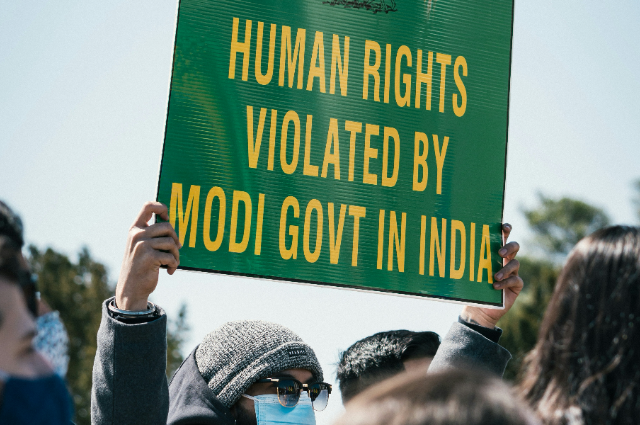
By Monday, more than 10,000 people were trying to march toward India’s Parliament. It was the largest gathering the movement had produced so far. Their central demand was for Education Minister Dharmendra Pradhan to resign, along with a serious crackdown on corruption tied to exam paper leaks. The date mattered too; this was the opening day of Parliament’s Monsoon Session. Protesters gathered at Jantar Mantar under a campaign called “Sansad Chalo,” meaning “March to Parliament.” As they walked, they chanted for both Modi and Pradhan to step down. A yoga teacher named Jyoti Rajput told reporters something that stuck with me: “This rotten system refuses to take action. It cannot see the pain of students, and that’s why so many people have joined this movement.”
What Happened When Police Stepped In
This is the part of the story that’s hardest to write about plainly. Police used tear gas and baton charges to stop the crowd from reaching Parliament. Photos from news agencies showed officers hitting protesters with canes as people tried to push forward. Videos that spread across social media were worse, showing police beating demonstrators, dragging some away, young people crying and asking officers to stop. Some protesters kept standing their ground anyway.
According to Delhi Police, nearly 180 people were hurt in total: 60 protesters and 118 police and security personnel. Seventy protesters were detained, and police said legal action would follow. From what I’ve seen in the footage that circulated afterwards, the violence appears to have started on the police side. No video I came across showed protesters striking first.
A Confusing Night for the Founder
At some point during the chaos, a strange rumour started spreading. CJP spokesperson Saurav Das posted that Dipke, the movement’s founder, had been “picked up” by police. He called on members of Parliament to support the students and accused security forces of cracking down brutally on a peaceful protest.
Delhi Police quickly denied this. They said Dipke had not been detained or arrested at all, and that he was still standing on stage at the protest site. Das then walked back his earlier claim, confirming that Dipke had not, in fact, been taken into custody. He did mention that a large crowd was still gathered near Kerala House. It’s a small detail, but it says a lot about how fast and confusing that night actually was for everyone involved, including the people running the movement.
Stepping Back From the Streets, Not From the Fight
After the violence, CJP’s leadership made a hard call. “We will not march again because the police will hurt the youth again,” Dipke said at a press conference the following day. He said around 150 protesters had been injured by tear gas, canes, and batons. But he was clear that the movement itself wasn’t stopping; they were just changing tactics, moving away from street marches for now while keeping up pressure on Pradhan to resign.
Hundreds of people are still camped out at Jantar Mantar, a spot in Delhi set aside for protests, with police keeping a close watch on the area. They say they’re not leaving until Pradhan actually steps down. The group has also added a new demand: releasing a detained activist.
A Government That’s Barely Budging
Here’s what stands out to me most. The government had mostly ignored this movement in its early weeks. Now, there are small signs that it’s shifting, even if only slightly. CJP spokesperson Saurav Das said Union Health Minister J.P. Nadda met with the group for about ten minutes at his home. Another spokesperson, Ashutosh Ranka, said Nadda asked for time to think over their demands. Meanwhile, Education Minister Pradhan hasn’t budged. He hasn’t resigned, and neither he nor anyone from the BJP has responded to questions about the protests.
That imbalance says a lot about where things stand. A ten-minute meeting on one side. Total silence from the person the protests are actually aimed at on the other. What started as a joke about insects has turned into a genuine test of how the government handles anger from young people over jobs, education, and accountability. The protesters aren’t marching right now, but they haven’t gone home either. If anything, this looks like a pause, not an ending.
References:
- Al Jazeera. “Police attack Cockroach activists as thousands march on Indian parliament,” July 20, 2026.
- NPR. “India’s Gen Z ‘Cockroach People’s Party’ started as satire but is serious about change,” July 20, 2026.
- Al Jazeera. “India’s ‘cockroach’ protest movement halts marches after police violence,” July 21, 2026.
- NPR. “India’s youth-led Cockroach movement vows to continue protest after police crackdown,” July 21, 2026.
- Wikipedia. “Cockroach Janta Party.”
- The Print / PTI. “CJP claims founder Abhijeet Dipke detained,” July 20, 2026.
- Prokerala. “Delhi Police dismiss report of CJP founder’s detention, call it misleading,” July 20, 2026.
. . .