
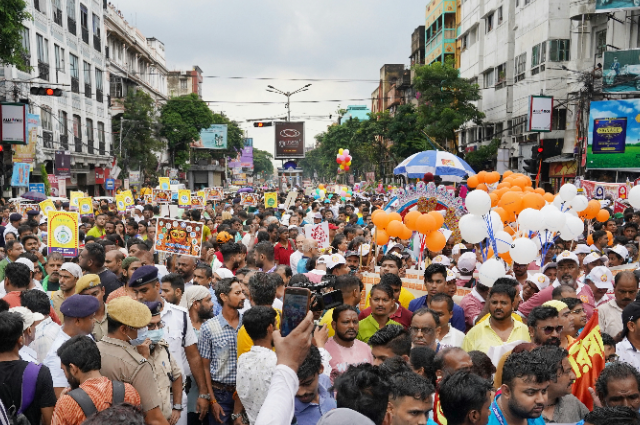
After the nation witnessed one of its largest student-led democratic movements in Delhi, Jharkhand erupted with a similar protest over the leak of the JPSC state exam paper.
The JPSC (Jharkhand Public Service Commission) is an authorised body that conducts yearly exams in Jharkhand to assess and recruit students for various administrative posts across the state. On July 29th, the body found itself under severe scrutiny for deliberately leaking the question papers of the 2026 examinations.
The speculation initially rose right after the results of the prelims exam, which was held in the month of April, were released. The students immediately noticed evidential loopholes and mismatches in the marking system and merit list, raising questions. Sooner, the existing doubts became more foundational after a successful candidate’s answer sheet went viral on social media.
The candidate named Suman Sourav had qualified for the next round of the main exam despite only answering 48/100 questions in the prelims. Agitation rose among other candidates who claimed the criteria were illegal and unjustifiable, claiming that applicants had been declared passed without even completing the required criteria and were gaining marks under partiality. Soon, a protest broke out, demanding reforms and accountability from the state government.
The Jaipal Singh Munda Stadium in Ranchi was soon filled with various student groups, holding slogans, rallies, and hunger strikes. The differing groups, despite their collective cause, in pursuit of maintaining leadership and gaining singular credit, led the protests separately. This included the JPSC-JSSC Reforms Manch, which is the main unaffiliated aspirants' group running one stage and Devendra Nath Mahto and other JLKM-linked leaders running the rival stage. Mahto also staged a hunger strike for six weeks with many other students. Student groups affiliated with various political parties also formed their own groups, including the BJP-led student wing and Congress student wing. AISA (All India Students Association), a left-wing organisation, also joined the protest. The institution’s president, Neha Bora, was thrown black ink on her face as retaliation for her support, gaining much more popular attention towards the movement.
The movement is, however, not an outcome of a sudden decision but rather a consequence of years of pent-up frustration and burnout. JPSC examination leak is not a novel phenomenon, just like the NEET paper leak. Since 2024, the state has witnessed multiple paper leaks and double reassessment issues, continuing to date. As usual, the government slipped up each and every time, promising a secure examination, but failed miserably.
CID inspections were called underway to investigate the issue, and the culprit was found to be one of the members from TSR Data Processing Pvt Ltd (TDPL), a Lucknow-based outsourcing firm hired to conduct the exams. The employee named Abhay Kumar, the company’s marketing manager, confessed after hours of reported questioning and assessment on how he shared the question paper on WhatsApp with other members, a month prior to the exam. Additionally, in a shocking statement, he also confessed his role as the prime culprit for the leakage of the question paper in 2024, whereby the candidates were taken to a warehouse and made to memorise 65 questions and answers, collecting 12 lakhs from each candidate.
Realising the absurdity and nonchalance of the government officials and examination authorities, the students put forth several demands, which, if not fulfilled, will instigate the protests further. The demands included the following: cancellation of the 14th JPSC civil examinations, an independent investigation into the recruitment procedures, structural reforms in JPSC and JSCC examination procedures, and stern action against those who committed the crime.
The Chief Minister of Jharkhand, Hemant Soren, claimed the situation was of national importance and expressed his desire for an open dialogue. However, despite the promise, there hasn’t been an official standoff between the government and the students except for the occasional visits made by representatives on behalf of the leaders and conducting six rounds of talks with the student delegation committee consisting of 11 members. This closed ‘olive branch approach’, an attempt at peaceful closure, was immediately opposed by the students. The students claimed to continue the protests until and unless a proper segment was held between them. The government had also planned to hold different sessions for the different groups, which ultimately did not happen, and was alleged by the students as a backstabbing method in order to turn the groups against each other.
As per current reports, the protests are still in action, but at a much quieter phase. The High Court has put a stay on the cancellation of exams demand, displeasing the protesters. The students have reportedly been facing ‘lathi’ charges and tear gas from the police force. The BJP party has recently set up a different movement demanding the removal of all FIRS filed against the job aspirants who have taken part in the protest.
References:
- Jharkhand Govt invites students agitating over job exam ‘irregularities’ for fresh rounds of talks - The Tribune.
- Jharkhand Student Protest: Two groups allegedly exchange fire ahead of key talks, what exactly happened and why did tensions escalate?
- Jharkhand protest live updates: What Can Ordinary Ink Do to Us? Neha Bora After Ink Attack During Ranchi students' JPSC and JSSC recruitment exam paper leaks
- Why Jharkhand Students Are Protesting: A Look at Their 4 Key Demands | Times Now
- 2026 Jharkhand student protests - Wikipedia