
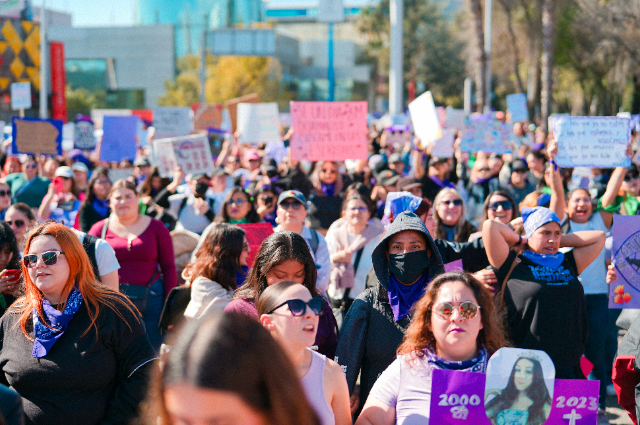
The 4B movement is one of the most discussed feminist movements to come out of South Korea. The term refers to four choices: refusing marriage, childbirth, dating and heterosexual sex. For women who follow the movement, these choices are not simply about avoiding relationships. They are connected to questions about safety, equality, freedom and the way women are treated in society.
The movement grew from a wider period of online feminist activism in South Korea. During the 2015 MERS outbreak, women faced strong online attacks and sexist accusations. This helped create an environment in which groups such as Megalia became important spaces for women challenging online misogyny.
Later, the discovery of hidden-camera crimes, the Nth Room case and other forms of digital sexual abuse added to women’s anger. These incidents created a deeper question: Can women feel safe in relationships and in a society where their private images can be secretly recorded, shared or manipulated?
How did the 4B movement begin?
To understand 4B, it is important to first understand South Korea’s online feminist environment.
Around 2015, the online community Megalia became an important part of the country’s feminist internet culture. Its rise was connected partly to the MERS outbreak. During the outbreak, two South Korean women were targeted by online rumours and sexist criticism. Women who reacted against this kind of treatment began using online spaces to challenge misogynistic language and attitudes.
Megalia used a controversial method known as “mirroring”. Supporters copied misogynistic language and turned it back towards men to show how harmful such language could be. The approach was highly controversial, but it also helped bring more attention to online sexism.
The 4B movement developed later within this wider digital-feminist environment. Its four principles are usually explained through four Korean terms: bihon, meaning no marriage; bichulsan, no childbirth; biyeonae, no dating; and bisekseu, no sex with men.
For supporters, these choices are a way of saying that women do not have to follow the traditional path of getting married, having children and building their lives around men.
It is also important not to describe 4B as representing every South Korean woman. It is a smaller and more radical part of the country’s wider feminist landscape. Researchers have also pointed out that the movement’s exact origins and size are difficult to measure.
What are molka crimes and why did they create anger?
One important issue behind women’s anger in South Korea has been molka, a term commonly used for illegal hidden-camera filming. Women have faced situations in which intimate images or videos were recorded without their knowledge and later shared online. The problem became a major public issue because digital platforms made it possible for such material to spread very quickly.
The issue became even more serious with the Nth Room case, in which women and girls were sexually exploited, and explicit material was distributed through online messaging platforms. The case caused widespread anger and brought attention to the connection between technology, sexual exploitation and misogyny.
The problem did not end with the Nth Room case. In 2024, South Korea faced another major controversy involving AI-generated deepfake sexual images. Police investigated hundreds of cases involving fake sexual images in which the faces of real women and girls were placed onto explicit images without their consent. Many of the victims were young women and teenagers.
For many women, these incidents created a feeling that their privacy and safety could be threatened even when they were simply using the internet or living their daily lives.
This is why digital sex crimes are important when discussing the anger behind South Korean feminism. They are not the only reason for the 4B movement, but they are part of the wider environment in which some women began questioning relationships, marriage and traditional gender roles.
Why did some women choose to reject marriage and relationships?
The 4B movement is not simply about saying that women dislike men. Its supporters often describe it as a way to take control over their own lives.
South Korea has faced several gender-related problems, including pressure on women around marriage, motherhood and appearance. Women also face concerns about workplace discrimination, sexual harassment and unequal responsibilities inside families. Human Rights Watch has documented discrimination against women in education, employment, promotion and family-related responsibilities. For some women, refusing marriage and childbirth became a form of protest against these expectations.
There is also an important economic side to the discussion. Housing costs, competition for jobs and the cost of raising children can make marriage and parenthood difficult for young people. South Korea has also experienced a very low birth rate, making marriage and childbirth a major social and political issue.
But it would be too simple to say that South Korea’s low birth rate was caused by 4B. The reasons are much broader and include economic pressure, housing costs, work culture, childcare responsibilities and changing attitudes towards marriage and family.
This is where the 4B movement becomes more than a personal lifestyle choice. Supporters see their decisions as a way to challenge a system in which women feel that they are expected to sacrifice their careers, bodies or freedom for family responsibilities.
At the same time, critics question whether completely withdrawing from relationships can bring wider social change. Some also argue that 4B is too exclusive and does not represent the views of all feminists in South Korea. These debates are an important part of understanding the movement fairly.
From South Korea to global attention
For many years, the 4B movement remained mostly associated with South Korea. That changed dramatically after the 2024 US presidential election.
After Donald Trump’s victory, posts about 4B spread widely on TikTok and other social-media platforms. Some American women began discussing whether they should avoid dating, marriage and sex with men as a form of protest. The movement suddenly received international attention.
However, the online popularity of 4B should not be confused with evidence that millions of women have formally joined the movement. Much of the discussion has happened through hashtags, videos and personal posts, making its actual size difficult to measure.
The international discussion also brought criticism. Some people argued that American discussions were simplifying a movement that developed from a very specific Korean social and political environment. Others questioned whether choosing not to date or marry can be considered a form of political activism.
There are also debates about inclusivity within Korean radical feminism, especially around transgender women and gay men. These disagreements show that feminism itself is not one single movement with one opinion. Different groups can have very different ideas about what equality and resistance should look like.
Still, the growing global interest in 4B shows that its central questions have travelled beyond South Korea. Women in different countries are discussing safety, reproductive choices, relationships and the treatment of women online.
The story of 4B is therefore not only about saying “no” to men. It is also about why some women feel that saying no is the only way they can regain control over certain parts of their lives.
The movement may remain controversial, and its future is difficult to predict. But the anger behind it cannot be understood without looking at the wider problems of gender inequality and digital sexual violence that have shaped South Korean feminist activism.
References:
- Britannica / California State University Sacramento — 4B Movement: 4B movement background and definition https://www.britannica.com
- Yonsei University — The 4B Movement: Envisioning a Feminist Future. Academic research on the 4B movement: https://yonsei.elsevierpure.com
- Al Jazeera — What is the 4B movement? Al Jazeera report on 4B and its global attention: https://www.aljazeera.com
- The Guardian — 4B and South Korea’s gender conflict. The Guardian report: https://www.theguardian.com
- Human Rights Watch — Gender discrimination in South Korea. Human Rights Watch research: https://www.hrw.org
- The Guardian — From spy cams to deepfake pornography: Report on South Korea’s digital sexual-abuse crisis https://www.theguardian.com
- Institute of Social Studies — Nth Room crimes and gender conflict: Research on the Nth Room case https://issblog.nl