
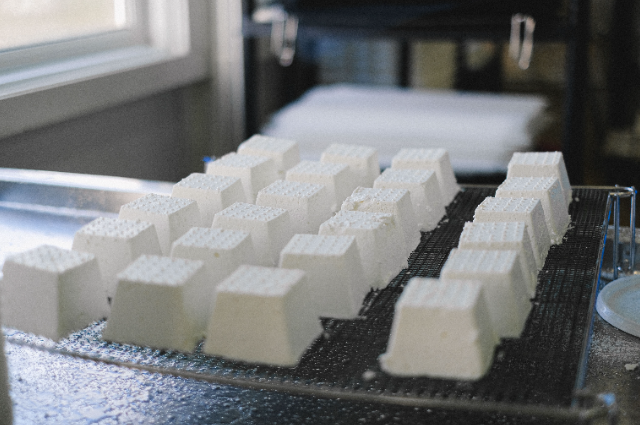
Maharashtra’s Food and Drug Administration (FDA) has been taking action on different food-safety issues in the state. One of the major actions is the ban on analogue paneer. The FDA found that many tested samples did not meet the required food standards. The action has also raised questions about restaurants, hotels and caterers that may be using analogue paneer without clearly informing their customers.
The recent action is not limited to paneer. The FDA has also taken action against food businesses over hygiene problems and has introduced restrictions on unhealthy food around schools. Together, these actions show a stronger focus on food safety and consumer health in Maharashtra.
Why did Maharashtra ban analogue paneer?
Paneer is a common food in India. It is used in homes as well as restaurants, hotels and catering businesses. But recently, the Maharashtra FDA found problems in several samples of paneer and analogue paneer.
According to the FDA’s order, samples were collected across Maharashtra between April 1, 2025 and March 31, 2026. Out of 308 samples tested, 109 did not meet the required standards. This included 79 substandard samples and 30 samples classified as unsafe. The FDA said this meant around 35.4 per cent of the tested samples were non-conforming.
The testing also raised concerns about the use of vegetable fat. Some samples had values that were outside the prescribed limits for milk fat. According to the FDA, this indicated the addition or replacement of milk fat with vegetable fat.
This is where the issue of analogue paneer becomes important. It may look similar to normal paneer, but its ingredients can be different. For a customer, knowing what they are actually eating is important. The FDA therefore imposed a one-year ban on the production, sale and distribution of analogue paneer in Maharashtra. The aim is not only to stop unsafe products but also to make food businesses more responsible about what they sell.
The main concern is simple: if a product is being sold or used as paneer, customers should be able to know whether it is genuine paneer or an alternative product.
What does the ban mean for restaurants, hotels and caterers?
This is perhaps the most important part of the issue. Restaurants, hotels and catering businesses use paneer in many dishes. Paneer is also used in large quantities during weddings, parties, functions and other events. Because of this, any change in the rules can directly affect these businesses.
During its inspections, the FDA found that some hotels, restaurants, caterers and other food establishments were using analogue paneer instead of genuine paneer. The concern was that customers were not always being informed about this through menus, invoices or display boards.
For a restaurant owner, using a cheaper alternative may appear to reduce costs. But if the customer believes they are buying a dish made with genuine paneer, the lack of information becomes a food-labelling and transparency issue.
For example, a customer ordering a paneer dish in a restaurant normally expects paneer made from milk. They may not know what product has actually been used in the kitchen. This is why clear information becomes important. The FDA’s action also puts more responsibility on food businesses. Restaurants and caterers need to know what they are purchasing from suppliers. They also need to maintain proper records and make sure that the products used in their kitchens meet food-safety requirements.
This does not mean that every restaurant or hotel is using unsafe paneer. The issue is about those businesses that are using products that do not meet the required standards or are not properly informing customers. For customers, the action can also create more awareness. People may start asking questions about the ingredients used in the food they order. In the long run, this can push food businesses towards better transparency.
The Parsi Dairy Farm case shows another side of food safety.
The analogue paneer issue was not the only action taken by Maharashtra FDA. Another case that received attention was the action against Mumbai’s well-known Parsi Dairy Farm. The FDA inspected the dairy’s facility on July 14 and reported several hygiene and food-safety problems. These included fungal growth on walls in production and storage areas, raw material being stored directly on the floor and problems related to the raw milk reception area. Other reports also mentioned pest infestation and sanitation-related deficiencies.
Because of these findings, the dairy’s food licence was suspended. However, this case also shows that FDA action does not always mean a permanent closure. After the dairy took corrective measures and met the required food-safety standards, the FDA restored its licence. The Parsi Dairy Farm reopened on July 30, 2026.
This is an important point for the article. Food safety is not only about adulteration. Clean production areas, proper storage, pest control, sanitation and safe handling of raw materials are also important.
A food business may have a long history and a trusted name, but that does not remove the need to follow safety rules. At the same time, when a business corrects the problems found during inspection, it can return to operations after meeting the required standards.
What do these FDA actions tell us?
The recent actions of Maharashtra FDA show that food safety is becoming a wider issue. The focus is not only on one product or one type of business.
Along with the analogue paneer ban and action against dairy facilities, the FDA has also introduced stricter food rules for foods sold around schools. Maharashtra has prohibited the sale, free distribution and advertising of foods high in fat, sugar and salt within school premises and within a 50-metre radius. The restrictions cover items such as certain fried foods, sugary drinks and other high-fat, high-sugar and high-salt products.
Schools and their food suppliers have also been told to follow food-safety requirements. The broader aim is to encourage healthier food choices for children. There is also a drug-safety side to the FDA’s work. In October 2025, Maharashtra issued a prohibition order for certain batches of Respifresh TR and Relife after they were found to contain diethylene glycol above permissible limits. The official Maharashtra order directed that their sale and distribution be stopped.
These cases are different from the analogue paneer issue, but they show the same larger responsibility: products that reach consumers need to meet safety standards. For restaurants, hotels and caterers, the analogue paneer ban is therefore more than just a new rule. It is also a reminder that food businesses have a responsibility towards their customers. They need to know where their ingredients come from, what they contain and whether they meet the required standards.
For customers, the message is also important. Food safety cannot depend only on trust in a restaurant or a famous brand. Proper testing, clear labelling and regular inspections are needed to make the food system safer. Maharashtra’s recent FDA actions show that enforcement is trying to catch problems at different levels—from manufacturers and suppliers to restaurants, caterers, schools and other food establishments. The real success of these actions, however, will depend on how consistently the rules are followed in the future.
References:
- Hindustan Times — Maharashtra bans analogue paneer after FDA testing. Read the report.
- Indian Express — FDA suspends Parsi Dairy Farm licence over hygiene lapses. Read the report
- NDTV Profit — Parsi Dairy Farm reopens after FDA lifts suspension. Read the report
- India Today — Maharashtra’s food restrictions around schools. Read the report.
- Maharashtra Government FDA — Prohibition order on cough syrups containing DEG. Read the official order