
“History often teaches us that humanity’s greatest battles are not always fought against wars or disasters. Sometimes they are fought against creatures so small that they escape our attention, until they begin to reshape our world.”
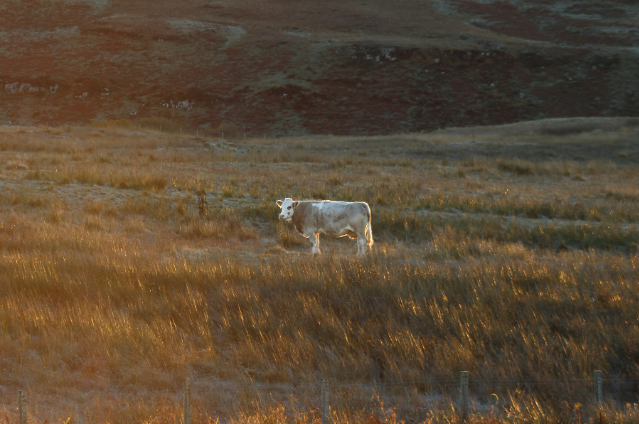
Imagine standing on a peaceful cattle farm early in the morning. The animals appear healthy, the fields are calm, and life seems to follow its ordinary rhythm. Hidden somewhere nearby, however, a single fly searches for something invisible to the human eye: a small wound on the skin of a living animal.
Unlike ordinary flies that feed on dead tissue, the New World Screwworm behaves in a far more disturbing way. It lays its eggs inside open wounds, where the larvae hatch and begin feeding on healthy, living flesh. As the larvae burrow deeper, the wound grows larger, causing severe pain, infection, and, if left untreated, even death.
For many people, this sounds like something from a horror film. Yet it is a biological reality that scientists and veterinarians have fought for decades.
For nearly half a century, North America believed this nightmare had become history. Through one of the world’s most successful disease-eradication programs, the New World Screwworm was eliminated from the United States, Mexico, and much of Central America. It was celebrated as a remarkable victory of science over nature.
Today, however, that confidence is being tested.
The parasite is slowly moving north once again. Recent detections in Central America and Mexico, along with a travel-related human case reported in the United States, have reminded experts that eradication does not always mean permanent disappearance.
This is no longer simply the story of an insect.
It is a story about global food security, climate change, international cooperation, and humanity’s constant struggle to stay one step ahead of emerging biological threats.
“The story of the New World Screwworm is not merely about a parasite returning to places where it once existed. It is about how fragile our victories against disease can be, and how the changing climate is quietly rewriting the boundaries of global health.”
What exactly is the New World Screwworm?
The New World Screwworm (Cochliomyia hominivorax) is not dangerous because of the adult fly itself. The real danger begins after the female lays hundreds of eggs inside even the smallest wound on a warm-blooded animal.
Within hours, the eggs hatch into larvae.
Unlike most fly larvae, which feed on dead or decaying tissue, screwworm larvae consume living flesh.
They literally drill themselves deeper into the body in a spiral motion, which is why they are called “screwworms.”
The infestation, medically known as myiasis, causes intense pain, swelling, bleeding, foul-smelling wounds, secondary infections, and, in severe cases, death if treatment is delayed.
Livestock, including cattle, sheep, goats, horses, pigs, and even wildlife, are particularly vulnerable.
Although human infections are relatively rare, they can occur, especially when untreated wounds are exposed in regions where the parasite exists.
This unique feeding behaviour makes the screwworm one of the world’s most economically destructive livestock parasites.
A Victory That Changed Veterinary History
There was a time when the New World Screwworm caused enormous economic losses across North America.
Every year, millions of cattle became infected.
Farmers watched healthy animals lose weight, become seriously ill, and sometimes die despite treatment.
The damage extended beyond individual farms.
Milk production declined.
Meat production suffered.
Export markets became uncertain.
Veterinary costs increased dramatically.
Scientists realised that treating infected animals alone would never solve the problem.
Instead, they developed an extraordinary idea, one that sounded almost impossible.
Rather than killing millions of flies, why not stop them from reproducing?
This idea eventually became the Sterile Insect Technique (SIT).
Millions of male screwworm flies were raised in laboratories, sterilised using radiation, and released into the wild.
Female screwworm flies mate only once during their lifetime.
When they mated with sterile males, no offspring were produced.
Generation after generation, the parasite population collapsed.
It became one of the greatest achievements in modern veterinary science.
By the late twentieth century, the United States had successfully eliminated the screwworm, followed by Mexico and several Central American countries.
For decades, many believed the battle had finally been won.
History, however, often reminds us that nature rarely surrenders forever.
When Success Creates Complacency
Perhaps the greatest danger after defeating a disease is believing it can never return.
History has shown that viruses, parasites, and insects often reappear when surveillance weakens or environmental conditions change.
The return of the screwworm is therefore not merely a scientific concern; it is a reminder that public health victories require constant vigilance.
Eradication is not a finish line.
It is a responsibility that must continue for generations.
Why is the Screwworm Returning?
For decades, scientists believed that the New World Screwworm had been pushed far enough south to prevent its return to North America. The Sterile Insect Technique had worked remarkably well, and strict surveillance programs helped keep the parasite under control.
However, diseases and parasites do not recognise political borders.
In recent years, veterinary authorities have reported new outbreaks in parts of Central America and Mexico. These developments have raised concerns that the parasite may once again expand into regions where it was previously eradicated.
Experts believe that there is no single reason behind its return. Instead, several interconnected factors are working together to create conditions that favour its spread.
One of the most important among them is climate change.
Climate Change: Opening New Doors for Old Threats
Climate change is often associated with melting glaciers, rising sea levels, and extreme weather events. Yet one of its most underestimated consequences is its ability to reshape the geography of infectious diseases.
Warmer temperatures allow insects and parasites to survive in places that were once too cold for them.
Longer summers provide more time for breeding.
Changes in rainfall patterns create favourable environments for many disease-carrying species.
The screwworm is no exception.
As average temperatures continue to rise, scientists fear that regions once considered naturally protected may gradually become suitable habitats for the parasite.
Climate change does not create new parasites.
It simply gives existing ones new opportunities.
This is why many public health experts now describe climate change not only as an environmental crisis but also as a growing health security challenge.
A Tiny Fly, A Massive Economic Threat
At first glance, the screwworm may appear to be a problem only for veterinarians and farmers.
In reality, its impact reaches far beyond farms.
Every infected animal represents a financial loss.
Farmers spend more on veterinary treatment.
Animals lose weight.
Milk production declines.
Pregnant livestock become vulnerable.
In severe cases, infected animals die.
When outbreaks spread across entire farming regions, the economic consequences multiply rapidly.
Governments must invest in surveillance.
Veterinary services become overwhelmed.
Trade restrictions may be imposed.
Exports can decline.
The result is not merely a farming problem; it becomes a national economic concern.
For countries whose rural economies depend heavily on livestock, even a relatively small outbreak can create significant financial pressure.
Why Should Ordinary People Care?
Many people who live in cities may assume that a livestock parasite has little to do with their daily lives.
The reality is very different.
Every meal on our dining table is connected to a long agricultural supply chain.
Healthy livestock contribute to stable meat prices, dairy production, leather industries, and rural employment.
When disease affects animals on a large scale, its consequences eventually reach consumers.
Reduced livestock production may contribute to higher food prices.
Farmers facing repeated losses may struggle to maintain their businesses.
Rural communities dependent on animal husbandry can experience economic hardship.
In today’s interconnected global economy, an outbreak affecting one region may indirectly influence markets thousands of kilometres away.
The screwworm reminds us that food security begins long before food reaches our plates.
It begins on farms.
The Human Dimension
Although human infections remain relatively uncommon, they are not impossible.
Health authorities have occasionally reported travel-related cases involving individuals who had visited areas where the parasite is present.
Such cases serve as an important reminder that diseases do not remain confined to animals.
They move with people, trade, wildlife, and changing ecosystems.
Perhaps the greatest lesson is that global health is no longer divided into separate categories of human health, animal health, and environmental health.
They are deeply connected.
Scientists describe this concept as One Health: the understanding that protecting animals, ecosystems, and people is one mission.
The story of the screwworm illustrates this principle with remarkable clarity.
What begins as an infestation on a remote cattle farm may eventually become a concern for veterinarians, governments, economists, public health experts, and consumers alike.
“The health of people, animals, and the environment is not a collection of separate stories. It is one shared story—and the return of the screwworm reminds us how closely those chapters are connected.”
Can the World Stop the Screwworm Again?
The answer is yes, but only if the world acts before the problem grows beyond control.
History has already shown that the New World Screwworm can be defeated. The Sterile Insect Technique remains one of the greatest examples of how science, international cooperation, and long-term commitment can overcome even the most destructive biological threats. However, the success of the past should never become an excuse for complacency.
Today’s world is far more interconnected than it was decades ago. Animals, people, and goods cross borders every day. Climate patterns are changing, ecosystems are shifting, and diseases are finding new opportunities to spread. Protecting countries from parasites like the screwworm now requires more than scientific innovation; it demands constant surveillance, international cooperation, and public awareness.
Experts believe that early detection is the strongest defence. A single infected animal identified in time can prevent thousands of future infections. Delayed action, on the other hand, allows the parasite to establish itself before authorities even realise the scale of the threat.
In many ways, the battle against the screwworm is no longer just about controlling an insect. It is about protecting agriculture, safeguarding livelihoods, and preserving global food security.
The Lessons We Cannot Afford to Ignore
Every major public health challenge leaves behind valuable lessons. The story of the New World Screwworm is no different.
First, it reminds us that eradication does not always mean permanence. Diseases and parasites may disappear for decades, but they can return when surveillance weakens or environmental conditions become favourable again.
Second, it demonstrates how deeply interconnected our world has become. A parasite affecting livestock in one region can eventually influence food prices, trade, and public health far beyond national borders.
Third, and perhaps most importantly, it teaches us that nature constantly adapts. Human beings celebrate victories, but nature rarely stops evolving. Our greatest strength is not believing we have won forever; it is remaining prepared for the next challenge.
Perhaps the most powerful lesson is that protecting animal health is also an investment in human well-being. Healthy livestock support farmers, strengthen economies, secure food supplies, and ultimately contribute to healthier societies.
A Shared Responsibility
When we think about global health, we often imagine hospitals, medicines, or scientific laboratories.
Rarely do we imagine a farmer examining a wounded calf at sunrise.
Yet that quiet moment may represent the very first line of defence against an outbreak that could eventually affect entire countries.
Behind every healthy animal is the hard work of farmers, veterinarians, researchers, and public health professionals whose efforts often go unnoticed.
The story of the screwworm reminds us that food security does not begin in supermarkets.
It begins in fields.
It begins on farms.
And sometimes, it begins with protecting a single wounded animal before a tiny parasite has the opportunity to spread.
The return of the New World Screwworm is not merely the story of an insect moving northward.
It is a warning.
A warning that victories against infectious diseases must never lead to complacency.
A warning that climate change is reshaping the geography of health in ways we are only beginning to understand.
And a warning that food security depends on protecting the invisible systems that sustain agriculture every single day.
Although the screwworm is small enough to fit on the tip of a finger, its impact has the potential to reach farms, economies, governments, and dining tables across continents.
The greatest threats to humanity are not always dramatic or immediate.
Sometimes they arrive quietly.
Sometimes they cross borders unnoticed.
Sometimes they hide inside the smallest living creatures.
The story of the New World Screwworm is therefore not simply about a parasite.
It is about vigilance.
It is about science.
It is about climate change.
Above all, it is about understanding that in an interconnected world, protecting animal health is ultimately an act of protecting humanity itself.
“History has shown that humanity is capable of defeating extraordinary biological threats. The real challenge is not winning the battle once; it is having the wisdom and determination to never stop guarding the victory.
The information presented in this article has been compiled and analysed using publicly available reports and official sources listed below.
References:
- Centres for Disease Control and Prevention (CDC). (2026). About New World Screwworm. Retrieved July 8, 2026.
https://www.cdc.gov - Centres for Disease Control and Prevention (CDC). (2026). New World Screwworm Outbreak Situation Summary. Retrieved July 8, 2026.
https://www.cdc.gov - United States Department of Agriculture (USDA APHIS). (2026). Stop Screwworm. Retrieved July 8, 2026.
https://www.aphis.usda.gov - Food and Agriculture Organisation of the United Nations (FAO). New World Screwworm Resources.
https://www.fao.org - World Organisation for Animal Health (WOAH). New World Screwworm.
https://www.woah.org - Associated Press. (2026). What to Know About the New World Screwworm Fly.
https://apnews.com. . .