
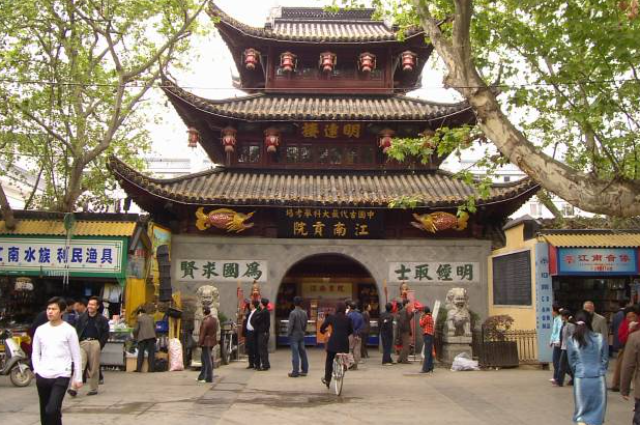
BEIJING, China — As the summer sun beats down, a sea of parents gathers outside a high school testing centre in Beijing. Many mothers are donning beautiful qipao gowns, an emblem of hope and success as their children take their first steps into adulthood. Inside the testing centre, where urban chaos is kept at bay by strict traffic controls and high-tech anti-cheating cameras, teenagers face a multi-day exam that will shape their economic destinies. This scene, replicated in countless testing centres throughout the country, is more than just a modern bureaucratic event. It's a nod to the enduring legacy of the Keju, the imperial examination system that dates back to around 600 A.D. during the Sui Dynasty. Although China's political and economic landscapes have changed dramatically over the centuries, the belief that a single, centralised exam can determine one's place in society remains deeply ingrained in the cultural fabric of the nation.
In imperial China, the social structure was neatly organised around a four-tier class system, deeply shaped by Confucian and legalist philosophies aimed at blending morality with state stability. At the top were the Shi, or scholar-bureaucrats, who governed the empire not because of noble lineage but through their success in gruelling imperial exams. Just beneath them were the Nong, or peasant farmers, held in high regard for their crucial role in food production and sustaining agrarian wealth, placing them second in status. The third tier comprised the Gong, artisans and craftsmen recognised for their valuable skills in creating tools and cultural products. Finally, at the bottom of this hierarchy were the Shang, the merchants and traders, considered by the elites to be unnecessary middlemen who accumulated wealth without directly producing anything. To limit their power, wealthy merchants were prohibited from joining the civil service and even banned from wearing the luxurious silk garments they traded. This strict system allowed the imperial examination to serve as a rare avenue for social advancement, where a bright peasant’s son could, theoretically, ascend to the esteemed position of imperial minister purely through academic excellence.
While the official caste laws of imperial China may be a thing of the past, the cultural framework still lives on, accompanied by a strikingly reversed economic landscape. In today's global marketplace, the historically sidelined Shang class, think of the tech moguls, industrial barons, and venture capitalists, has skyrocketed to the top of wealth and societal influence. On the flip side, the Nong class has seen a significant decline in its relative status. Once viewed as the backbone of dynastic ideology, rural agricultural workers now often find themselves hampered by the hukou, or household registration system. This system limits their access to essential urban social services, healthcare, and top-tier education, leaving many modern farmers stuck at the bottom of the economic hierarchy. Meanwhile, party officials, academic elites, and a burgeoning urban professional class have taken over the middle ground that was once held by scholars and artisans.
Even with the changing economic landscape, the story of the scholar who changes their fate through an exam continues to hold strong cultural significance, especially with the Gaokao, which is China’s National College Entrance Examination. Back in June 2026, the Ministry of Education revealed that 12.9 million candidates signed up for this high-stakes test. This figure shows just how fierce the competition remains, even though it’s a slight drop from the 13.35 million who applied the year before. Sociopolitical analysts closely watching educational trends in China note that the exam acts as a modern version of the imperial selection system, standing out as the most egalitarian, albeit quite harsh, method for navigating the deep-rooted class divides in society.
Under China's 15th Five-Year Plan, covering the years from 2026 to 2030, the government aims to boost undergraduate enrollment at top universities by over 100,000 spots. This move is part of a broader effort to align higher education with fast-evolving high-tech fields, including carbon neutrality science and low-altitude technology. Yet, the pressure to gain admission to these prestigious institutions is still largely dictated by students' exam scores, which means that the age-old challenges of the Keju continue to loom large. Modern families pour significant financial resources into private tutoring, while students endure gruelling years of rote memorisation, all in pursuit of a deeply ingrained cultural belief that academic success is the ultimate safeguard against systemic inequality.
References
- China Daily (June 3, 2026). 12.9 million register for 2026 gaokao as authorities prepare for safe, fair exam. https://global.chinadaily.com.cn
- Global Times (June 7, 2026). 12.9 million Chinese sit 2026 college entrance exam as gaokao shows a social ethos that values knowledge, fairness. https://www.globaltimes.cn
- University of New Mexico Historical Archives (Accessed 2026). The Structure of Empire: The Four Occupations in Imperial China. https://www.unm.edu
- Wikipedia Reference Index (Updated 2026). The Social History of the Four Occupations (Shi, Nong, Gong, Shang) and the Keju Exam Evolution. https://en.wikipedia.org
- Xinhua News Agency (June 7, 2026). Xinhua Headlines: 12.9 mln Chinese take 2026 college entrance exam to chase dreams, rewrite life paths. https://english.news.cn