
The service behind the service
When a citizen receives a vaccination certificate, reaches a cyclone shelter before a storm, or obtains timely guidance from a community health worker, the visible result may appear simple. A service was delivered. A problem was solved. A life was made a little safer. Yet behind each outcome is a network of people whose names rarely appear in a headline: field workers, nurses, local volunteers, data-entry personnel, software engineers, coordinators, drivers, administrators and maintenance teams. Their work often becomes noticeable only when something goes wrong.
Public service is sometimes described through budgets, policies, buildings and digital platforms. Those are essential, but they do not act on their own. A warning must reach a household; a record must be entered correctly; a frightened patient must be reassured; a server problem must be resolved; and an instruction must be translated into action. The most important part of public delivery is therefore not merely the design of a system but the human chain that makes it work.
Three documented experiences from India illustrate this reality: the recognition of community health activists, the mass evacuation before Cyclone Fani, and the operation of a vaccination programme supported by a national digital platform. These are not invented personal testimonies. They are real public events, examined through published institutional accounts. Together, they reveal why effective services depend on both visible compassion and less visible technical competence.
A million connections between communities and care
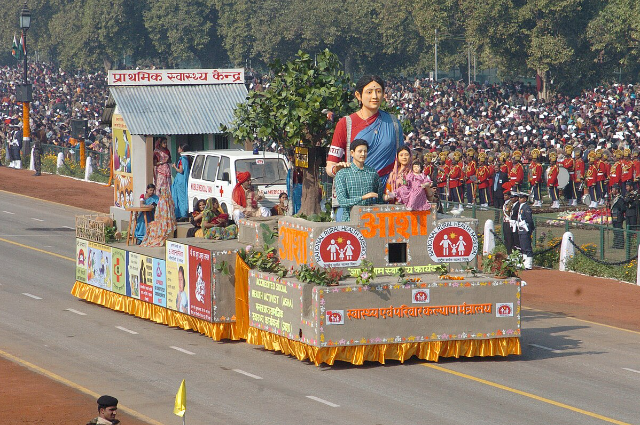
In May 2022, the World Health Organisation recognised India’s Accredited Social Health Activists, widely known as ASHA workers, with a Director-General’s Global Health Leaders Award. WHO described more than one million women whose contribution lies in connecting communities with primary healthcare. Their responsibilities have included support for maternal and child health, immunisation, tuberculosis care, health promotion and the response to COVID-19. The recognition was significant because it honoured a vast workforce rather than a single celebrated individual.
The achievement is best understood through the nature of the work. A health facility may be physically present and remain difficult to access for a family lacking information, confidence, transport or time. A community worker can help bridge that gap. She may explain the value of antenatal care, encourage a family to complete immunisation, or help someone understand where to seek treatment. Such work is neither glamorous nor easily captured by a single performance indicator. Its value often lies in trust built gradually, through repeated conversations.
Consider the difference between issuing a public health advisory and ensuring that it is understood. A message sent from an office may reach a phone, but it cannot automatically answer a worried parent’s questions. Human contact supplies context: local language, familiarity with household circumstances, and the patience to address hesitation. Technology can distribute information at scale; frontline workers can make that information usable.
Recognition, however, should not obscure difficult working conditions. A commentary published in The Lancet Regional Health – Southeast Asia after the WHO award argued that public appreciation should be matched by substantive improvements in support and working conditions. This distinction matters. Calling someone a hero must never become an excuse to treat exhaustion, inadequate resources or insecurity as normal requirements of service.
The deeper lesson of the ASHA experience is that trust is public infrastructure. It cannot be purchased as equipment or installed as software. It develops when people return, listen, follow through and demonstrate reliability. A system that overlooks this human work risks confusing the existence of a service with genuine access to it.
Forty-eight hours before a cyclone
In May 2019, Cyclone Fani approached the eastern coast of India. The United Nations Office for Disaster Risk Reduction reported that early warnings and large-scale evacuation efforts helped move approximately 1.2 million people to safety in less than 48 hours. A subsequent UNDRR account described the participation of more than 45,000 volunteers. The operation drew on years of disaster preparedness, including shelters, warning arrangements, drills and local mobilisation.
Numbers on that scale are impressive, but they can conceal the difficult human tasks behind them. A forecast does not itself persuade an elderly resident to leave home. A siren does not arrange assistance for someone with limited mobility. A shelter does not automatically become orderly, accessible and reassuring. Between a scientific prediction and a safer community stand people who communicate risk, organise transport, coordinate supplies, check households and help neighbours make urgent decisions.
Fani is an especially instructive case because it demonstrates the relationship between institutions and individuals. Meteorological information made the threat visible; public authorities organised the response; physical shelters provided places of refuge; and local responders helped translate the plan into movement on the ground. Remove any one element and the others become less effective.
The comparison with Odisha’s devastating 1999 super cyclone also illustrates the value of sustained learning. UNDRR documented the state’s long-term investments in disaster management after that tragedy. It would be misleading to attribute all later improvements to any one person, technology or policy. The result emerged from an evolving system of preparation and collective action.
There is a powerful lesson here for everyday public administration. Success often happens before the public notices a crisis: in training sessions, updated contact lists, working communications equipment, rehearsed procedures and relationships between agencies. Preventive work receives less attention precisely because, when it succeeds, the feared outcome may not occur.
The unseen workforce inside a digital achievement
India’s COVID-19 vaccination programme provides a third example, this time highlighting the relationship between large-scale public operations and digital technology. According to the Government of India’s Economic Survey 2022–23, more than 220 crore vaccine doses had been administered by 6 January 2023. The same official account described Co-WIN as an end-to-end digital system supporting vaccination operations and real-time stock tracking at national, state and district levels.
These figures describe an extraordinary operational scale, but a digital platform alone does not administer an injection. Health workers prepare and deliver vaccines. Staff confirm eligibility and record doses. Managers organise sessions and supplies. Technical personnel maintain systems, resolve defects, safeguard information and support users. The public-facing certificate is the final product of many interdependent actions.
The role of technology professionals deserves particular attention because their contribution is often judged by its absence. When an application works, the citizen sees a functioning screen rather than the people who designed its workflows, tested its reliability, managed databases or responded to incidents. When an application fails, those same people suddenly become highly visible. This creates an unusual imbalance: successful preventive technical work can look like nothing happened.
Good digital public service requires more than writing code. Systems must remain understandable to frontline users, tolerate operational pressure, protect sensitive information, and provide practical ways to correct mistakes. They must account for connectivity limitations, changing rules, high transaction volumes and the reality that citizens do not all possess equal digital skills. A technically elegant service that excludes the people who most need it is not fully successful.
The vaccination experience also warns against treating a large aggregate number as proof that every individual had an equally easy experience. Programme totals show scale; they do not by themselves measure accessibility, convenience, staff workload or the experience of those facing barriers. Responsible evaluation asks both how much was delivered and how fairly and reliably the service reached people.
Perhaps the most important insight is that digital and human services are not competing models. A dependable platform can reduce repetitive work and improve coordination. A capable frontline team can correct misunderstandings and assist people who cannot navigate a process independently. Each makes the other more effective.
What the three stories have in common
At first glance, a community health visit, a cyclone evacuation and a national vaccination platform seem to belong to different worlds. Yet each depends on a similar sequence: reliable information, timely decisions, clear communication, coordination across roles, and someone taking responsibility for the final step. Policy establishes an intention; institutions create capacity; people deliver the outcome.
These cases also challenge the popular idea of the solitary hero. Public services are collective achievements. A nurse cannot provide safe care without supplies and records. A volunteer cannot evacuate a community without a credible warning and somewhere safe to go. A software engineer cannot build a useful system without understanding the needs of staff and citizens. The strongest public institutions make these dependencies explicit rather than expecting individuals to overcome structural weaknesses through personal sacrifice.
Another shared theme is the importance of ordinary competence. Accuracy in a register, a timely escalation, a tested backup, a clearly explained instruction, or a follow-up call may appear routine. In a complex service, however, small dependable actions accumulate into public trust. Reliability is rarely dramatic, but it is one of the most valuable forms of dedication.
Finally, these experiences show that public service must be evaluated in human terms. Efficiency matters, yet the ultimate questions are whether a person obtained needed care, whether a family reached safety, and whether a citizen could use a service with dignity. Data can help answer these questions, but numbers should guide attention toward people rather than replace them.
Recognition should lead to better systems
If society wishes to honour its invisible heroes, appreciation must extend beyond ceremonial praise. Frontline workers need relevant training, safe working conditions, supportive supervision and clear channels for raising concerns. Technical teams need realistic timelines, adequate staffing, documented processes, cybersecurity practices and opportunities to maintain skills. Volunteers need preparation, protective arrangements and coordination with responsible agencies.
Institutions should also recognise the contributions that traditional performance reporting can miss: preventing an outage, simplifying a difficult form, resolving a recurring citizen complaint, improving accessibility, or helping a colleague manage a critical situation. These improvements may not produce a photograph or a public celebration, but they strengthen service quality.
Leadership has a special responsibility to create a culture in which problems can be reported early. When staff fear blame, small defects remain hidden until they become larger failures. When teams are encouraged to learn, document and improve, individual experience becomes institutional knowledge. That is how public services become resilient rather than dependent on a few exceptional people.
Citizens also have a role. Respectful engagement with frontline personnel, constructive feedback and awareness of public processes can help build more effective services. Respect does not mean accepting poor performance without question; it means distinguishing accountability from hostility and recognising the constraints within which workers operate.
The measure of a successful service
Behind a vaccination record may be a worker who helped someone understand the process. Behind a timely evacuation may be a volunteer who knocked on another door. Behind a stable digital service may be a technician who corrected a fault before anyone experienced it. These examples are representative illustrations of the roles documented in the case studies, not claims about unnamed individual incidents.
The invisible heroes of public service are not invisible because their contributions are small. They are often invisible because effective systems allow the public to focus on the service rather than the machinery behind it. Their achievement is shared, practical and deeply human.
A mature society should celebrate these contributions while also asking whether the people performing them have the resources, recognition and working conditions they deserve. The truest tribute is not merely to call them heroes. It is to build institutions in which dedication is supported, technology serves people, and good public service can be delivered consistently—not only through extraordinary effort, but as an everyday standard.
References:
- World Health Organisation. “India’s ASHA workers win Global Health Leaders Award.” 23 May 2022. https://www.who.int/india/india-asha-workers
- Asthana, S., and Mayra, K. “India’s one million Accredited Social Health Activists (ASHA) win the Global Health Leaders award...” The Lancet Regional Health – Southeast Asia, 2022. https://doi.org/10.1016/j.lansea.2022.100029
- United Nations Office for Disaster Risk Reduction. “Fani’s hard lesson on resilient infrastructure.” 7 May 2019. https://www.undrr.org
- United Nations Office for Disaster Risk Reduction. “Empowering local communities for early action.” https://www.undrr.org
- Press Information Bureau, Government of India. “National COVID-19 Vaccination Programme Meets Its Goals...” 31 January 2023. https://www.pib.gov.in/PressReleasePage.aspx?PRID=1894907