
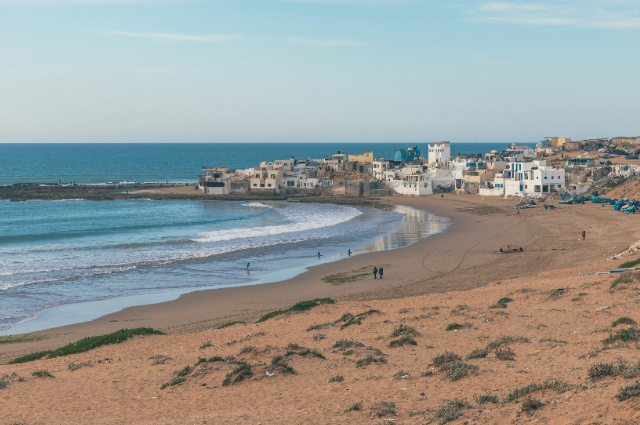
An "absolute humanitarian emergency" in Ceuta—a tiny Spanish autonomous city spanning roughly 19 to 20 square kilometres on the North African coast with a normal population of about 84,000—means a sudden, massive influx of roughly 49,000 to 72,000 migrants scaling fences or swimming around breakwaters from Morocco within a 24-to-48-hour window. This arrival rate equals 60% to 80% of the entire local population entering at once, entirely collapsing local infrastructure.
According to the Spanish Ministry of the Interior and the regional president, approximately 72,000 people entered Ceuta in less than 24 hours between July 30 and July 31. Ceuta is a Spanish enclave covering 18,000 square kilometres on the Moroccan coast, which has been under Spanish sovereignty since the late 16th century and, together with Melilla, represents the only land border between the European Union and Africa. Thousands of individuals arrived in Ceuta by swimming, utilising floats and inflatable mattresses, across the approximately five kilometres separating the coast from the Moroccan town of Fnideq, while others entered by breaching the land fence.
Most of the tens of thousands of migrants who swam into the Spanish exclave of Ceuta on Thursday have now returned to Morocco, escorted to the border by Spanish soldiers and police.
But the extraordinary surge of arrivals has left at least 72 people dead, their bodies pulled from the sea where they floated alongside abandoned rubber rings and flippers.
This week's events have also shaken Europe politically, once again exposing divisions over the sensitive issue of migration.
And they've left lingering questions about what sparked the sudden influx: whether social media posts promising an easy path to Europe just went viral or this was something more deliberate, even organised.
Spanish Prime Minister Pedro Sánchez, who travelled to Ceuta on Friday, described the mass crossing as “a violation of Spain’s territorial integrity” and blamed human trafficking networks for encouraging thousands of migrants to risk the dangerous journey. The traffickers deceive so many young people, and ultimately lead many of them to their deaths — whether in the ocean or, as in this case, at Spain’s border in the autonomous city of Ceuta,” Sánchez said.
The latest death toll marks a sharp increase from earlier estimates, underscoring the scale of what officials have described as a humanitarian emergency. Ceuta President Juan Jesús Vivas said around 60,000 migrants had entered the Spanish enclave since Thursday, equivalent to nearly 70 per cent of the city’s population, calling the situation “absolutely unsustainable.” Spain’s Interior Ministry later put the figure at around 50,000 crossings, while saying nearly 25,000 people had already returned voluntarily to Morocco.
The Supreme Court ruled earlier this month that migrants intercepted while trying to reach Ceuta and Melilla at sea cannot be returned in a sweeping manner under the special regime of border rejection for the enclaves.
Most immigrants had entered by swimming around the breakwaters of Tarajal and Benzú or by crossing on foot along the shoreline.
The root cause is economic opportunity; second-order causes may include climate change, social inequality, and repression. By 3 August, Spanish government officials said about 70,000 people had voluntarily returned to Morocco. Thousands, largely from sub-Saharan Africa, have been estimated to still be remaining in Ceuta. By 3–4 August, at least 111 migrants were reported to have died as a result of the incident.
The Guardia Civil said that crowds broke through the fences into Spain after overwhelming police at the city's breakwater. Video footage showed hundreds swimming across from the Moroccan side, using inflatable inner tubes and other flotation aids.
"The situation is absolute chaos," Rachid Sbihi, head of the association that represents Spain's Guardia Civil in Ceuta, told the Associated Press. "It's not possible to give precise numbers, but there are thousands of migrants crossing," he said, adding that the border had "totally collapsed."
The AFP news agency cited a spokesperson for the Spanish government's delegation in Ceuta as saying that nine people had died amid the offshore rush.
The response to the mass migration surge into Ceuta has triggered massive public protests, intense internal political fighting, and a major European diplomatic scramble. While the majority of the 60,000+ arrivals have been returned to Morocco, the thousands who remain—particularly hundreds of unaccompanied minors—have pushed local systems past their breaking point. Ceuta's Mayor-President, Juan Jesús Vivas, has openly disputed the central government's low estimates of remaining migrants. He claims up to 11,000 people are still stuck in the city. The local government is demanding the urgent creation of a closed mass detention centre to confine undocumented migrants and fast-track their deportations so they do not sleep on the streets.
References:
- www.thehindu.com
- www.aljazeera.com
- www.indianexpress.com
- www.ndtv.com
- www.bbc.com
- www.theobservatoryforhumanrights.com
- www.google.com