
From the continued ethnic violence in Manipur from May 2023 to a statewide sound protest in October 2026. The ongoing crisis in Manipur underscores the wide gap between merely restoring order and establishing enduring peace.
The Evening Manipur Refused to Stay Quiet
On the evening of October 23, 2026, the streets and roads of Imphal Valley, Manipur were filled with a different kind of protest. People from all over the surroundings banged metal plates and household items, utensils, sounded vehicle horns and sirens, and shouted slogans. For about thirty minutes, from approximately 7:30 p.m. to 8:00 p.m., thousands of residents participated in coordinating a sound protest across five districts.
This demonstration was particularly organized at the call of the Federation of Haomee, expressing anger over continued killings, the prolonged ethnic conflict, and the government's failure to restore peace in the region. The gathering became tense near the Kangla fort region, which serves as a historic centre of Manipur's political and cultural identity. Barricades were erected, and tear gas shells were used to disperse the protesters to avoid movement towards the Raj Bhavan area. No injuries were reported in the account published by NDTV on 24 October.
Why would people take to the streets with utensils and horns rather than relying only on speeches, placards or conventional marches?
The answer lies in the crisis that has lasted over the past three years. The sound protest was not the beginning of Manipur's struggle. It was another expression of public frustration after years of violence, displacement, uncertainty, and attempts to restore peace.
The noise was a form of expression to make people listen, yet the questions behind that October evening are far older. How did Manipur reach this point, what has changed since this conflict began, and mainly why does a crisis of this scale struggle for a solution from the nation?
May 2023: The Beginning of a Catastrophe
Manipur's conflict did not begin because of one argument. The conflict in Manipur has roots in a long and complicated history. Ethnic identity has played a role in shaping the situation. Many factors, including land rights, old grudges from the past, and different expectations about safety and self-rule, have all contributed to the tensions.
The Meitei people mostly live in the Imphal Valley. The Kuki-Zo and Naga communities are mainly found in the surrounding hill areas. These differences in where people live have led to disagreements over land, access to jobs and education, and even recognition of rights.
A big turning point came in March and April 2023. The issue of whether the Meitei community should be given scheduled tribe status became a point of contention. On April 14, the Manipur High Court asked the state government to look into this request. Tribal organizations strongly opposed it. They worried that giving the Meitei community scheduled tribe status might weaken protections that already exist for hill tribes.
The High Court's order was later challenged. In the end, the Supreme Court overturned the order. The damage was already done. Tensions had risen too high.
On May 3, 2023, a tribal solidarity march took place in the hill districts. It was a protest against the Meitei scheduled tribe demand. The march turned violent. Clashes broke out. These clashes quickly spread to parts of Manipur. Homes were burned. Religious buildings, schools, and other public buildings were destroyed. The situation spiraled out of control.
In response, curfews were imposed. The internet was shut down in some areas. Security forces were sent in. The situation turned into a humanitarian crisis. People were displaced. Supplies were limited. Fear and uncertainty gripped the region. The conflict had gone beyond politics.
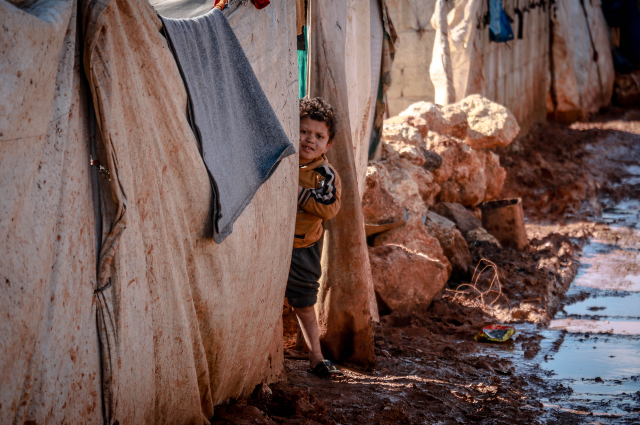
Families fled from their homes, communities became increasingly separated, and thousands of people sought refuge in relief camps. Many people were displaced and could no longer return to the places they had lived, studied, and worked. This crisis also deepened the mistrust between communities. Neighbourhoods that once accommodated people from different communities and backgrounds were divided by fear and insecurity.
The conflict therefore became more than a question of law and order. It threatened the relationships and shared spaces that make ordinary life possible.
Three Years of Continuous Violence and Human Displacement
The passing of time has not made the effects of May 2023 go away. In September 2026, Manipur's Home Minister Govindas Konthoujam Singh told the state Assembly that 306 people had been killed and 49 were still missing since the violence started, with those numbers recorded as of August 31, 2026. These are the numbers given to the Assembly, not a full and independent check of every event.
Behind these numbers are families who have lost people, people who have had their homes destroyed, students who have had their studies interrupted, and workers who have lost their jobs. Displacement is not about finding a place to sleep. It can mean not having access to work, health care, school, familiar markets, community connections, and a feeling of being part of a place.
The effects also reach people who have not left their homes. Fear can change where people go, which hospitals they use, if they feel safe going to school, and if they can visit friends or family from another group.
When people are separated for years, it becomes harder to trust each other again. Stories and blame can spread easily when communities have less chance to talk to each other. Even when the fighting slows down, the divisions it created can stay.
The challenge for humanitarians is two-fold: keeping people safe from violence and creating the conditions that let them live together without fear again.
What Has Changed, and Why Has Peace Remained Elusive?
Since the start of the conflict in 2023, there have been many changes within the political leadership, security, and administrative structure. However, they do not constitute a full resolution
The Chief Minister N. Biren Singh resigned in February 2025. This resulted in President's Rule occurring and the state coming under central control. Although there were security operations and relief efforts, there was still uncertainty over how to ensure the safety of the displaced communities and resolve political tensions.
An attempt at peace was made on April 5th, 2025. Members of both the Meitei and Kuki-Zo groups attended a meeting organised by the Union Home Ministry. Although this represented an important step forward, it was seen as a weak platform. There was uncertainty over how the groups were being represented, confidence in each other, and whether anything would come from the meeting.
President's Rule ended on February 4th 2026 as a new government led by an elected leader, Yumnam Khemchand Singh, was formed. Despite the political change, there were still security issues.
In April 2026, there was another outbreak of conflict. Two children were killed in Bishnupur district after coming into contact with an explosive. This sparked protests, which resulted in a further two civilian deaths.
Although there have been fewer conflicts, this does not mean there has been a true resolution. Although security measures can be used to prevent attacks, and political changes can lead to opportunities for talks, real peace will only be achieved once trust has been rebuilt, those in power have taken responsibility, and people can return safely.
Just because relief centres have closed does not mean displaced families are back to normal. They need to feel safe, have access to public services, stable jobs, and know they will not face any more conflict. Similarly, although political talks can happen at a high level, they will not be effective unless there is proper engagement with those at a grassroots level. There needs to be a willingness to resolve the underlying issues.
October 2026: When the Public Took to the Streets
Against this background, the October 23 sound protest became another expression of frustration.
The Federation of Haomee called on people across the valley to participate in a coordinated demonstration. Residents used everyday objects to make noise, transforming household utensils, drums and vehicle horns into instruments of public protest.
The demands included an end to continued killings, restoration of normalcy, implementation of the National Register of Citizens, identification of people whom the organisers described as illegal immigrants, and abrogation of the Suspension of Operations agreement with armed groups. These were the organisers' political and security demands; they should not be interpreted as independently established solutions to the conflict.
The demonstration also revealed that there is no single, universally shared account of what peace should look like. Different communities and organisations have their own fears, priorities and grievances. Some emphasise security and territorial integrity; others stress protection of tribal rights, political autonomy and safe return for displaced people. A solution that ignores the concerns of one community risks deepening the mistrust that has already made dialogue difficult.
The protest's symbolism was nevertheless striking. Rather than relying only on formal political channels, participants used a collective sound to communicate their dissatisfaction. Their actions suggested that, for those who joined, the existing responses had not provided sufficient reassurance.
Near Kangla Fort, police used barricades and tear gas to disperse the gathering. Such incidents raise questions about how authorities balance public order with peaceful expression. The circumstances of each police action must be assessed on the evidence available, but the larger issue remains: public frustration cannot be addressed permanently through crowd control alone.
The sound protest did not resolve Manipur's conflict. It made visible the continuing distance between official efforts to restore normalcy and the sense of security and confidence that many residents still seek.
Why Is Manipur Not Always a Major National Story?
One of the most difficult questions is why a crisis involving hundreds of deaths, prolonged displacement and continuing insecurity does not remain at the centre of national discussion every day.
It is important not to assume, without evidence, that all media organisations have deliberately ignored Manipur or that the issue receives no coverage. National and regional outlets have continued reporting on the conflict, including the recent sound protest. The more precise question is why the crisis can receive intense attention during a major outbreak and then lose prominence even while its consequences continue.
One reason may be the way news cycles operate. A dramatic event, a political announcement, or a violent incident often generates a concentrated burst of coverage. When the immediate event passes, stories about the longer process of rehabilitation, negotiations, and rebuilding trust can be more difficult to sustain. These developments are less easily represented by a single image or breaking-news headline, even though they shape people's lives over months and years.
Geography and access may also matter. Manipur is in India's Northeast, far from the country's largest national media centres. Reporting from conflict-affected areas can require local knowledge, reliable sources, and the ability to verify events across areas that may be difficult to access. Regional reporters and publications are especially important because they can follow developments that might not generate continuous national coverage.
Another challenge is the complexity of the conflict. A short report can describe an incident, but explaining the history of land rights, ethnic identity, political representation, armed groups, and competing accounts of security takes considerably more space. Simplifying these issues into a story of two opposing sides risks obscuring differences within communities and the experiences of people who do not fit neatly into either narrative.
There is also a difference between the visibility of a crisis and its actual severity. When a story disappears from the front page, its consequences do not disappear with it. A child who has missed school, a family unable to return home, or a patient unable to reach familiar healthcare services continues to experience the crisis long after national attention shifts elsewhere.
These are reasons to examine how coverage is sustained, not proof that the media have intentionally suppressed the story. Establishing whether Manipur has received less coverage than comparable crises would require a systematic study of news output over time, including the number of reports, their prominence, the range of sources used, and how frequently follow-up reporting appears.
Still, the question deserves to be asked: if a crisis continues after the headlines fade, who is responsible for ensuring that its unresolved consequences remain visible?
What Would Meaningful Progress Look Like?
Manipur's future cannot depend on security measures alone, nor can reconciliation be achieved by asking communities simply to forget what happened.
First, civilians need reliable protection from further violence. Incidents must be investigated, and allegations of wrongdoing must be addressed through credible legal processes. Accountability matters because unresolved grievances can make future violence more likely and undermine confidence in institutions.
Second, displaced families need practical and safe routes to rehabilitation. This includes secure housing, compensation where applicable, access to healthcare and education, and opportunities to rebuild livelihoods. Returning people to an unsafe environment would not amount to genuine recovery.
Third, political dialogue must address the underlying disputes rather than treating them as secondary to restoring routine administration. Discussions about land protections, constitutional status, political representation, security arrangements and relations between hill and valley communities require participation from affected groups. No single meeting can substitute for a sustained process.
Finally, rebuilding trust requires more than agreements between leaders. Local institutions, civil society organisations, women, young people and community representatives need opportunities to participate in peace-building. Shared public services, safe transport routes and practical cooperation can help create conditions in which people encounter one another as neighbours rather than only through competing political narratives.
Progress should be measured not simply by whether streets are quiet, but by whether people can travel safely, attend school, receive medical treatment, return to their homes and express their concerns without fear.
The Sound That Should Not Be Forgotten
The sound protest of October 23 was a moment within a much longer story. It did not begin the conflict, and it cannot resolve it. But it provides a window into a society where the desire for normal life remains entangled with fear, political disagreement and unresolved loss.
Since May 2023, Manipur has experienced changes in leadership, security arrangements and attempts at dialogue. Yet the official death toll, continuing concerns over missing people and the renewed violence reported in 2026 demonstrate how much remains unresolved.
The challenge is not merely to end the next outbreak of violence. It is to create conditions in which another outbreak becomes less likely: through accountability, inclusive negotiations, safe rehabilitation and institutions that people across communities can trust.
The question of national attention matters for the same reason. A crisis should not need a fresh outbreak of violence or an extraordinary protest to be considered newsworthy. The work of rebuilding lives deserves attention even when it is gradual, difficult, and less dramatic than the events that first brought a place into the headlines.
On that October evening, people used ordinary objects to make an extraordinary amount of noise. Whether their message leads to meaningful change remains uncertain. But the lesson is clear: the absence of headlines is not evidence of peace, and the sound of a protest should not be the only moment when a struggling society is heard.
References:
- Ratnadip Choudhury, NDTV, October 24, 2026. “Drums, Horns And Utensils: Thousands Join Sound Protest Across Manipur.”
https://www.ndtv.com - The Sangai Express, October 23, 2026. “Noise protest rings through streets of Imphal.”
https://www.thesangaiexpress.com - The Indian Express, April 10–11, 2026. “Expert Explains | The long, fractured history of Manipur, and the road ahead.”
https://indianexpress.com - The New Indian Express, September 3, 2026. “306 killed in ethnic violence since May 2023: Manipur home minister tells assembly.”
https://www.newindianexpress.com - People's Union for Civil Liberties (PUCL), September 1, 2025. “Manipur Conflict Two Years On: A Fragile Peace and a Deeply Unresolved Crisis.”
https://pucl.org - ThePrint / PTI, May 3, 2026. “Rallies, shutdown mark third anniversary of ethnic conflict in Manipur.”
https://theprint.in