
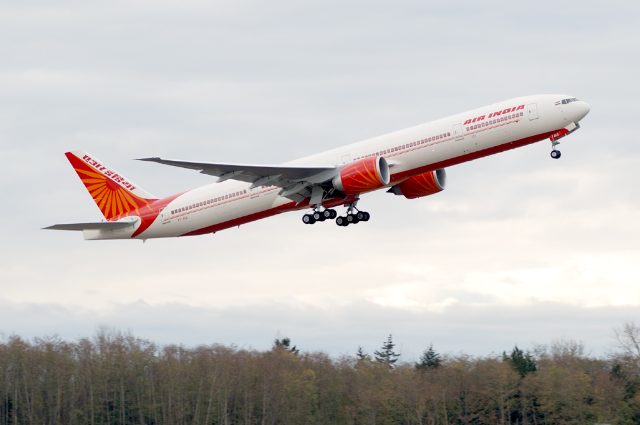
Organisations are often tested by how they add value through products, services, profits, and market position. But beneath every major organisational transformation lurks a bigger vulnerability and opportunity: the people. While technology can be replaced, strategies designed, and infrastructure modernised, sustainable transformation relies on employees with the skills, motivation, and support needed to change.
This principle is borne out in real life by Air India's recent transformation after it returned to the Tata Group. When it comes to reviving a carrier as high-profile as Air India, all eyes have been on new aircraft, technological upgrades, a brand refresh, and network expansion. But one of the most important aspects of this evolution has been occurring internally: How its human assets have been refurbished.
The Air India saga exemplifies, from an HRM point of view, how recruitment, workforce realignment, performance management and Learning & Development (L&D), onboarding or integration with employees after the acquisition, partly through digitalisation and corporate culture, can be frontiers for corporates aspiring to translate their ownership change into transformative success.
The HR Challenge Behind the Transformation
The challenges at the Tata Group-run airline went beyond just aircraft and customer service when it returned to the Tata fold in January 2022. Its workforce structure reflected years of low recruitment and limited organisational growth.
Air India data indicated that non-flying recruitment had been stalled for well over 15 years. Consequently, the average age of ground staff employees had reached nearly 54 years when the retirement age was58 (Air India, 2026a). This created an important human resource challenge.
An older workforce should not be seen as inherently negative. Long-timers carry institutional memory and professional knowledge; The major issue is when a company does not build a robust pipeline of younger talent, new capabilities and future leaders at the same time.
Air India thus faced the traditional strategic HRM problem of how to retain crucial organisational experience while rapidly building capabilities to meet the needs of a modern global airline. The response went beyond simply recruiting. As part of the broader organisational renewal programme, Human resource transformation gained prominence.
Recruitment as a Tool for Organisational Renewal
Talent acquisition is among the largest parts of Air India's HR transformation—and one of the most topical.
Meanwhile, the carrier said it has been hiring about 14,000 workers since last year. The workforce grew from 11,000 to over 24,000. Pilot numbers nearly doubled, and cabin crew also increased substantially (Air India, 2026a).
This large-scale recruiting had several purposes. First, it met the immediate human resources needs arising from the airline's growth. An expanding fleet and, importantly, routes beyond the domestic market required pilots, cabin crew, engineers, operational professionals, technology specialists, and managers.
Second, recruitment injects talent into the organisation. Analytics, digital technology, customer experience management (CEM), advanced revenue systems and data-driven decision-making are now the lifelines for a modern airline. These capabilities cannot always be built quickly using existing systems alone.
Third, recruitment helped renew the workforce. According to Air India, the average age of its non-flying staff fell from about 54 to 36 years, and that of cabin crew fell from about 46 to 30 (Air India, 2026a).
These numbers show that recruitment can be a strategy, not just a way to fill open positions. Talent acquisition can change the face, skill set, and future of an organisation (in terms of People).
Moving From Tenure to Performance
Another major HRM dimension in Air India's transformation was its push to strengthen performance management.
Traditional organisations sometimes base career advancement on seniority or long service. While experience should be noted and treasured, organisations in competitive industries also need clarity and accountability on performance indicators.
Air India said that, for corporate restructuring, the main challenge is replacing the earlier tenure-driven system with a merit-based performance culture. Air India introduced individual key performance indicators, balanced scorecards, and redesigned compensation structures to connect employee contribution with progression and rewards (Air India, 2026a).
Rise: The airline also pushed out an evaluation management system. AI. This is primarily relevant from an HRM perspective. A good performance management system must be more than annual employee scoring. It should clarify expectations, highlight development needs, deliver constructive feedback, and link individual performance to organisational goals.
When performance management is done right, it becomes a two-way communication system between employees and management. But a performance culture has its downsides. For instance, introducing new evaluation standards can make employees accustomed to traditional systems anxious. Thus, fairness, transparency and communication are of the highest importance.
KPIs alone will not transform your organisation into a performance-driven one. Employees need clarity on what is expected of them and confidence that evaluation systems are applied fairly.
Learning and Development as an Investment
Hiring thousands of employees was not enough to create change. Employees need to develop the competencies the organisation requires continuously.
Air India has also invested in training and a learning tree: an aviation-related training academy is being set up near Gurugram, while the digital route will be via Gurukul. AI (Air India, 2026a). These initiatives include building capabilities in cabin services, flight operations, engineering, and ground operations.
This is an important milestone regarding the role of training. Traditionally, HR departments treated training as an infrequent back-office activity. In the modern strategic HRM paradigm, learning is seen as a continuous process closely related to employee capability, organisational performance, and long-term competitiveness.
In some fast-changing industries, existing knowledge can become obsolete in real time. Thus, employees need reskilling or upskilling opportunities throughout their careers. Air India's growth story testifies that corporate transformation and the development of people capabilities must go hand in hand.
Digital HR and the Employee Experience
HR systems were historically seen as tools for employers; technology now enables HR to serve employees.
Air India has modernised several critical internal systems and adopted digital platforms for employee learning, communication, and day-to-day operations. Digitising employee-facing channels has replaced several paper-based processes, and the airline uses mobile-first tools across employee groups (Air India, 2026b).
There are ideas to earn huge profits from digital hr. Employees get faster access to information, managers use better data to make decisions, and administrative processes move faster, while HR teams spend less time on transactions.
Yet going from traditional HR to digital HR takes more than just purchasing a solution. Training Employees on New Systems and Technology must remain readily accessible; digital transformation should enhance the employee experience, not make it harder.
This distinction is essential. Digital HR should enable efficient people management, not replace the human touch.
Managing Culture During a Major Merger
Workforce integration with Air India has been one of the most complex facets of transformation since the merger.
This restructuring of Tata Aviation ultimately brought together four airlines into a group of 2 lead airlines. Full-service airline businesses of Air India and Vistara were integrated, as were the low-cost airline verticals.
A merger is not just a financial or legal event. They are also human events. Workers walking into a merged entity may have different cultures, pay structures, day-to-day operating styles, leadership, and professional identities.
It leaves human resource managers trying to answer one of the most difficult questions there is: how can they integrate different employee groups without killing their identity, equity, and inclusion?
Air India said its initiatives include efforts to align employee contracts, organisational structures and seniority while establishing common systems across a unified workforce. In the long run, sociologists argue this integration depends less on formal policies and more on whether employees stop seeing themselves as Wistron employees and start forming a shared organisational identity.
Can create a slogan, but cannot build culture. It develops through daily leadership behaviour, communication that shows fairness and recognition & employee experience.
Diversity and Workforce Transformation
In addition, Air India's composition has also changed significantly.
According to the company, overall gender diversity improved during this transformation, increasing from around 35% to 44% (Air India, 2026a). Women also make up a large share of its cabin crew workforce, although representation continues to evolve across other occupational groups.
As for those in HR, diversity should not be treated like a quota. A diverse workforce brings varied experiences, perspectives, and approaches to solving problems. But diversity is only beneficial when paired with inclusion.
believe everyone should have the opportunity to participate, feel included, and develop and progress regardless of their background or identity. Thus, organisations need to assess not only whom they recruit but also who is trained, promoted, given leadership roles, and whose voice counts in making meaningful decisions at any level.
Lessons for Human Resource Managers
The Air India case presents a few key learnings for students and practitioners of Human Resource Management.
One: HR strategy must support business strategy. Air India would realistically be unable to expand aircraft operations and international routes without simultaneously building up its workforce.
Second, recruitment needs to be based on organisation-wide capabilities, not merely headcount. The third one is that performance clarity is critical for organisational transformation. Employees must see how their work ladders up to the organization's high-level goals.
The fourth is that learning and development are as important as technological and strategic change. The fifth principle is that mergers require careful cultural integration. In reality, merging organisations on paper is much simpler than building trust among employees from both organisations.
Last but not least, the case shows that HR transformation is not a project. Focus is a continuous imperative across all stages of recruitment, learning, performance, culture and employee engagement.
The Human Side of Corporate Revival
The transformation of Air India is still an ongoing process, and its true success, or otherwise, will not be known for a very long time. The eventual result will be driven by operational performance, customer satisfaction, financial sustainability and employee experience.
However, already the transformation has one key lesson for Human Resource Management: Organisations are not transforming themselves. People transform organisations.
New aircraft may improve capacity. Technology may increase efficiency. Branding can affect public opinion. But aeroplanes are managed by employees- people themselves who serve customers, broker problems, and execute technology – not to mention transforming corporate strategy into day-to-day behaviour.
The Air India story thus is more than just the resurrection of an airline. It shows how critical it is to treat human capital like a strategic asset during large change.
The message for HR: Once organizations realize that people are not just assets to implement strategy, they will finally achieve transformation. They play an active role in making it.
References:
- Air India. (2022). Air India unveils transformation plan: Vihaan.AI. Air India Newsroom.
- Air India. (2023). Air India concludes first phase of transformation program - Vihaan.AI. Air India Newsroom.
- Air India. (2024). Air India completes merger with Vistara. Air India Newsroom.
- Air India. (2025). New Year greetings from Campbell Wilson, CEO & MD, Air India. Air India Newsroom.
- Air India. (2026a). Air India's people transformation: Rebuilt for scale, performance and the future. Air India Newsroom. https://www.airindia.com
- Air India. (2026b). Rebuilding the digital core: How technology is powering Air India's transformation. Air India Newsroom. https://www.airindia.com