
The Ocean Is Never Just Water
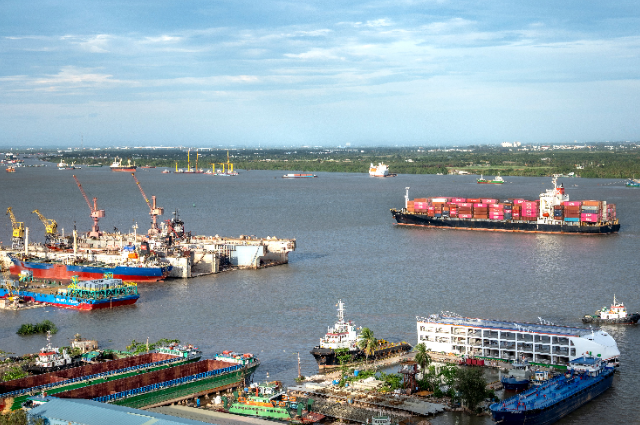
A ship leaving the Persian Gulf for East Asia does not simply cross an empty stretch of water. It passes through routes that carry oil, gas, food, machinery and the economic hopes of entire nations. A port on that journey may look like a collection of cranes and warehouses. Yet, depending on who operates it, who finances it, and what agreements govern its use, that same port can acquire a significance far beyond trade.
This is where geography becomes politics.
India occupies a central position in the Indian Ocean, one of the world's most important maritime regions. Its long coastline, proximity to major shipping routes and location between the Middle East and Southeast Asia give it natural advantages. For centuries, these waters connected Indian merchants with Africa, Arabia and the wider Asian world. Today, they connect India to energy supplies, international markets and the security of its own neighbourhood.
But geography offers an advantage, not a guarantee.
China's expanding economic, diplomatic and security presence across South Asia and the Indian Ocean has created a difficult strategic question for New Delhi: can India retain its regional influence while another major power builds deeper relationships with the countries surrounding it?
The concern is often described as the "String of Pearls." It refers to the network of ports, infrastructure projects, and strategic relationships China has developed or pursued along key maritime routes, including those near India's neighbourhood. The phrase is widely used in Indian strategic debate, but it is important to understand its limits. It is not the official name of a single, publicly declared Chinese military plan. Nor does every Chinese-funded port automatically become a naval base. Its value lies in describing a pattern of strategic concern, not in proving that every investment forms part of a secret military design.
Nevertheless, the concern is real. China's overseas infrastructure can strengthen its commercial reach, improve its access to maritime facilities and potentially provide logistical support to its navy. The degree of military access depends on political agreements, local consent, infrastructure and the circumstances of a crisis. These distinctions matter because India must prepare for genuine risks rather than fight imagined ones.
The challenge extends beyond the sea. The unresolved India-China boundary dispute, the 1962 war and the deadly confrontation in eastern Ladakh in 2020 have left a deep mark on bilateral trust. The two countries have continued diplomatic and military engagement, including efforts to manage tensions along the frontier. Yet border arrangements remain a source of strategic uncertainty.
India therefore faces a two-sided problem. On land, it must protect its territorial interests and prevent a dangerous military imbalance. At sea, it must preserve freedom of navigation and ensure that expanding Chinese access does not become a source of coercion. Between these two fronts lies South Asia, where smaller states are making decisions about trade, investment, infrastructure and security.
The central question is not whether India should oppose every Chinese project. That would be neither realistic nor wise. It is whether India can build a neighbourhood in which countries have enough confidence in Indian partnership to preserve their independence of choice.
That is the real test of the Neighbourhood First policy.
When Infrastructure Becomes Strategy
China's rise has changed the way economic development and national security interact. A port can support trade in ordinary times while offering useful facilities to naval vessels in certain circumstances. A railway can move passengers and goods while also having potential logistical value during a crisis. Digital networks, telecommunications systems and energy pipelines can improve development while creating dependencies that matter to national security.
None of these possibilities, by itself, proves hostile intent. The strategic meaning comes from the wider picture: ownership, access rights, debt obligations, security arrangements, geographical location and the ability of a host country to make independent decisions.
China's Belt and Road Initiative has given Beijing a powerful means of extending its international influence through investment and connectivity. The China-Pakistan Economic Corridor, the proposed and developing facilities at Kyaukpyu in Myanmar, and Chinese involvement in ports across the Indian Ocean illustrate different parts of this wider presence. In June 2026, China and Myanmar again pledged to advance the China-Myanmar Economic Corridor, including the Kyaukpyu deep-sea port and associated energy and transport infrastructure.
These projects are not identical. Some are operational, others remain under development, and their commercial and strategic significance varies. Treating them as a single, fully operational military network would exaggerate the evidence. Ignoring their combined potential would be equally careless.
The danger for India is not simply that China has more ports. It is that Beijing may gain a wider range of options during a crisis: access to supplies, better knowledge of maritime activity, stronger diplomatic leverage and closer links with governments whose decisions affect India's security.
Yet an important question is often left unanswered. Why do India's neighbours welcome Chinese investment in the first place?
The answer cannot be reduced to pressure or manipulation. These countries need roads, electricity, ports, jobs, digital services and access to global markets. They also have their own political interests. If China offers financing for a project that India has discussed for years without completing, a neighbouring government has a reason to consider the Chinese offer. If Indian trade rules or border procedures create difficulties, local businesses will seek alternatives.
This is where the strategic competition becomes uncomfortable for New Delhi. India may have stronger historical and cultural ties with its neighbours, but history does not automatically build a bridge, supply electricity or create employment. Goodwill is an asset. It is not a substitute for performance.
India must therefore understand that the strongest answer to the String of Pearls is not a louder slogan or a race to announce more projects. It is a record of reliable partnership that neighbouring societies can see and experience.
The Himalayan Front: Bhutan and Nepal
Bhutan: A Small Kingdom with Enormous Strategic Weight
Bhutan is a reminder that the size of a country does not determine its importance. Its location between India and China gives it a significance far greater than its population or economic size might suggest. The Doklam plateau, close to the tri-junction of India, Bhutan and China, is especially sensitive because of its proximity to the Siliguri Corridor, the narrow stretch of Indian territory connecting the northeastern states with the rest of India.
The 2017 Doklam standoff showed how a dispute over road construction in a small area could draw two major Asian powers into a serious confrontation. China and Bhutan have continued their boundary negotiations, and Bhutan's territorial questions must be understood in their own right rather than treated simply as an extension of India's dispute with China. China's claims in areas including Doklam and the Sakteng region have added to Indian strategic concerns. Recent boundary discussions have kept the issue relevant.
India's strongest position in Bhutan is not a claim to exclusive influence. It is the depth of a partnership that has produced visible benefits. Hydropower cooperation, trade, development assistance and close people-to-people relations connect the two countries. In a recent joint statement, the governments welcomed an Indian concessional line of credit worth ₹4,000 crore for energy projects in Bhutan.
This is precisely the kind of partnership India should expand: one that supports Bhutan's economic ambitions while respecting Bhutanese sovereignty. India should help complete energy and transport projects on time, widen access to Indian markets, improve digital links and support Bhutan's own development plans. It must also listen carefully to Bhutanese concerns about environmental protection, debt and the benefits that local communities receive.
A confident India does not need Bhutan to surrender its freedom of choice. It needs Bhutan to see cooperation with India as a dependable way to protect that freedom.
Nepal: Geography Cannot Be Replaced, but Trust Can Be Lost
Nepal's relationship with India is unusually intimate. Families, languages, religious traditions, trade routes and employment connect the two societies across a long, open border. These ties are difficult to reproduce through investment alone. Yet they have not prevented political tensions.
Nepal is a sovereign country with its own democratic debates, national interests and foreign policy. Its leaders have reasons to diversify economic relationships, and Chinese infrastructure offers Kathmandu a chance to reduce some of its dependence on Indian transit routes. China's Belt and Road Initiative has encouraged discussion of trans-Himalayan connectivity, although difficult terrain, high construction costs and the challenge of turning proposed routes into commercially viable transport links remain important constraints.
India should not respond by demanding that Nepal choose one neighbour over another. Such pressure could strengthen the very political forces in Kathmandu that favour greater distance from New Delhi.
The better approach is practical. India should improve the reliability of cross-border trade, expand electricity transmission and power purchases, complete road and rail links, support flood management and make border procedures less burdensome for ordinary people. Cooperation on energy is especially promising because Nepal's hydropower potential can serve its domestic needs while supplying electricity to India.
The two governments have continued to discuss physical connectivity, energy, digital links and development cooperation. These are not minor diplomatic subjects; they are the foundations of a relationship that can create shared economic interests for decades.
India also needs to recognise that Nepal's political disagreements with New Delhi cannot always be explained by Chinese influence. Some arise from genuine concerns about sovereignty, unequal economic dependence and the treatment of Nepalese interests. A partnership becomes stronger when it can survive criticism.
The Himalayas are a natural barrier, but they are not a permanent wall against political change. If India wants to remain Nepal's preferred partner, it must keep earning that position.
The Eastern Neighbourhood: Bangladesh and Myanmar
Bangladesh: Stability Through Mutual Interest
Bangladesh is central to India's eastern security and economic strategy. Its location offers opportunities for trade, transport and access to India's northeastern states. Cooperation can reduce transport costs, improve regional supply chains and create markets for businesses on both sides of the border.
China has become an important economic and military partner for Bangladesh. Chinese companies have participated in infrastructure development, while Chinese equipment has played a substantial role in Bangladesh's defence procurement. Dhaka, like many capitals, seeks to obtain investment and technology from multiple countries rather than depend on a single partner.
This is not inherently hostile to India. The problem arises if economic or security relationships create strategic dependencies that limit a country's freedom of action or give an outside power disproportionate influence over critical infrastructure.
Bangladesh's domestic political upheaval has made the relationship more delicate. India must therefore distinguish its long-term interests from its short-term preferences about political leadership. No government-to-government agreement can substitute for the confidence of the people who live across the border.
The most constructive response is to protect practical cooperation even when high-level relations become difficult. Cross-border electricity trade, customs modernisation, flood forecasting, public health cooperation and reliable transit arrangements can benefit both countries. The Bangladesh, Bhutan, India and Nepal (BBIN) framework also offers a route towards closer subregional transport and economic integration.
India should keep channels open across political parties and institutions, respect Bangladesh's sovereign decisions and avoid allowing temporary diplomatic disputes to destroy useful economic links. At the same time, both governments need effective arrangements to address border incidents, illegal trafficking, security threats and the concerns of border communities.
China may have greater financial resources for some projects. India has geographical proximity and the possibility of much deeper regional integration. The advantage will belong to the country that converts these assets into benefits that people can actually feel.
Myanmar: A Gateway with a Dangerous Road Ahead
Myanmar connects India's northeastern region with Southeast Asia and sits beside the Bay of Bengal. Its stability affects India's border security, regional connectivity and efforts to deepen ties with ASEAN countries. Yet civil conflict and political instability have made major development projects difficult to complete and operate safely.
China's position is particularly significant. The China-Myanmar Economic Corridor links plans for transport and energy infrastructure with China's interest in reaching the Indian Ocean through Myanmar's western coast. The Kyaukphyu deep-sea port and associated pipelines could provide China with an additional route for energy supplies and commercial activity. In June 2026, Beijing and Myanmar's authorities reaffirmed their intention to advance the corridor and related projects.
Security developments deserve attention, too. Myanmar adopted a Private Security Services Law in February 2025 that allows licensed foreign companies to provide security services, subject to national rules and approvals. Analysts have raised concerns that Chinese private security companies could protect Chinese infrastructure and personnel, increasing Beijing's role in the security environment surrounding its investments. That does not mean Chinese military forces have thereby acquired an unrestricted right to operate in Myanmar. The distinction between private security and a foreign military presence must remain clear.
India's answer includes the Kaladan Multi-Modal Transit Transport Project, designed to connect India's eastern seaboard with Sittwe Port in Myanmar, then use inland waterways and roads towards Mizoram. The project offers an alternative route for the Northeast and could reduce pressure on the Siliguri Corridor. Its strategic value, however, depends on completing the remaining links and ensuring that transport can function in an unstable security environment.
India must combine this infrastructure with careful diplomacy, border management, humanitarian assistance and engagement with relevant local stakeholders. Its policy should protect Indian security without losing sight of the people affected by Myanmar's conflict. A road that cannot be used safely is not a successful strategic asset, however impressive it looks on a map.
Pakistan and the Western Indian Ocean
Pakistan-Occupied Kashmir: A Dispute with Wider Consequences
The China-Pakistan Economic Corridor presents one of India's most direct strategic objections to the Belt and Road Initiative. The corridor passes through territory in Pakistan-occupied Kashmir that India claims as part of its sovereign territory. New Delhi has consistently objected to the project on this basis.
The dispute therefore connects three issues: the unresolved conflict over Jammu and Kashmir, China's strategic partnership with Pakistan and the possibility that infrastructure may create interests which Beijing would seek to protect during a crisis.
CPEC is more than a collection of roads and energy projects. It reflects a deep relationship involving investment, military cooperation and diplomatic support. If a serious India-Pakistan conflict occurred, China could face pressure to protect its personnel, projects and strategic interests. The extent of any Chinese response would depend on the circumstances; it should not be presented as an automatic military intervention.
The risk of a wider conflict is already serious because both India and Pakistan possess nuclear weapons. Any proposal involving the use of force to alter control of territory must therefore be assessed against the likely military, diplomatic and humanitarian consequences, not simply its symbolic appeal.
A further development emerged in 2026. Pakistan, Saudi Arabia and Türkiye signed the Makkah Joint Defence Agreement on 7 August. Pakistan's Foreign Ministry describes the pact as defensive and states that an armed attack on one member is to be regarded as an attack on all. On 20 October, Reuters reported that Türkiye had submitted the agreement to its parliament for ratification.
This agreement deserves attention, but its implications should not be exaggerated. It does not, on the available evidence, establish that Türkiye or Saudi Arabia would automatically enter a conflict over Kashmir. The precise nature of assistance would depend on the agreement's implementation, each state's decisions and the circumstances of any armed attack. The reported move towards ratification also means the legal position must be distinguished from the political significance of the pact.
For India, the sensible response is to deepen diplomatic engagement with Gulf countries and Türkiye, maintain strong defence preparedness and make clear that its territorial claims are not directed against the wider Muslim world or any particular civilisation. India's interests require careful statecraft, not the assumption that a regional defence agreement has already created a unified anti-India military front.
The objective must be to deter aggression, preserve diplomatic room for manoeuvre and avoid a conflict whose consequences could extend far beyond South Asia.
The Maldives: Influence Is Built in Ordinary Times
The Maldives occupies a strategically important position near major Indian Ocean shipping routes. Its islands matter for maritime awareness, regional security and the protection of commercial traffic. Relations with India have experienced periods of tension, including disagreement over the presence and role of Indian military personnel, but the relationship also rests on strong practical interests.
China's infrastructure and financing ties with the Maldives have attracted attention because of the country's location and financial vulnerabilities. Yet Maldivian governments are entitled to seek investment from different partners. The task for India is not to prevent every Chinese project but to ensure that Maldivian choices do not undermine regional security or place the country's economic independence at risk.
India's financial support offers a concrete example of how practical cooperation can matter. In October 2024, the Reserve Bank of India agreed to provide the Maldives with access to currency-swap support of up to US$400 million and ₹30 billion under the relevant framework. In April 2026, the Maldivian government confirmed that the US$400 million facility had been settled and welcomed approval for the first withdrawal under the ₹30 billion swap window.
This support demonstrates that India's role is not confined to military security. It can also help a neighbouring economy manage immediate financial pressure. Such assistance should be transparent, financially responsible and designed to strengthen long-term economic resilience.
India should continue investing in maritime cooperation, climate adaptation, healthcare, tourism links, renewable energy and skills development. For an island nation facing environmental and economic pressures, these issues are not secondary to national security; they are national security.
The Indian Ocean will not become more stable because India insists that the Maldives is within its sphere of influence. It will become more stable when Maldivians see a partnership with India as useful, respectful and dependable.
India's Strategic Position: A SWOT Analysis
India's position in this contest cannot be measured by counting ports, comparing defence budgets or listing diplomatic visits. Its real strength lies in the combination of geography, economic opportunity, cultural connections and the ability to build lasting partnerships. Its weaknesses, however, are equally important because strategic opportunities are easily lost when domestic capacity fails to match national ambition.
Strengths: Geography, Relationships and Strategic Independence
India's greatest natural advantage is its position in the Indian Ocean. Its peninsular geography places it near important shipping routes, while its island territories add to its maritime reach. This does not amount to absolute control over the ocean. International shipping operates under international law, and other powers maintain substantial naval capabilities. Still, India's location gives it valuable opportunities for maritime surveillance, search and rescue, anti-piracy operations and cooperation with other coastal states.
Its second strength is its network of relationships with neighbouring societies. Shared languages, religious traditions, family connections, education and trade create links that infrastructure alone cannot reproduce. India also has experience in providing emergency assistance, disaster relief, medical support and development cooperation. When used with sensitivity, these relationships can support trust across political differences.
A third strength is India's strategic independence. New Delhi can cooperate with the United States, Japan, Australia and European partners while maintaining relationships with other powers. The Quad provides a platform for maritime cooperation, infrastructure discussions and other forms of coordination in the Indo-Pacific. India need not become part of a rigid military bloc to benefit from partnerships that improve its security and economic position.
Weaknesses: The Gap Between Ambition and Delivery
India's most damaging weakness is the gap that can emerge between announcing a project and completing it. Delays, land acquisition problems, difficult terrain, funding constraints and administrative barriers can weaken the value of cross-border connectivity. A neighbour waiting for a road or railway cannot benefit from a promise indefinitely.
Economic differences also matter. China possesses a much larger industrial and financial base, allowing it to support overseas projects on a scale that India cannot always match. India should not attempt to compete by spending without considering the long-term costs. Nor can it assume that cultural familiarity will compensate for poor service, unreliable transport or difficult trade procedures.
Border infrastructure presents another challenge. Difficult terrain along the Himalayan frontier requires roads, tunnels, airfields, communications and logistics systems capable of supporting both civilian development and military preparedness. Such infrastructure must be developed with attention to environmental limits and the needs of local communities.
India must also improve coordination among its ministries, state governments, development agencies and security institutions. A project can be economically attractive yet strategically ineffective if the agencies responsible for its different stages do not work together.
Opportunities: A More Connected and Resilient Region
India has an opportunity to present itself as a major manufacturing and technology partner at a time when many countries want more diverse supply chains. Its digital public infrastructure, including payment systems and digital identity capabilities, can support cooperation when adapted to local laws and needs. Regional electricity markets, renewable energy projects, telecommunications links and cross-border transport could create economic ties that are difficult to replace.
The Bay of Bengal offers particular promise. Greater cooperation among India, Bangladesh, Bhutan, Nepal, Myanmar, Sri Lanka, Thailand and other regional partners could improve trade, disaster response and maritime security. BIMSTEC, BBIN and other practical frameworks can help advance specific projects even when broader regional organisations face political obstacles.
India can also use partnerships with Japan, Australia, the United States and European economies to support investment, technology transfer and maritime awareness. The aim should not be to create a rigid anti-China coalition. It should be to expand the number of reliable economic and security options available to regional countries.
Threats: Strategic Pressure and the Risk of Miscalculation
The most serious threat is the possibility of a simultaneous crisis on India's northern and Western Fronts. A confrontation with China combined with conflict involving Pakistan would place heavy demands on military logistics, intelligence, economic resilience and diplomatic capacity. Nuclear weapons make the consequences of miscalculation especially grave.
A second threat is the growth of strategic dependence. If a country becomes heavily reliant on one external power for essential infrastructure, technology, financing or security, its room for independent decision-making may narrow. This risk must be evaluated project by project; debt alone does not prove coercion, and foreign investment is not automatically a threat to sovereignty.
The emerging Makkah defence pact adds another factor to India's regional calculations, but its actual military implications remain dependent on implementation and future decisions. It is a reason for careful diplomatic assessment, not a basis for assuming that every neighbouring or Gulf country will support Pakistan in a conflict.
Finally, India must guard against a threat of its own making: strategic overreaction. If every Chinese investment is treated as hostile, India could alienate partners whose cooperation it needs. If every disagreement with a neighbour is interpreted as evidence of a foreign conspiracy, diplomacy will become harder precisely when it is most necessary.
The purpose of strategic analysis is to distinguish a genuine threat from an uncomfortable but manageable reality.
From Encirclement to Partnership: India's Strategic Reform Blueprint
India needs a response that is firm about national security and generous in its understanding of neighbouring countries' needs. Military preparedness is necessary, but it must be joined to economic delivery, diplomatic patience and institutional reform.
Build a Maritime Network, not a Race for Bases
India should strengthen maritime awareness through coastal surveillance radar systems, information-sharing arrangements, satellite monitoring, naval cooperation and the development of its own ports and logistics facilities. Cooperation with island nations and regional partners can help identify suspicious activity, protect shipping and improve responses to natural disasters.
India's access and logistics arrangements with partner countries can expand its operational reach. Facilities and agreements involving Duqm in Oman, Sabang in Indonesia and Réunion in the wider Indian Ocean region are relevant to different aspects of maritime engagement, although their legal arrangements and operational roles are not identical.
The idea sometimes described as the Necklace of Diamonds captures India's effort to develop strategic relationships and access points around the Indian Ocean. But the aim should not be to encircle China in return. A policy based on reciprocal encirclement would deepen insecurity and make every port a potential flashpoint.
India should instead develop the capacity to monitor maritime activity, protect its interests and cooperate with regional countries while respecting international law. Its navy must remain credible, but the broader objective should be a stable ocean in which no power can easily threaten the lawful trade of others.
Replace Project Announcements with Project Delivery
India needs a stronger system for managing international development projects from the first feasibility study to long-term maintenance. A dedicated project-delivery mechanism could coordinate financing, clearances, contractors, environmental assessments and diplomatic follow-up. Public reporting should make it possible to track progress and understand delays.
The goal is not to imitate China's financial model or ignore the risks of large infrastructure projects. It is to compete through reliability. A smaller project completed on time, within a responsible budget and with clear benefits for local communities can build more lasting influence than a grand project left unfinished.
India should also design projects with the receiving country's needs in mind. Local employment, fair procurement, environmental safeguards and transparent financing are not obstacles to strategic influence. They help ensure that a partnership remains politically sustainable after the original leaders have left office.
Make Digital Cooperation a Shared Public Good
India's experience with digital payments and public digital systems offers opportunities for regional cooperation. Interoperable payment networks can make trade easier for small businesses, help workers transfer money and reduce transaction costs. Digital links can also support customs clearance, disaster warnings and access to public services.
But digital diplomacy must not become another instrument of dependence. Partner countries should retain control over their data, establish clear privacy protections and have a genuine say in how systems operate. India should provide technical support and training rather than expect neighbouring governments to adopt Indian systems without adaptation.
If a Nepalese trader, a Bangladeshi business owner or a Maldivian tourism operator finds it easier to work with India because digital systems function well, regional integration gains a practical foundation. This is influence through usefulness, not pressure.
Give Neighbourhood First a Measurable Standard
India should judge its neighbourhood policy not only by the value of aid announced or the number of agreements signed, but by whether people benefit from them. A regional project should be assessed against clear measures: completion time, trade growth, electricity supplied, jobs created, transport costs reduced and public satisfaction.
Regular consultations with local businesses, communities and civil society can identify problems before they become diplomatic disputes. Where a project causes harm or fails to deliver its promised benefits, India should be prepared to review it rather than defend it simply because it carries national prestige.
The policy must also survive changes of government. India's relationships should extend beyond the leader currently in office to parliaments, local administrations, universities, professional groups and the wider public. This is especially important in countries experiencing political transitions.
Neighbourhood First becomes credible when cooperation continues through disagreement.
Protect India's Borders Without Abandoning Diplomacy
India must maintain strong defence capabilities, improve border infrastructure and strengthen intelligence-sharing with trusted partners. It should prepare for the possibility of a two-front crisis without assuming that such a crisis is inevitable. Military readiness and diplomatic engagement are not opposing choices; each can reduce the risk that the other will be tested.
On Pakistan-occupied Kashmir, India must continue to state its territorial position clearly while assessing the consequences of any proposed action under international law and the realities of regional security. The Makkah defence pact makes diplomatic assessment more important, but it does not justify treating military escalation as unavoidable.
India should maintain communication with Saudi Arabia and Türkiye, strengthen its broader Gulf relationships and avoid framing the dispute in civilisational or religious terms. Diplomatic channels can help reduce misunderstandings even when territorial disagreements remain unresolved.
With China, India should combine firmness on sovereignty with working channels for border management, military communication and crisis prevention. The diplomatic and military discussions reported in August 2026, including plans for additional communication channels, show why these mechanisms remain important.
No serious national security strategy should depend on the hope that a crisis will never occur. Equally, no wise strategy should make a crisis more likely through unnecessary provocation.
Make Regional Cooperation Worth Defending
India should give greater priority to regional electricity trade, transport links, disaster response, health cooperation, climate adaptation and maritime safety. These may appear less dramatic than military agreements, but they address the everyday interests that shape public opinion and government policy.
A more connected South Asia would create shared interests across borders. Businesses would depend on stable transport. Energy producers would benefit from reliable markets. Communities would gain from coordinated flood warnings and disaster relief. Students and workers would develop relationships that survive political tensions.
This is not a romantic claim that trade automatically prevents conflict. Economic dependence can create vulnerabilities, and political disputes can disrupt profitable relationships. But well-designed regional cooperation raises the cost of confrontation and gives governments more reasons to preserve stability.
India's greatest opportunity is to make the neighbourhood more prosperous without demanding political obedience in return.
The Real Contest Is for Trust
China's growing presence around India is a strategic reality that New Delhi cannot afford to ignore. Its infrastructure investments, expanding diplomatic relationships and potential access to important maritime facilities create challenges that require careful planning. The unresolved Himalayan boundary, the China-Pakistan partnership and the growing importance of the Indian Ocean make India's security environment more complicated than it was a generation ago.
Yet there is a danger in describing this entire landscape as a tightening ring from which India must somehow escape. Such a picture makes neighbouring countries appear like pieces on a chessboard rather than sovereign nations with their own ambitions, fears and choices. It also risks hiding a difficult truth: India's regional influence depends partly on what India itself does.
Bhutan needs a partnership that supports its development and respects its independence. Nepal needs reliable connectivity and fair economic opportunities. Bangladesh needs cooperation that can survive political change. Myanmar needs safe and practical routes to development amid a devastating conflict. The Maldives needs economic stability and maritime security. Each country has different interests, and none should be expected to fit into a single Indian strategic design.
India must be strong enough to defend its borders, capable enough to protect its maritime interests and confident enough to accept that its neighbours will maintain relationships with other powers. What it cannot afford is to become so anxious about Chinese influence that it neglects the work required to sustain its own.
The lesson of the String of Pearls is therefore larger than the contest between two Asian giants. It is a lesson about the relationship between power and legitimacy. Money can build a port. Technology can connect a railway. Military agreements can create new forms of access and cooperation. But none of these guarantees that people will trust the country behind them.
Trust is built more slowly. It grows when a promised bridge is completed, when electricity arrives reliably, when a neighbour receives assistance without being humiliated, and when a disagreement does not destroy an entire relationship. It also grows when a country can defend its interests without treating every difference as an act of hostility.
India's future as a major power will depend on its ability to bring these qualities together. It must strengthen its armed forces without making confrontation its defining purpose. It must expand its economy without neglecting the countries closest to it. And it must use its geography as an advantage while remembering that geography alone cannot create loyalty.
The Indian Ocean will remain a place of competition. The Himalayas will remain a difficult frontier. China will continue to pursue its interests, just as India and its neighbours will pursue theirs. There is no permanent strategic victory waiting at the end of a road, a naval deployment or a diplomatic summit.
The more meaningful victory would be a South Asia in which countries possess greater freedom to choose their partners, greater capacity to develop their economies and greater confidence that disputes need not lead to conflict.
That is how India can answer encirclement without becoming imprisoned by the idea of encirclement itself.
A nation does not secure its neighbourhood merely by preventing others from entering it. It secures its neighbourhood by giving its neighbours compelling reasons to build their future alongside it.
References:
- Bhutan Ministry of Foreign Affairs — India-Bhutan cooperation and the ₹4,000 crore energy credit line.
- Nepal Ministry of Foreign Affairs — India-Nepal discussions on connectivity, energy and development cooperation.
- Myanmar Ministry of Foreign Affairs — China-Myanmar cooperation and the China-Myanmar Economic Corridor, June 2026.
- S. Rajaratnam School of International Studies — Chinese private security companies in Myanmar.
- Prime Minister's Office, India — Kaladan project and alternative connectivity for India's Northeast.
- Prime Minister's Office, India — India-Maldives economic and maritime security partnership.
- Maldives Ministry of Foreign Affairs — Currency-swap facility update, 23 April 2026.
- Pakistan Ministry of Foreign Affairs — Official statement on the Makkah Joint Defence Agreement, August 2026.
- Reuters — Türkiye's submission of the Saudi-Pakistani-Turkish defence pact for parliamentary ratification, 20 October 2026.
- Reserve Bank of India — Official material on currency-swap arrangements and financial cooperation.
- India's Ministry of External Affairs — Official statements, bilateral relations and regional cooperation.
- Observer Research Foundation — Research and analysis on India's neighbourhood, the Indo-Pacific and maritime strategy.