
A Life Changed in a Moment
Have you ever imagined what you would do if, in a single moment, your life changed completely? The plans you had made might suddenly seem impossible. The future you once imagined could become uncertain, and even ordinary daily activities might require a new kind of courage.
For Arunima Sinha, this was not a hypothetical question. In 2011, a tragic incident during a train journey changed the course of her life. She suffered serious injuries and lost her left leg. Before the incident, she had been a national-level volleyball player with ambitions of building a future through sports. Afterwards, she faced the difficult task of recovering physically and emotionally while learning to live with a prosthetic leg.
Yet her story did not end with that incident.
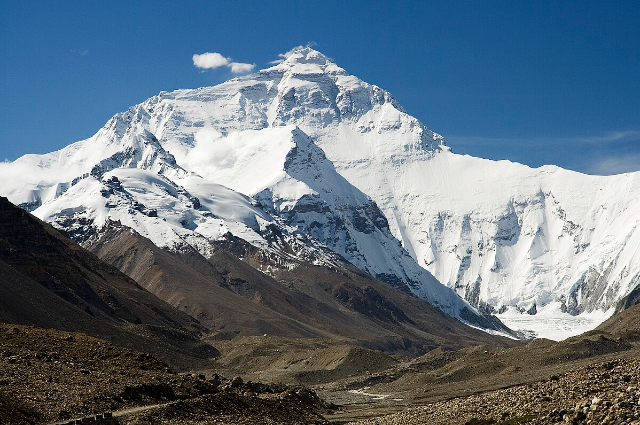
Just two years later, on 21 May 2013, Arunima Sinha reached the summit of Mount Everest. She became the first female amputee to climb the world's highest mountain above sea level, an achievement recognised by Guinness World Records.
Her journey is remarkable, but it is important to understand what makes it meaningful. It is not simply a story about a woman climbing a mountain. It is about a person who faced an unexpected change, found a new goal, and worked towards it through training, patience, and determination.
Her experience also raises a question that deserves our attention: how often do we judge people by their limitations before giving them the opportunity to demonstrate their abilities?
Before Everything Changed
Before the world knew her as a mountaineer, Arunima Sinha was already an athlete. She had competed at the national level in volleyball and had ambitions for her future. Sports had given her experience of discipline, competition, and the importance of regular practice.
Her life, however, took an unexpected turn in 2011.
According to accounts published by the Government of India, Sinha was travelling by train to take an examination connected with recruitment to the Central Industrial Security Force when a robbery attempt took place. She resisted the attackers and was thrown from the train. She suffered serious injuries, and doctors eventually had to amputate her left leg.
The physical consequences were severe, but the incident also changed the direction of her sporting ambitions. An athlete who had once relied on her physical abilities now had to learn new ways of moving and carrying out everyday activities.
It is easy to describe such an experience in a few sentences. Understanding its personal impact is much harder. Recovery from a major injury can involve pain, uncertainty, frustration, and the need to adjust to changes that were never part of a person's plans.
We should not pretend that determination makes such difficulties disappear. Nor can we know every thought and feeling Sinha experienced during her recovery. What we can see from her subsequent actions is that she began looking towards a different future.
The incident changed her circumstances, but it did not erase her interest in achievement.
A Dream Born During Recovery
While recovering at the All India Institute of Medical Sciences in New Delhi, Sinha decided that she wanted to climb Mount Everest.
It was an extraordinary ambition. Everest is not a mountain that can be climbed through enthusiasm alone. Its extreme altitude, severe weather, difficult terrain, and limited oxygen create serious risks even for experienced mountaineers.
For Sinha, there was an additional challenge. She was recovering from major injuries and had to learn how to climb with a prosthetic leg. Her goal would require her to develop new physical skills while preparing for an expedition in one of the world's most demanding environments.
Some people might have wondered why she had chosen such a difficult objective. Others might have considered it unrealistic. Whatever doubts surrounded her ambition, the important question was whether she could prepare for the challenge in a serious and responsible way.
She began taking practical steps towards her goal.
Sinha received mountaineering training at the Nehru Institute of Mountaineering in Uttarkashi. She also sought guidance from Bachendri Pal, the first Indian woman to climb Mount Everest, and trained with support from the Tata Steel Adventure Foundation.
In 2012, she climbed Island Peak as part of her preparation for Everest. This experience helped her develop the skills and experience needed for a more demanding expedition.
These details reveal something important about her journey. A dream may begin with a moment of inspiration, but it becomes achievable only when it is supported by action.
Sinha did not simply decide that she would climb Everest and wait for circumstances to change. She trained, learned from experienced mountaineers, and worked towards her goal step by step.
That is where the difference between wishing and preparing becomes clear.
When Other People Doubt Your Abilities
One of the difficulties faced by people who pursue unusual goals is that others may struggle to believe in them. When someone has a disability, those doubts can become even more pronounced.
Sinha has spoken publicly about the doubts she encountered and how people who initially questioned her eventually became supporters. Her experience reflects a wider problem: people with disabilities are sometimes judged by what others assume they cannot do rather than by their actual abilities.
This way of thinking can have consequences far beyond hurt feelings. It can affect access to education, employment, sports, and other opportunities. A person may never receive the chance to develop a skill because someone else has already decided that the effort is pointless.
Of course, recognising someone's potential does not mean ignoring genuine risks. Mountaineering is dangerous, and any expedition must be approached with appropriate training, equipment, planning, and judgement. Encouragement should never replace preparation.
The real problem arises when concern becomes an automatic rejection of someone's ambitions.
Sinha's journey challenged such assumptions. Rather than relying only on words to convince others, she prepared for the task she had chosen. Her training and eventual achievement gave people a reason to reconsider their expectations.
There is a lesson here for all of us. Before deciding that someone cannot succeed, we should ask whether we understand their abilities, their circumstances, and the support they need.
Sometimes, the greatest barrier a person faces is not a lack of talent but a lack of opportunity. Giving someone a fair chance does not guarantee success, but refusing them that chance makes success much harder.
Fifty-Two Days on the Road to Everest
On 1 April 2013, Arunima Sinha began her Everest expedition. She climbed with Susen Mahto, an instructor associated with the Tata Steel Adventure Foundation.
The expedition lasted 52 days. At 10:55 a.m. on 21 May 2013, Sinha reached the summit.
It was a historic moment. Guinness World Records recognises her as the first female amputee to climb Everest, and the Government of India has documented her achievement.
Reaching the summit was the visible result of months of preparation, but the climb itself required far more than a strong desire to succeed. High-altitude mountaineering demands technical knowledge, physical endurance, cooperation, and the ability to make careful decisions when conditions become difficult.
For Sinha, using a prosthetic leg added another dimension to the challenge. She had to apply her training in an environment where every movement and decision mattered.
It would be misleading to suggest that she succeeded because she refused to feel fear or because determination made her invulnerable. Courage does not mean that danger disappears. It means approaching a difficult situation with preparation and judgement, while understanding that the risks remain real.
Her achievement was extraordinary precisely because the challenge was real.
When we hear about a person reaching the top of a mountain, we often picture the final moment: the summit, the photographs, and the celebration. We rarely see every hour of preparation that made that moment possible.
Sinha's story reminds us that major achievements are often built through many smaller efforts. Training sessions, lessons from experienced people, practical decisions, and the willingness to continue learning may receive less attention than the final record, but they are essential parts of the journey.
What Her Achievement Tells Us About Disability
Arunima Sinha's climb carried a message beyond the world of mountaineering. It challenged the assumption that losing a limb must bring an end to a person's ambitions.
A disability can create real difficulties. It may affect movement, access to public spaces, participation in sports, or the ability to carry out particular tasks. These challenges should not be ignored or romanticised.
At the same time, disability does not describe every aspect of a person's identity or potential. People have different interests, skills, circumstances, and ambitions. One person's experience cannot tell us what every other person with a disability can or should achieve.
Sinha's accomplishment is significant because it widened public understanding of what may be possible when determination is combined with preparation and support.
It also encourages us to think about how society responds to people who need different kinds of assistance. Are schools making activities accessible? Do sports programmes provide appropriate facilities and equipment? Are people given opportunities based on their interests and abilities, or are assumptions made about them before they can even begin?
These are practical questions, not merely emotional ones.
A society becomes more inclusive when it recognises both the challenges people face and their right to participate. That may require accessible buildings, suitable equipment, trained instructors, financial assistance, and changes in the attitudes of others.
Sinha's achievement can encourage people to reconsider their assumptions, but it should not create the expectation that every person with a disability must accomplish something extraordinary to earn respect.
A person's dignity does not depend on climbing Everest, winning a medal, or setting a world record. Respect is something people deserve without having to prove that they are exceptional.
The deeper lesson is not that everyone must overcome every obstacle. It is that people should have a fair opportunity to develop their abilities and choose meaningful goals for themselves.
Success Is Not Always a Solo Journey
Inspirational stories sometimes focus so heavily on an individual's determination that everyone else involved becomes invisible. Arunima Sinha's journey offers an opportunity to recognise a more complete picture of achievement.
Her commitment was central to her success, but she also trained at a recognised mountaineering institute, sought guidance from an experienced climber, and received support from an adventure foundation.
This does not diminish her accomplishment. Instead, it helps us understand what made it possible.
A good mentor can help someone identify mistakes, develop skills, and prepare for challenges that would otherwise be difficult to understand. Training institutions can provide technical knowledge and structured learning. Supportive organisations can make equipment, expertise, and opportunities more accessible.
No one can undertake another person's effort on their behalf, but support can make that effort more effective.
The same principle applies to everyday life. A student preparing for an examination may depend on teachers, family members, and classmates. An athlete needs coaching and practice facilities. Someone learning a new profession may benefit from guidance and encouragement.
Asking for help is not a sign of weakness. Often, it is part of learning how to succeed.
Sinha's story therefore teaches two connected lessons: personal responsibility matters, and so does the environment in which a person pursues a goal.
If we want more people to achieve their potential, we should celebrate individual effort while also building the systems that help people learn, train, and participate.
From Personal Achievement to Social Impact
Following her Everest ascent, Sinha received public recognition for her achievement. The Government of India records that she was awarded the Padma Shri in 2015 and received the Tenzing Norgay National Adventure Award.
Her public story has also been associated with an ambition to establish a sports academy for underprivileged people and people with disabilities.
This adds another dimension to the discussion of success. Achieving a personal goal can be deeply meaningful, but recognition can also create opportunities to draw attention to the challenges faced by others.
Sports, when made accessible, can help people develop confidence, discipline, teamwork, and physical skills. They can provide opportunities for young people to discover their interests and learn how to work towards goals.
However, making sports accessible requires practical support. It is not enough to tell people to believe in themselves. They may also need suitable facilities, trained coaches, appropriate equipment, funding, and a welcoming environment.
Consider a young student who is interested in athletics but cannot afford the necessary equipment. Telling that student to be determined may encourage, but it does not solve the financial problem. Providing access to equipment and coaching can turn encouragement into a real opportunity.
This is where Sinha's story can inspire action beyond admiration.
Schools can consider whether students with different needs are able to participate in their activities. Communities can examine whether their sporting facilities are accessible. Organisations can look for ways to support talent that might otherwise go unnoticed.
Not every reader will be able to create a major institution or fund a sports programme. Even small changes can matter. Treating someone fairly, including a classmate in an activity, or refusing to make assumptions about another person's abilities can contribute to a more respectful environment.
An inspiring story becomes more useful when it encourages us to think about what we can do in our own surroundings.
Lessons for Young People
There are several lessons young people can take from Arunima Sinha's experience.
First, a setback does not have to decide your entire future. Life may change in ways we cannot predict. Some losses are permanent, and some difficulties cannot be solved quickly. Even so, new goals and possibilities may emerge as circumstances change.
Second, ambition needs a practical plan. It is easy to become excited about a dream. The harder task is identifying what must be learned, how much preparation is required, and what steps should come first. Sinha's training shows that meaningful progress involves more than motivation.
Third, learning from others is valuable. Her preparation involved experienced mountaineers and organised training. We should not assume that we must know everything before we begin. Seeking guidance can help us understand challenges and make better decisions.
Fourth, we should not allow other people's assumptions to define us. Advice and criticism can sometimes be useful, especially when they identify real weaknesses or risks. But an assumption based only on someone's appearance or circumstances should not automatically determine what they are capable of doing.
Fifth, we should recognise the role of support. Individual effort matters, but opportunity also matters. A fair society tries to ensure that people have access to the resources and assistance they need to develop their abilities.
These lessons do not apply only to people pursuing extraordinary achievements. A student preparing for a difficult examination, learning a new language, or recovering from disappointment can use the same principles: set a realistic goal, practise consistently, seek guidance, and learn from setbacks.
Our challenges may be very different from Sinha's, and we should not compare ordinary difficulties with the dangers of climbing Everest. Nevertheless, her experience gives us a useful way to think about perseverance and preparation in our own lives.
The Meaning of Reaching the Summit
On 21 May 2013, Arunima Sinha reached the summit of Mount Everest and became the first female amputee to climb the mountain. Her achievement followed a life-changing train incident, a difficult recovery, specialised mountaineering training, and a demanding expedition.
Her story deserves to be remembered not only because it produced a historic record, but also because it challenges us to think more carefully about human potential.
She did not reach Everest simply by wishing for success. She prepared for a demanding challenge, learned from experienced people, and continued working towards a goal that required considerable effort. Her journey shows the importance of determination, but it also shows why training, mentorship, and support should not be overlooked.
Her experience also reminds us that a person should never be reduced to a single event or physical condition. People deserve opportunities to learn, participate, and pursue their ambitions without being limited by assumptions made about them.
We do not all need to climb the world's highest mountain to accomplish something worthwhile. For one person, success may mean completing an education. For another, it may mean developing a skill, helping a community, or finding the confidence to begin again after a difficult experience.
The goals may differ, but the importance of preparation, patience, and opportunity remains.
Arunima Sinha's journey cannot promise that determination will make every dream possible. Real life involves limitations, risks, and circumstances beyond individual control. What her achievement does show is that we should be careful before deciding that a person's future has already been determined by adversity.
Perhaps the most valuable lesson from her story is this: we should not measure a person's possibilities only by the difficulties they have faced. We should also recognise their efforts, respect their choices, and help create the conditions in which their abilities can grow.
The summit was the destination of Sinha's expedition. The wider meaning of her journey lies in the questions it leaves with us—about courage, opportunity, inclusion, and the way we judge one another.