
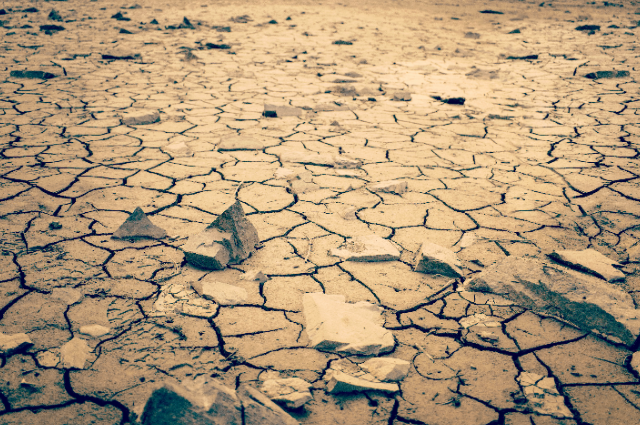
Source: Joshua Woroniecki on Unsplash.com
Water scarcity is often understood as a problem caused by insufficient rainfall. In many rural areas, however, the situation is more complicated. A region may receive seasonal rainfall and still experience a serious shortage of water because groundwater is extracted faster than it can be replenished. This problem becomes particularly important in agricultural communities, where the livelihoods of families depend on the availability of water throughout the year.
The experience of Gadakwadi, a village in Khed tehsil of Pune district, Maharashtra, provides an important case study of community-based groundwater management. The village faced difficulties associated with seasonal water shortages, declining groundwater availability and the pressure of agricultural demand. Its experience attracted attention because local water management was approached through scientific investigation and community participation rather than through the construction of water-harvesting structures alone.
The case is significant for another reason. It raises a question that applies to many water-stressed regions: how can a community protect a resource when the needs of individual households and farmers place pressure on the same limited supply? The experience of Gadakwadi does not offer a universal solution, but it demonstrates why effective water management requires an understanding of local conditions, responsible use and cooperation among those who depend on the resource.
Understanding the Problem
According to a technical report published by the Advanced Centre for Water Resources Development and Management (ACWADAM) in November 2017, Gadakwadi experienced serious water shortages during the summer. These difficulties affected agricultural activity and contributed to migration among some residents in search of employment.
For an agricultural community, the consequences of water scarcity extend beyond the immediate difficulty of obtaining drinking water. Insufficient irrigation can affect crop production, household income and the ability of farmers to meet their financial responsibilities. When agricultural activity becomes uncertain, families may have little choice but to seek employment elsewhere.
It is tempting to explain such circumstances entirely through irregular rainfall. Rainfall is certainly important, particularly in semi-arid regions, but it does not by itself determine whether groundwater remains available. The condition of the aquifers, the amount of water extracted, the nature of the local geology and the effectiveness of recharge all influence groundwater availability.
This distinction is important in understanding Gadakwadi. The problem was not simply how to obtain more water during the summer. It was also necessary to understand why the existing groundwater supply was under pressure and whether the pattern of its use could be sustained.
Without this understanding, emergency measures might provide temporary relief without addressing the conditions that produced the shortage. A more lasting response required information about the underground water system and the relationship between its natural replenishment and human consumption.
Scientific Investigation and Groundwater Assessment
An important feature of the Gadakwadi initiative was the involvement of ACWADAM in studying local groundwater conditions. Rather than assuming that water shortages could be resolved through additional construction, the initiative examined the geological and hydrological characteristics of the area.
Groundwater is stored and moves through geological formations known as aquifers. These formations differ in their ability to store and transmit water. Consequently, the presence of a well does not necessarily indicate that a dependable supply will remain available throughout the year. The location of a recharge structure also matters because water entering the ground must be able to reach the relevant aquifer.
The technical report describes the identification of aquifers, the monitoring of wells and the assessment of groundwater recharge and discharge. Twenty selected wells were monitored monthly between November 2014 and May 2017. These observations provided information about seasonal changes in groundwater levels and the response of the wells to rainfall.
The report identified a serious imbalance between groundwater extraction and replenishment. It indicated that the main aquifer was being overexploited during the summer and that the estimated annual discharge exceeded annual recharge during the period examined.
These findings helped establish that groundwater depletion could not be addressed simply by increasing the number of wells or relying on water-harvesting structures. If extraction continued to exceed replenishment, the resource would remain vulnerable even where conservation measures had been introduced.
Scientific assessment therefore served a practical purpose. It helped identify the nature of the problem and provided a basis for deciding where recharge measures might be useful and how the existing supply should be managed. The case illustrates the importance of basing environmental interventions on local evidence rather than assuming that the same solution will work equally well in every village.
Bringing Scientific Knowledge Into Village Decisions
Technical research alone cannot determine how a community should use its water. Researchers may identify an imbalance between recharge and extraction, but decisions about farming, irrigation and the use of wells involve people whose incomes and daily lives depend on the resource.
The Gadakwadi initiative therefore included community participation in the groundwater-management process. Its approach sought to make the findings of the investigation understandable to residents and to involve village institutions in discussions about possible measures.
The technical report records that the groundwater study and its recommendations were presented at a Gram Sabha meeting in January 2016. This was an important stage because it brought the findings into a local decision-making forum rather than leaving them solely within a technical report.
The Gram Sabha provides a setting in which members of a village can discuss matters affecting their community. In the context of groundwater management, such participation can help residents understand the connection between individual decisions and the condition of a shared resource.
A farmer may regard a well primarily as a means of protecting a particular crop, but groundwater does not always follow the boundaries of individual landholdings. The amount extracted from an aquifer by one user can affect the water available to others. Managing groundwater therefore requires consideration of the wider system on which individual wells depend.
The initiative also involved collective conservation work. The 2017 report records a shramdaan activity near a percolation tank, where approximately 100 people participated in constructing a continuous contour trench in the catchment area.
Such participation is relevant because the success of a conservation measure depends partly on whether local people understand its purpose and are willing to support its maintenance. Community involvement can also connect technical recommendations with practical knowledge of the landscape and the needs of residents.
However, participation should not be understood as a guarantee of success. Communities contain people with different resources, priorities and levels of influence. Effective groundwater management consequently requires not only consultation but also clear decisions, continuing cooperation and attention to the different effects that restrictions may have on households.
Managing Demand Alongside Recharge
One of the central lessons of the Gadakwadi case is that water conservation cannot focus exclusively on increasing supply. Recharge measures are useful only when they form part of a wider approach that considers how much water is being extracted and for what purposes.
The management recommendations included restrictions on new borewells, the identification of suitable recharge locations through hydrogeological studies, more efficient irrigation and crop planning according to water availability. These measures addressed the relationship between the amount of water entering the groundwater system and the amount being withdrawn.
Agriculture was particularly important in this respect. The technical report estimated that more than 90 per cent of groundwater use in the village was associated with agricultural activity. This finding indicated that changes in irrigation and cropping practices could have a substantial influence on the overall demand for groundwater.
Yet reducing agricultural water use is not simply a technical decision. Farmers must consider the income a crop may generate, the costs of cultivation, market conditions and the risk of losing a harvest. A change that appears environmentally desirable may create financial difficulties if farmers do not have suitable alternatives.
For this reason, recommendations concerning crop selection and irrigation need to be understood in their economic context. More efficient irrigation methods, including drip and sprinkler systems, may help reduce water use under appropriate conditions. Crop planning can also help align agricultural decisions with the quantity of water reasonably available.
Nevertheless, such measures require local assessment. Their effectiveness depends on factors such as crop type, soil, irrigation practices and the reliability of water supplies. They should not be treated as identical solutions for every agricultural community.
The wider significance of Gadakwadi lies in the recognition that groundwater management involves both environmental limits and human needs. Conservation is more likely to be sustainable when it protects the resource without ignoring the livelihoods of those who depend on it.
Reported Outcomes and Their Significance
NITI Aayog's Compendium of Best Practices in Water Management 2.0, published in September 2021, includes the Gadakwadi initiative. It reports that the village became tanker-free in 2017–18 and attributes the improvement to groundwater management, conservation measures and community acceptance of recommendations concerning water use.
The reported outcome is significant because dependence on water tankers can indicate difficulties in maintaining a reliable local supply. Reducing that dependence may improve the ability of households to meet their needs and allow farmers to plan their activities with greater confidence.
The case also demonstrates the potential value of connecting scientific assessment with local institutions. Information about groundwater becomes more useful when it informs decisions about extraction, recharge and agricultural demand. In this sense, the initiative provides an example of how environmental research can contribute to practical decision-making at the village level.
At the same time, the reported achievements should be interpreted with appropriate caution. The NITI Aayog compendium presents the initiative as a good practice, but the reported outcome does not establish that the village will remain free from water shortages under all future conditions. Long-term water security depends on rainfall variability, groundwater extraction, agricultural demand and the continued implementation of management measures.
The earlier technical report itself emphasised the need to manage groundwater extraction alongside efforts to increase recharge. This is an important qualification. A successful period does not remove the need for continued monitoring, and a village that has reduced its dependence on tankers can still become vulnerable if demand increases or recharge declines.
The available reports therefore support a measured conclusion: Gadakwadi offers a useful example of community-based groundwater management, but its long-term effectiveness depends on whether the practices responsible for the reported improvements can be maintained.
Questions of Equity and Collective Responsibility
Groundwater management also raises questions about fairness. Although the resource may be shared, the people who depend on it do not necessarily have equal access to land, wells, technology or financial support. Restrictions on extraction and changes in agricultural practices may consequently affect different households in different ways.
For example, a farmer with access to irrigation alternatives may be better able to adjust to a reduction in groundwater use than a household with fewer resources. Similarly, investments in efficient irrigation may be more difficult for farmers who cannot afford the initial costs.
These differences matter because a technically sound conservation policy may face difficulties if its burdens fall disproportionately on households with limited alternatives. Community-based management therefore needs transparent decision-making and practical consideration of the circumstances of different users.
The Gadakwadi experience points towards the value of bringing scientific evidence into local discussions, but it also raises a broader question about how such discussions should be organised. Participation becomes meaningful when residents can understand the evidence, raise concerns and contribute to decisions that affect their livelihoods.
This is particularly important for groundwater because the consequences of overextraction may be shared even when the benefits of extraction are unevenly distributed. Effective management must recognise that individual access to water exists within a larger ecological system and that the long-term interests of the community may require limits on short-term use.
So, the experience of Gadakwadi demonstrates why groundwater scarcity requires more than a temporary response to seasonal shortages. The technical investigation identified problems in the relationship between groundwater extraction and replenishment, while community participation helped bring the findings into local decision-making. Recommendations concerning recharge, irrigation and crop planning addressed the need to manage both supply and demand.
The reported reduction in dependence on water tankers is an encouraging outcome, although it should not be taken as proof that the problem has been permanently resolved. Groundwater management requires continued observation and adjustment because the resource is affected by both natural conditions and human decisions.
The wider lesson is not that one village has discovered a solution that can be transferred without change to every other place. Rather, Gadakwadi illustrates the importance of understanding local conditions before choosing interventions and of involving the people whose livelihoods depend on the resource.
For communities facing water scarcity, scientific knowledge is most useful when it informs practical decisions. Conservation structures may help recharge groundwater, but their benefits can be undermined if extraction remains excessive. Similarly, community participation has lasting value when it leads to informed choices and continued responsibility rather than temporary involvement.
Ultimately, the question is not only how much groundwater a community can obtain today, but whether its present use allows that resource to remain available in the future. Gadakwadi's experience provides a reason to take that question seriously and to treat groundwater management as a continuing responsibility rather than a task completed by a single project.
References:
- Advanced Centre for Water Resources Development and Management (ACWADAM). Participatory Groundwater Management in Gadakwadi. Technical Report ACWA/Hydro/2017/H62, November 2017.
- NITI Aayog. Compendium of Best Practices in Water Management 2.0. New Delhi: NITI Aayog, September 2021, pp. 16–17.