
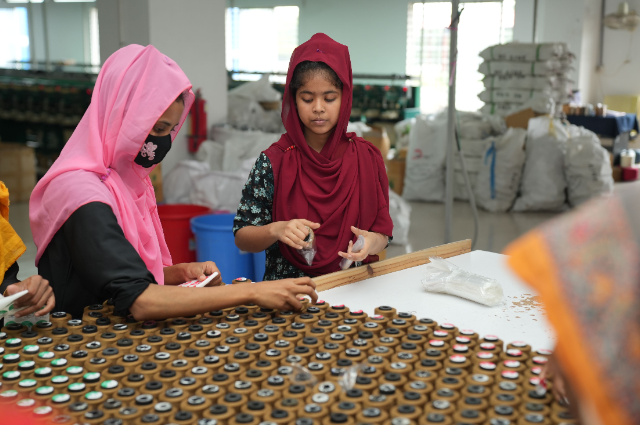
In 2004, a young mother in Kalliyur, a village in Thiruvananthapuram district, began setting aside Rs 10 every week from the monthly allowance she received for her personal use. It was a tiny sum, but she had a goal. Her husband, an electrician, earned very little, and she wanted to add to the household income. She had studied only until Class X, married, and spent her days looking after her family, as many women around her did.
Twelve years later, in 2016, she was an elected gram panchayat member and the head of a paper-bag unit that she and nine other women had built from scratch. Her name is Mini, and her story, reported by The News Minute that year, is one of thousands that grew out of a single Kerala programme: Kudumbashree.
This article follows Mini and several other women whose journeys have been documented by journalists, and sets them against official descriptions, budget figures and academic research. The aim is to understand what Kudumbashree has actually achieved in more than a quarter of a century, and where it falls short. A note on the accounts: they were published in 2016 and 2025, so the women’s circumstances may have changed since.
A neighbourhood, not just a scheme
Kudumbashree, a Malayalam name that roughly means “prosperity of the family”, was launched in 1998 by Kerala’s Local Self Government Department as a mission to eradicate poverty (Kanichar Grama Panchayat, n.d.). It followed the recommendations of a three-member task force appointed by the state government and was modelled on women’s groups that had already worked in Malappuram and Alappuzha, with support from the national agricultural bank, NABARD (Deccan Herald, n.d.).
Its roots go back further. According to The News Minute, the idea began in 1992 in the Alappuzha municipality, where a notice in regional newspapers led to around a hundred groups of roughly twenty women each. They were trained to run small enterprises such as cattle-rearing and poultry farming. A pilot followed in Malappuram in 1994, where close to 4,000 groups of twenty women were formed, with goat-rearing, poultry and dairy units among the activities (The News Minute, 2016).
The Malappuram pilot was not easy. James Varghese, who was the district collector at the time and later became Kudumbashree’s first executive director, told the publication that families and political parties there had opposed women going out to work, in a district bound by religious and social constraints. The programme succeeded anyway, and news of that success spread to other districts (The News Minute, 2016).
The basic unit is the Neighbourhood Group, or NHG, made up of 10 to 20 women, with one woman aged 18 or above from each family. NHGs are federated into Area Development Societies at the ward level and Community Development Societies at the level of the local body (Kanichar Grama Panchayat, n.d.; Deccan Herald, n.d.). K. B. Valsala Kumari, who served as executive director from 2012 to 2015, has explained that this is what separates Kudumbashree from the self-help groups of other states: it is organised by neighbourhood, on the belief that women who live near one another are more likely to support each other than a random group of women (The News Minute, 2016).
Its scale is large, though the numbers differ by source and year. A Kerala local government page says more than 43 lakh families are registered members (Kanichar Grama Panchayat, n.d.). Deccan Herald put the figure at over 46 lakh members in 3.09 lakh neighbourhood groups and described the network as one of the largest of its kind in the world (Deccan Herald, n.d.). Mission officials told ThePrint in 2025 that the programme has over 40 lakh participants, of whom 10 lakh are connected with some kind of business (ThePrint, 2025). Anyone quoting a membership figure should state the source and the year.
Rs 10 at a time: Mini’s paper-bag unit
Mini’s own journey shows how the model is meant to work. She joined in 2004 and contributed Rs 10 a week. About six months later, her group formally registered, which made it eligible for bank loans. With a Rs 50,000 subsidy from the Kudumbashree State Mission and an additional bank loan of Rs 2.5 lakh, the group of ten women set up a paper-bag making unit in Kalliyur, and Mini now heads it (The News Minute, 2016).
The pattern of small savings, then credit, then a business is the template that the mission describes on its own pages, which list thrift-based microfinance and bank linkage as core activities (Kanichar Grama Panchayat, n.d.). The early months were hard. Mini said there were months when the unit earned Rs 10,000 and months when it earned as little as Rs 1,000, and that it took a couple of years for orders to become steady (The News Minute, 2016).
What changed for her was not only income. She described herself as an average Malayali woman who studied up to Class X, married and looked after her family, and she said she had never imagined that she would end up helping other women who had the potential to represent their communities but lacked the means (The News Minute, 2016).
From pappadams to baby food: Bhageerathy’s climb
Bhageerathy’s path was different at the start. She lived in an agraharam in Palakkad and held a postgraduate degree, yet she was never encouraged to step out of her home for work. Nobody imposed a ban, she explained to The News Minute; it was simply the general rule for the women of that locality. In 2004, after years of staying at home while nurturing the dream of a business, she was introduced to Kudumbashree through a bank manager and persuaded women in her neighbourhood to form an Ayalkoottam, the first step toward joining the programme (The News Minute, 2016).
Her group of ten made pappadams and snacks at home and pooled them for sale at a local Kudumbashree outlet. Months later, the same women ran a seasonal food outlet for two years, and then set up a Nutrimix unit. By 2016, that unit was supplying 135 metric tonnes of powdered baby food across Palakkad, produced in a fully equipped facility. Bhageerathy said the members earned at least Rs 10,000 a month. Her family had moved out of the agraharam and built its own house; she had continued her postgraduate studies, and she hoped to enrol for a PhD. “None of this would have been possible without Kudumbashree,” she said (The News Minute, 2016).
She also pointed to something money cannot measure. Weekly meetings meant that women met and socialised, and this made them more confident about themselves while also ensuring a steady monthly income (The News Minute, 2016).
Placed side by side, the two stories reveal the programme’s logic. A group, a modest start and steady support turned women who were outside the paid economy into producers and managers. They also hint at a question that matters later in this article: both women had some formal education, and both lived in settings where a group could be formed, and a bank manager could be found.
From goats to data entry: a movement diversifies
Kudumbashree did not stay with goats and poultry. According to The News Minute, it began with micro-financing and poultry farming and later moved into organic farming, tailoring, catering, household waste management and travel services. In 2002, when government offices began to digitise and needed data entry operators, the programme trained a group of twenty women in Thiruvananthapuram for that work (The News Minute, 2016).
By 2016, the programme had about 50,000 activities across production, livelihood and service sectors, with the Nutrimix units earning the largest revenue. The Onam season gave a sense of the commercial scale: the Ernakulam unit alone reported a turnover of Rs 8.5 crore from Onam sales, more than half of it from organic fruit and vegetables, while Onam fairs across the state brought in Rs 32 crore (The News Minute, 2016). A programme manager, Priya Paul, summed up the approach as training women in sectors where there is demand (The News Minute, 2016).
A crisis, and a plate of food for Rs 20
The pandemic tested the model. In 2020, the mission launched low-cost Janakeeya hotels, restaurants that serve affordable meals starting at Rs 20 (ThePrint, 2025). The idea showed how a network of trained women, with experience in catering and food production, could be redirected quickly toward a public need. It also became the foundation for the next phase.
A new chapter: cafés and caregivers
After 25 years, mission officials say, the programme felt it needed to show growth. In 2025, it began to promote higher-income ventures, including premium cafés and a training project called K for Care, which prepares home-care professionals. The mission’s stated aim is to raise members’ incomes from Rs 10,000 to Rs 30,000 a month, and in some cases much higher (ThePrint, 2025).
Latha Sunil, 53, runs one of these cafés in Thiruvananthapuram. She had done odd jobs since her marriage but had always loved cooking. Seed money of Rs 20 lakh from the mission, together with guidance on low-interest loans, registration and licensing, helped her and her partner, Sindhu Prithviraj, open the café on 7 April. The local Community Development Society helped with forms and with applications for Mudra loans, and a micro-enterprise consultant appointed by the mission visits the café once a week. Eight months on, eleven women in purple shirts were serving customers, and the café had repeat visitors (ThePrint, 2025).
One of those employees, Sheeba A., 52, is hired at Rs 500 a day. She is also secretary of her local Kudumbashree unit, and she supplements her income by retailing oil, garments and other goods with fellow members. Because they are Kudumbashree workers, she said, wholesalers offer them subsidised prices, and customers can pay in instalments within three months (ThePrint, 2025).
The caregiving programme offers a different kind of opportunity. Anand C. from Kollam was married at 20 in 1998, and her husband’s family did not let her work for years. When financial pressure finally changed their minds, she struggled to find a job. After free training under K for Care, she now works as a caregiver for a 67-year-old man with Parkinson’s disease and earns Rs 30,000 a month (ThePrint, 2025).
Public money supports this expansion. According to ThePrint’s reading of the 2025 Kerala Budget, Rs 270 crore was earmarked for Kudumbashree’s micro-enterprises, local economic development, microfinance and agriculture-linked activities. The allocation was Rs 130 crore in 2016–17 and Rs 84 crore in 2012–13 (ThePrint, 2025).
Beyond income: a voice in local government
Kudumbashree’s influence now reaches into local politics. Women hold 50 per cent of seats in local bodies in Kerala, and in the 2025 local body elections women made up 40,040 of the 75,624 candidates, according to the State Election Commission figures cited by ThePrint. Official data show that 7,210 of the 23,612 councillors elected across village, block and district panchayats and corporations are Kudumbashree volunteers (ThePrint, 2025). A Manorama report cited in the same article put the number at 7,378 in 2015 and 848 in 2005, which suggests how quickly the trend grew (ThePrint, 2025).
Mini P., a former primary school teacher and full-time Kudumbashree volunteer since 2013, was elected as a village councillor in Pangode panchayat in Thiruvananthapuram district in the 2025 elections. She told ThePrint that the programme helped her start speaking in public and interacting with the community (ThePrint, 2025). Supriya Anilkumar, a Community Development Society chairperson in Wayanad, explained why such women are suited to local office: they are already used to survey and data collection work that resembles a ward member’s duties (ThePrint, 2025).
Women from the programme now stand for candidates of different political parties, and this article takes no side among them. The point here concerns civic skills. Weekly meetings, group accounts and public interaction turned out to be training in leadership, and many women who gained those skills have taken them into public life.
Where the model strains
A fair account must also ask who benefits least. J. Devika, a gender and social historian at the Centre for Development Studies in Thiruvananthapuram, told ThePrint that Kudumbashree has helped decently educated lower-middle-class women who already had some political and social capital to emerge. She credited the programme with helping women manage the financial stress of the early 2000s through loans that did not push them into heavy debt. But she warned that members are very vulnerable to government policy and local political support, and argued that the state should stop piling on responsibilities unrelated to the programme’s goals. Members, she said, should be paid for the services they are asked to perform and should not become a “reserve army of labour” for everything (ThePrint, 2025).
Academic research points in the same direction. A research note in the Journal of Extension Education surveyed 120 women in the Haripad block of Alappuzha district and found that heavy workload was a constraint, particularly for the functionaries who run the units. Respondents said their units would perform better if they were not overloaded (Journal of Extension Education, 2020). A study published through the University of Portsmouth examined non-participation and found that women from the most marginalised backgrounds face barriers to joining, a form of passive or implicit exclusion despite the programme’s financial and non-financial benefits (‘Inclusivity’ in welfare-oriented microfinance, n.d.).
The evidence on income is more encouraging but also modest. A study of 100 Kudumbashree micro-enterprise units in Kerala found that members’ incomes improved gradually after they joined (Sulaiman, n.d.). A 2024 desk review of women’s social capital and social cohesion in Kerala observed that, while Kudumbashree looks favourable from an institutional perspective, claims about women’s empowerment and community cohesion are less well supported by evidence (Women’s social capital and social cohesion in Kerala, 2024).
The stories in this article hint at the same distance between ambition and reality. Mini’s early income swung between Rs 10,000 and Rs 1,000 a month. A café worker earns Rs 500 a day, while the mission’s target is Rs 30,000 a month. These numbers do not show failure; they show how far the programme still has to go to match its own stated goals.
What the story teaches
Kudumbashree is not a finished success, and it did not end poverty by itself. But the record shows several lessons that other communities and governments can learn from.
First, start small and build trust. A contribution of Rs 10 a week looks trivial, yet it created the habit of saving, the discipline of weekly meetings and the credibility needed to access bank loans. Second, use the neighbourhood as the unit. Women who live near one another can support each other in ways that formal institutions cannot. Third, public support matters. Subsidies, training, markets and budget allocations helped these small businesses survive their difficult first years.
Fourth, measure honestly and look for those who are left out. If the programme mainly reaches women who already have education and social connections, it must work harder to reach the poorest. And fifth, protect the women from being treated as unpaid labour for every government task. A programme built on women’s trust should not exhaust it.
Mini’s story began with ten rupees and a weekly meeting. Her unit now makes paper bags; she has served as a public representative, and by her own account she helps other women find the same path. That is what makes the Kudumbashree story worth telling: it shows how patient, collective action can change who has a place at the table, and it shows how much work remains to make sure the table has room for everyone.
References:
- Deccan Herald (n.d.) Kudumbashree: A Kerala story starring empowered women, by Arjun Raghunath. https://www.deccanherald.com
- Kanichar Grama Panchayat (n.d.) Kudumbashree – State Poverty Eradication Mission. Local Self Government Department, Government of Kerala. https://kanicharpanchayat.lsgkerala.gov.in/en/node/88
- Journal of Extension Education (2020) Constraints faced by rural women in participation in Kudumbashree activities (research note), Vol. 32, No. 3. https://doi.org
- ‘Inclusivity’ in welfare-oriented microfinance: lessons from Kudumbashree in Kerala, India (n.d.) University of Portsmouth Research Portal. https://researchportal.port.ac.uk
- Sulaiman, E. K. (n.d.) Women empowerment through micro-enterprises: an empirical analysis of Kudumbashree units in Kerala. Mahatma Gandhi University. https://mail.i-scholar.in
- The News Minute (2016). The Kudumbashree story: How Kerala women’s grassroots scheme grew into a multi-crore project, by Megha Varier, 15 October 2016.
https://www.thenewsminute.com - ThePrint (2025) Politics to entrepreneurship, how Kerala’s Kudumbashree is giving women a platform, a life of autonomy, by Aneesa P. A., 30 December 2025. https://theprint.in
- Women’s social capital and social cohesion in Kerala: the case of Kudumbashree (2024) desk study. https://crmindia.org