
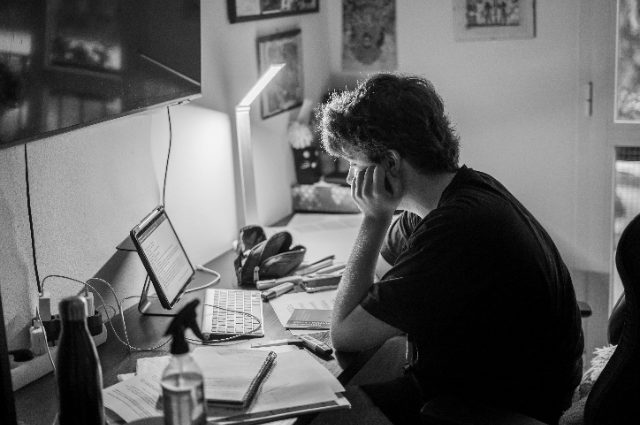
After years of education, I began questioning whether qualifications alone could prepare me for the life I wanted to build.
For most of my life, I thought I knew what I was supposed to do. Study hard. Get educated. Earn qualifications. Then find a good future.
It was not a complicated formula. I grew up believing that education was one of the safest paths available to a young person like me. If I studied seriously and collected the right qualifications, I assumed that the next stage of life would gradually become clear. For many years, I did not have much reason to question that idea.
Education had been a major part of my life from the beginning. I spent around twelve years studying in a residential Islamic educational environment. Those years shaped my worldview, my habits, and a significant part of my identity.
But eventually, I had to move between different worlds. There was the educational environment I had known for years, and then there was the wider world of university education, careers, technology, money, professional skills and an increasingly competitive job market.
The transition was not dramatic. There was no single morning when everything suddenly changed. Instead, questions began appearing slowly. What am I actually going to do with my life? What career should I choose? Is a degree enough? What skills do I really have? How will I become financially independent? How will I eventually support my family? And perhaps the question that stayed with me the longest: Am I becoming capable, or am I simply becoming qualified? I did not have an answer. I still don't have a complete one.
When education stopped feeling like the whole answer
My academic journey has not followed one perfectly straight line. I studied economics at the undergraduate level and later entered postgraduate study in an Islamic university environment. Education continued to occupy a large part of my life.
But alongside formal education, I started looking for something else. I began exploring practical skills. Video editing. Content creation. Graphic design. Copywriting. AI-assisted writing. Freelancing. Amazon KDP. Print-on-demand. E-commerce. Different online business models. Some interests lasted longer than others. Some became serious experiments. Others were things I explored for a while before wondering whether they were really suitable for me.
It would be easy, looking backwards, to describe all of this as a carefully designed plan. It wasn't. Sometimes I became excited about a new opportunity because it seemed promising. Sometimes I saw someone else succeeding at something and wondered whether I should try it too. Sometimes I wanted clarity so badly that I started looking for the next thing instead of understanding the thing I was already doing. There were moments when I questioned whether I was progressing or simply moving from one experiment to another.
That uncertainty has been one of the most honest parts of my life. I have not followed a perfectly planned path. I have experimented. I have changed my mind. I have started things without knowing exactly where they would lead. And I have had to accept that being uncertain does not necessarily mean that I am doing nothing.
A degree can tell you what you studied. It cannot answer every question about what you can do.
Eventually, I began to understand why the difference between education and capability mattered to me. This is not an argument against degrees. I still value formal education. Knowledge matters. Academic discipline matters. The ability to study deeply matters. But there are other questions that education alone cannot always answer. Can I communicate clearly? Can I solve a practical problem? Can I create something useful? Can I work with another person professionally? Can I learn a skill independently? Can I adapt when circumstances change? Can I turn knowledge into value? Can I earn? Can I take responsibility for something outside an examination hall?
These questions became increasingly important as I started thinking about my future. And this is not only a question that exists in my head. The wider employment landscape makes the education-to-work transition a serious issue for young people. The International Labour Organization's India Employment Report 2024 examines precisely this relationship between youth employment, education and skills, and notes the importance of addressing skills gaps and improving the transition between education and work.
India's education policy discussions have also increasingly emphasised the connection between academic learning and employment, including skill-based learning, projects, internships and stronger links between educational institutions and industry. Reading about these issues made me realise that the question I was asking myself was part of something much larger. Millions of young people spend years becoming educated. But education and employability are not automatically the same thing. For me, this stopped being an abstract policy discussion. It became personal.
When a skill had to become useful
Video editing was one of the first skills I began taking seriously as something I might actually use to earn. Initially, I was simply learning. I watched tutorials. I practised editing short-form videos. I studied how creators structured their content and how editors used visuals, pacing and sound to hold attention.
But eventually I reached a point where learning was no longer enough. I had to ask: Can I actually do this for someone else? That question changed the experience completely. I had to learn how to find potential clients. I had to approach creators, educators, coaches and personal brands. I had to write messages to people who did not know me. I had to understand what a client wanted instead of simply creating something I personally liked. I had to learn about revisions, deadlines, communication and pricing. Eventually, I got an opportunity to edit for an educational creator. I received raw footage, a reference video and specific feedback about the visual style. There were comments about things such as visuals, image frequency, clutter, and branding. I revised the edit according to the feedback and delivered the final version. From the outside, it might not seem like a significant event.
For me, it was. It was the point where video editing began moving from the category of “something I am learning” toward “something I can potentially provide as a service.” I had not suddenly become a successful freelancer. I had not built a business. I had simply completed a real piece of work for another person. But that small experience changed the way I understood skills. Knowing something and being able to use it are not always the same thing.
Building something while still figuring myself out
Around the same period, I started building my own presence online. Initially, I was interested in career clarity, skills, content creation and the confusion many young students experience about their futures. But the more I thought about those subjects, the more I realised that my questions were not limited to careers.
They were connected to identity. To faith. To money. To ambition. To discipline. To education. To social pressure. To the expectations young people carry. Eventually, the kind of content I wanted to create became broader: conversations about Deen, Dunya and Muslim youth. I don't want it to become another page filled only with generic quotes or motivational statements. I want to talk about questions that people actually struggle with. Why are educated young people still confused about their careers? Why do students spend years preparing for degrees without always developing practical abilities? Why do we compare our lives with people whose circumstances we don't fully know? How should a young Muslim think about ambition and money? How do education and faith fit into a rapidly changing world? What does a meaningful life actually look like? These are not questions I have solved. That is precisely why they interest me. I am not standing outside the problem explaining it to everyone else. I am inside it.
The uncomfortable feeling of being behind
There is another part of being young today that I rarely know how to explain properly. Everyone else's progress is visible. You open your phone and see someone your age starting a company. Someone is studying abroad. Someone is travelling. Someone has thousands of followers. Someone seems to have found a career. Someone is earning money. Someone appears completely certain about what they are doing. Then you look at your own life and realise that you are still trying to understand the basics. I have felt that. I have seen friends move ahead in different directions while I was still trying to understand mine. Sometimes that comparison became uncomfortable. Am I moving too slowly? Did I waste time? Should I have started earlier? Why don't I have the same clarity?
There have been periods of overthinking, loneliness, and uncertainty. I have had moments when I questioned whether I was actually progressing. But there is something I have slowly learned about comparison. You rarely see the entire life of another person. You see the result. You don't see every uncertainty behind it. And when I compare my unfinished chapter with somebody else's visible achievement, I am usually comparing two completely different things. That doesn't mean comparison disappears. It doesn't. I still experience it. I am simply becoming more aware of what it does to me.
Even my future is still under construction.
I have also thought seriously about international education and career opportunities, including Germany. I started learning German and reached around the A2 level. That experience has given me another reminder that learning something intellectually is different from being able to use it comfortably. I can understand some things. I can study grammar. I can recognise vocabulary. But speaking is harder. Sometimes I know what I want to say and still struggle to say it quickly. So I practise. The same thing has happened with communication more generally. I have deliberately tried to become better at speaking, explaining ideas, reducing hesitation and expressing myself more confidently.
I have participated in debates, competitions, academic activities and public speaking. None of these experiences has transformed me into a completely confident person. I still hesitate. I still sometimes struggle to express what I am thinking. But I have started to understand that confidence does not always arrive before action. Sometimes you become more comfortable only after repeatedly doing the uncomfortable thing.
I am not at the end of the story.
There is a temptation when writing a personal story to create a satisfying ending. You struggle. You learn. You work hard. You succeed. Then you explain the lessons you learned. My life does not have that ending. Not yet. And I don't want to invent one. I am still studying. I am still learning skills. I am still trying to earn. I am still building a personal brand. I am still learning German. I am still exploring career possibilities. I am still working on communication. I still overthink. I still compare myself with other people sometimes. I still don't know exactly where all of this will lead.
My long-term goal is not simply to collect certificates. I want to become capable enough to build a stable and meaningful life for myself and eventually support the people who depend on me. But even that goal is still being defined. My understanding of success is changing along with it. For a long time, I thought success was mainly about reaching a destination. Now I am more interested in a different question:
What kind of person do I need to become to handle the life I want?
I don't know the complete answer. Maybe I won't know for a long time. But I know that I have spent years learning what I was supposed to learn. Now I am trying to learn something different. How to take what I know and actually use it. How to turn skills into value. How to deal with uncertainty without becoming paralysed by it. How to balance faith with ambition, education with practical ability, and dreams with responsibility. How to build a future without pretending that I already know exactly what that future will look like.
I am not writing this as someone who has figured everything out. I am writing it because I haven't. Perhaps that is the most honest description of where I am today. I spent years becoming qualified. Now I am trying to become capable. And somewhere between those two things, I am still becoming the person I want to be. Maybe that is the question I will carry with me for a long time: Am I merely becoming qualified, or am I actually becoming capable?