
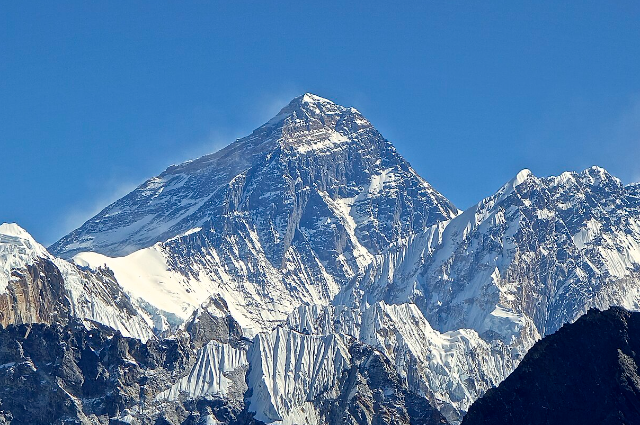
Some mountains exist on Earth. Others exist inside us. The hardest ones to climb are not always made of snow and stone, but of fear, doubt, and the courage to begin again.
On some days, life changes without warning.
One moment, we are making plans for the future. The next, we are struggling to understand a present we never imagined. We wonder why things happened, what we did wrong, and whether we will ever be able to return to the lives we once knew.
In April 2011, a young Indian woman named Arunima Sinha faced such a moment.
She was a national-level volleyball player with dreams of building a future through sports. She was young, ambitious, and determined. Like many people her age, she had plans that extended far beyond the ordinary.
Then came an incident that changed her life forever.
While travelling by train, Arunima was attacked by robbers and thrown from a moving train. She suffered severe injuries and lost her left leg.
She was only in her twenties.
Imagine having a future full of possibilities and suddenly facing a reality you never prepared for. The physical pain was only one part of the struggle. There was also the challenge of recovering, adjusting to a changed life, and discovering what the future might still hold.
For many people, such an experience would have made the future difficult to imagine.
But Arunima's story did not end with what happened to her.
It began with what she chose to do next.
During her recovery, Arunima made a decision that seemed almost impossible: she wanted to climb Mount Everest.
Everest is the highest mountain on Earth. Reaching its summit requires months of preparation, exceptional endurance, technical skills, and the ability to face dangerous conditions. Even experienced mountaineers know that the journey demands extraordinary commitment.
Arunima was recovering from a life-changing injury.
Yet she began preparing for the challenge.
She trained at the Tata Steel Adventure Foundation under the guidance of renowned mountaineer Bachendri Pal, the first Indian woman to climb Mount Everest. The training was demanding, and she had to learn mountaineering while adapting to her prosthetic leg.
There were physical challenges, difficult days, and moments when the goal must have seemed impossibly distant.
But she continued.
Her journey required more than determination. It required discipline, preparation, patience, and a willingness to learn something completely new.
She could not change what had happened in April 2011. She could, however, work towards deciding what happened next.
And that distinction is at the heart of her story.
On 21 May 2013, Arunima Sinha reached the summit of Mount Everest.
She became the first female amputee to climb the world's highest mountain.
Think about that for a moment.
The mountain had not become smaller. The climb had not become easier. Her achievement did not erase the suffering she had experienced.
Instead, she had trained, adapted, and worked towards a goal that many people would have considered beyond her reach.
Her success was not simply about standing on the top of a mountain.
It was about demonstrating what a person can accomplish when circumstances change, but the desire to move forward remains.
When I think about Arunima's journey, I am reminded of how quickly we sometimes judge the limits of our own abilities.
We tell ourselves that we cannot do something because we have failed before. We become afraid to begin because the possibility of disappointment feels too uncomfortable. Sometimes, we allow other people's doubts to become our own.
We look at the distance between where we are and where we want to be, and the distance seems so enormous that we forget to take the first step.
Arunima's story challenges that way of thinking.
It does not promise that determination will make every difficulty disappear. It does not suggest that every dream can be achieved simply by wishing for it.
Instead, it reminds us that meaningful achievements often require us to face reality honestly, prepare ourselves, and keep working even when progress is difficult.
Her story also teaches us something important about identity.
Before her accident, Arunima was an athlete. After it, she was still a person with ambitions, abilities, and a future that had not yet been written.
Her injury became part of her story, but it did not have to become the whole story.
That is a lesson worth remembering.
We are often tempted to define people by the most difficult thing that has happened to them. We see their struggles before we see their abilities. We focus on what they have lost rather than what they may still create.
But a person's life is always more complicated than a single event.
Sometimes, the most meaningful question is not, “What happened to this person?”
It is, “What possibilities remain?”
Arunima Sinha's achievement cannot erase the hardship she endured, nor should her story make anyone feel that they must accomplish something extraordinary to prove their worth.
Her courage matters because it was her own response to an incredibly difficult experience.
She climbed Mount Everest, but her greatest lesson may be one that applies to every one of us: a difficult beginning does not have to determine the ending.
Perhaps we will never face a mountain as high as Everest. But we will all encounter challenges that test our patience, shake our confidence, and make us question whether we can continue.
In those moments, Arunima's journey offers a reason to pause before giving up.
We may need to change our plans. We may need to start again. We may need to accept help and learn a different way forward.
And that is not failure. That is being human.
Arunima Sinha did not change her past. She built a future beyond it.
Her story reminds us that courage is not the absence of difficulty; it is the willingness to keep moving forward while facing it.
Because sometimes, the greatest victory is not reaching the highest mountain in the world.
It is refusing to let one difficult chapter become the final page of your