
“I Will Eat Every Pound”
“I will undertake to eat every pound of steel rail they succeed in making.”
That was Sir Frederick Upcott, the British chief commissioner of the Indian Railways, scoffing at the idea that an Indian company could make steel to British standards. Within a few years, that same company was supplying steel for the First World War.
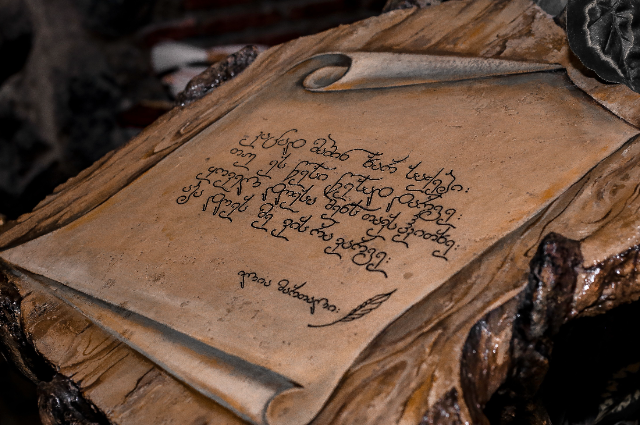
Yet the part of this story that stays with me is not the steel. It is a letter, written in 1902 by a man who would not live to see his project completed. It barely mentions furnaces or profit. It dwells instead on shade trees, football grounds and places of worship.
I came across that letter more than a century later, as an MBA student in the very city it created. It made me question much of what business school treats as an afterthought.
Jamsetji Nusserwanji Tata wrote to his son Dorabji about the steel town he hoped to build. There was no plant yet, no town and not even a final site. His instructions were nonetheless remarkably precise:
“Be sure to lay wide streets planted with shady trees, every other of a quick-growing variety. Be sure that there is plenty of space for lawns and gardens. Reserve large areas for football, hockey and parks. Earmark areas for Hindu temples, Mohammedan mosques and Christian churches.”
What is striking is what the letter leaves out. There is no mention of output, costs or returns. A man planning one of the most ambitious industrial ventures in Asia chose to write about shade, sport and faith. He was designing for the people who would live there before a single furnace had been lit.
Jamsetji died in Germany in 1904. He never saw the city, or the steel.
The Dream Everyone Laughed At
Dorabji carried his father’s vision forward. The site chosen was the village of Sakchi, at the meeting point of the Subarnarekha and Kharkai rivers, close to rich deposits of iron ore. In 1907, when the company invited the public to subscribe ₹1.5 crore, around 8,000 Indians put in ₹2.32 crore within three weeks. At a time when British capital dominated Indian industry, ordinary Indians staked their savings on a dream.
Steel production began in 1912. Dorabji later observed that had Upcott kept his word, he would have suffered “some slight indigestion”. In 1919, the Viceroy renamed Sakchi in honour of the man who had imagined it: Jamshedpur.
Welfare Before the Law Demanded It
The letter was not mere sentiment. It became company policy.
In 1912, the company introduced an eight-hour working day, long before Indian law required one. Free medical care followed in 1915, schools for workers’ children in 1917, and paid leave and a provident fund in 1920. Maternity benefits arrived in 1928, and a profit-sharing bonus in 1934. When Mahatma Gandhi visited Jamshedpur in 1925, he saw much of this first-hand.
No regulation demanded any of it. These were choices, made decades before the law caught up. That does not mean the record was flawless, as the city’s own history would later show. But the intent was unmistakable.
Where My MBA Comes In
For me, this history is not distant. XLRI was founded in this city in 1949 as the Xavier Labour Relations Institute, with the support of Tata Steel officials. The first chairman of its Board of Governors was Sir Jehangir Ghandy, Tata Steel’s first Indian general manager. A business school that began by studying how to treat workers fairly grew out of a city built around that very idea.
This term, I am working on a live project with Tata Steel on learning and development, focused on the Tata Management Development Centre. Our first task was decidedly unglamorous. Once the centre approved our project charter, my team set about building a sheet comparing how other large companies train and develop their people: programmes offered, hours per employee, spend per head. Row after row of tidy, comparable figures.
Somewhere in that spreadsheet, it struck me that every number measured what companies give their people, and none captured what kind of working life those people actually lead. Jamsetji’s letter would not have fitted into a single cell.
In the case competitions I have entered on sustainability and the circular economy, responsibility is usually a single slide. We place it near the end, give it a neat framework and move swiftly on to the financials. We treat responsibility as something to present, not something to design around.
Friedman, Freeman and a Letter From 1902
Business schools usually frame this debate as a contest between two ideas. In 1970, the economist Milton Friedman argued that the social responsibility of business is to increase its profits. In 1984, the management scholar R. Edward Freeman countered with stakeholder theory, which holds that a company must create value for employees, communities and suppliers, not only for shareholders.
Jamsetji had settled the question for himself almost seventy years before Friedman wrote a word. His letter is stakeholder theory written as a town plan.
Today, Indian law requires large companies to spend two per cent of their average profits on corporate social responsibility. In 2024 to 2025, Indian companies spent a record ₹40,794 crore under this rule, according to the Bharat CSR Performance Report 2026, and the top 1,000 listed companies must also file detailed sustainability reports. These rules have done real good.
But a law that compels companies to care is, in a sense, an admission. It exists because caring did not happen on its own. Jamsetji’s letter offers a different model, in which responsibility is not a cost bolted on after the business is designed, but part of the design itself.
My generation of managers has become adept at measuring responsibility, scoring it and reporting it. We are far less practised at writing it into the first draft.
The Other Side of the Story
It would be dishonest to tell this story as a fairy tale. Jamshedpur was a company town, and company towns carry their own contradictions.
Workers formed the Jamshedpur Labour Association in March 1920, and in 1928 a prolonged strike ended only after Subhas Chandra Bose stepped in to negotiate a settlement with management. Good amenities, it turned out, did not always mean workers felt heard. For most of its history, Jamshedpur has also been run without a conventional elected municipal body, with the company overseeing much of the city’s administration. Critics have long argued that however well a company runs a city, its residents deserve a democratic voice in how they are governed.
That criticism is fair. Paternalism, however benevolent, is not partnership. But the lesson I draw from Jamshedpur is not that companies should run cities. It is that the people a business affects belong in the plan from the first page, not in a footnote.
What a Letter Can Teach a Business School
Every MBA student learns to write a business plan. We analyse market size, competition, unit economics and exit strategy. We rarely begin with the question Jamsetji began with: what kind of life will this create for the people around it?
India’s companies now spend crores reporting responsibility. Jamsetji spent one letter designing it.
More than a century later, the trees he asked for still line the streets of the city where I study. Perhaps that is the truest measure of a business. Not how quickly it grows, but whether, a hundred years on, people still sit in the shade of decisions it made before it earned its first rupee.
References:
- “Men of Steel, Heart of Gold,” excerpt from The Tata Saga, Penguin India. (Jamsetji’s 1902 letter; the Upcott remark and Dorabji’s reply)
- “Tata Steel’s formative years,” Business Standard, 2007. (The 1907 share issue)
- “Jamshedpur: A ‘Private’ Success Story,” Live History India, 2021. (Site, renaming, Gandhi’s visit, municipal status)
- Tata Steel, company history: employee welfare milestones, 1912 to 1937.
- Tata Steel, “Tata Workers’ Union begins centenary year celebrations,” press release, 2019. (The 1920 founding of the union; the 1928 strike)
- XLRI – Xavier School of Management, institutional history.
- Friedman, Milton. “The Social Responsibility of Business Is to Increase Its Profits.” The New York Times Magazine, 13 September 1970.
- Freeman, R. Edward. Strategic Management: A Stakeholder Approach. Pimman, 1984.
- Fulcrum, Bharat CSR Performance Report 2026.
- Companies Act, 2013, Section 135; Securities and Exchange Board of India, Business Responsibility and Sustainability Reporting framework.