
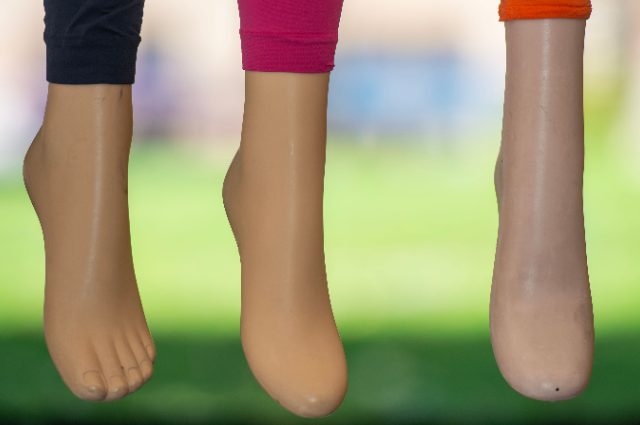
Imagine being given an artificial foot that allows you to stand and walk, but makes it difficult to sit cross-legged, squat or work comfortably in a muddy field. For someone living in a city and wearing shoes throughout the day, these limitations might seem manageable. For someone whose daily life involves walking barefoot, sitting on the floor, working in agricultural fields or climbing uneven paths, they can make the artificial limb almost impractical.
This was the problem that confronted an Indian orthopaedic surgeon in Jaipur during the 1960s.
He noticed that some patients who had received artificial limbs were returning to their old crutches. Their prostheses had been designed to meet certain medical and functional standards, yet they did not fit the everyday realities of the people expected to use them.
Instead of asking patients to change their way of life to accommodate the technology, he began asking a different question: could the technology be changed to accommodate them?
That question helped give rise to one of India's most recognised contributions to affordable rehabilitation: the Jaipur Foot.
When a medical solution failed to understand its users
The story of Jaipur Foot is closely associated with Dr Pramod Karan Sethi, an orthopaedic surgeon who worked at Sawai Man Singh Hospital in Jaipur, and Pandit Ram Chandra Sharma, a skilled local craftsman.
During his medical practice, Dr Sethi encountered patients who were dissatisfied with conventional prosthetic feet. The problem was not necessarily that the devices were medically defective. Rather, their design did not always correspond to the cultural and practical conditions of their users.
Many artificial feet available at the time were intended to be worn with shoes. They were not designed for people who regularly walked barefoot or wore open footwear. Their limited flexibility also made movements such as squatting and sitting cross-legged difficult.
These were not minor inconveniences. They affected people's ability to participate in ordinary activities.
For a farmer, the ability to work in a field could be essential to earning a livelihood. For someone who lived in a household where family members sat on the floor, sitting comfortably was part of everyday social life. A prosthesis that restored basic walking but prevented these activities could still leave its user feeling restricted.
Dr Sethi recognised that rehabilitation needed to consider the person's environment, occupation and lifestyle, not just the missing limb.
He began working towards a more practical design, and his collaboration with Ram Chandra Sharma became central to that effort.
The meeting of medicine and craftsmanship
The development of Jaipur Foot is a particularly interesting example of what can happen when medical knowledge meets practical craftsmanship.
Dr Sethi understood the anatomical and functional requirements of an artificial foot. Ram Chandra Sharma brought the ability to work with materials and shape them into useful forms.
Their collaboration helped produce a prosthetic foot that was different from the conventional designs then available.
The Jaipur Foot used materials such as rubber and wood, with components designed to provide greater flexibility. Its construction allowed movements that conventional rigid designs did not easily support.
The prosthesis was developed during the late 1960s, with 1968 commonly cited as the year of its introduction. Historical accounts differ slightly in how they describe the development and finalisation of the design, but the contribution of Dr Sethi and Ram Chandra Sharma is well established.
The importance of the invention was not simply that it was made in India. It was that it addressed a problem that existing technology had not adequately considered.
A person using the Jaipur Foot could walk barefoot, squat and sit cross-legged more comfortably than with many conventional prosthetic feet available at the time. Its design also made it useful in environments involving uneven ground and wet agricultural conditions.
The prosthesis was not created to imitate an expensive foreign product. It was developed around the actual movements and needs of its intended users.
Why the design mattered
To understand the significance of Jaipur Foot, it helps to look beyond the appearance of an artificial limb.
A prosthesis must do more than fill the space left by a missing body part. It must allow its user to perform activities that matter in everyday life.
The ability to bend the foot, adjust to uneven surfaces and support different positions can influence how comfortably someone moves.
The Jaipur Foot's flexible design helped users perform movements such as squatting and sitting cross-legged. These functions were especially relevant in communities where people frequently sit on the floor, walk without shoes or work in agricultural surroundings.
The use of locally available materials also helped make the design more affordable and adaptable.
A 2008 article in the "Journal of Bone and Joint Surgery" noted that the Jaipur Foot was developed for barefoot amputees using local artisans and readily available materials. It also described its usefulness in rural working conditions, including wet and muddy fields.
The design demonstrated an important principle: medical technology should not be judged only by its technical sophistication. Its usefulness must also be measured by how well it serves the person who depends on it.
From an invention to an institution
The story did not end with the development of the prosthetic foot.
In 1975, Dr D. R. Mehta established Bhagwan Mahaveer Viklang Sahayata Samiti, commonly known as BMVSS, in Jaipur. The organisation developed into one of the most widely recognised providers of artificial limbs and rehabilitation assistance.
It is important to distinguish the two milestones. Jaipur Foot was developed through the work of Dr Sethi and Ram Chandra Sharma, while BMVSS was established later by Mehta to expand access to rehabilitation services.
BMVSS helped take the work beyond the setting in which the original design had emerged. It provided artificial limbs and other assistive services to people who might otherwise have struggled to afford them.
Its approach also included outreach programmes and rehabilitation camps, bringing services closer to people living far from major medical centres.
The organisation's work eventually reached communities outside India as well. The Jaipur Foot became known in countries affected by conflict, landmines and other causes of limb loss.
The design attracted international attention because it demonstrated that an effective prosthetic solution did not always need to be prohibitively expensive or dependent on highly specialised imported materials.
A modern story of regained independence
The impact of prosthetic rehabilitation becomes clearer when we consider the experiences of people who receive these services.
A 2026 report published by Tata Trusts describes the experience of Naziya Mohammad, a young woman born with congenital deformities affecting her arms and lower limbs.
Her everyday activities were difficult, and she and her family sought assistance through BMVSS in Delhi after learning about its prosthetic services.
A team helped assess her medical needs and provided a fitted below-knee artificial limb through the organisation's programme.
The report describes how the new limb helped her move more independently and manage daily activities with greater confidence.
Naziya's experience is not simply a story about receiving a medical device. It illustrates why proper assessment, fitting and rehabilitation matter. An artificial limb is useful only when it responds to the needs of the person using it.
Her case also shows how an organisation whose work grew from the Jaipur Foot's legacy continues to support people through prosthetic rehabilitation.
The experience of every beneficiary is different. A prosthesis cannot remove every physical, social or economic barrier, and it does not guarantee that life will immediately return to normal. But appropriate rehabilitation can make a meaningful difference to mobility and independence.
Affordability is only the beginning
One of Jaipur Foot's most important contributions has been its emphasis on affordability.
For many people, the cost of a prosthetic limb can be a serious obstacle. The price of the device is only one part of the expense. Travel, medical assessment, fitting, adjustments and follow-up appointments may add further costs.
Someone living in a remote village may have to travel to a city for treatment. A person earning a daily wage may lose income while attending appointments. Families may also struggle to arrange transport and accommodation.
Affordable prosthetic technology can reduce one major barrier, but access requires more than a low price.
Patients need professional assessment, appropriate fitting, training and follow-up care. A poorly fitted prosthesis may cause discomfort, skin problems or difficulty walking. The needs of a person with a below-knee amputation may also differ considerably from those of someone requiring an above-knee prosthesis.
This is why rehabilitation must be treated as a continuing process rather than a one-time distribution of artificial limbs.
The Jaipur Foot's legacy is strongest when its accessibility is combined with suitable medical care and support.
The limitations that still deserve attention
Despite advances in prosthetic technology, access to rehabilitation remains unequal.
People living in rural and economically disadvantaged communities may not know where to seek assistance. Some may be unable to travel to a specialised centre. Others may receive a prosthesis but lack access to maintenance, replacement or follow-up services.
There is also a broader problem that technology alone cannot solve: the lack of accessible public infrastructure.
A person may regain the ability to walk but still encounter buildings without ramps, public transport without suitable facilities, inaccessible workplaces and social attitudes that limit participation.
Disability inclusion must therefore extend beyond medical treatment.
Schools, workplaces, public transport systems and public buildings need to be designed so that people with disabilities can participate independently and with dignity.
The purpose of rehabilitation should not be to make every person conform to one narrow idea of physical ability. It should be to help individuals achieve their own goals and participate in society without unnecessary barriers.
An innovation that began by listening
The story of Jaipur Foot offers a lesson that extends far beyond prosthetic technology.
Its development began with a surgeon noticing that patients were not using the artificial limbs they had been given. Instead of dismissing their difficulties, he tried to understand why the devices were failing them.
The solution emerged through collaboration between medical expertise and craftsmanship. It was shaped by the practical realities of the people who would use it.
That approach remains relevant to modern innovation. Technology is often celebrated for being faster, more advanced or more sophisticated. But a product can be technically impressive and still fail if it does not address the needs of its intended users.
The Jaipur Foot reminds us that innovation should begin with listening.
It also reminds us that the contribution of a craftsman can be as important as that of a medical professional, and that meaningful progress often emerges when different kinds of knowledge come together.
Dr P. K. Sethi and Ram Chandra Sharma helped demonstrate that an artificial limb could be designed around the realities of everyday Indian life. BMVSS later helped extend the reach of prosthetic and rehabilitation services to many more people.
Their work does not mean that every challenge faced by people with limb loss has been solved. Affordable devices, accessible infrastructure, professional rehabilitation and social inclusion remain essential.
But it changed the way an important problem was approached.
The most meaningful achievement of Jaipur Foot is not merely that it helped people walk. It is that it challenged the assumption that people must reshape their lives around technology.
Sometimes, the most important innovation is not the invention of something entirely new. It is the willingness to look at an existing problem from the perspective of the person living with it.
And that is where the real significance of Jaipur Foot lies: in a design that began by understanding people, and in a legacy that continues to remind us that dignity and independence should never be luxuries.
References:
- Arya, A. P. and Klenerman, L. (2008). “The Jaipur foot.” The Journal of Bone and Joint Surgery, British Volume, 90(11), 1414–1416. https://pubmed.ncbi.nlm.nih.gov/18978257/
- United Nations Development Programme India. “Best Foot Forward.” https://www.undp.org/india/stories/best-foot-forward
- Publications Division, Government of India. Yojana, February 2008, article on Dr P. K. Sethi and Jaipur Foot. https://www.publicationsdivision.nic.in
- Smithsonian Institution, Cooper Hewitt. “Jaipur Foot and Below Knee Prosthesis.” https://www.si.edu/object/chndm_DO90.003
- Tata Trusts Horizons (April 2026). “A Leg-up for the Limbless.” https://horizons.tatatrusts.org
- Saha, M. et al. (2024). “Revolutionising Rehabilitation: The Legacy of Dr Pramod Karan Sethi and the Jaipur Foot.” *Cureus*. https://pmc.ncbi.nlm.nih.gov/articles/PMC11480697/