
A research-informed reflection on child labour, unequal opportunity, and the right to learn
The boy behind the counter
At seven in the evening, a small shop can become a world of its own: the bell above the door, the scrape of coins across a counter, the smell of detergent and dust, the impatient customer asking for change. Imagine a boy standing behind that counter while children his age walk past with schoolbags. He knows the price of cooking oil, the location of every biscuit packet, and how to smile when a customer is rude. But he may not know what his class is studying this week.
This boy is a composite figure, not a claim about one identifiable child. His circumstances, however, reflect a real social problem: children can be pushed into work long before they have a fair chance to learn, rest, play, and decide what kind of adult they want to become. We often describe child labour through numbers, raids, laws, and rescue photographs. We should also ask a quieter question: what happened before a child began working, and what must change so that returning to school becomes possible?
The answer is rarely as simple as telling a family to send its child to school. A household facing an uncertain income may depend on every pair of hands. A child may be behind in class, lack documents, travel long distances, care for younger siblings, or feel ashamed to return after months away. The problem is not only that a child is working. It is that the systems around that child may have failed to make childhood possible.
What the evidence tells us—and what it cannot
Child labour is not the same as every task a child performs. Age-appropriate chores or safe, limited activities can help children learn responsibility. Child labour refers to work that harms children, interferes with education, or violates minimum-age and safety standards. Long hours, hazardous conditions, coercion, and work that prevents school attendance are especially serious warning signs.
India has made progress in expanding education and reducing child labour, but progress does not mean the problem has disappeared. UNICEF’s 2024 research report, Child Labour and Schooling in India: A Reappraisal, notes that gaps remain in school attendance and completion and that some forms of child work may be hidden or undercounted. The report stresses the links between schooling, household vulnerability, and children’s own experiences. Its importance lies not just in measuring the problem but in asking how education systems can better prevent children from being drawn into harmful work.
A 2025 UNICEF Innocenti study drawing on research with children and parents in Bihar and Telangana found that supportive teachers—especially those who encouraged students and followed up when they missed school—were reported as important drivers of improved schooling. The research also identified household economic and health conditions as factors associated with school dropout, which can in turn push children towards work. These findings challenge the idea that child labour can be solved through enforcement alone. A child needs protection from exploitation, but the family may also need social protection, and the school must be ready to welcome the child back.
Numbers are essential, but they have limits. A survey can estimate how many children work; it cannot fully capture the embarrassment of arriving at school unable to read at the same level as classmates, or the fear a parent feels when a day without wages means less food at home. Good policy needs both reliable data and the voices of children and families.
The chain that keeps a child at work
Child labour is often described as a single act of exploitation, but it can be the final link in a chain of pressures. A parent loses work. A medical bill arrives. Rent rises. A seasonal crop fails. A family migrates in search of wages. School records or language differences complicate admission. The child begins helping for a few hours, then misses lessons, falls behind, and gradually becomes a worker in practice even if nobody ever announces that school is over.
Poverty is not the only cause, and poor families should not be treated as careless or indifferent to education. Many parents make painful choices under conditions they did not create. Employers may prefer children because they are easier to underpay, intimidate, or control. Communities may normalise work by saying that a child is “learning the trade.” Schools may fail to identify repeated absences early. Consumers may enjoy low prices without asking whose time and safety paid for them.
Girls’ work can be particularly easy to overlook. A girl may not be visible in a workshop or roadside stall, yet spend hours cooking, cleaning, collecting water, or caring for siblings while adults work. Such responsibilities can quietly reduce study time, attendance, and rest. A response that counts only paid work risks missing part of the burden.
The chain is difficult to break because each link can appear ordinary on its own. One missed school day seems small. One extra shift seems temporary. One unpaid task seems like family duty. But when these pressures accumulate, a child’s future narrows without a formal decision ever being made.
Why rescue alone is not enough
Rescue from hazardous or illegal work is necessary. It can remove a child from immediate danger and hold exploitative adults accountable. Yet rescue is the beginning of a process, not the finish line. If a child returns to a household with no dependable income, the same pressures may draw the child back to work. If the school offers no bridge classes, the child may feel lost. If rehabilitation support is delayed, a legal intervention may change the location of the problem without changing its causes.
A durable response needs several parts working together. First, children must be identified safely and treated with dignity, not blamed for working. Second, they need access to age-appropriate education, including help catching up after time away. Third, vulnerable households need practical support—social protection, access to public services, health care, and routes to more secure adult employment. Fourth, employers and supply chains must be monitored so that exploitation is not rewarded. Finally, local authorities, schools, civil-society organisations, and communities need ways to share information and follow up without exposing children to retaliation.
India has legal protections addressing child labour, including restrictions on employment of children below fourteen and prohibitions on adolescents in hazardous occupations, alongside the right to free and compulsory education for children in the relevant age group. Laws matter because they establish boundaries and duties. But a law printed in a book cannot notice a child’s repeated absence, pay a family’s rent, or help a student relearn fractions. Institutions must turn legal promises into ordinary, dependable support.
The school must become a place to return to
Imagine that the boy from the opening scene is finally able to leave work and return to school. His first day back may not resemble a triumphant photograph. He may be older than some classmates, uncertain about basic lessons, and worried that others will ask where he has been. If the school responds with punishment or ridicule, the door may close again.
A child-friendly school makes returning possible. Teachers can track attendance patterns, contact families with curiosity rather than accusation, and work with local support services when a child disappears from class. Bridge learning can help students rebuild foundational skills. Flexible support for children whose families migrate can reduce disruption. Safe transport, usable toilets, accessible teaching, and reliable meals can matter as much as speeches about the value of education.
Teachers cannot solve poverty on their own, and schools should not be expected to replace social services. But teachers are often among the first people who can notice that a child is at risk. They need time, training, referral pathways, and institutional backing to act. The 2025 UNICEF Innocenti research from Bihar and Telangana reinforces this practical insight: encouragement and follow-up by teachers can help keep children connected to schooling, while education measures work best alongside household support and stronger child-protection systems.
The goal should not be to make a child feel rescued by a generous adult. It should be to make education so accessible, safe, and worthwhile that leaving it for harmful work becomes less likely in the first place.
What citizens can do beyond feeling sorry
It is easy to feel moved by a photograph of a child at work and then return to ordinary life. Compassion matters, but compassion without action can become a performance. Citizens can begin by refusing to romanticise exploitative work as character-building. They can avoid humiliating or confronting a child in public, and instead seek safe, appropriate ways to alert local child-protection services or trusted organisations when they suspect exploitation.
Consumers can ask businesses about labour standards, particularly where goods or services depend on hidden, low-paid work. Employers can verify age, follow labour laws, and ensure that their contractors do the same. Colleges and community groups can organise learning support, book drives, mentoring, and school-retention initiatives in partnership with local educators rather than assuming that one-off charity solves a structural problem. Journalists and writers can tell stories responsibly, protect children’s identities, and avoid turning suffering into spectacle.
Most importantly, we should listen. Children and families understand barriers that outsiders may miss: a school that feels unsafe, an inaccessible route, a teacher who humiliates struggling students, or a benefit that is difficult to claim. Listening does not mean accepting harmful practices. It means designing interventions with the people who must live with their consequences.
A future measured in choices
The most convincing measure of progress is not the number of speeches delivered against child labour. It is whether fewer children are forced to choose between earning today and learning for tomorrow. It is whether a family can survive a temporary crisis without sending a child to work, whether an employer expects accountability, whether a teacher notices absence before it becomes permanent, and whether a child who has missed school can return without shame.
No single programme can do all of this. Governments must enforce protections and make social support accessible. Schools must identify risk early and help children catch up. Employers must stop benefiting from exploitation. Communities must challenge the belief that a poor child’s time is worth less than anyone else’s. Researchers must continue to improve evidence, including on hidden work and the different experiences of boys and girls. Citizens must sustain attention after the news cycle moves on.
The boy behind the counter does not need us to imagine that he is helpless. He needs adults and institutions to stop treating his limited options as inevitable. He may be curious, funny, skilled with numbers, interested in machines, or full of ideas he has never had time to explore. His future should not be decided by the accident of his family’s income or by the convenience of an employer.
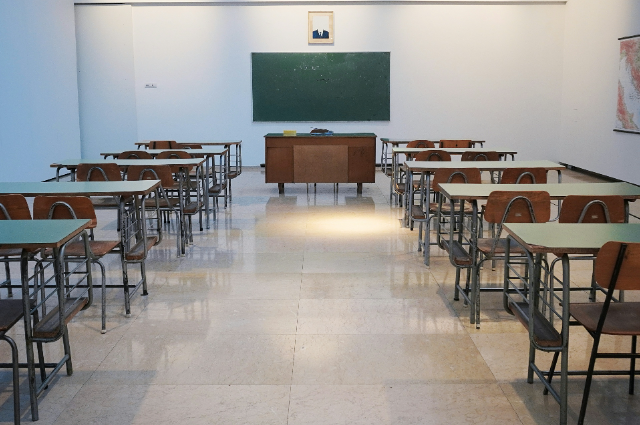
A classroom is more than a room with desks. It is a promise that a child’s life can contain possibilities beyond the work available today. Keeping that promise requires more than opening a school gate. It requires making sure the child can reach it, remain there, learn with dignity, and return when life has interrupted the journey.
One day, the shop bell may ring, and the boy may be there only to buy a notebook on his way home from school. That would be a small scene, almost too ordinary to photograph. It would also be a meaningful sign of change: not that society has learned to feel sorry for working children, but that it has begun to make room for their childhoods.
References:
- UNICEF Office of Research – Innocenti. (2024). Child Labour and Schooling in India: A Reappraisal. https://www.unicef.org
- UNICEF Office of Research – Innocenti. (2025). What Drives Changes in Child Labour and Schooling? Evidence from two exploratory studies among children and adolescents in Bihar and Telangana, India. https://www.unicef.org
- International Labour Organisation. (2017). Fact Sheet: Child Labour in India. https://www.ilo.org
- UNICEF Data. Child Labour: definitions, measurement, and global data resources. https://data.unicef.org
Editorial note: The opening child is a fictional composite used to introduce the issue; no real individual is being represented. The article uses no photographs, so no image credits are required. Please review the competition’s originality and submission terms before uploading.