
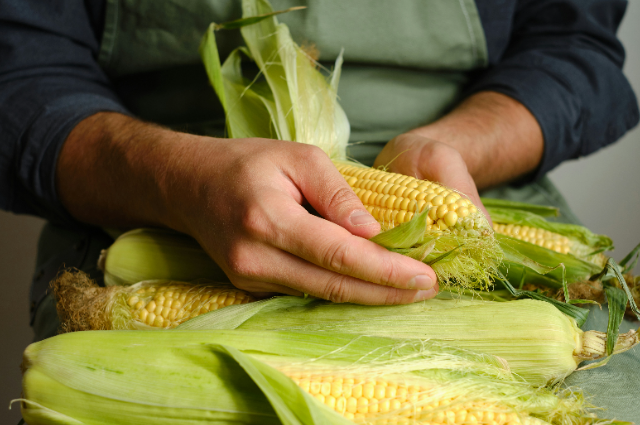
In agricultural biotechnology, some of a company's most valuable intellectual property may exist not in a laboratory or on a computer, but in seeds growing in a field. Protecting these assets presents a unique management challenge: they must be cultivated in open environments, yet remain secure from unauthorised access. The case of Mo Hailong, also known as Robert Mo, demonstrates how agricultural research, intellectual property, operational risk and criminal law can intersect.
Mo Hailong, an executive associated with Beijing Dabeinong Technology Group (DBN Group), participated in a conspiracy to steal proprietary corn seeds from DuPont Pioneer and Monsanto. The case became a significant example of agricultural intellectual property theft in the United States. In January 2016, Mo pleaded guilty to conspiracy to steal trade secrets, and in October 2016, he was sentenced to three years in prison (U.S. Department of Justice (D), 2016a, 2016b).
Beyond the criminal proceedings, the case raises an important management question: how can organisations protect valuable biological assets while maintaining the openness required for research and production?
Understanding the Value of the Stolen Seeds
To understand the seriousness of the case, it is necessary to understand the value of inbred corn seeds. Commercial hybrid corn is produced by crossing selected parental lines. These carefully developed lines contribute to the characteristics of the resulting hybrid, including yield and other agronomic traits. Their development requires specialised knowledge, experimentation and sustained investment.
The parental seeds targeted in the Mo Hailong case contained valuable proprietary information belonging to DuPont Pioneer and Monsanto. According to the DOJ, Mo participated in obtaining these seeds with the intention of transporting them to China for the benefit of a Chinese seed business (DOJ, 2016a).
The economic significance of such theft extends beyond the immediate value of the physical seeds. A competitor obtaining proprietary biological material may gain access to research outcomes without bearing the original developer's comprehensive research and development costs. This could weaken the legitimate owner's competitive advantage and reduce the commercial value of years of research.
However, the value of the seeds should not be confused with a proven financial loss of a particular amount. Although the DOJ described the stolen material as valuable intellectual property developed through years of work and substantial investment, the sources cited here do not establish that a billion dollars was stolen or that the alleged theft resulted in a quantified billion-dollar loss. Therefore, the case is best understood as an example of attempted appropriation of valuable agricultural trade secrets, rather than a verified billion-dollar loss.
The Investigation and Legal Outcome
The investigation began after DuPont Pioneer security personnel detected suspicious activity and alerted the Federal Bureau of Investigation (FBI). Investigators subsequently examined a wider conspiracy involving the acquisition of inbred corn seeds and efforts to transfer them to China. The case demonstrated the importance of employees and security personnel recognising unusual activity and reporting it through appropriate channels (DOJ, 2013).
On December 12, 2013, the U.S. Attorney's Office announced Mo's arrest on a charge of conspiracy to steal trade secrets. It is important to distinguish the allegations made at the time of arrest from the facts later admitted in his plea agreement. On January 27, 2016, Mo pleaded guilty and admitted participating in the conspiracy. On October 5, 2016, he was sentenced to 36 months in prison, three years of supervised release and forfeiture of two farms associated with the criminal activity (DOJ, 2013, 2016a, 2016b).
The case was prosecuted under federal law addressing the theft of trade secrets. Section 1832 of Title 18 of the United States Code criminalises specified forms of unauthorised acquisition or use of trade secrets when the statutory requirements concerning economic benefit and harm to the owner are satisfied. It also covers qualifying attempts and conspiracies (18 U.S.C. § 1832).
This legal framework highlights an important distinction: protecting intellectual property is not simply about preventing trespassing. Organisations must also establish ownership of confidential information, restrict unauthorised access and maintain evidence that supports appropriate legal action if a breach occurs.
Operational Analysis: Three Lessons for Management
1. Agricultural intellectual property creates a distinctive security challenge. Unlike confidential digital files stored within a controlled information system, agricultural research material may need to grow across geographically dispersed fields. This creates a practical tension between accessibility and security. Restricting every field completely may be impractical, while insufficient monitoring can expose valuable research material. The management lesson is that security must be designed around the nature of the asset. Companies should identify which parental lines and research plots contain particularly valuable material, assess their exposure, and apply stronger controls where the potential consequences of a breach are greatest.
Recommended measures include restricting access to sensitive research locations, maintaining accurate records of authorised visitors, controlling the disclosure of field coordinates, and establishing procedures for reporting suspicious activity. These are proposed risk-management measures, not claims that every measure was introduced as a result of the Mo Hailong case.
2. Trade-secret protection requires coordinated organisational controls. Physical security alone cannot protect intellectual property. Employees, contractors, research partners and logistics personnel may all interact with sensitive material. Consequently, protection must extend across the organisation.
Companies should establish clear confidentiality obligations, limit access to proprietary biological material according to job responsibilities, document transfers between facilities, and train employees to recognise and report potential security incidents. Agreements with external research partners should clearly define permitted access, handling, use and transfer of materials.
These measures also support legal protection. Trade-secret status depends in part on information remaining confidential and its owner taking reasonable steps to preserve secrecy. The U.S. legal framework therefore makes organisational discipline an important complement to enforcement after a breach (18 U.S.C. § 1832; Legal Information Institute, n.d.).
Management must also ensure that security policies are practical. Excessively restrictive procedures may delay legitimate research, while poorly enforced policies can create a false sense of security. The objective should be proportionate protection based on the value of the asset and the level of risk.
3. Agricultural security is part of wider supply-chain resilience. The consequences of threats to agricultural assets can extend beyond an individual company. Agricultural innovation contributes to productivity, commercial competitiveness and food-system resilience. Research on U.S. crop-security preparedness highlights the importance of coordination among government agencies and other stakeholders when addressing significant agricultural threats (Mackelprang & Friedman, 2021).
For managers, this means that security should not end at the boundary of a research field. Organisations need documented procedures for investigating missing material, preserving relevant evidence, notifying appropriate authorities and assessing potential downstream consequences.
Performance can be monitored through practical indicators, such as unauthorised-access incidents, unexplained inventory discrepancies, the time taken to escalate reported concerns, and the completion of scheduled security audits. These indicators would help management evaluate whether controls are functioning rather than assuming that written policies guarantee protection.
Implications for Indian Agribusiness
The case also offers relevant lessons for Indian seed and agricultural biotechnology businesses. India has a substantial agricultural research and seed sector, where the protection of proprietary germplasm and breeding material is commercially important.
Companies can apply the principles illustrated by this case by identifying their most valuable biological assets, documenting their movement between research and production sites, limiting access to sensitive material, and training field personnel to report suspicious activity. Legal agreements, confidentiality measures and appropriate record-keeping should complement physical security.
Digital tracking systems may also help organisations maintain traceability, but their effectiveness depends on the quality of the underlying records, access controls and verification procedures. Technologies such as blockchain should not be treated as automatic solutions: a digital record cannot, by itself, prevent unauthorised physical access or guarantee that the information entered is accurate.
These recommendations are applications of general risk-management principles to Indian agribusiness. The American case does not establish that Indian companies face identical risks or use identical security practices. Each organisation must assess its own operating environment, legal obligations and exposure.
The Mo Hailong case demonstrates that agricultural intellectual property can be vulnerable even when it represents years of research and substantial commercial investment. It also shows why operational security, legal protection and employee awareness must work together. For management, the central lesson is to identify critical assets, assess how they may be exposed, introduce proportionate preventive controls and establish clear procedures for responding to suspicious activity. These measures should be supported by reliable records and regular evaluation.
Protecting agricultural innovation is not merely a security function. It is part of protecting an organisation's competitive advantage and ensuring that research investments can generate legitimate long-term value. The most effective approach combines prevention, accountability and preparedness, rather than relying solely on prosecution after a breach has occurred.
References:
- U.S. Department of Justice. (2013, December 12). https://www.justice.gov
- U.S. Department of Justice. (2016a, January 27). https://www.justice.gov
- U.S. Department of Justice. (2016b, October 6). https://www.justice.gov
- Mackelprang, R., & Friedman, D. C. (2021). Agricultural crop security: Exploring US federal readiness and response capabilities. Health Security, 19(5), 551–559. https://doi.org
- Legal Information Institute. (n.d.). Trade secret. Cornell Law School. https://www.law.cornell.edu
- 18 U.S.C. § 1832. Theft of trade secrets. Office of the Law Revision Counsel, U.S. House of Representatives. https://uscode.house.gov