
What makes someone a mother? Is it simply giving birth to a child, or is it the willingness to love, protect, and stand beside someone even when the entire world has turned its back on them? I believe motherhood is not always defined by blood. Sometimes, it is defined by the people we choose to love, the sacrifices we make, and the lives we refuse to abandon.
The extraordinary life of Sindhutai Sapkal, lovingly known as 'Mai', is a beautiful yet heartbreaking example of this belief. Her story is not just about a woman who raised thousands of orphaned children. It is about someone who experienced abandonment, hunger, and humiliation but somehow found the strength to become a source of hope for others. It is difficult to imagine how someone who struggled to find a place for herself in the world eventually created a home for so many people who had nowhere to go.
A Childhood That Never Got to Be a Childhood
Sindhutai Sapkal was born on 14 November 1947 in Pimpri Meghe village in Maharashtra's Wardha district. She grew up in a poor family, where educating a girl child was not considered a priority. Despite her interest in learning, she could study only up to the fourth standard. Her childhood was shaped by poverty, social restrictions, and responsibilities that no child should have to carry so early in life. She was married at a young age, and the years that followed brought her immense difficulties. She experienced domestic abuse and an unhappy marriage. Her life, which should have been filled with the possibilities of youth, gradually became a struggle for survival.
The most painful chapter came when she was abandoned by her husband while she was pregnant with her fourth child. Imagine being heavily pregnant, having no financial security, and suddenly finding yourself without the support of the person who was supposed to stand beside you. She was left to face a world that offered her very little kindness. Her suffering did not end there. Even when she approached her family for shelter, she did not receive the support she desperately needed. A woman who was about to become a mother once again had nowhere to call home.
The Night That Changed Her Life
One of the most heartbreaking accounts of Sindhutai's life is the story of how she gave birth to her daughter in a cowshed after being abandoned. She was alone, frightened, and struggling to survive. The circumstances surrounding the birth were extremely difficult, and she had to find the strength to protect herself and her newborn child. Think about that moment. A mother holding her newborn baby, with no comfortable bed, no family waiting to welcome them, and no assurance of what the next morning would bring. There are moments in life when people do not need sympathy or motivational speeches. They simply need someone to stand beside them. Sindhutai did not have that person. She eventually began begging at railway stations and other public places to feed herself and her daughter. Her circumstances were so difficult that survival became her everyday responsibility. Yet, somewhere in the middle of her own suffering, she noticed something that would change her life forever.
When She Saw Herself in Other People's Pain
While begging for survival, Sindhutai encountered abandoned and destitute children. These children were struggling with hunger, homelessness, and the absence of anyone who could care for them. She understood their loneliness because she had experienced abandonment herself. Perhaps she saw a reflection of her own helplessness in their eyes. She could have continued focusing only on her own survival. Nobody would have blamed her. After everything she had experienced, even looking after herself and her daughter was an enormous challenge. But she made a different choice. She began sharing whatever little food she could obtain with children who had even less than she did. Eventually, she started taking responsibility for abandoned children, providing them with food, shelter, affection, and opportunities for education. There is something deeply moving about this transformation. A woman who had been denied the security of a home decided to become a home for others. Someone who had experienced rejection chose acceptance. Someone who had been left alone refused to let other children experience the same loneliness. Her suffering did not make her indifferent to the suffering of others. Instead, it made her more sensitive to it. That, perhaps, is one of the greatest lessons her life offers us. From Begging on Railway Platforms to Building Homes
Sindhutai's journey was not an overnight success.
She had to struggle for food, find shelter for children, and convince people to support her work. She delivered speeches, sought donations, and approached people for assistance. Gradually, her efforts developed into a larger social mission. She established institutions and organisations dedicated to caring for orphaned and disadvantaged children. Her work eventually extended across Maharashtra, with homes providing children access to food, education, shelter, and a chance to build independent lives. According to official institutional accounts, more than a thousand children received care and support through her work. Some of them eventually became doctors, lawyers, engineers, and professionals in different fields.
Just imagine the possibilities.
Children who might otherwise have grown up without education, stability, or family support were given opportunities to shape their own futures. For them, Sindhutai was not simply a social worker whose photograph appeared in newspapers. She was Mai.A mother.A person they could turn to when life became difficult. Perhaps the most remarkable part of her story is that she did not limit her compassion to children who shared her blood. She built a family through love rather than biology. A Decision That Revealed the Depth of Her Love.
There is another deeply significant aspect of Sindhutai's life.
Her biological daughter, Mamata, was entrusted to the Shrimant Dagdusheth Halwai Trust in Pune so that Sindhutai could avoid any possibility of favouring her own daughter over the children she had taken into her care. This decision is an important part of her story and reflects the responsibility she felt towards all the children she raised. It is difficult to imagine the emotions involved in making such a decision. She had already experienced separation and abandonment. Yet, she made a choice that she believed would allow her to treat the children under her care equally. Her biological daughter later grew up and became involved in continuing her mother's social work. This part of Sindhutai's journey makes me think about how complicated love can be. Sometimes, love is not simply about keeping someone close. Sometimes, it involves making difficult decisions because we believe they will benefit others. Her life was filled with sacrifices that most people would find difficult to understand.
Recognition That Came After Years of Struggle
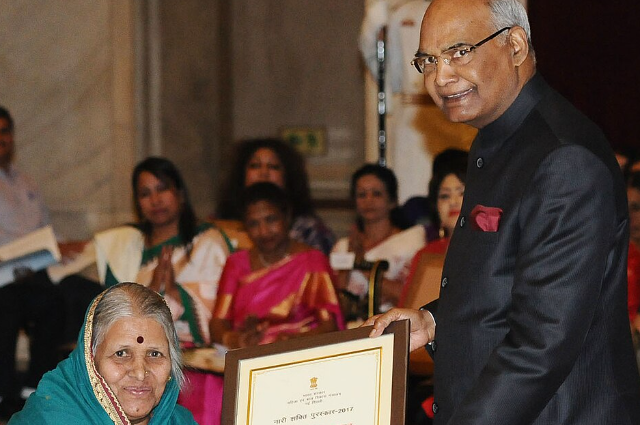
For many years, Sindhutai continued her work through determination, public support, and donations. Eventually, her contribution received recognition at national and international levels. She received several awards for her social work, including the Nari Shakti Puraskar in 2017 and the Padma Shri in 2021 in the Social Work category. She also became widely known through the documentary Mee Sindhutai Sapkal, which introduced her extraordinary life to a wider audience. But I believe her greatest achievement cannot be measured through awards. It is found in the lives of the children who received an education, found shelter, built careers, and experienced the affection of someone they could call their mother. Awards can recognise an individual's contribution, but they cannot fully measure the number of lives transformed by that contribution.
The World Lost a Mother, But Her Legacy Lives On
On 4 January 2022, Sindhutai Sapkal passed away at the age of 74. Her death marked the end of an extraordinary personal journey, but the values she stood for continue through the children, institutions, and people influenced by her work. She left behind something much more meaningful than a collection of awards or public recognition. She left behind a family that extended far beyond the boundaries of her own household. When I think about her story, one question repeatedly comes to my mind. How many people in this world are abandoned simply because they are poor, unwanted, or considered someone else's responsibility? We live in a society that frequently speaks about humanity, kindness, and compassion. We celebrate inspirational personalities, share motivational quotations and express sadness when we hear about unfortunate incidents. But how often do we actually step forward when someone needs help?
Sindhutai did not wait for society to become more compassionate. She practised compassion when she herself needed it the most. She did not have unlimited resources. She did not begin with wealth, influence, or powerful connections. She began with the little she had and continued despite the difficulties. Her life also reminds us that children need much more than food and shelter. They need affection, encouragement, education, security, and the feeling that somebody genuinely cares whether they succeed or fail. A society cannot call itself progressive if its most vulnerable children are left without opportunities.
What Her Story Means to Me
I think one of the saddest things about human suffering is that it can sometimes make people lose their ability to trust, love, and care. Yet Sindhutai's life presents a different possibility. She experienced cruelty but did not choose cruelty. She experienced rejection but did not become rejecting. She knew what it felt like to be unwanted, but she made hundreds of children feel wanted.
Her story makes me question our understanding of strength.
We often associate strength with physical power, financial success, professional achievements, or social status. But perhaps strength also means continuing to care when life has given you every reason to stop caring. It means sharing your food when you barely have enough for yourself. It means giving someone shelter when you once struggled to find one. It means becoming the person you desperately needed when you were younger.
Sindhutai Sapkal's journey teaches us that a person's past does not have to determine the kindness they offer to the world. She could have allowed her painful experiences to define the rest of her life. Instead, she transformed them into a purpose that gave countless other lives a new direction. I believe that is what makes her story unforgettable. She was once a woman who had nowhere to go. She became a woman to whom thousands of children could return. Perhaps the most beautiful definition of motherhood is not found in the act of giving birth, but in the decision never to let another child feel that they are alone. The world may remember her as the 'Mother of Orphans', but the children who found love, protection and a future because of her will remember something much simpler.
Abandoned when she needed love the most, Sindhutai Sapkal transformed her suffering into a lifetime of compassion, giving thousands of forgotten children something they never had: a mother, 'Mai'
And sometimes, that one word carries more meaning than all the awards in the world.