
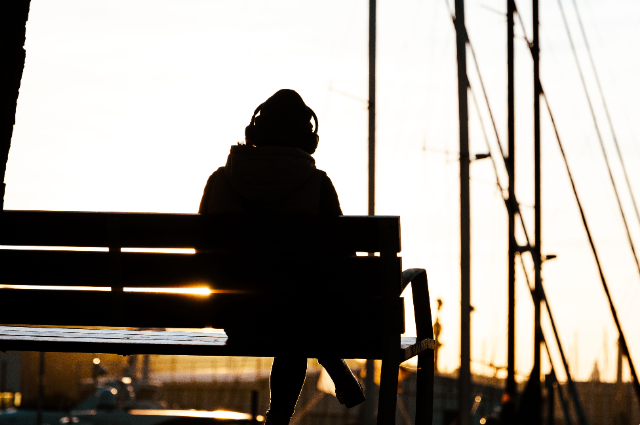
There was a girl named Kriva.
Weird name, na? A combination of Lord Krishna and Shiva. But somehow, she has qualities of both, earned through a lot of pain, while still believing she is God's favourite child.
Since childhood, Kriva has been interested in psychology, philosophy, meditation, and the Vedic perspective on life and the soul's purpose. Maybe that's why she never looked at things the way other people did. When her parents were betrayed by their own close relatives, especially in matters of property, she started observing things that a child shouldn't have to understand at such an early age.
As we all know, family fights are not something new. The people we trust the most sometimes hurt us the most, and elders, even after being betrayed, often continue to see the good in those people. Parents think children don't understand these things, but they do. Even if a child doesn't say anything, they notice everything. They see the fights, feel the tension, and slowly, all of it starts shaping their behaviour.
The same happened with Kriva. She forgave her parents and the people who hurt her family, but she couldn't be the same carefree girl she was before.
Through psychology and modern perspectives, she started noticing how people behave differently with different people. Sometimes, we treat distant people better than the ones who have always been there for us. We fight with our close ones because somewhere we believe they won't leave, but when it comes to choosing between them and someone distant, we often value the distant person more. Kriva understood that being good to people is important, but not so good that they start taking you for granted.
Then came the Vedic perspective. She believed that everything carries karma and that what is meant for someone will eventually find its way to them. Sometimes, she even wondered whether the pain good people go through could be connected to past-life karma. But then another question came to her mind: if the present is still in our hands, why can't people choose to do better now? If parents can see that their child is silently getting affected by family fights, can't they do something to protect them?
Kriva slowly detached herself, not wanting to carry the same grudges and patterns into her own life. She was both mature and childish, making everyone laugh while silently understanding their pain. Strangers trusted her with their stories, but whenever someone cried in front of her, she never believed everything immediately. She always thought, I know your side, but what about the other person's POV?
She struggled to understand people who cried easily, believing tears could sometimes make others feel guilty. To her, sensitivity wasn't about crying. Have you met someone for whom crying is difficult, someone who controls a volcano within themselves because they don't want their pain to become someone else's punishment?
She analysed everything through psychology, philosophy, and Vedic wisdom, yet still couldn't find one conclusion that explained it all. Perhaps life was about to teach her what knowledge couldn't.
If you normally see Kriva, she is someone who cares unconditionally, balances emotions with logic, and makes sure you always have a reason to laugh. Maybe that's why people get attached to her so easily, and many of them genuinely care for her, too.
But we all know that when you fall in love, facts and philosophies don't always work anymore. Sometimes, it's just the heart. And this was what changed Kriva.
She met someone who was, in many ways, a mirror of herself. They laughed alike, fought over similar things, and had so much in common, except for one thing: understanding. He often made fun of her to make her laugh, while she became gentle with him because she never wanted to hurt him. Her heart kept telling her that nobody is entirely good or bad, and that if he understood her, she shouldn't detach herself so easily. But her mind kept asking, if he understood her so well, why didn't he think once before hurting her?
Kriva was always the one making efforts, yet there was someone else he trusted deeply, and his relationship with that person often became a reason for their fights. Eventually, tired of the inconsistency, she decided to stop showing her feelings and detach herself. But the twist was that she never stopped caring. She understood him, respected him, and still maintained boundaries, choosing to keep him only as a normal friend. Imagine caring for someone so much while consciously choosing not to attach yourself to them.
This became another pattern in her life. She wanted her family, friends, and closest people to be happy, but she was also learning that her own needs mattered. With time, the boy changed and began respecting her more, but by then, something had changed within Kriva, too. His efforts could not bring back what she no longer felt in the same way.
Her ordinary behaviour was already full of care, something people often mistake for love. As time passed, she found herself caught between two choices: she couldn't hold someone against their will, but she couldn't always convince her heart to let go, either. Sometimes, she chose to trust that time would change things.
Kriva slowly realised that she wasn't entirely right, nor entirely wrong. The same was true for everyone around her. People see situations through their own experiences, fears, and perspectives. Understanding someone doesn't mean justifying their actions, just as being hurt doesn't make someone right about everything. Sometimes, everyone has their own truth.
Perhaps the greatest thing Kriva learned was spirituality: finding a connection with the divine when life offered no clear choice. She began to understand surrender, not as defeat, but as accepting that she couldn't control every person, every outcome, or every feeling.
And maybe we all have a Kriva within us. The part that loves, questions, overthinks, detaches, and still hopes. The part that learns love can break our ego and our illusion of control over life. Someone may move on after three months, while someone else takes five years. Neither is necessarily wrong. Every person, every bond, and every healing journey is different. Sometimes, things happen that we cannot fully explain, because life always has its exceptions.
The strongest message is that people can have different perspectives, nobody is entirely right or wrong in every situation, and understanding someone doesn't mean you must sacrifice yourself to keep them.
In the end, Kriva's story was never just about love. It was about ego, detachment, divine faith, and the painful realisation that understanding everyone does not mean knowing what to do with your own pain.