
In the late summer of 1941, two botanists named Abraham Kameraz and Olga Voskresenskaia were harvesting potatoes at the Pavlovsk Experimental Station, some thirty kilometres south of Leningrad. The potatoes were not destined for any dinner table. Each row was a living archive, a variety whose ancestors had been gathered from distant corners of the earth by expeditions that had taken years, and the German front was drawing near enough that the harvest could not wait. They dug while the front closed in, and the tubers were carried to the Institute of Plant Industry in the city, to a building that would soon become one of the strangest fortresses of the Second World War.
What followed is among the least told and most instructive episodes of that war. Over the next two and a half years, the staff of the institute protected one of the largest collections of crop diversity ever assembled while their city starved around them. Several of them died of hunger in rooms that held rice, grain and seed. This article sets out what is known of that decision, what it cost, what it preserved, and why the story belongs to the present as much as to the past.
A Collector Who Wished to End Famine
The institute owed its character to one man. Nikolai Vavilov, born in 1887, was a botanist and one of the first geneticists in Russia. He travelled to the great centres of cultivation across the world and added some 250,000 plant samples to the collection (Gulf News/AFP, n.d.). He directed the institute from 1921 to 1940, and in 1926 he founded the Pavlovsk station, which became one of eleven seed banks he established across the former Soviet Union (Yale Environment 360, 2010).
His reasoning was practical rather than romantic. A farmer who plants a single variety is wagering a whole harvest on a single set of genes, and a blight, a drought or a new pest can ruin the wager in one season. A collection of thousands of varieties is an insurance policy against famine, because somewhere within it lies the trait that will resist the disease or withstand the heat. Vavilov also had the humility to learn from traditional farmers, whose long selection of local crops he regarded as a scientific resource and not as a curiosity (Daily Maverick, 2021).
His fortunes turned for political reasons. Vavilov defended Mendelian genetics at a time when the Soviet state favoured the doctrines of Trofim Lysenko, and the disagreement proved fatal. He was arrested in 1940 during an expedition to Ukraine, sentenced to death, and then granted a “pardon” in the form of twenty years in prison (Daily Maverick, 2021). He died of starvation in 1943 (Civil Eats, 2010). The man who had devoted his life to ending famine was starved to death by the state he served, and his institute faced the greatest crisis in its history without him.
The Cellar
The siege of Leningrad lasted 872 days, from September 1941 until January 1944. Estimates of the civilian dead range from roughly seven hundred thousand to nearly a million, most of them victims of hunger and cold (Koerner, n.d.; LessWrong, 2012). People ate grass and boiled the leather of their shoes (Daily Maverick, 2021). Attempts to evacuate the collection had failed, and the staff were left with an unenviable question: should they preserve the seeds or preserve themselves? (Simon & Schuster, 2025).
They chose the seeds. The scientists boxed a cross-section of the most valuable material, carried it into the basement, and organised themselves into shifts that guarded it around the clock (Koerner, n.d.). According to the publisher’s account of Simon Parkin’s book on the subject, they also rescued potato samples under fire, extinguished incendiary bombs that fell on the roof, and defended the collection against scavengers, the bitter cold and their own hunger (Simon & Schuster, 2025). The Germans had coveted the collection as a prize, and when they failed to secure the Leningrad vault, they turned their attention to Vavilov’s other centres (Daily Maverick, 2021).
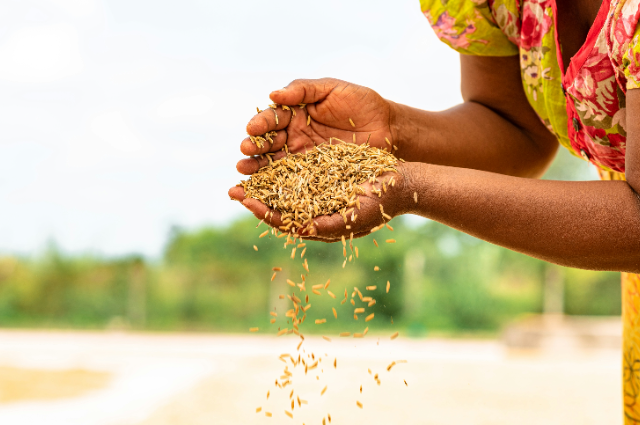
The most affecting detail concerns Dmitri Ivanov, a botanist who died of starvation while guarding several thousand packets of rice (Amusing Planet, 2018). Rice is food in its plainest form, and it lay within his reach. Nothing prevented him from eating it except a conviction about what it was for.
Counting the Dead
Any careful account of this story must acknowledge that the numbers disagree. The most commonly repeated figure is nine scientists who starved to death while guarding the collection (Amusing Planet, 2018; Koerner, n.d.). Other accounts say twelve (LessWrong, 2012; Civil Eats, 2010). The institute itself, in an interview with AFP, pointed to a gallery of portraits of twenty-eight employees who died of hunger during the siege despite having access to the grain (Gulf News/AFP, n.d.).
These figures may reflect different definitions, since some count only those who died at their posts in the vault and others count every member of staff lost to the siege, but none of the sources consulted for this article settles the point. A responsible writer should therefore report the range and decline to choose the most dramatic number. The uncertainty does not diminish the achievement. It is a reminder that wartime records are imperfect, and that the true count of those who died in Leningrad, at the institute or elsewhere, will never be known with precision.
The Moral Arithmetic
Was the sacrifice wise? The question deserves a real answer and not a salute. Reviewers of Parkin’s account note that a few staff members pleaded to be allowed to eat the collection, and that senior officials who had been evacuated before the siege later wrote to grant permission, yet most of the scientists believed in their mission and in Vavilov’s vision (Dear Author, 2025). The decision was therefore not a command carried out in obedience. It was a choice renewed, day after day, by people who could have chosen otherwise.
There is a sound argument on each side. Those who defend the choice point out that a crop variety, once consumed, cannot be rebuilt, and that many accessions in any seed bank exist in small quantities, so a single hungry meal could extinguish a lineage that had taken centuries of farming to produce. Those who are troubled by it observe that human lives are also irreplaceable, and that no seed has a claim stronger than a child’s. The honest conclusion is that the scientists made a terrible wager on behalf of strangers they would never meet, and that it is possible both to admire their courage and to grieve that the choice existed.
What the Seeds Gave
The wager has been repaid with interest. According to a review of Parkin’s account, by 1967 a hundred million acres of Russian farmland had been planted with seeds derived from the institute’s collection, and by 1979 that area had nearly doubled, reaching about a third of all the country’s arable land (Dear Author, 2025). The institute was renamed in Vavilov’s honour in 1968, in time for its seventy-fifth anniversary, and a Soviet postage stamp commemorated him in 1977 (Begin English, n.d.). Breeders in many countries have drawn on the varieties that survived, and the collection continues to be maintained in St Petersburg today.
The episode has also entered culture. The novelist Elise Blackwell fictionalised the siege in her 2003 novel Hunger, which in turn inspired a song by the American band The Decemberists (Begin English, n.d.). More recently, Parkin’s book The Forbidden Garden has brought the botanists’ choice to a wide readership. Yet the best memorial is not literary. It is every field in which a farmer sows a resilient crop and thinks nothing of the long chain of hands that preserved its ancestry.
The Second Siege
The Pavlovsk station, where Kameraz and Voskresenskaia once dug their potatoes, faced a different kind of siege in 2009 and 2010. In December 2009, the Russian Ministry of Economic Development transferred one-fifth of the station’s fields to a federal housing agency, which intended to build on the land. Conservationists reported that ninety per cent of the varieties grown at Pavlovsk exist in no other collection (Yale Environment 360, 2010).
The danger was peculiar to the station’s design. Unlike the Svalbard Global Seed Vault in Norway, which stores dormant seed in cold rooms, Pavlovsk is a field bank, in which living plants must be regularly grown and renewed. Its trees, bushes and berries cannot be dried or frozen, and moving them would take years and considerable philanthropic funding (Civil Eats, 2010; VOA Learning English, 2010). Cary Fowler, who led the Global Crop Diversity Trust, called the potential loss “the largest intentional, preventable loss of crop diversity” of his lifetime (Yale Environment 360, 2010).
The response was extraordinary. A petition organised by the Trust gathered 50,000 signatures, and President Dmitry Medvedev, who had been addressed directly on social media, acknowledged the issue. His intervention halted the bulldozers, guards were posted at the collection’s gates, and a reprieve was granted while an amendment to the Land Code, which then made no reference to the station, was proposed along with a recommendation of national heritage status (Crop Wild Relatives, 2010). Scientists at the institute had earlier appealed through the courts and lost (Civil Eats, 2010). The reports available to this author date from 2010, and readers who require the station’s present legal position should consult the Global Crop Diversity Trust directly.
A Lesson in Redundancy
The parallel between 1941 and 2010 is instructive. In both cases, the threat to the collection was not malice toward plants but indifference to their value. The developers, in one memorable argument, held that because the collection was priceless it was also worthless, for it had no market price (Seed World, n.d.). A seed bank produces its returns slowly and invisibly, and it is therefore easy to mistake for an idle asset.
The world has learned some lessons. There are an estimated fourteen hundred seed and plant preservation centres worldwide, and Norway opened the Svalbard vault in 2008, built into a mountain to hold duplicate copies of seeds from other banks (VOA Learning English, 2010). Duplication is the principle that the Leningrad scientists could not afford: a collection kept in a single building depends on the courage of whoever happens to be guarding it, whereas a collection duplicated across continents depends on no one’s martyrdom.
The Last Word
It is tempting to describe the botanists of Leningrad as saints, but the account is more useful if they are described as scientists. They understood, more precisely than most of their contemporaries, that a harvest is the product of inheritance, and that inheritance, once lost, does not return. Their sacrifice was an act of long-range reasoning carried out in the shortest of circumstances, in a cellar, in the cold, with the answer sitting a few feet away in paper packets.
The next time bread is broken at a table, it is worth remembering that its grain descends from a lineage that someone, somewhere, declined to eat. Vavilov wished to end famine, and the colleagues who guarded his work gave their lives to it so that others might eat. Their memorial is a harvest, and it is renewed every year.
References:
- Amusing Planet (2018) The Scientists Who Starved to Death Surrounded by Food. Available at: https://www.amusingplanet.com
- Begin English (n.d.) In 1941, Vavilov’s scientists refused to eat from the world’s largest seed bank in besieged Leningrad. Available at: https://begin-english.ru
- Civil Eats (2010) Development Threatens One of World’s Oldest Fruit Seed Collections. Available at: https://civileats.com
- Crop Wild Relatives (2010) Pavlovsk collection earns reprieve. Available at: https://www.cropwildrelatives.org
- Daily Maverick (2021) Nikolay Vavilov: the Russian who tried to feed the world, and starved to death. Available at: https://develop.dailymaverick.co.za
- Dear Author (2025) Review: The Forbidden Garden by Simon Parkin. Available at: https://dearauthor.com
- Gulf News/AFP (n.d.) Frozen in time. Available at: https://gulfnews.com
- Koerner, B. (n.d.) Microkhan. Available at: https://microkhan.com
- LessWrong (2012) Vavilov Day starts tomorrow. Available at: https://www.lesswrong.com
- Parkin, S. (2025) The Forbidden Garden: The Botanists of Besieged Leningrad and Their Impossible Choice. New York: Simon & Schuster.
- Seed World (n.d.) The Second Siege. Available at: https://www.seedworld.com
- Simon & Schuster (2025) The Forbidden Garden by Simon Parkin. Available at: https://www.simonandschuster.ca
- VOA Learning English (2010) Russian Housing Plan Threatens Seed Bank. Available at: https://learningenglish.voanews.com
- Yale Environment 360 (2010) New Hope for Pavlovsk Station and Russia’s Rare Plant Reserve. Available at: https://e360.yale.edu