
Three shots were fired in a Bombay bedroom in April 1959. It took the country years to decide what they meant.
Earlier that day, Commander Kawas Nanavati of the Indian Navy had come home from an assignment and found his wife, Sylvia, distant in a way he had not seen before. He asked her what was wrong. She told him. For some time she had been in love with Prem Ahuja, a Sindhi businessman, a friend of the family, a man Nanavati had known for nearly fifteen years.
Much of what happened next was never in dispute. Nanavati drove Sylvia and their children to the Metro cinema, where they were to watch Tom Thumb, a film he had promised them, and left them there. He went to his ship and drew a revolver and six rounds from the stores on a pretext. By the Navy's own log, he even completed some official duties first. He drove to Ahuja's office and found it empty, then to his flat, where a servant let him in. He walked into the bedroom and shut the door. Three shots were fired, and Prem Ahuja died. Nanavati went first to the Navy's provost marshal and then to the police, and told them what he had done. The deputy commissioner would later testify that Nanavati even corrected the spelling of Ahuja's name in the record.
The argument was about the minutes inside that room and the hours before them. The defence said Nanavati had asked Ahuja whether he meant to marry Sylvia and take on her children, that Ahuja had answered with contempt, and that a struggle over the revolver followed, during which it went off. In the defence's telling, Nanavati's first impulse on hearing Sylvia's confession had been to shoot himself, and she had talked him out of it. That was grave and sudden provocation, they said, and it would make the killing a lesser offence than murder. The prosecution pointed at the cinema and the ship. A servant had heard three shots in quick succession and put the whole episode at under a minute, hardly the length of a scuffle. Nanavati had walked out past Ahuja's sister, Mamie, who was in another room of the flat, without a word about an accident, and had unloaded the gun before confessing, which to the prosecution did not look like a man in a daze. The High Court would later count about three hours between the confession and the killing, hours in which a man could have cooled down, and which this one spent collecting a revolver.
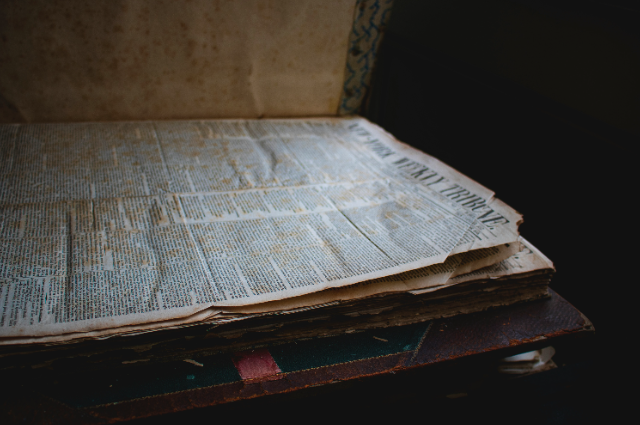
Outside the courtroom, a second trial was running, and it had a much larger audience. Blitz, a weekly tabloid owned by Russi Karanjia, took the case up like a serial. In its pages, Nanavati was the wronged husband, a decorated officer of middle-class decency betrayed by a friend. Ahuja was the playboy, a seducer who, as Blitz told it, lured women into his bedroom. Copies that usually sold for a quarter of a rupee went for two during the trial. On the pavements, hawkers sold toy revolvers named after the commander and towels named after the dead man.
Bombay picked sides the way cities do. The Navy and the Parsi community stood behind Nanavati, who was a Parsi. The Sindhi community stood behind Ahuja's sister, Mamie, who had asked a young lawyer named Ram Jethmalani to help the prosecution. He was thirty-six and had no great name yet. This case would give him one. Karl Khandalavala argued for Nanavati, and at one stage or another the best legal minds of the era turned up, among them Nani Palkhivala, Y. Y. Chandrachud and H. M. Seervai. The historian Gyan Prakash has called it India's first media trial, and the label fits.
In the middle of all this stood Sylvia, English by birth, the mother of three, and the reason any of it had begun. Her letters to Ahuja were read in court, and they complicated Mamie's claim that her brother meant to marry her; in them Sylvia herself wondered whether he did. In one she wrote that something inside her had snapped when he spoke of the other girls he might marry. Asked why she had taken the children to a film while her husband was in such a state, she answered that she had been upset herself, had not been thinking clearly, and had found it hard to explain such things to children. She stood by her husband through all of it. The author Bachi Karkaria, who wrote a book on the case, has said what held her attention: how the killer became a hero, the dead man a villain, and Sylvia a hazy bystander in her own story.
The case went before a jury, and later critics would say the jury had been listening to the city as well as to the witnesses. By eight votes to one, it found Nanavati not guilty. The sessions judge, Ratilal Bhaichand Mehta, called the verdict perverse and sent the case up to the Bombay High Court, a step with little precedent. People in the courtroom and outside it cheered. When Nanavati was led out to his car, some of them offered him flowers.
The High Court heard the matter afresh, found that the jury had been misdirected on points of law, and in March 1960 convicted Nanavati of murder and sentenced him to life imprisonment. Within hours, the Governor of Bombay suspended the sentence so that he could appeal. The Supreme Court later set that order aside, and Nanavati went to prison. On 24 November 1961, it upheld the conviction. Provocation, the Court held, has to be sudden, and a man who has hours to reflect and spends them arming himself has not been provoked in the way the law means. The test it set out is still cited in Indian courts.
That should have closed the story, but it had too many friends. Public sympathy never left Nanavati, and Blitz went on campaigning for a pardon even after the Supreme Court had spoken. The difficulty was the Sindhi community, which was expected to react badly. What eased it, by Aarti Sethi's account, was a pair of quieter developments. Mamie Ahuja, who had fought the case for years, gave her assent to the pardon in writing. And the government had before it the application of Bhai Pratap, a Sindhi trader and freedom fighter convicted of misusing an import licence, whom it was already inclined to release. The Governor of Maharashtra, Vijaya Lakshmi Pandit, sister of Prime Minister Nehru, pardoned both men on the same day. Nanavati had spent about three years in custody.
The jury system did not come out of the case unscathed. It is often said that this was the last jury trial in India, and that is a myth; juries went on sitting in some courts well into the 1960s. But the verdict gave critics their best exhibit, an argument that ordinary jurors could be swayed by sympathy and by what they read in the papers. Jury trials were phased out in favour of trials by judges, and the Code of Criminal Procedure of 1973 made it official.
Nanavati and Sylvia emigrated to Canada with their children and settled in Burlington, Ontario, where he died in 2003. Prem Ahuja, who died that day in April, never got to say anything for himself. What survives of him is largely what a tabloid chose to print.
The story outlived the case. Salman Rushdie gave a fictional Commander Sabarmati a chapter of Midnight's Children, Gulzar's film Achanak drew on it in 1973, and Rustom retold it in 2016.
What I cannot put down is the cinema. A father leaves his children at the pictures, promises to collect them, and drives away. Whether his mind was already made up is what three courts spent years deciding. Bombay wanted a story with a clean shape: a good man pushed too far, a guilty man dead, an ending that let everyone feel the world was in order. The courts held on to the untidier version, in which a man can be wronged and still answer for what he does with the hours that follow. It was not a satisfying thing to cheer. The crowd with the flowers cheered anyway.
References:
- K. M. Nanavati v. State of Maharashtra, AIR 1962 SC 605, Supreme Court of India, decided 24 November 1961.
- "K. M. Nanavati v. State of Maharashtra," Wikipedia, en.wikipedia.org/wiki/K._M._Nanavati_v._State_of_Maharashtra (draws on Aarti Sethi, "The Honourable Murder," Sarai Reader 2005, and Gyan Prakash, "Blitz's Bombay," Seminar).
- "The Nanavati Papers," Business Standard, business-standard.com/article/specials/the-nanavati-papers-116072901521_1.html
- "In Hot Blood: The Nanavati Case That Shook India" by Bachi Karkaria, reviewed in The Quint, thequint.com/lifestyle/books/in-hot-blood-the-nanavati-case-that-shook-india-by-bachi-karkaria
- "Love/Death and Scandal in Bombay," Man's World India, mansworldindia.com/entertainment/cinema/love-death-and-scandal-in-bombay-nanavati-case-inspired-film-rustom-the-real-story/
- Vir Sanghvi, on the lawyers of the Nanavati case, virsanghvi.com/Article-Details.aspx?key=1329