
The work that cannot pause
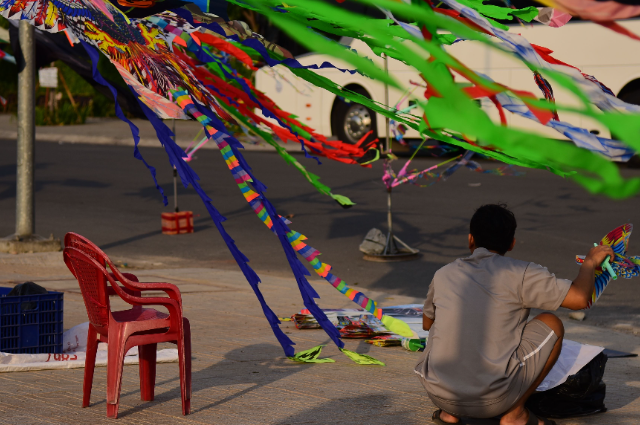
In Danilimda, a neighbourhood of Ahmedabad, Fatima makes kites at home. In the months before Uttarayan, the city’s kite-flying festival, she can make as many as 300 kites a day. Her work depends on delicate materials. A ceiling fan may scatter or damage them, so on the hottest days she faces an uncomfortable choice: keep working in a hot room or lose income by stopping. When temperatures rose above 45°C on successive days in 2024, Fatima and other workers reported dizziness, headaches, and skin rashes. The World Bank reported her experience after officials visited the neighbourhood to learn from Ahmedabad’s heat response.
Fatima’s account is not simply a weather story. It shows how heat affects a household’s livelihood. Someone who works outdoors may be visible to passers-by, but a home-based worker can be exposed behind a closed door, with no employer responsible for providing shade, water, or rest. The risk increases when a day without work means less money for food, rent, or school expenses. A public-health message to “stay indoors” may sound straightforward, but for someone who already works indoors, the room itself may be hazardous.
The city’s warning came too late once
Ahmedabad had already learned that extreme heat could become a major public-health emergency. In May 2010, a severe heat wave struck the city. One study reported that the crude daily death rate, normally around 100 deaths, rose to more than 300 on the hottest day. Another analysis estimated 1,344 excess all-cause deaths that month. These figures were more than statistics. They revealed a danger that can otherwise be mistaken for ordinary summer discomfort: heat can overwhelm the body, worsen existing illnesses, and become fatal.
After the disaster, the Ahmedabad Municipal Corporation worked with public-health researchers and other partners to create a Heat Action Plan. Launched in 2013, it was the first municipal heat action plan in South Asia. Its development drew on local needs assessments, health data, discussions with community representatives, and consultations with hospitals, emergency services, and other agencies. That process matters. A plan designed only in a distant office might issue a forecast but miss the daily decisions that determine whether people can protect themselves.
The plan links forecasts to a chain of actions. The India Meteorological Department provides information about expected temperatures. Colour-coded alerts communicate the danger, while municipal departments, hospitals, emergency responders, community organisations, and media outlets are notified. Health facilities prepare for heat-related illness, and public messages advise people to reduce exposure, drink water, and cool down. During high-risk conditions, warnings should travel beyond the weather desk to reach where people work, seek care, and make decisions.
A warning is useful only if people can act on it.
For a warning to save lives, it must arrive on time, make sense, and offer a practical next step. “Drink water” is useful advice, but it does not ensure access to clean water. “Avoid the sun” can help a street vendor, but it does not cool a poorly insulated home. Advice to stop working may also be impossible for someone paid by the piece. That is why Ahmedabad’s response has expanded beyond alerts to include community outreach, health-system readiness, and efforts to reduce exposure.
The city’s plan emphasises communication through multiple channels, including media, text messages, printed materials, and direct outreach. It also focuses on groups whose work or living conditions increase their exposure: construction and industrial workers, street vendors, women, children, older people, and residents of low-income neighbourhoods. Health workers are trained to recognise and manage heat-related illness. Some construction schedules can be shifted to cooler hours, and clinics and emergency services can prepare for higher demand on high-alert days. These steps do not eliminate heat, but they can help people turn warnings into action.
Community-based organisations in Ahmedabad have also addressed conditions inside homes. Mahila Housing Trust has supported reflective roof treatments in low-income areas. A light-colored roof can reflect more sunlight and reduce indoor heat compared with a dark roof, making a home more comfortable during the day. The World Bank reported that the Trust had treated roughly three million square feet of roofs by 2024. This practical intervention is also a reminder that adaptation involves more than emergency response; it includes improving the places where people live.
For women in Danilimda, another response has been hot-weather microinsurance through the Self-Employed Women’s Association. The World Bank reported that a payout of 2,000 rupees could be triggered when temperatures crossed a high-hazard threshold. For a worker such as Fatima, this payment can make taking a break from work more financially possible. Insurance does not cool a room or prevent illness. Instead, it can reduce the financial penalty of protecting one’s health.
What the evidence can and cannot say
A peer-reviewed pilot evaluation compared summer mortality patterns before and after Ahmedabad introduced its plan. The researchers found that the plan was associated with lower mortality on extremely hot days and estimated that more than 1,000 deaths may have been avoided each year. This is an important result, but the authors urge caution. Their study was observational, and factors such as changes in population, air pollution, housing, adaptation, or the timing of hot days could not be fully ruled out. The findings support the promise of a coordinated plan, but they do not prove that the plan alone caused every observed change.
This distinction is essential to honest storytelling. A city’s success should not be exaggerated into a claim that the heat problem has been solved. Ahmedabad still faces hot seasons, uneven housing conditions, and workers whose incomes depend on working through discomfort. Fatima’s experience in 2024 shows the limits of a system that can warn people but cannot yet cool every home or make every lost workday affordable. Progress is real, but much remains to be done.
The broader lesson is that effective protection depends on coordination and trust. Forecasters can identify risks, but health services need to know how to respond to alerts. Municipal teams can prepare, but residents must receive messages they can understand. Community groups can explain why a fan cannot simply be switched on in a kite workshop or why a vendor cannot leave a stall during the hottest hours. This local knowledge should shape the plan, not be treated as an afterthought.
A city that listens before the next heat wave
Extreme heat is often described as an environmental problem, but its effects are shaped by work, housing, and income. The same temperature may mean a manageable afternoon for someone with a cool room and paid leave, but a health threat for someone whose home is also a workshop and whose earnings depend on each finished kite. Recognising these differences does not distract from science; it helps a city turn science into effective protection.
Ahmedabad’s experience shows how a tragedy can lead to a coordinated system of forecasting, public warnings, prepared health services, and community action. The next challenge is to extend that system further into daily life. This means cooling homes, protecting workers, improving access to water and rest, and ensuring that people who lose income when they stop working are not forced to choose between earnings and safety.
Fatima’s kites are made for a festival that fills the city’s sky. Her story points to a quieter measure of resilience: whether a city can help the people who make them stay safe without making them bear the cost alone. A forecast becomes a public-health tool when it leads to action. That action becomes meaningful when it listens to people who know, from inside a hot room, what protection must make possible.
References:
- Nick Jones and Nerali Patel, “On urban heat, India offers lessons to the world,” World Bank Blogs, 21 November 2024. https://blogs.worldbank.org
- Knowlton et al., “Development and Implementation of South Asia’s First Heat-Health Action Plan in Ahmedabad,” International Journal of Environmental Research and Public Health, 2014. https://pmc.ncbi.nlm.nih.gov/articles/PMC4024996/
- Mavalankar et al., “Ahmedabad’s Heat Action Plan: Development and lessons learned,” ClimaHealth, 2022.
https://climahealth.info/ - Hess et al., “Building Resilience to Climate Change: Pilot Evaluation of the Impact of India’s First Heat Action Plan on All-Cause Mortality,” Journal of Environmental and Public Health, 2018. https://pmc.ncbi.nlm.nih.gov/articles/PMC6236972/