
There is a particular kind of happiness that begins long before the journey itself, a happiness that makes even the calendar feel like a companion conspiring in your favour. Mine began with a countdown. A few days before Durga Puja, while the world around me continued with its ordinary business of lectures, assignments, and college deadlines, I had already begun measuring time in the only units that mattered to me. Every morning, I would text my mother, Good morning, five days to go! Then, Good morning, four days to go! Three days. Two days. Each message was a little prayer disguised as a greeting, a small announcement to the universe that I was getting closer to where I belonged. Perhaps it was childish, this excitement over returning home, but I had never understood why growing up was supposed to mean growing out of such things. We spend our lives learning to leave, learning to manage ourselves, learning to become people who can survive without being held. And yet, somewhere between becoming independent and learning to stand alone, I think we forget that there is no shame in wanting somewhere to return to.
One morning, a friend asked me, rather casually, what made me so excited about going home. I remember feeling strangely offended. How could I possibly explain something so ordinary and, at the same time, so sacred? How could I tell her that home was the place where I could sleep without worrying about tomorrow, where silence did not need an explanation, and where I did not have to earn my right to be tired? Home was where I could exist without constantly proving that I was capable of existing on my own. It was the place where somebody would notice if I had eaten properly, where my smallest inconveniences could become somebody else's concern, and where I was allowed to be a daughter before I was expected to be anything else. Everybody needs such a place, I told her. Perhaps we spend our entire lives searching for it in different people, different cities, and different dreams. I was fortunate enough to know its address. Why, then, should I not be excited to return?
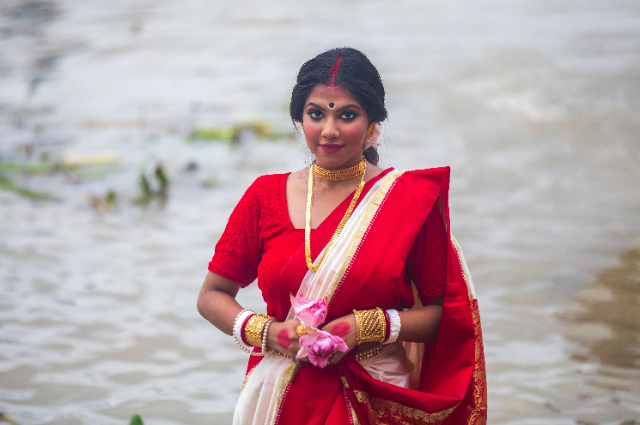
And perhaps this is why Durga Puja has always felt like something more than a festival to me. In the Bengali imagination, Maa Durga is not merely the formidable goddess who arrives with her children to defeat evil; she is also Uma, the daughter who returns to her parental home, welcomed with the tenderness reserved for someone who has been away too long. Every autumn, we decorate our streets, illuminate our pandals, and wait for her arrival as though the entire city has been preparing to receive its own daughter. And this year, I realised that the same celebration was quietly taking place in my own little corner of the world. Just as Kolkata dressed itself in lights for the Goddess, my parents had decorated our home and even our car, preparing them for my return. There was something so touching about that thought: while an entire city was making arrangements to welcome its divine daughter, my own little world was dressing itself up to welcome me. Our home, too, had its own pandal of affection, its own lights of anticipation, its own quiet rituals of waiting. There is something beautifully human about this divinity. We worship her strength, but we also understand her longing. We celebrate the goddess who can conquer demons, yet we make room in our hearts for the daughter who simply wishes to come home. And when the days of celebration end, when the drums grow quieter, and the idols begin their journey towards the river, we are reminded that even the most magnificent arrivals must eventually become departures. Perhaps that is the secret sorrow of growing up: learning that leaving is inevitable, but never quite learning how to leave without looking back.
This year, I travelled home alone. There was something quietly significant about that journey, about finding my way back without needing someone to accompany me, about watching familiar landscapes unfold beyond the window and realising that independence could carry me home just as easily as it could carry me away. I had once thought of my nest as a place I was always preparing to leave. I wanted the world, its unfamiliar streets, its opportunities, its endless possibilities. I wanted to discover who I could become beyond the safety of everything I knew. But somewhere along the way, I began to understand that a nest is not a cage simply because it offers shelter. A bird does not return because it has forgotten how to fly; it returns because even the widest sky cannot replace the comfort of a familiar branch. And perhaps this understanding became clearest when I heard my friends speak of how their families celebrated the Goddess at home. In some households, five varieties of fish would be prepared for Devi, alongside every imaginable delicacy worthy of a divine guest. I found myself thinking how privileged I was to live in a home where my parents practised a similar kind of devotion, only their daughter happened to be the one returning. They, too, bought and cooked every possible good food, made sure there would be maacher jhol waiting for me, and turned ordinary meals into little feasts of welcome. Somewhere between the fish curries, the familiar flavours, and the lovingly prepared dishes, I discovered a kind of worship that needed neither incense nor mantras. I could grow older, become braver, collect degrees, make mistakes, and build an entirely different life for myself. None of that would make the place where I began any less precious.
And so, perhaps the answer to my friend's question is simpler than the explanation I tried to offer her. Devi or the ordinary naari, every daughter seeks the home that makes her heart tarangit—though no rhyme could ever quite contain the feeling. Maa Durga returns to her earthly home not because she lacks the power to stand alone, but because even divinity deserves the tenderness of belonging. And perhaps that is what this Puja taught me: that independence and longing can coexist, that becoming your own person does not require you to outgrow the people who made you, and that the courage to leave is only half the story. The other half is having somewhere to return to. One day, I will leave again. I will count down to other journeys, discover other versions of myself, and perhaps build a nest of my own. But no matter how old I grow or whoever I become, somewhere there will always be a home that remembers me before the world knew my name. A home where the car is decorated for my arrival, where the lights are switched on a little more lovingly, where the fish curry tastes like a childhood that never quite leaves, and where my arrival is reason enough for a celebration. After all, home is where love lives, and no matter how far a daughter travels, the heart always knows the way back.