
A rescue story usually ends when the animal is released. But the real question is larger. What does all this work change for wildlife, for families and for the city?
The fourth article in our series looks for the answer in Wildlife Welfare Association's own rescue records. Since September 2023, WWA has logged every rescue in an app, and it now publishes the anonymised totals on its website. The earlier articles told how WWA began, how it grew and which rescues made news. This one explains how the work creates benefits, and is careful to separate what is measured from what is likely but unmeasured.
Where wild animals meet people
WWA's records show that wildlife conflict in this region is not a forest problem. It is a home problem.
| Where the animal was found | Animals, Sep 2023 to Nov 2026 |
| Inside a house | 1,100 |
| Inside a housing complex | 489 |
| By a roadside | 429 |
| In a garden | 350 |
| In a building lobby | 201 |
| At a construction site | 167 |
More than a third of all logged animals were found inside someone's home. That single fact explains much of WWA's value. When a snake or a civet appears in a living room, the family's first instinct may be fear, and fear can lead to a bite or to a dead animal. A rescuer who arrives quickly takes both risks away.
Most rescues happen in and around Thane. Of the animals logged, 2,649 came from the Thane forest range, with smaller numbers from Navi Mumbai, Mumbai, Yeoor, Padgha, Bhiwandi and Dahanu.
When the calls come
The records also show a clear season. Across all recorded years, calls are lowest in May and climb with the monsoon. They peak in October, the busiest month, with 427 animals logged across all years, most of them reptiles. WWA explains that snake calls rise with the rains, when flooded burrows push snakes into homes and gardens.
The helpline does not close at night. About 16 per cent of calls come between 8 pm and 6 am.
How fast help arrives
Speed matters in a rescue, both for the animal and for a frightened household. WWA measures the time from a case being logged to a rescuer accepting it. Across 3,743 cases, 87 per cent were taken by a rescuer within 30 minutes and 93 per cent within an hour. Travel time comes after that.
The system behind this is simple. A call to the helpline becomes a case in the app, every rescuer on duty is alerted at once, and the first available one takes it.
How the work helps wildlife
Fewer animals killed in fear. This is the most direct benefit, and it works through a clear mechanism. WWA's public guide tells people not to catch, corner, kill or throw things at a snake, and to call instead. Every animal removed by a rescuer is one that was not beaten to death in a corridor. This is a reasonable inference from the work, though it is not counted.
Treatment and release. WWA says 352 animals have received rehabilitation care since September 2023, at its centre in Manpada and through partner veterinarians. Healthy animals go back to suitable habitat; injured ones are treated first. Individual releases are documented in news reports. WWA does not publish a total number of releases.
Breadth of species. WWA has recorded 96 species. That includes animals of conservation concern, such as the Leith's softshell turtle it treated in 2022, which the Free Press Journal described as critically endangered.
Upholding the law. Rescues are reported to the Forest Department, and WWA works with forest officials against illegal wildlife trade. The 2019 King Cobra case, described in Article 3, began with an illegal exchange of snakes.
Habitat. On World Environment Day in June 2026, WWA and Sanjay Gandhi National Park held a tree plantation drive in the park's forest. It is one documented drive; its long-term results are not yet measured.
How the work helps people
Safer homes. Removing a venomous snake from a house protects the people in it. WWA connects its work to India's high snakebite burden, and its safety guide gives the key first-aid steps: keep the person calm and still, go straight to a hospital with anti-venom, and do not cut, suck or tie the wound.
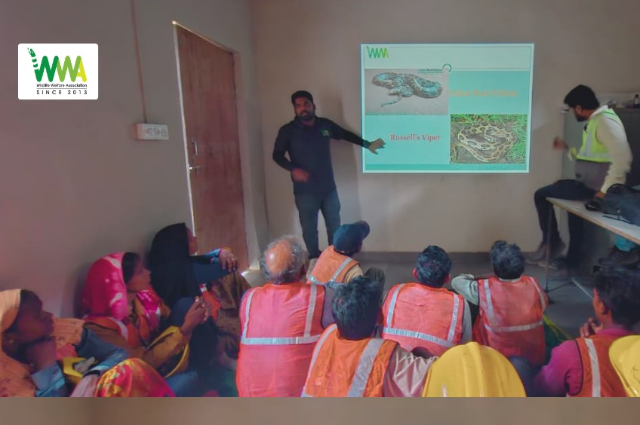
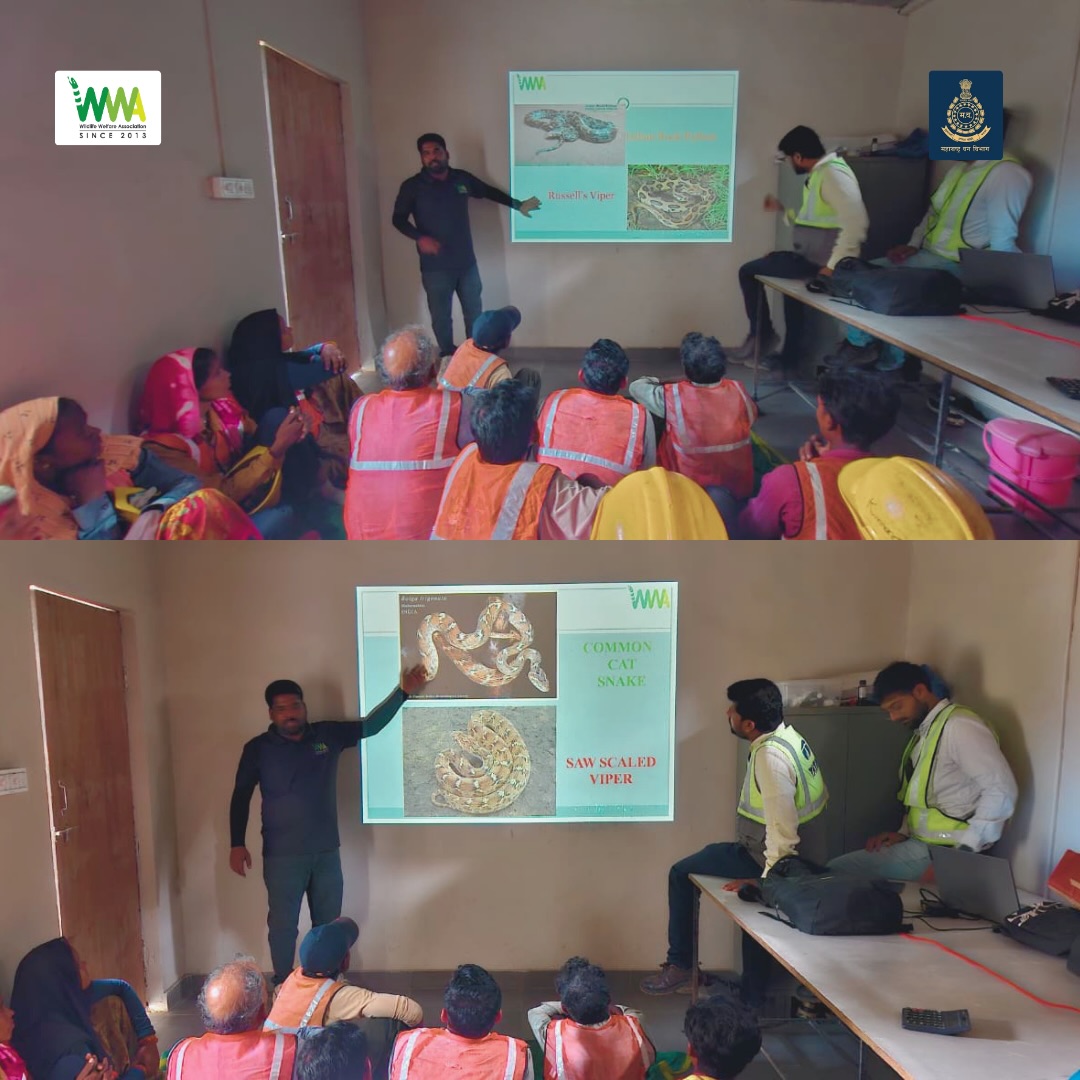
Knowledge that lasts. WWA's awareness sessions aim to turn fear into understanding. In April 2026, it ran a session for workers at a construction site, the kind of place where 167 of its logged animals were found. Its Instagram feed also shows a session on illegal wildlife trade. Mission Zero Bite, a named WWA programme, aims to prevent snakebites and attacks through awareness and safe practice.
A trusted link to officials. For a resident, calling the Forest Department about a crocodile on the road can feel daunting. WWA bridges that gap. It takes the call, informs the authorities and carries out the rescue with their approval, as it did in Powai in July 2026.
Respect for privacy. WWA's published figures never show who called or where an animal was found or released. Places are grouped by forest range, and any group with fewer than five rescues is merged into "other". This protects callers and also protects animals from people who might want to find them.
What we can and cannot say
The benefits above fall into three groups. Some are directly documented: rescue counts, response times, places, species and individual cases reported in the press. Some are reported by WWA alone, such as rehabilitation totals. And some are reasonable long-term benefits, such as fewer snakebite deaths, healthier local wildlife and greater public tolerance of wild animals, which no one has yet measured for WWA's area.
That honesty matters. The strongest case for WWA is not a claim that it has changed the city's ecology. It is the plain record of thousands of animals moved safely out of homes and back towards the wild, and of thousands of families who called for help instead of reaching for a stick.
The final article in this series looks at WWA's continuing mission and at how readers can take part.
Figures are from WWA's website as of 10 November 2026.