
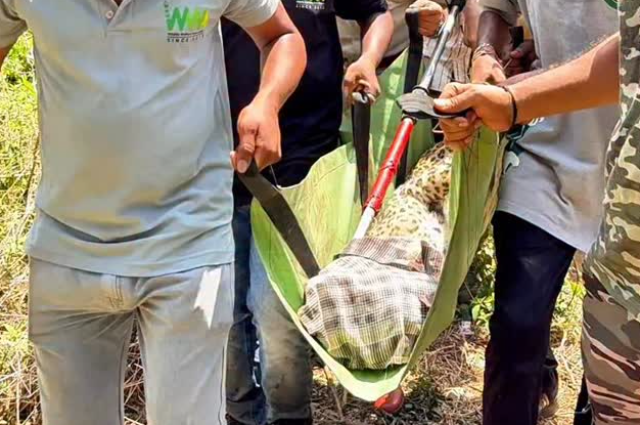
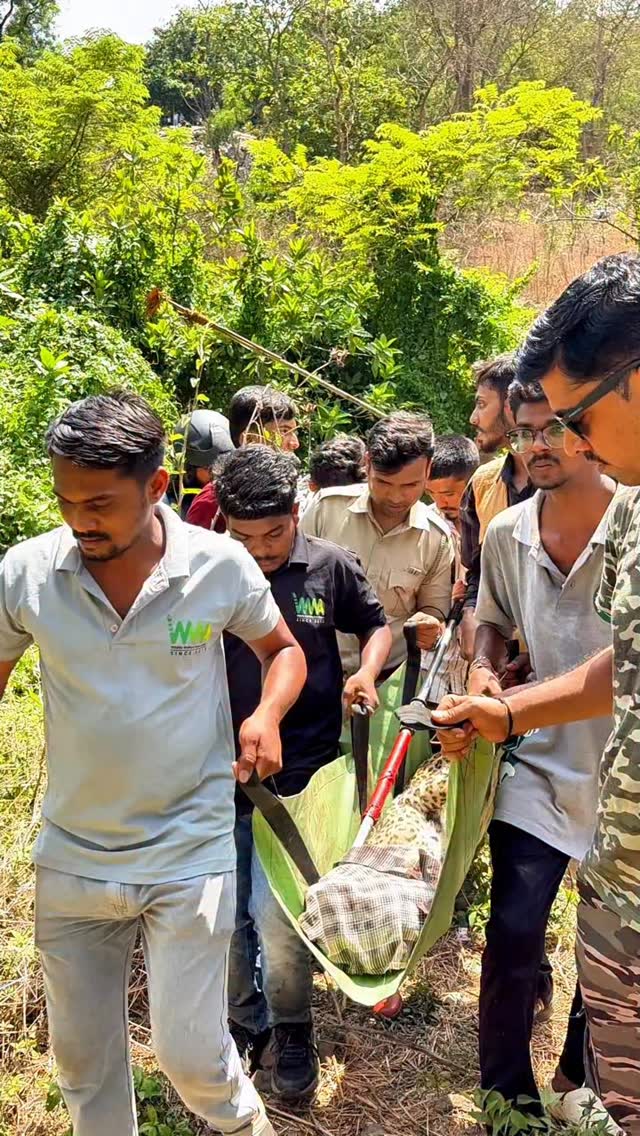
"Every call. Every creature." That is how Wildlife Welfare Association sums up its work on its website today, more than thirteen years after it began rescuing snakes in Thane.
This is the last article in our five-part series. The first four told how WWA began, how it grew, which rescues made news and how the work changes. This one looks at the present and ahead, and at what readers can do. Where we discuss the future, we are careful to separate what WWA has said from our own reading of the wider picture.
The mission today
WWA's stated mission is to conserve wildlife and its habitat and to work for the welfare of individual wild animals, in partnership with communities and government. Its vision is a society that realises the value of the wildlife around it and accepts its existence alongside us.
In practice, that means eight areas of work. Rescue and rehabilitation are the core. Around them sit human-animal conflict management, wildlife disaster rescue, community outreach, a snakebite prevention programme called Mission Zero Bite, scientific research and support to the Forest Department against wildlife crime.
What WWA is doing now
The work in 2026 has been steady and varied. By early November, WWA had rescued 608 animals in the year: 416 reptiles, 145 birds and 47 mammals. It posts a monthly activity report on Instagram, giving the count of mammals, reptiles and birds rescued that month.
Its recent posts show the range. A fruit bat was freed from garden netting in a housing society. A brown wood owl, seldom seen in the city, was rescued. A baby monkey abandoned by its troop was taken into care. In August, an injured nilgai was rescued at Shahapur, on the district's rural edge. In June, WWA and Sanjay Gandhi National Park planted saplings in the park's forest on World Environment Day.
WWA's current website, whose legal pages are dated October 2026, publishes its rescue figures openly, updated through the day and stripped of anything that could identify a caller or an animal's location.
The pressures ahead
WWA has not published a formal plan for the coming years, and we have not found any announced new projects. What its own words and records do show are the pressures it works under.
A city growing into wild spaces. In a recent awareness post, WWA noted that encounters between people and wildlife are becoming more common as cities grow into natural habitats. Its records support this view of where conflict happens: inside homes, lobbies, gardens and construction sites.
The monsoon surge. Calls rise sharply with the rains. In July 2026 alone, WWA's records show 119 animals rescued, against 33 in May. A volunteer team has to stretch to meet that peak every year.
People and equipment. WWA speaks of about 100 volunteers, and its records show 32 rescuers active in the past twelve months. Every rescue has a cost. The organisation lists fuel for night call-outs, snake hooks, carriers and medicine among its needs, and its equipment wish-list includes trail cameras, protective gloves, headlamps, animal carriers and heat and UV lamps for recovering reptiles.
Our reading of the wider picture
The following is editorial analysis, not a statement by WWA.
The Mumbai region is unusual. Few large cities in the world have a national park, leopards, crocodile lakes and mangrove creeks within their limits. That makes urban wildlife rescue less a niche activity and more a basic civic service, much like a fire brigade for animals.
Three things seem likely to shape that service. First, data: WWA's move to logged, anonymised rescue records gives officials and researchers a factual picture of where and when conflict happens. Second, partnership: its rescues were joint efforts with the Forest Department, SGNP teams, municipal disaster cells and veterinarians. Third, prevention: the cheapest rescue is the one that is never needed, because a family knew what to do.
What you can do
You do not need to handle a snake to help wildlife. WWA's own guidance gives every reader a role.
When you find a wild animal. Stay calm and keep a few metres away. Keep children and pets back. Do not try to catch, corner or kill it, and do not call untrained people. If a snake is inside a room, leave, shut the door and put a towel along the gap. For an injured bird, place it gently in a ventilated box in a dark, quiet place, and do not force food or water into it. For a monkey, civet or other mammal, keep your distance, close your doors and keep crowds back. Then call the WWA helpline: +91 97573 22901, 22902 or 22903, answered 24 hours a day.
If someone is bitten by a snake. Keep the person calm and still and go straight to the nearest hospital with anti-venom. Do not cut or suck the wound, do not apply a tight tourniquet, and do not use ice or herbal remedies. Do not waste time trying to catch the snake.
Remember the law. Wild animals are protected under the Wildlife (Protection) Act, 1972. Killing, capturing or keeping them is a punishable offence.
Volunteer. WWA trains volunteers for rescue work, awareness sessions, social media, fundraising and more. It has an online volunteer form linked from its website.
Give. WWA accepts donations by UPI, card or net banking through PayU, and bank transfer, and says donors can request an 80G tax certificate. Full details are on its donate page. You can also buy an item from its equipment list and have it delivered to the rescue centre at Manpada, Thane.
Spread the word. Save the helpline number and share it with your housing society. A number on a society notice board may be what saves the next animal, or the next person.
The work continues
WWA began with two people and a few snake calls. Today it's a helpline that links thousands of households to trained volunteers, forest officials and vets. Its future depends less on any grand plan than on something simple: that the next person who finds a wild animal at their door picks up the phone.
Figures are from WWA's website as of 10 November 2026.