
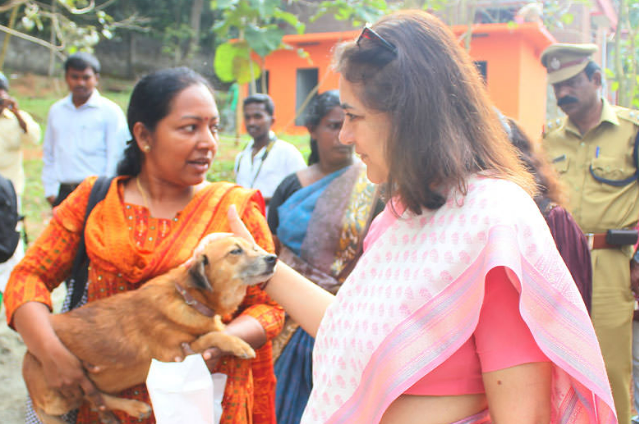
Animal care and welfare remind me of Meneka Gandhi, a well-known animal rights advocate. Many people focus only on common pets like dogs and cats, even though animal welfare is a much broader and more important issue. Others still think mainly about village animals like cows, buffaloes, camels, and goats, even while living in metro cities.
The point is, why?
Why do we have to think about caring for animals? For me, animals are herbivorous or carnivorous. They are amazingly living their lives in the jungle. They pretend not to worry about their lives, unlike humans, who do because they have brains. The tricky thing is that evolution made humans via monkeys. On what cost? For destroying animals' lives and risking the ecological balance of nature? Even vegetarians who think they are very cool don’t harm or eat animals or birds. But the bitter truth is that one simple human indirectly unknowingly uses animal byproducts on a large scale for daily wages.
We care for those animals only in return; people knew they were nourishing them and securing them like all pets. Besides pets, we hold nothing in our hands. Animals in India face extinction despite conservation efforts due to relentless habitat destruction, illegal poaching, and escalating human-wildlife conflicts. We read about what else we can do to rescue them, but we're scared when panthers are found in someone’s home near you.
Before stepping into animal care and welfare, I want to draw your attention to how innocently we are affecting animals' lives, often unknowingly, in the name of top brands, the economy, and lavish status, because most of us can afford that life or have become addicted to such accessories. I am not saying in that way also that we all become vegan, stop drinking cows' milk, butter, curd, and so on, as it's not going to harm, kill, or extinct cows for sure. Have a look at what I want to say, keep reading.
Animal Source Food:-
The term animal source foods (ASFs) has been used to refer to these animal products and by-products collectively. Examples include meat, fat, blood, milk, eggs, honey, and unpopular products such as isinglass (used in wine), rennet (used in cheese), and cochineal (carmine). Increased production and consumption over the past 50-70 years have led to widespread environmental and animal welfare impacts. These extend to 80% of Amazonian deforestation. Since 1950, meat production has tripled, dairy production has doubled, and egg production has increased almost fourfold. As a result, animal husbandry drives climate change, ocean acidification, and biodiversity loss, and kills 60 billion animals annually. Animal fats and other materials can be sold to make commercial products such as cosmetics, paint, cleaners, polishes, glue, soap, and ink.
Ivory, wool, fur, horns, leather, gelatin ( photographic film), feathers, beeswax, royal jelly, silk, scales, sponges, venom, escorted pearls, these on a large scale we knew, and the list is much more beyond. Don’t forget about Bone China Crockery on top, which is ceramic crafted from a blend of 50% bone ash, 25% kaolin, and 25% feldspathic materials. Bone china contains animal bone ash—typically sourced from cattle in the meat industry. Bone china requires the literal boiling, burning, and crushing of bones to achieve its lightweight, milky-white, and translucent finish. Ash of long-dead animals, typically cattle, blended into clay. The process converts sterile animal bones into fine bone ash. Since 1748, we have been using Bone China Crockery. For vegan users, there are porcelain products. In India, the first factory was Bengal Pottery, established in 1964, and Rajasthan became a hub for bone china production from 2003.
Isn’t it strange that the clothing of humans required to be made from the skin of animals?
- Fur and leather have long held prestigious places in the fashion industry, serving as symbols of luxury, durability, and timeless style. Real fur is always taken from dead animals, but the animals are intentionally killed for their skins. Some animals have been skinned alive for their fur to preserve the quality of the pelt. Some important animals used for fur, namely, rodents(beaver, chinchilla, muskrat, nutria), sheep(broadtail, borrego, mangollian lamb, persian lamb), calf, stoat, fox, kangaroo, baby goat, lynx, mink, pony horse, rabbit, raccoon, sable, seal, squirrel, wolf.
- Leather is known for its durability, versatility, and timeless appeal, making it one of the most utilised materials in fashion. Leathers are smooth leather, suede, or split; each skin differs in size, colour, and surface markings. Leather is tanned and chemically treated to maintain and soften it while preserving the material. It's tanned as patent-shiny and glossy,glace-hard and polished, natural grain surface-natural skin,embossed-image pressed into surface. Leather is a by-product of the meat and dairy industries, meaning the animal is slaughtered(BRUTAL KILLING) first, and its skin is subsequently removed and treated. Some important animals used for leather, namely alligators, elephants, lizards, ostrich, buckskin horse, elk deer, pigskin, crocodile, goatskin, snakeskin, eelskin, pony horse, calfskin, cowhide, kangaroo lambskin, sheepskin, and deerskin.
- Cosmetics, the beauty layering the human cruelty. I have heard lipstick contains animal fats. In the cosmetics industry, millions of animals are used alive for laboratory testing, while ingredients and natural hair brushes are made from animals that have been cruelly killed. I am focusing on the animal products used in cosmetics rather than the process or outcomes. Beewax(cera alba or cera flava), Milk protein, Cochineal Carmine, Collagen from animal skin, Elastin from aorta or vertebrae or cattle, estrogen in perfume extracted from the urine of pregnant mare, gelatin by boiling bones, glucosamine from bone marrow of chickens, glycerin could be derived from animal fats, gaunine known as pearl extract, pearl powder or pearl essence made from ground fish scales, honey, hyaluronic acid from combs on the head of rooster, keratin extract from nails, feathers, horns, hair, and hooves of animals, lactose from animal milk is always vegan, lanolin from sheep’s wool, lecithin, oleic acid, panthenol derived from meat or honey, perfume eg castoreum from beaver or cheap vanilla scent from cow dung, propolis from bees, retinol, shellac 1 kg need 300,000 killed insects, silk protien from slikworm cocoons, squalene from shark liver, stearin could be from animal fats.
- The Pharmaceutical Industry evidently conducts clinical trials and testing mainly on several animals, and many animal by-products are used in the preparation of medicines. I am not going into much detail, but for awareness minutely, I want to say animals used in medicines, such as insulin from cattle, pigs, pork, and beef, have been completely ended since 2006, and now synthetic insulins are prepared, shark cartilage is used to cure cancer, Traditional Chinese Medicine includes tiger bones, rhino horns, deer antlers, and snake bile, Homeopathic medicine Oscillococcinum made from duck’s heart and liver, cockroches for anit asthemetic effects, cow blood is used in vaccines.
Every topic is vast, but in a nutshell, I'm just saying, so many animals are killed at what cost? Just for our luxury? Health care is needed, but why are we not taking precautions for our health?
Maneka Gandhi and her Welfare Organisation:-
Maneka Gandhi is a politician, environmentalist, and animal rights activist. She has been a prominent animal rights activist since 1989, the year when she became India's Minister of State for Environment and Forests and began actively introducing sweeping policies for animal protection. In 1995, she was appointed as chairwoman of the Committee for Control and Supervision of Experiments on Animals (CPCSEA). In 1996, she protested against the first McDonald's opening in India, mentioning "we don't need cow killers in India". She is a patron of International Animal Rescue, which is a British-based NGO. She has filed Public Interest Litigations several times, which led to the replacement of municipal killing of homeless dogs by investigating laboratories where animal testing was being carried out. She has filed for Animal Birth Control programs due to the overpopulation of street dogs. In September 2023, she advocated for the protection of the Dol Ka Badh forest in Jaipur. She hosted Maneka's Ark, an environmental talk show which was aired on Doordarshan's DD National channel in the 1990s. She had also hosted Heads & Tails, an animal rights show. As an author, she has written a few books on animal welfare. She has won many animal welfare awards for the work she is wholeheartedly doing towards animals as an activist.
In 1992, she founded her NGO, ANIMAL WELFARE ORGANIZATION, PFA (People for Animals). Headquarters in New Delhi with 100+ regional units. It has a nationwide network of 26 hospitals, 165 units, 60 mobile units, and 2.5 Lakh members. People For Animals has provided treatment to more than 25,000 animals across more than 250 species. This organisation often works with various animal welfare and rights organisations, such as Humane Society International (HSI) and People for the Ethical Treatment of Animals (PETA). People For Animals continues to recognise the concept of the 4 'R's – Rescue, Rehabilitation, Release, and Research. This organisation has also established several veterinary hospitals. It is introducing animal welfare lessons in schools across India. It runs shelters, ambulance services, sterilisation programs, treatment camps, and disaster rescue missions for animals. It utilises a dedicated team of interns to research and write scripts, columns, and pamphlets, and Professionals with backgrounds in animal/social welfare produce digital content and articles on their website. Mostly articles and columns are written by Maneka Gandhi herself as the founder. These articles are broadly about animals, pet animals, their behaviour, and how to understand their unspoken feelings. I understand from their few articles.
Welfare and Rescue:-
Animal welfare science uses measures such as longevity, disease, immunosuppression, behaviour, physiology, and reproduction. It's a long subject to go into in depth, and in short, I must say it directly: indirectly protecting the lives of several animals by creating several laws and NGOs to regulate them. I used to think that animal lives are at risk because of our modernisation, but actually, it’s not.
Animal protection laws were started when Emperor Ashoka (304–232 BCE) issued orders against hunting and animal slaughter, in line with ahimsa. Several Kings built hospitals for the treatment of animals. Jainism is also a great example to emphasise nonviolence as its supreme ethical principle. Their eating habits also focused on not harming, even insects. First animal sanctuaries and charitable hospitals, known as panjrapoles, were founded by Jain Communities. These are dedicated to sheltering, feeding, and medically treating sick, ageing, and rescued animals, particularly cattle and birds. In the 13th century, Genghis Khan protected wildlife in Mongolia. Western Nations such as Ireland and Japan also initiated animal welfare in the 1630s.
In 1776, Humphrey Primatt wrote “A Dissertation on the Duty of Mercy and Sin of Cruelty to Brute Animals”, one of the first books published in support of animal welfare. Primatt has been described as one of the most important figures in the development of a notion of animal rights. He was born in London in 1734 and became a clergyman in the Church of England. He commented that "pain is pain, whether it be inflicted on man or on beast". In his book, he mentioned that God creates animals, so humans have no right to harm them or give them pain. Even though he is never against non-vegetarians due to food habits, eating animals is fair enough, but still, for unnecessary motives, it's bad to harm animals. Arthur Broome was inspired by his book and republished it in 1822. Till late 20th century, many authors struggled for the Animal Welfare Acts.
People for Animals, Voice for Stray Dogs, Wildlife SOS, Blue Cross of India, Federation of Indian Protection Organisations, and PETA are national NGOs. Help in Sufferings, Daksh Animal Foundation, Jaipur Animal Welfare Association, and Go Niravana Foundation are mainly in Jaipur, Rajasthan. Ambani Animal Initiative, Vantara by Anant Ambani in Jamnagar, Gujarat. The Animal Welfare Institute is one of the most efficient and trustworthy organizations to donate to. It was founded by American Christine Stevens in 1951. The WWF World Wildlife Fund has been leading global conservation since its founding in 1961. Sanjay Gandhi Animal Care Centre (SGACC), 1980- India's and Asia’s largest all-animal shelter
Animal Welfare Issues:-
- Animal testing:- Experimental research with animals is conducted in universities, medical schools, pharmaceutical companies, defence establishments, and commercial facilities that provide animal-testing services to the industry. Research has been performed on animals useful for organ transplant techniques, the heart-lung machine, antibiotics, and the whooping cough vaccine. There have been several debates about the ethics and necessity of animal testing. The earliest references to animal testing are found in the writings of the Greeks, the 2nd to 4th centuries.
- Abandoned pets:- Abandoned pets are those who are intentionally left by their owners, dumped on the streets, or left alone in vacant properties. The United Kingdom passed such acts in the 1960s.
- Bambi effect:- The "Bambi effect" is a psychological and societal phenomenon in which people develop a disproportionate empathy and sentiment toward cute, charismatic animals such as deer, baby seals, or pandas. This term is derived from the animated film Bambi.
- Behavioural enrichment:- It is necessary for optimal psychological and physiological well-being. A variety of enrichment techniques are used to create desired outcomes for an animal's individual and species' history. It focused on a wide range of vertebrates and invertebrates.
- Blood sport:- Animal fights just to entertain the public. Common examples of the former include combat sports such as cockfighting and dogfighting. Some forms of hunting and fishing. I witnessed an ox-fighting game in my childhood village; it was scary, and I was shocked by how people just laughed and enjoyed that dangerous fighting. Sometimes a theme in fiction, and sometimes historians' gladiatorial games. Now, virtual games, such as Mortal Kombat and PUBG.
- Cruelty to animals: Cruelty to animals, known for animal abuse, animal neglect, or animal cruelty by humans. Such as the inhumane killing of animals for food or just for entertainment. Leonardo da Vinci once purchased caged birds in order to set them free. In his notebook, he records his anger with the fact that humans used their dominance to raise animals for slaughter. Remains of sheep and goats from the early Bronze Age show less bone thickness, reflecting calcium deficiencies resulting from poor nutrition and intensive milking.
- Feral cat: A feral cat is an unowned domestic cat (Felis catus) that lives freely outdoors and avoids human contact; it does not allow itself to be handled or touched, and usually remains hidden from humans. They are included in IUCN's list of the world's 100 worst invasive alien species. Activists who seek to normalise feral cats in the environment are attempting to rebrand feral cats as community cats.
- Hunting: Hunting, the human practice of seeking, pursuing, capturing, and killing wildlife. It is nothing new to us, as we all have read in history about Kings and Invaders. They hunt animals for food, luxury, and to show unseen power as a symbol. Prehistoric Primitives, has no choice but to hunt animals for food. Even in mythology, several incidents we know of involve hunting.
- Overpopulation in companion animals: There is an overpopulation of pet cats, dogs, and exotic animals. India represents 70% of worldwide human rabies cases, many of which are attributed to stray dogs. During the COVID-19 pandemic, with many people staying home, animals were adopted frequently. Large numbers of animals are placed in shelters by pet owners each year for reasons such as moving, allergies, behavioural problems, lack of time or money, or life events. Some animals can get pregnant again immediately after giving birth, making the timing of removing the reproductive part is difficult for owners. Pets may escape during stressful events. Domestic animal overpopulation can be an ecological concern. Stray animals often feed on wildlife, causing native species to decline.
- Overview of discretionary invasive procedures on animals: Numerous procedures performed on domestic animals are usually more invasive than purely cosmetic alterations. Animals like cats, dogs, cattle, horses, mice, and sheep are used for castration, tail docking, nose tagging, ear tagging, claw removal, tattooing, dehorning, mulesing, pin firing, teeth removal, and branding. Poultry used for beak trimming, blinders, devoicing, dubbing, force feeding, feather plucking, poinioning, spur removal, wing clipping, and caponizing. Snake for venom duct removal.
- Poaching: Poaching is the illegal hunting or capturing of wild animals on conservation reserve land. It is illegal to harvest wildlife with the intention of possessing, transporting, consuming, or selling it and using its body parts. At the end of the 18th century, with easy access to rifles, peasants and servants were increasingly allowed to poach. Poaching was used as a dare. It had a certain erotic connotation, as in Franz Schubert's Hunter's Love Song in 1827. Ivory, rhino, African vultures, fishing, and tigers are mainly targets of poaching.
- Puppy mills: A puppy mill, also known as a puppy farm. A dog breeding facility for quick results in poor conditions. It is a result of increased demand for household pets since World War II. It focused on quantity, indiscriminate breeding, lack of human contact and environmental enrichment, poor husbandry, and no veterinary care. Dogs kept in wire cages led to injuries to their paws and legs. Having poor locomotion facility. The environment is too hot for the dogs.
- Whaling: Whaling is the hunting of whales for their products, such as meat and whale oil. The Whaling industry spread throughout the North Atlantic and later to the rest of the world since 1026. It got banned in the 1960s due to its extinction. Iceland, Japan, and Norway are still engaging in and supporting the commercial hunting of whales. Whale oil is used little today, and modern whaling is primarily done for food: for pets, fur farms, sledge dogs, and humans, and for making carvings of tusks, teeth, and vertebrae.
- Hypertype: Hypertyped animals are exclusively created by humans. Hypertype usually refers to an exaggeration of traits in animal breeding. Breeds of cats, dogs, horses, rabbits, and livestock have extremely short muzzles, excessive skin folds, or amplified skeletal proportions. Some are forced to become dwarves, and some to become giants. Dutchhead and loinhead rabbits are one kind. Gipsy, quarters, paint, Arabian horses are one kind. Bulldogs, German Shepherds, Dachshunds, and Basset Hounds are dogs of one kind. Breeders selected animals based on size and abnormalities, such as shorter legs. The rapid success of dog shows led to transformations in purebred dogs. They often lead to severe health problems; hypertypes are completely artificial and driven by humans.
Conclusion:
This topic is so vast that I have ever imagined. Just now I remembered the JUNE 2020 lockdown and the crucial time of COVID. We went through the news that was going viral, "Elephant in Kerala dies after suspected firecrackers hidden in fruit exploded in her mouth." That elephant was one month pregnant.
We can’t forget that sparrows are becoming extinct because of 4G, 5G, but what is the real reason? I am still not convinced. While the idea that mobile tower radiation killed off the birds is a viral myth, scientists and ornithologists agree that there is no strong scientific evidence. As sparrows are not extinct.
These kinds of incidents are actually normal, as we notice such weird behaviours of humans towards animals, and keep ignoring them in our hectic lives. Boys always tease street dogs or cows by irritating them. Harassing strays causes immense stress and fear in the animals, which often triggers a defensive reaction. Just for fun, repeatedly placed buffalo and cows on railway tracks, leading to several accidents. Late-night DJ sounds make street dogs instantly aggressive, as they are highly sensitive. Irritate fish by pouring different things on the river banks just to bring them to the surface water.
Wow !! Don't you think it's an amazing thing? The animals have emotions, but they can't speak, and what do humans do to them? They are inside, from their hearts, afraid, scared of them, and those same humans go to zoos, adventure trips to sanctuaries, and click their selfies with animals just to post on social media nowadays. I wonder sometimes where the connection is lost, which we have in our minds from childhood, by watching the cartoon series Mowgli - THE JUNGLE BOOK. That series is still the perfect example in our presence, which portrays every emotion of wild animals.
Only we can save our future by caring for, rescuing, and providing welfare for those innocent animals who can't speak but can express emotions far more accurately than we could ever do. For me, animals are like those innocent babies who want our attention. Our affection, and don't forget we Indians believe in the cow, a devotional animal in Hinduism. It represents Mother Earth, as it is a source of goodness, and its milk nourishes all creatures. Krishna, a central Hindu deity, is often portrayed in stories recounting his life as a cowherd and is referred to as the child who protects cows. Snake, referred to as Naag Raj, followers of Shiva or Vishnu worship Vasuki and Shesh Nag. Lion with Maa Durga and mouse with Ganesha, Peacock with Kartikey, and so on and on, every incarnation of God somehow taught us how to connect with animals, and we are forgetting our natural treasures in terms of animals, and I can't say anything about those who enjoy their meals in the form of non-veg and spreading spirituality as well, but that’s the hidden bitter truth.
REFERENCES:-
- https://en.wikipedia.org/
- https://en.wikipedia.org/
- https://www.peopleforanimalsindia.org/
- https://en.wikipedia.org/
- https://en.wikipedia.org/
- https://textilelearner.net
- https://www.shoplikeyougiveadamn.com
- https://en.wikipedia.org/
- https://en.wikipedia.org/
- https://en.wikipedia.org/
- https://en.wikipedia.org/
- https://en.wikipedia.org/
- https://en.wikipedia.org/
- https://en.wikipedia.org/
- https://en.wikipedia.org/
- https://en.wikipedia.org/
- https://en.wikipedia.org/
- https://en.wikipedia.org/
- https://en.wikipedia.org/
- https://en.wikipedia.org/