
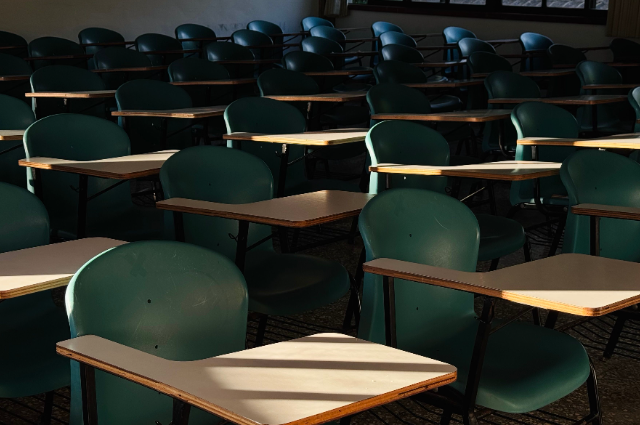
They came with books, not weapons.
They did not ask for privilege. They asked for a fair chance. They did not march to divide a nation. They marched to defend the future they had spent years preparing for.
Every student standing on the streets carries more than a placard. They carry the weight of countless sacrifices, their own and those of parents who believed education was the surest path to dignity.
When peaceful voices go unheard, trust begins to fade.
This is not about politics. It is about protecting the dreams of millions.
Every government must remember that power is entrusted by the people and strengthened by their confidence.
Listen before another generation loses faith.
How did a generation told that education would change its destiny end up marching in the streets instead of entering workplaces?
I. The Promise of the Indian Dream
For generations, education has occupied a sacred place in the Indian imagination. In homes where wealth was scarce, books became the greatest inheritance parents could offer their children. Across villages and cities alike, families accepted financial hardship, postponed personal comforts, and invested every available resource in a single belief: that education could change the course of a life. It was a promise repeated across dinner tables, classrooms, and public speeches. Study sincerely, work honestly, compete fairly, and opportunity will eventually find you.
Independent India was built on this faith. Education was envisioned not merely as a means of acquiring knowledge but as the great social equaliser capable of breaking the cycle of poverty, reducing inequality, and creating a society where merit triumphed over circumstance. Successive governments reinforced this belief by expanding educational institutions, scholarship programmes, and skill development initiatives, and by repeatedly assuring that India's young population would become the nation's greatest strength.
The idea of the "demographic dividend" soon entered the national vocabulary. With nearly two-thirds of its population below the age of thirty-five, India was described as a country uniquely positioned to shape the twenty-first century. Political leaders celebrated the energy of its youth. Economists viewed them as a productive workforce capable of driving sustained economic growth. Universities promised opportunity. Coaching institutes promised success. Society promised respect. Families promised unwavering support. Together, they created an unwritten social contract between the young citizen and the Republic: work hard, trust the system, and your future will reward your perseverance.
For millions of students, this promise became the guiding principle of life itself. Childhood gave way to endless examinations, coaching classes, mock tests, competitive rankings, and relentless preparation. Birthdays were postponed, festivals shortened, friendships sacrificed, and leisure transformed into luxury. Parents borrowed money, mortgaged property, or exhausted years of savings to ensure that their children had access to the best education they could afford. Behind every examination application lay not merely a candidate but an entire family's hopes, expectations, and sacrifices.
The scale of this national investment in education is reflected in India's remarkable progress since Independence. According to the Periodic Labour Force Survey (PLFS) 2023–24, the country's literacy rate has reached 80.9 per cent, a remarkable rise from 18.3 per cent in 1951. Few achievements better illustrate India's enduring belief in education as the pathway to social mobility and national development. Every percentage point gained represents millions of children entering classrooms, millions of parents choosing education over immediate income, and millions of families placing their faith in the transformative power of learning.
Yet this success presents a profound paradox. While India has become more educated than at any point in its history, employment opportunities have not expanded at the same pace. The PLFS Annual Report 2025 estimates the overall unemployment rate at 3.1 per cent under the usual status approach for persons aged fifteen years and above. However, among educated individuals with secondary education and above, the unemployment rate rises to 6.5 per cent, highlighting a growing disconnect between educational attainment and meaningful employment. The challenge confronting India today is therefore not merely to educate its youth but to ensure that education continues to lead to opportunity, dignity, and economic security.
Statistics, however, reveal only part of the story. They cannot measure the years spent preparing for competitive examinations, the repeated postponement of recruitment processes, the emotional strain of watching opportunities slip away despite relentless effort, or the sacrifices of parents who continue to believe that tomorrow will justify today's hardships. Behind every percentage lies a young person waiting to begin a life that has already been postponed for far too long.
It is impossible to understand the protests of today's youth without first understanding the depth of this promise. The anger visible on India's streets did not emerge overnight. It grew slowly in the space between expectation and reality, between merit and uncertainty, between effort and opportunity. Before examining why Indians have chosen protest over patience, one must first understand the dream they were taught to believe in.
For every story of success that inspired millions, there were countless others still waiting for their turn. And gradually, an unsettling question began to echo across classrooms, coaching centres, and households alike:
What happens when the promise of merit collides with the reality of uncertainty?
II. The Great Indian Waiting Room
If there is one word that captures the experience of millions of young Indians today, it is waiting.
Waiting has become more than a phase in life. It has become a condition of existence. A generation that did everything it was asked to do now finds itself suspended between education and employment, aspiration and opportunity, effort and reward. For many young Indians, life no longer moves from one
milestone to another. Instead, it moves from one notification to the next, from one examination calendar to another, from one postponement to another.
The irony is difficult to ignore. Never before has India produced so many graduates, engineers, doctors, lawyers, researchers, and skilled professionals. Never before has access to education expanded so rapidly. Yet never before have so many young people spent so many years waiting simply for an opportunity to begin the careers they prepared for. Degrees are earned on time. Futures are not.
The waiting begins long before employment. It begins with entrance examinations that determine careers in a matter of hours. For countless aspirants, years of disciplined preparation culminate in a single examination whose fairness and credibility become matters of immense public importance. Whenever questions arise over examination integrity, whether through allegations of paper leaks, administrative lapses, or procedural irregularities, the consequences extend far beyond the examination itself. They undermine confidence in a system that millions rely upon as the gateway to opportunity.
The controversy surrounding the National Eligibility cum Entrance Test, widely known as NEET, became one of the most visible manifestations of this crisis of confidence. For students who had devoted years to preparation, uncertainty surrounding the examination was not merely an administrative inconvenience. It represented the possibility that effort alone might no longer determine outcomes. When trust in a competitive examination weakens, faith in merit itself begins to erode.
The experience is strikingly similar across numerous recruitment examinations. Vacancies are announced but remain unfilled for years. Recruitment processes begin only to be delayed by litigation, administrative hurdles, or procedural revisions. Results are declared months after examinations conclude. Joining letters are postponed. Entire recruitment cycles stretch across years, leaving aspirants trapped in a prolonged state of uncertainty. By the time appointments finally arrive, many candidates have crossed age limits for other opportunities or exhausted both their financial resources and emotional resilience.
The consequences of this waiting extend beyond government employment. As vacancies remain unfilled and recruitment slows, many graduates reluctantly accept contractual positions, insecure gig work, or employment unrelated to their qualifications. Others leave their hometowns in search of opportunities
elsewhere. Some migrate abroad, contributing to an ongoing brain drain in which highly educated young Indians seek stability and recognition beyond the country's borders. The issue, therefore, is not merely unemployment. It is the growing mismatch between talent and opportunity.
Behind every delay lies a human story. There is the student who postpones higher education while waiting for recruitment results. The graduate who spends years preparing for successive examinations without financial independence. The parents who continue to bear the economic burden of supporting adult children because opportunities remain uncertain. The young professional who measures life not by achievements but by deadlines repeatedly extended.
India has often been described as the world's youngest nation. Yet for many of its young citizens, youth itself is slipping away in queues, waiting lists, examination schedules, recruitment portals, and postponed appointments. Their lives have become organised around anticipation rather than progress.
The Great Indian Waiting Room is therefore not merely a metaphor. It is a lived reality for millions. It is a place where qualifications accumulate, hope is repeatedly deferred, and time itself becomes the greatest cost. A country cannot indefinitely ask its youth to remain patient while the opportunities they were promised remain permanently under preparation. For sooner or later, waiting gives way to questioning, and questioning, when left unanswered, inevitably finds its way onto the streets.
III. When Hope Took to the Streets
Every protest begins long before the first slogan is raised.
It begins in a classroom where a student studies long after midnight, believing that merit will prevail. It begins in a coaching centre where thousands prepare for an examination that promises to transform their lives. It begins in households where parents quietly sacrifice their savings so that their children may have opportunities they themselves never had. And it begins in the silent expectation that if one follows the rules, the system will honour its own.
When that expectation is repeatedly shaken, frustration gradually seeks a public voice.
The images that have emerged from different parts of India in recent years are remarkably similar. Students sitting peacefully on roads with books still in their hands. Young job aspirants holding placards instead of appointment letters.
University campuses transformed into spaces of debate and dissent. Citizens are gathering not because they reject democracy, but because they wish to be heard within it. These are not merely photographs of protest. They are portraits of a generation struggling to preserve its faith in institutions.
The demonstrations that followed concerns over competitive examinations, recruitment delays, unemployment, and administrative uncertainty cannot be understood in isolation. Each protest has its own immediate cause, yet together they reveal a deeper pattern. They represent the growing conviction that institutions must not only function but also be seen to function with fairness, transparency, and accountability. In a democracy, trust is built as much by procedure as by outcomes.
The recent mobilisation led by Sonam Wangchuk offered another dimension to this wider conversation. Rooted in demands concerning constitutional safeguards, environmental protection, and democratic accountability, the movement demonstrated how questions about governance increasingly resonate with younger generations. Many students and young citizens identified with the movement not because they shared every specific demand, but because they recognised in it a broader appeal for dialogue, participation, and responsible governance. The movement reminded the country that democratic engagement is strengthened when citizens participate peacefully in public life.
Equally striking has been the emergence of symbolic forms of protest in contemporary India. The Cockroach Janata Party, regardless of how one interprets its methods or message, reflects the growing use of satire, symbolism, and digital culture as instruments of political expression. Such movements illustrate how a generation raised in the age of social media increasingly communicates through humour, irony, and symbolism to express frustration with institutions and public life. Whether one agrees with these forms of expression or not, they reveal a significant shift in how democratic participation is evolving among young Indians.
Social media has further transformed the character of public protest. Platforms that once served primarily for entertainment have become spaces where examination updates, recruitment notifications, legal developments, and civic campaigns circulate with extraordinary speed. Students separated by geography now share information, organise discussions, verify claims, and amplify concerns in ways that were unimaginable only a decade ago. Digital platforms have not created dissatisfaction, but they have made it visible, connected, and impossible to ignore.
Peaceful protest occupies a special place in India's constitutional tradition. From the freedom movement to countless social reforms, public assembly and peaceful dissent have often served as catalysts for democratic change. The Constitution guarantees freedoms of speech, expression, and peaceful assembly because democracy is not sustained solely through periodic elections. It also depends upon continuous dialogue between institutions and citizens. Protest, when conducted peacefully and within the constitutional framework, is therefore not an exception to democracy but one of its recognised expressions.
This principle carries an important responsibility for everyone involved. Protesters bear the responsibility of remaining peaceful and respectful of the rights of others. Governments bear the responsibility of responding with transparency, restraint, and dialogue. Institutions bear the responsibility of maintaining public confidence through fairness and accountability. Democracies function best when disagreement becomes conversation rather than confrontation.
The tragedy of the present moment is not that India's youth have chosen to speak. The greater tragedy would be if they came to believe that speaking no longer matters. Democracies do not weaken because citizens ask difficult questions. They weaken when citizens conclude that their questions will never receive meaningful answers.
The young people standing on India's streets today are not merely demanding examinations, jobs, or policy changes. They are asking for something far more fundamental: the assurance that the Republic they trusted continues to trust them in return. Their placards carry specific demands, but behind every slogan lies a larger appeal for justice, dignity, and institutional credibility.
A democracy should hear its students before it hears its slogans. For when books reach the streets, they carry not only the weight of knowledge but also the burden of a generation determined that its future should not remain indefinitely on hold.
IV. The Silent Emergency Nobody Wants to Name
Not every national crisis announces itself with dramatic headlines or official declarations. Some unfold quietly, accumulating over years until they become
so deeply woven into everyday life that society begins to mistake them for normal. India's youth crisis is one such emergency. It is not defined by a single event, nor can it be reduced to unemployment statistics, examination controversies, or student protests alone. It is the convergence of these realities that makes the present moment so significant.
For many young Indians, the crisis begins with uncertainty but does not end there. A delayed examination becomes a delayed graduation. A postponed recruitment process becomes postponed financial independence. An unfilled vacancy becomes another year of dependence on ageing parents. What appears to be an administrative delay on paper often translates into profound emotional and economic consequences in real life. Time, for the young, is not merely a calendar. It is the opportunity itself.
The economic dimension of this crisis is visible across the country. Despite improvements in higher education and skill development, many graduates continue to struggle to secure stable employment that matches their qualifications. Others find work only through temporary contracts, informal employment, or the gig economy, where flexibility often comes at the cost of security, social protection, and long-term career growth. A degree that once promised stability increasingly competes with a labour market characterised by uncertainty.
Yet unemployment alone does not explain the anxiety of an entire generation. Equally significant is the growing sense that the relationship between effort and reward has become unpredictable. Young people are repeatedly encouraged to compete harder, acquire more skills, earn additional certifications, and adapt continuously to changing economic conditions. While continuous learning is essential in a rapidly evolving world, there comes a point where endless preparation begins to resemble endless postponement. When qualifications multiply faster than opportunities, frustration becomes inevitable.
This prolonged uncertainty has profound consequences for mental health. Behind every examination result lies months, and often years, of emotional investment. Students carry not only their own expectations but also those of families who have sacrificed income, comfort, and security in the hope of a better future. Failure, delay, or uncertainty is therefore experienced not simply as a personal setback but as a perceived failure to justify collective sacrifice.
Anxiety, depression, burnout, loneliness, and emotional exhaustion have increasingly become part of the vocabulary of student life.
The tragedy of student suicides has forced the nation to confront this reality with painful urgency. Each such loss represents far more than an individual tragedy. It raises difficult questions about the pressures created by an intensely competitive education system, the stigma surrounding mental health, inadequate counselling services, financial stress, and the overwhelming expectation that a single examination determines an entire life. No society can regard the loss of its young people as an unfortunate but acceptable consequence of competition. Every such incident demands collective reflection and institutional responsibility.
Beyond campuses and coaching centres, families too bear the invisible burden of this crisis. Parents postpone retirement, exhaust savings, incur debt, and continue supporting adult children whose transition into stable employment remains uncertain. In rural India, where educational advancement is often viewed as the principal route out of economic hardship, delayed opportunities affect not only individuals but entire households. The aspirations of one generation become intertwined with the anxieties of another.
The challenge is further complicated by broader economic and technological transformations. Inflation has increased the cost of education and living. Rapid advances in artificial intelligence and automation have altered the nature of work, creating opportunities in some sectors while generating uncertainty in others. Young professionals are increasingly told to prepare not for one career but for several, adapting continuously to technological disruption. While innovation is indispensable for economic progress, it also requires equally robust investments in reskilling, social protection, and inclusive employment policies.
The consequences extend beyond economics. A growing number of talented young Indians seek opportunities abroad, contributing to a continuing outflow of skilled professionals. Migration has always been part of human history and often reflects healthy global mobility. Yet when increasing numbers perceive opportunities elsewhere as more predictable or institutions abroad as more dependable, the phenomenon also invites reflection on domestic conditions. A nation's greatest resource is not merely its educated youth but its ability to inspire them to build their future at home.
At its deepest level, this is a crisis of trust. Trust that examinations will be fair. Trust that recruitment processes will be completed without undue delay. Trust that institutions will remain transparent and accountable. Trust that hard work will continue to matter. Democracies are sustained not only by constitutions and elections but also by public confidence in the institutions that govern everyday life. When that confidence weakens, dissatisfaction spreads far beyond any single policy dispute.
The silent emergency confronting India today is therefore not simply unemployment, nor merely educational stress. It is the gradual erosion of confidence among a generation that has invested its youth in the belief that merit, perseverance, and integrity would be sufficient to shape a meaningful future. Economic reforms alone cannot resolve such a crisis unless they are accompanied by institutional credibility, timely governance, and genuine public engagement.
History teaches that nations flourish when their young citizens look to the future with confidence rather than apprehension. The greatest challenge before India is not only to create more opportunities but also to restore faith that those opportunities will be fair, accessible, and worthy of the sacrifices made to attain them. The deepest wound of any generation is not unemployment itself. It is the moment when hope begins to seem less rational than despair.
V. The Republic at a Crossroads
Every generation inherits a nation. Some preserve it. Others redefine it. India's youth stand at such a defining moment. The question before the Republic is no longer whether its youth are talented, resilient, or ambitious. Those qualities have never been in doubt. The real question is whether the institutions of the Republic are capable of matching the aspirations they have helped create.
The relationship between a democratic State and its citizens is founded upon more than constitutional provisions and periodic elections. It rests upon trust. Citizens trust that public institutions will act fairly, that opportunities will be distributed transparently, and that hard work will be rewarded without prejudice or unnecessary delay. Governments, in turn, rely upon the confidence and cooperation of the people they serve. When this relationship weakens, even well-intentioned policies struggle to inspire public faith. Rebuilding that trust is therefore not a political preference but a democratic necessity.
The first step towards restoring confidence lies in strengthening institutional credibility. Competitive examinations must not only be conducted fairly but must also be perceived as fair. Recruitment processes should be completed within clearly defined timelines, with greater transparency and accountability at every stage. Administrative delays that leave thousands of young people waiting for years cannot be dismissed as routine inefficiencies, for every postponed appointment represents another life placed on hold.
Education itself requires renewed reflection. For decades, success has been measured almost exclusively through examinations and rankings, often overlooking creativity, critical thinking, vocational excellence, and emotional well-being. An education system designed primarily to produce successful candidates must also strive to produce confident citizens capable of navigating an increasingly uncertain world. Universities should remain spaces where knowledge, debate, innovation, and democratic engagement flourish together.
Mental health deserves equal attention. The emotional burden carried by students and job aspirants can no longer remain a private struggle hidden behind examination scores and recruitment notifications. Accessible counselling services, supportive academic environments, and public campaigns that reduce the stigma surrounding psychological distress should become integral components of educational policy rather than afterthoughts. A nation that invests in the minds of its youth must also invest in their well-being.
Economic opportunity remains central to any meaningful solution. Sustainable employment generation, support for entrepreneurship, investment in research and innovation, and stronger links between education and industry are essential if India's demographic dividend is to fulfil its promise. Technological transformation, including the rapid expansion of artificial intelligence, should be accompanied by large-scale reskilling initiatives so that innovation becomes a source of opportunity rather than insecurity. The objective is not merely to create jobs but to create pathways through which talent can find purpose and dignity.
Equally important is the manner in which democratic disagreement is approached. A confident democracy does not regard every protest as a challenge to its authority, nor does it assume that criticism weakens the nation. Peaceful dissent has long been part of India's constitutional tradition and democratic heritage. Governments, institutions, universities, civil society, and citizens all share a responsibility to ensure that disagreements are addressed through dialogue, transparency, and mutual respect. Listening is not a concession of power. It is one of the highest expressions of democratic confidence.
None of these responsibilities belongs to governments alone. Educational institutions must uphold academic integrity. Public authorities must strengthen administrative accountability. The private sector must contribute meaningfully to employment creation and skill development. Families and communities must recognise that a young person's worth cannot be measured solely by examination results or professional titles. The future of a generation cannot rest upon the actions of one institution alone; it demands collective responsibility.
Ultimately, the unrest visible across India's campuses and streets is not merely a story of examinations, unemployment, or public protest. It is a reminder that the strength of a republic is measured not by the absence of criticism but by its willingness to respond to it with wisdom, fairness, and humility. Every generation asks its nation a defining question. Today's young Indians are asking whether the promises made to them still carry meaning.
The article began with an image of students carrying books instead of weapons. That image deserves to remain with us.
They still carry books.
They still carry dreams.
They still carry the hope that education, honesty, and perseverance can transform lives.
Whether those hopes are fulfilled will shape not only the future of millions of young Indians but also the character of the Republic itself.
For a nation's greatest wealth is neither its natural resources nor its economic output. It is the confidence with which its young people look towards tomorrow. If that confidence is protected, India will possess an extraordinary future. If it is allowed to erode, no statistic of economic growth will fully compensate for what has been lost.
The boiling blood of India's youth should not be feared. It should be understood. Beneath the anger lies aspiration. Beneath the frustration lies faith waiting to be
References
- International Labour Organisation, & Institute for Human Development. (2024). India Employment Report 2024: Youth employment, education and skills. International Labour Organisation.
- Ministry of Finance, Government of India. (2025). Economic Survey 2024–25. Government of India.
- Ministry of Statistics and Programme Implementation. (2024). Periodic Labour Force Survey (PLFS): Annual Report 2023–24. Government of India.
- Ministry of Statistics and Programme Implementation. (2025). Periodic Labour Force Survey (PLFS): Annual Report 2024–25. Government of India.
- National Crime Records Bureau. (2024). Accidental Deaths and Suicides in India 2023. Ministry of Home Affairs, Government of India.
- NITI Aayog. (2023). National Multidimensional Poverty Index: A Progress Review 2023. Government of India.
- Office of the Registrar General & Census Commissioner, India. (2011). Census of India 2011: Primary Census Abstract. Government of India.
- Press Information Bureau. (2025). Periodic Labour Force Survey Annual Report 2024–25 released. Government of India.