
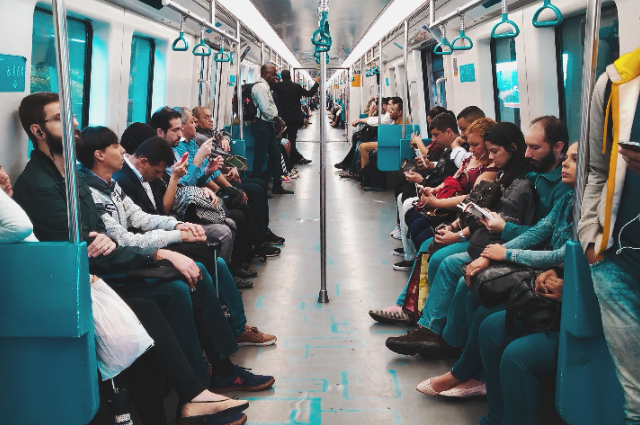
"The world's largest democracy cannot build true prosperity on the bankrupt sleep and exhausted minds of its youth."
What if the greatest addiction in Digital India is not alcohol, narcotics, or gambling, but the endless pursuit of bad news? In a nation with over 900 million internet users and one of the world's cheapest data markets, millions wake up and fall asleep before glowing screens, consuming an infinite stream of crises, conflicts, disasters, and outrage. But are we becoming more informed, or merely more afraid? The more we scroll, the less certain we seem to become. Algorithms reward our fears, headlines monetise our anxieties, and every swipe promises understanding while delivering unease. When a civilisation begins to mistake vigilance for wisdom and anxiety for awareness, must it ask itself a dangerous question: do we still control our attention, or has our attention become the most profitable colony ever conquered?
I. The Infinite Scroll: How India Became a Nation of Digital Vigilantes
At 2:43 a.m., much of India appears asleep. The traffic has faded, shop shutters have fallen, and office lights have dimmed. Yet millions remain awake before glowing screens. A student in Delhi scrolls through updates about a global conflict. A software engineer in Bengaluru reads predictions about artificial intelligence replacing jobs. A young entrepreneur in Mumbai checks market news for the tenth time that day. Across the country, countless individuals perform the same ritual: swipe, read, worry, repeat. This is the age of the infinite scroll.
India's digital transformation is one of the most remarkable stories of the twenty-first century. In less than a decade, the country has moved from limited connectivity to becoming one of the largest digital societies in human history. According to the Internet in India Report 2025, India's internet user base has crossed 950 million users, with rural India accounting for nearly 57 percent of active internet users. Just a few years ago, crossing the 900-million mark seemed ambitious; today, it is a reality. Behind these numbers lies a revolution that has fundamentally altered how Indians experience the world.
For generations, information arrived in measured doses. Newspapers appeared in the morning, radio bulletins aired at scheduled hours, and evening news programmes summarised the day's events before families returned to their routines. Information had boundaries. Once the newspaper was folded or the television switched off, individuals re-entered the rhythms of ordinary life. Those boundaries, however, have all but disappeared. Information now accompanies people everywhere. It waits beside their beds, travels with them to classrooms and workplaces, interrupts meals, and lingers beside them long after midnight. The smartphone has become humanity's first truly portable universe—a device capable of delivering every triumph, tragedy, controversy, and catastrophe occurring anywhere on Earth.
India's digital expansion has been fuelled by another extraordinary factor: affordability. The country enjoys some of the lowest mobile data costs in the world, transforming internet access from a luxury into a near necessity of everyday life. As connectivity expanded, so did consumption. By 2025, Indians were spending an average of more than three hours daily on social media platforms alone, while monthly data consumption had risen to nearly 24 gigabytes per user compared to just 62 megabytes in 2014. India is now among the world's largest consumers of mobile data. Yet the true revolution has occurred not in technology but in attention. Every generation before ours lived with some degree of information scarcity; the modern Indian lives amidst information abundance. The challenge is no longer finding information but escaping it.
A single social media session can expose an individual to political controversies, economic forecasts, climate disasters, crime reports, celebrity scandals, examination pressures, and international conflicts within a matter of minutes. The human brain was never designed for such exposure. For most of human history, threats were local. A person worried about dangers within their village, community, or immediate surroundings. Today, a college student in Srinagar can experience anxiety about a war thousands of kilometres away, a stock market fluctuation on another continent, and a natural disaster in a state they have never visited. Technology has collapsed geographical distance, but it has also eliminated psychological distance. Consequently, individuals now carry emotional burdens that previous generations were never required to bear.
This phenomenon becomes particularly visible in the rise of doomscrolling—the compulsive consumption of negative news and distressing content online. What makes doomscrolling especially deceptive is that it disguises itself as responsibility. Unlike alcohol or gambling, it appears socially acceptable, even admirable. The individual believes they are staying informed, becoming aware, and fulfilling their duties as a responsible citizen. Yet awareness and obsession are not synonymous. Many people begin scrolling in search of certainty. They want to understand the economy, monitor political developments, follow examination updates, or stay informed about social issues. However, the digital ecosystem rarely provides closure. Every answer generates another question, every headline leads to another headline, and every crisis reveals yet another crisis. The scroll possesses no natural ending.
This endless engagement is not accidental. Social media platforms and news applications are designed to retain user attention for as long as possible. The longer a user remains engaged, the greater the advertising revenue generated. Consequently, digital platforms tend to prioritise content that provokes strong emotional reactions. Fear, outrage, anxiety, and shock frequently outperform calm analysis because they compel users to remain engaged. A reassuring headline may briefly attract interest, but an alarming headline commands attention. Over time, this creates a digital environment in which negative information enjoys a structural advantage over positive information. Gradually, users begin to perceive the world through a lens dominated by crisis. Even when their personal lives remain relatively stable, their digital lives become saturated with uncertainty.
India's demographic profile intensifies this challenge. Nearly half of the country's internet users are under the age of thirty-five. Students preparing for highly competitive examinations, young professionals navigating uncertain job markets, and entrepreneurs operating in rapidly changing industries are already vulnerable to stress and performance pressures. Continuous exposure to negative information amplifies these existing anxieties. Moreover, the internet in India is increasingly multilingual. Nearly 98 per cent of users now consume content in Indic languages, enabling information to reach communities that were previously excluded from the digital sphere. While this democratisation of information is a remarkable achievement, it also means that the emotional effects of doomscrolling are no longer confined to urban English-speaking populations. They now extend into towns, villages, and households across the nation.
The irony is striking. The Digital India initiative envisioned a nation empowered through connectivity, knowledge, and innovation. In many respects, that vision has succeeded beyond expectations. Millions have gained access to education, banking services, healthcare information, government schemes, and entrepreneurial opportunities through digital technologies. Yet every technological revolution produces unintended consequences. The same device that enables online learning can also deliver endless anxiety. The same platform that connects families can distribute fear. The same network that spreads knowledge can spread exhaustion.
India has entered an era in which information is no longer consumed occasionally but continuously. The citizen has become a digital vigilante—always alert, always connected, and always watching. Yet vigilance comes at a cost. When every notification feels urgent, every headline appears alarming, and every swipe reveals another crisis, attention itself becomes depleted. The individual remains informed yet increasingly overwhelmed, connected yet increasingly restless. As Digital India advances deeper into the information age, it must confront a critical challenge: preserving peace of mind in a society surrounded by infinite information.
II. Engineering Anxiety: Why the Human Brain Cannot Stop Scrolling
If doomscrolling were merely a consequence of weak self-control, its solution would be remarkably simple. Individuals would simply put their phones away, close their applications, and return to their daily lives. Yet the persistence of doomscrolling among students, professionals, academics, and even highly disciplined individuals suggests a deeper reality. The phenomenon is not rooted in a lack of intelligence or willpower but in the architecture of the human mind itself. Long before the emergence of smartphones, social media platforms, and algorithmic feeds, human survival depended upon an extraordinary sensitivity to danger. For thousands of years, our ancestors survived because they noticed threats more quickly than opportunities. Missing the sight of a predator hidden in the grass could prove fatal, whereas overlooking a pleasant landscape carried little immediate consequence. Evolution, therefore, equipped human beings with what psychologists describe as a negativity bias—a tendency to assign greater significance to negative information than positive information. While this cognitive trait once served an essential survival function, the digital age has transformed it into a profound vulnerability.
Modern digital platforms operate by exploiting this evolutionary inheritance. Every day, billions of pieces of content compete for human attention, and algorithms rapidly learn that fear, outrage, uncertainty, and conflict attract engagement more effectively than calm, balanced, or reassuring information. Consequently, users who click on a single story concerning economic instability, unemployment, political controversy, or social unrest are often guided toward increasingly similar content. What begins as a reasonable attempt to stay informed gradually develops into a continuous exposure to alarming narratives. The individual believes they are exercising independent choice, yet invisible recommendation systems continuously shape the information environment around them. In this way, doomscrolling is not merely a personal habit but a technologically amplified interaction between human psychology and algorithmic design. The more attention negative information receives, the more prominently it appears, creating a cycle in which anxiety becomes both the product and the fuel of digital engagement.
This cycle is strengthened by another psychological mechanism known as variable reward, a principle frequently associated with gambling behaviour. Human beings are particularly attracted to unpredictable rewards because uncertainty itself stimulates anticipation. Social media feeds operate on a similar principle. Most posts are ordinary and quickly forgotten, yet occasionally a user encounters information that appears highly significant—a breaking news alert, an unexpected revelation, a shocking video, or an emotionally charged debate. The possibility of discovering something important encourages continued scrolling. Each swipe carries the promise that the next post might finally provide clarity, reassurance, or understanding. Instead, it usually delivers another layer of complexity, concern, or uncertainty. The result is an experience remarkably similar to chasing a horizon that continuously retreats. Closure remains perpetually out of reach, while the desire to attain it grows stronger with every scroll.
The Indian context makes these psychological dynamics particularly significant. Home to one of the world's largest youth populations and one of the fastest-growing digital ecosystems, India has experienced an unprecedented transformation in the way information is consumed. Smartphones have become classrooms, libraries, newsrooms, workplaces, and entertainment centres simultaneously. For millions of students preparing for highly competitive examinations such as UPSC, NEET, JEE, CLAT, or judicial services, the internet is both an indispensable educational resource and a constant source of distraction and anxiety. Similarly, young professionals navigating uncertain labour markets often find themselves exposed to endless discussions regarding layoffs, economic slowdowns, automation, and career insecurity. In such circumstances, doomscrolling acquires an illusion of usefulness. Individuals convince themselves that remaining constantly informed will better prepare them for the future. Yet the future rarely becomes clearer through excessive consumption of information. More often, it becomes more frightening.
The consequences of this behavioural pattern extend far beyond temporary stress. Psychological research increasingly suggests that prolonged exposure to distressing content contributes to heightened anxiety, emotional exhaustion, impaired concentration, and disrupted sleep. The relationship between doomscrolling and sleep is particularly revealing. Many individuals engage in scrolling immediately before bedtime, believing they are relaxing after a demanding day. In reality, exposure to emotionally stimulating content activates cognitive and emotional processes that make restful sleep more difficult. A person who encounters stories of violence, economic uncertainty, political conflict, or environmental catastrophe shortly before sleeping often carries those concerns into the night. Over time, insufficient sleep further weakens emotional regulation, making individuals more susceptible to anxiety and compulsive digital behaviours. Thus, a self-perpetuating cycle emerges in which anxiety encourages scrolling and scrolling intensifies anxiety.
Perhaps the most troubling consequence of doomscrolling is its ability to distort perceptions of reality. Human beings naturally assess risk based upon the information most readily available in memory. When individuals repeatedly encounter stories of disaster, conflict, and crisis, they begin to perceive the world as more dangerous than it objectively is. Social progress, economic improvements, scientific breakthroughs, and acts of everyday kindness struggle to compete with the emotional intensity of negative news. As a result, public consciousness gradually becomes saturated with pessimism. Citizens who are safer, healthier, and more connected than previous generations may nevertheless feel increasingly vulnerable and uncertain. The issue, therefore, is not that people know too much, but that they are exposed to a disproportionate concentration of information designed to trigger emotional responses.
Doomscrolling ultimately reveals a fundamental contradiction of the digital age. Technology has granted humanity unprecedented access to knowledge, yet knowledge itself has become difficult to distinguish from overload. The challenge facing contemporary India is not merely technological but psychological: how can a society benefit from the immense advantages of digital connectivity without allowing its collective attention to be captured by an endless marketplace of fear? Until this question is addressed, the infinite scroll will continue to transform awareness into anxiety, information into exhaustion, and curiosity into compulsion.
III. The Cost of Constant Crisis: Doomscrolling and India's Mental Health Emergency
If the first casualty of doomscrolling is attention, the second is mental well-being. The human mind possesses a remarkable capacity to process challenges, adapt to uncertainty, and recover from adversity. However, it was never designed to absorb a relentless stream of crises twenty-four hours a day. Every notification, breaking news alert, disturbing video, and alarming headline demands a small portion of emotional energy. Individually, these encounters may appear insignificant; collectively, they create a psychological burden that accumulates over time. The consequence is not merely temporary stress but a state of chronic mental fatigue increasingly visible across India, particularly among young people.
India is home to one of the youngest populations in the world, with nearly 65 per cent of its population below the age of thirty-five. This demographic advantage is often celebrated as the country's greatest strength. Yet it is also the generation most deeply immersed in digital ecosystems. Students preparing for competitive examinations such as UPSC, JEE, NEET, CLAT, and judicial services spend countless hours online for educational purposes. Simultaneously, they are exposed to social media platforms that continuously deliver information about unemployment, economic uncertainty, geopolitical tensions, environmental disasters, and the achievements of their peers. Consequently, the internet becomes both a tool of aspiration and a source of anxiety. A student who logs in to watch an educational lecture may, within minutes, find themselves scrolling through discussions about declining job opportunities, examination failures, or global crises. The transition is so seamless that it often goes unnoticed.
The psychological effects of such exposure are increasingly supported by research. Mental health professionals across India have reported growing levels of anxiety, stress, sleep disorders, and emotional exhaustion among adolescents and young adults. According to surveys conducted by organisations working in the mental health sector, excessive screen time and compulsive social media use are frequently associated with heightened anxiety levels and reduced psychological well-being. While doomscrolling is rarely the sole cause of mental distress, it often acts as an amplifier, intensifying existing worries and creating new ones. An individual already concerned about academic performance may become overwhelmed after consuming hours of content predicting economic decline or discussing the struggles of unemployed graduates. The result is a sense of helplessness that extends beyond the original concern.
One of the most damaging consequences of doomscrolling is its impact on sleep. Sleep is not merely a period of rest; it is the foundation upon which emotional regulation, memory, concentration, and psychological resilience depend. Yet for millions of Indians, scrolling through social media has become the final activity before sleep and the first activity upon waking. Exposure to emotionally charged content late at night keeps the mind alert when it should be winding down. Disturbing news stories, political arguments, crime reports, and sensationalised content activate stress responses that interfere with healthy sleep patterns. Over time, inadequate sleep weakens the brain's ability to manage emotions effectively, making individuals more susceptible to anxiety, irritability, and compulsive digital behaviours. Thus, doomscrolling creates a vicious cycle in which anxiety disrupts sleep, poor sleep increases anxiety, and increased anxiety encourages further scrolling.
Beyond anxiety and sleep deprivation lies another less visible consequence: emotional exhaustion. Human beings possess a limited capacity for empathy and emotional engagement. Traditionally, this capacity was directed toward family members, neighbours, colleagues, and local communities. Today, digital technologies expose individuals to suffering occurring across the globe. Within a single hour, a person may encounter stories about war, poverty, violence, natural disasters, discrimination, and personal tragedies. While empathy is a noble human quality, constant exposure to suffering can eventually overwhelm emotional resources. Psychologists often describe this phenomenon as compassion fatigue—a state in which individuals become emotionally drained by repeated encounters with distressing information. Ironically, excessive exposure to tragedy can reduce rather than enhance meaningful engagement with social issues. People become numb not because they do not care, but because they have been forced to care about too many things simultaneously.
Doomscrolling also reshapes how individuals perceive themselves and their futures. Social media platforms rarely present reality in balanced proportions. Alongside negative news, users are continuously exposed to curated representations of success, wealth, beauty, productivity, and achievement. A young professional reading alarming reports about economic instability may immediately encounter posts celebrating entrepreneurial success or international career opportunities. This juxtaposition creates a powerful sense of inadequacy. Individuals begin comparing their ordinary lives to carefully constructed digital narratives, often concluding that they are falling behind. Such comparisons are particularly harmful in a country where academic competition, employment pressures, and social expectations are already intense. The result is a generation that feels simultaneously over-informed and under-confident.
The effects extend beyond individuals to families and communities. One of the paradoxes of the digital age is that people are constantly connected yet increasingly distracted. Family members sitting in the same room often inhabit entirely different digital worlds. Conversations are interrupted by notifications. Meals are accompanied by scrolling. Moments that once fostered connection are increasingly mediated through screens. While technology has made communication easier, it has also fragmented attention. Relationships suffer when presence is replaced by perpetual digital engagement. Doomscrolling contributes to this fragmentation by convincing individuals that another update, another headline, or another post deserves immediate attention.
The workplace has not remained immune to these developments. Professionals across sectors report difficulties maintaining concentration amidst constant digital interruptions. Productivity researchers have repeatedly demonstrated that frequent task-switching reduces efficiency and increases mental fatigue. Doomscrolling compounds this problem by encouraging employees to shift attention from work-related tasks to emotionally stimulating content. Even brief interruptions can disrupt focus, while prolonged engagement with distressing information can negatively affect mood and decision-making. In an economy increasingly dependent on knowledge work, attention has become one of the most valuable professional resources. Doomscrolling steadily erodes that resource.
Perhaps the most concerning consequence is the normalisation of anxiety itself. Previous generations viewed anxiety as a temporary response to specific challenges. Today's digital culture often treats anxiety as an ordinary feature of everyday life. Constant worry about global events, political developments, economic conditions, and social controversies is increasingly perceived as normal rather than exceptional. Many individuals no longer recognise the difference between being informed and being overwhelmed. They accept exhaustion as awareness, hypervigilance as responsibility, and stress as a necessary cost of modern citizenship. Such normalisation obscures the severity of the problem and discourages meaningful intervention.
India's growing mental health challenge cannot be attributed solely to doomscrolling. Economic pressures, academic competition, urbanisation, social change, and numerous other factors all contribute to psychological distress. However, doomscrolling functions as a force multiplier, magnifying fears, prolonging uncertainty, and reducing opportunities for mental recovery. It transforms occasional concerns into continuous preoccupations and converts isolated worries into a constant background hum of anxiety.
The mental health emergency unfolding in Digital India is therefore not merely a medical issue; it is also a cultural and technological one. A society that remains perpetually connected to crisis risks becoming perpetually exhausted. The challenge before India is not to disconnect from reality but to establish healthier boundaries around its consumption. Awareness remains essential, but awareness without limits can become a burden too heavy for any generation to bear. Unless individuals learn to distinguish meaningful engagement from compulsive consumption, the endless scroll will continue extracting its price—not from data plans or mobile batteries, but from the minds of those who use it.
IV. The Business of Fear: How Algorithms Profit from Human Attention
Doomscrolling is often portrayed as a personal failing—a lack of discipline, a weakness of character, or an inability to manage screen time. Such explanations are comforting because they place responsibility entirely on the individual. Yet they overlook a crucial reality: doomscrolling does not occur in a vacuum. Behind every endless feed lies a sophisticated digital infrastructure designed to capture, retain, and monetise human attention. The modern internet is not merely a collection of information; it is an economy, and in that economy,
attention functions as the most valuable currency. Understanding doomscrolling, therefore, requires examining not only the psychology of users but also the business models of the platforms they use.
The digital economy operates on a deceptively simple principle. Most social media platforms, search engines, and news applications are available at little or no direct financial cost to users. Their profitability depends primarily on advertising revenue. Advertisers pay for visibility, and visibility depends upon user engagement. Consequently, the longer individuals remain on a platform, the more advertisements they encounter and the greater the revenue generated. Time spent online is not merely a metric; it is the foundation of an entire economic system. Every additional minute a user spends scrolling contributes to a platform's commercial success.
This business model creates powerful incentives. Digital companies are not rewarded for helping users leave their applications quickly. They are rewarded for ensuring that users remain engaged for as long as possible. Algorithms are therefore optimised to identify content most likely to hold attention. These systems continuously analyse user behaviour—what people click, how long they watch a video, which posts they share, and what topics provoke emotional reactions. Over time, algorithms become remarkably effective at predicting what will keep users engaged. Unfortunately, what captures attention most effectively is not always what promotes well-being.
Research consistently demonstrates that negative information attracts greater engagement than neutral or positive content. Stories involving conflict, danger, outrage, controversy, and uncertainty generate stronger emotional responses than routine reports of stability or progress. This tendency reflects deep-rooted psychological biases, but digital platforms transform those biases into economic opportunities. An alarming headline is more likely to be clicked than a reassuring one. A controversial post generates more comments than a balanced analysis. A sensational claim spreads more rapidly than a nuanced explanation. Consequently, content creators, media organisations, and platform algorithms all operate within an environment where emotional intensity is rewarded.
The implications for news consumption are profound. Journalism performs an essential democratic function by informing citizens about matters of public importance. However, the rise of digital media has altered the incentives under which news organisations operate. In an era where advertising revenue depends heavily on clicks, views, and engagement metrics, competition for attention has intensified dramatically. Headlines are increasingly crafted not merely to inform but to provoke curiosity, concern, or outrage. Terms such as “crisis,” “shock,” “breaking,” “exclusive,” and “warning” dominate digital news ecosystems because they encourage users to click. While many journalists remain committed to professional standards, the broader media environment often rewards sensationalism more than restraint.
India provides a particularly revealing case study of these dynamics. The country's enormous digital population represents one of the world's most lucrative attention markets. Hundreds of millions of users engage daily with social media platforms, online news portals, video-sharing applications, and messaging services. This vast audience creates intense competition among content creators seeking visibility. In such an environment, content that generates strong emotional reactions often rises to prominence regardless of its informational value. Outrage becomes shareable. Fear becomes clickable. Anxiety becomes profitable.
Political content illustrates this phenomenon vividly. Democratic societies depend upon vigorous public debate, yet digital platforms frequently amplify the most polarising voices rather than the most thoughtful ones. Algorithms prioritise engagement, and few things generate engagement more effectively than conflict. Content that reinforces existing beliefs often receives greater visibility because users are more likely to interact with material that confirms their views. Over time, individuals may find themselves surrounded by information that reflects only one perspective, creating what scholars describe as “echo chambers.” Within these environments, political disagreements appear larger, opponents seem more extreme, and compromise becomes increasingly difficult.
Doomscrolling flourishes within such ecosystems because polarisation itself is emotionally stimulating. Every controversy promises new developments. Every dispute produces fresh content. Users become trapped in cycles of anticipation and outrage, continually returning for updates. What begins as political awareness can gradually transform into political obsession. The same pattern emerges in discussions surrounding economic issues, social conflicts, celebrity controversies, and public scandals. Digital platforms benefit regardless of whether users feel informed, angry, anxious, or frustrated, provided they remain engaged.
Another important dimension of this business model is the rise of recommendation algorithms. Unlike traditional media, where individuals actively select newspapers or television channels, modern platforms increasingly determine what users see. Recommendation systems analyse behaviour and curate personalised feeds tailored to individual preferences. While personalisation offers convenience, it also concentrates power in the hands of algorithms. These systems decide which stories receive visibility, which perspectives gain prominence, and which topics dominate public attention. Users often assume they are freely exploring information when, in reality, much of their digital experience is being shaped by automated decision-making processes designed to maximise engagement.
The consequences extend beyond individual well-being. When societies consume disproportionate amounts of emotionally charged content, public discourse itself begins to change. Complex issues become simplified into conflicts between opposing sides. Nuance struggles to compete with certainty. Measured analysis is overshadowed by dramatic claims. The result is a public sphere increasingly driven by emotion rather than reflection. Citizens become informed about events but are less capable of processing them thoughtfully. In such an environment, doomscrolling is not merely a personal habit; it becomes a social condition affecting how communities perceive reality.
Technology companies often argue that users ultimately choose what they consume, and there is truth in that claim. Individuals retain agency over their digital behaviour. However, meaningful choice requires recognising the environment in which choices are made. Casinos are carefully designed to encourage gambling, supermarkets strategically arrange products to influence purchasing decisions, and digital platforms are engineered to maximise engagement. The existence of personal responsibility does not eliminate the influence of structural incentives. Doomscrolling persists not simply because users lack discipline but because entire systems are designed to make disengagement difficult.
The ethical questions raised by this reality are increasingly urgent. Should technology companies bear greater responsibility for the psychological effects of their products? Should algorithms prioritise user well-being alongside engagement metrics? Should governments introduce stronger regulations governing digital platforms? These questions remain subjects of intense debate, but one fact is difficult to ignore: the current attention economy rewards behaviour that often undermines mental health. As long as fear, outrage, and anxiety remain among the most effective tools for capturing attention, they will continue to occupy a central place in digital ecosystems.
The rise of doomscrolling, therefore, reveals a deeper truth about contemporary society. The digital age has not merely created new technologies; it has created new markets. Among the commodities traded within those markets, none is more valuable than human attention. Every swipe, click, view, and share contributes to an economy that transforms attention into profit. In that economy, fear is not simply an emotion. It is a resource. The challenge facing Digital India is whether it can build a technological future that values human well-being as highly as human engagement. Until then, the endless scroll will remain not only a psychological habit but also a profitable business model.
V. Reclaiming Attention: Building Digital Well-Being in an Age of Endless Information
The story of doomscrolling is often told as a story of technological excess, psychological vulnerability, and corporate profit. Yet to end the discussion there would be to surrender to the very pessimism that doomscrolling cultivates. Technology is not destiny. Human beings created the digital world, and human beings retain the capacity to reshape their relationship with it. The challenge confronting Digital India is therefore not whether technology should be abandoned, but whether it can be used without allowing it to dominate the most valuable resource any individual possesses: attention.
Attention is frequently misunderstood as a simple cognitive function. In reality, it is the foundation upon which modern life is built. What people pay attention to influences what they learn, how they think, what they remember, and ultimately who they become. A student's future is shaped by attention. A professional's productivity depends upon attention. Relationships flourish through attention. Democracies function when citizens pay thoughtful attention to public affairs. When attention becomes fragmented, every aspect of personal and collective life begins to suffer. Doomscrolling represents more than excessive screen use; it represents a gradual erosion of the ability to direct one's mental energy toward meaningful goals.
The first step toward addressing this challenge is recognising that being informed is not the same as being constantly updated. Modern digital culture often equates awareness with continuous connectivity. Individuals feel compelled to monitor every development, every controversy, and every breaking news alert. Yet meaningful understanding rarely emerges from endless exposure to information. Knowledge requires reflection, context, and interpretation. A citizen who spends ten minutes reading a well-researched article may understand an issue more deeply than someone who spends three hours scrolling through fragmented headlines. The pursuit of awareness should therefore focus on quality rather than quantity. Consuming information intentionally is far more valuable than consuming it continuously.
Digital literacy must also evolve beyond technical skills. For years, discussions about digital literacy have emphasised the ability to use devices, access information, and navigate online platforms. While these competencies remain important, the challenges of the twenty-first century demand a broader understanding. Citizens must learn how algorithms shape information environments, how emotional manipulation influences online behaviour, and how attention is monetised within digital economies. Understanding the mechanics of recommendation systems allows individuals to recognise that their online experiences are not entirely organic. Such awareness does not eliminate the influence of algorithms, but it reduces their power by making their operations visible.
Educational institutions have a particularly important role to play. Schools and universities devote considerable attention to academic achievement, professional skills, and technological proficiency. Yet relatively little time is dedicated to teaching students how to manage digital environments that increasingly shape their mental lives. Young people are often expected to navigate complex online ecosystems without guidance regarding information overload, social comparison, misinformation, or compulsive digital habits. Incorporating digital well-being into educational curricula would equip future generations with tools to engage with technology more consciously. In a nation where millions of students rely upon digital platforms for learning, such education is becoming a necessity rather than a luxury.
Families, too, remain central to the solution. The rise of smartphones has transformed household dynamics, often creating environments in which physical presence coexists with psychological absence. Parents, children, and siblings may occupy the same room while engaging with entirely different digital worlds. Reclaiming attention, therefore, requires rebuilding spaces for uninterrupted human interaction. Shared meals without devices, designated periods of digital disconnection, and conversations free from constant interruptions may appear simple, yet their cumulative effects can be profound. Human beings derive resilience not merely from information but from relationships, and relationships require sustained attention to flourish.
Technology companies themselves cannot be excluded from this conversation. For years, the dominant metric of success within the digital economy has been engagement. The assumption that more engagement is inherently desirable has shaped the design of platforms used by billions of people. Yet growing evidence regarding the psychological consequences of excessive digital consumption raises important ethical questions. If companies possess the ability to influence user behaviour, do they also possess a responsibility to protect user well-being? Features such as screen-time reminders, content controls, notification management tools, and algorithmic transparency represent initial steps, but more substantial reforms may be necessary. The future of digital innovation should not be measured solely by the amount of attention captured but also by the quality of experiences created.
Government institutions also have a role in fostering healthier digital ecosystems. Public policy has historically adapted to address new social challenges created by technological change. Industrialisation required labour protections. Urbanisation necessitated public health reforms. Similarly, the digital age may require policies that encourage transparency, accountability, and responsible platform design. Such measures need not undermine innovation. On the contrary, they can help ensure that technological progress serves human flourishing rather than merely commercial interests. The objective is not censorship or excessive regulation but the creation of conditions in which citizens can engage with information without becoming overwhelmed by it.
At an individual level, however, the most significant changes often begin with small acts of intentionality. Choosing specific times to consume news rather than checking updates continuously, disabling unnecessary notifications, setting boundaries around social media use, and creating moments of digital silence can significantly reduce the compulsion to scroll. These practices are not acts of withdrawal from society. Rather, they are acts of reclaiming agency. They affirm that attention belongs to the individual rather than to algorithms competing for engagement. In a world designed to demand constant reaction, the ability to pause becomes a form of power.
The broader challenge facing India extends beyond technology itself. The nation stands at a historic moment defined by rapid economic growth, digital innovation, demographic transformation, and expanding global influence. The success of these developments will depend not only upon infrastructure, connectivity, and technological adoption but also upon the mental well-being of the people who use them. A society exhausted by information overload cannot fully realise its potential. Innovation requires focus. Democracy requires thoughtful deliberation. Progress requires citizens capable of distinguishing urgent problems from manufactured distractions. The future of Digital India, therefore, depends as much upon protecting attention as upon expanding access.
Doomscrolling thrives on the belief that every problem demands immediate observation. Yet many of the world's challenges cannot be solved through continuous monitoring. They require informed action, collective responsibility, and sustained engagement. There is a profound difference between witnessing a crisis and contributing to its resolution. The former often produces anxiety; the latter creates purpose. Reclaiming attention means redirecting energy from compulsive observation toward meaningful participation in family life, community engagement, education, professional growth, and civic responsibility.
The ultimate challenge of the digital age is not scarcity of information but abundance of it. Humanity has solved the problem of access and now confronts the problem of excess. The question is no longer whether people can connect to information but whether they can maintain control over their attention amidst an environment designed to fragment it. Digital India has achieved remarkable success in bringing knowledge to millions. Its next challenge is ensuring that this knowledge empowers rather than overwhelms.
The danger facing contemporary society is not that it will run out of information. Information has become limitless. The greater danger is that amidst the noise of endless notifications, urgent updates, and infinite scrolling, individuals may lose the ability to think deeply, reflect meaningfully, and live attentively. For a civilisation that has long valued introspection, balance, and self-mastery, the most radical act of the digital age may not be speaking louder, sharing more, or scrolling further. It may simply be knowing when to stop.
VI. Synthesis: The Multidimensional Matrix of Doomscrolling
Here is a consolidated summary of the essay's core chapters, breaking down the technological, psychological, social, and economic dimensions of doomscrolling in India.
Comprehensive Overview of Doomscrolling in Digital India
Section / Theme | Core Phenomenon | Key Statistical Data & Context | Underlying Psychological / Business Mechanism | Major Consequences / Impact | Reclaiming Strategy |
| I. The Infinite Scroll: How India Became a Nation of Digital Vigilantes | The transition from bounded information (newspapers, scheduled radio/TV) to limitless, portable digital consumption | 950 million+ internet users by 2025 (with rural India making up 57%). Average of 3+ hours daily on social media. Data use skyrocketed from 62 MB (2014) to 24 GB per user/month (2025). | Information Abundance: The human brain is forced to process global crises (e.g., a student in Srinagar worrying about distant wars) with the same intensity as local threats. | Elimination of psychological distance. Citizens turn into "digital vigilantes"—always alert, perpetually watching, yet emotionally depleted and overwhelmed. | Intentional Consumption: Shifting the focus from information quantity to quality (e.g., reading one well-researched article instead of hours of fragmented headlines). |
II. Engineering Anxiety: Why the Human Brain Cannot Stop Scrolling | Doomscrolling disguised as a responsible act of staying informed, driven by structural platform design rather than a lack of willpower. | 98% of users consume content in Indic languages, expanding the psychological impact from urban centres deep into rural households. | Negativity Bias & Variable Rewards: Human evolution prioritises danger for survival. Social media feeds exploit this by serving unpredictable bursts of shocking/alarming news to keep users swiping. | Distortion of risk assessment (the world is perceived as far more dangerous than it objectively is). Pervasive public pessimism, emotional exhaustion, and compromised concentration. | Evolving Digital Literacy: Teaching users how algorithms operate, how emotional manipulation works, and how to recognise that online feeds are manufactured, not organic. |
III. The Cost of Constant Crisis: India's Mental Health Emergency | Continuous, unbuffered exposure to traumatic global/local events acts as a force multiplier for youth anxiety. | 65% of India's population is under the age of 35. Highly vulnerable groups include students preparing for intensely competitive exams (UPSC, NEET, JEE, CLAT). | Compassion Fatigue & Social Comparison: The mind is forced to empathise with too many global tragedies at once. Simultaneously, users compare their real lives against curated digital success stories. | The Vicious Cycle: Late-night scrolling activates stress responses, disrupting sleep. Poor sleep weakens emotional regulation, which in turn triggers more compulsive scrolling. Normalisation of anxiety. | Institutional & Family Boundaries: Rebuilding device-free zones (shared family meals, periods of digital silence). Introducing digital well-being programs into school and university curricula. |
IV. The Business of Fear: How Algorithms Profit from Human Attention | The "Attention Economy," where human focus and emotional engagement are treated as the most valuable commodities. | India represents one of the world's most lucrative and intensely competitive digital attention markets. | Monetisation of Outrage: Platforms rely heavily on advertising revenue. Because fear, controversy, and shock trigger the highest clicks/shares, algorithms systematically prioritise negative content. | Creation of rigid "echo chambers". Public discourse is stripped of its nuance and reduced to hostile, simplified polarisation, transforming political/social awareness into obsession. | Structural Reforms & Regulation: Pushing tech companies for algorithmic transparency, screen-time tools, and shifting public policy to value human well-being over raw engagement metrics. |
"For a civilisation that has long valued introspection, balance, and self-mastery, the most radical act of the digital age may not be speaking louder, sharing more, or scrolling further. It may simply be knowing when to stop."
Doomscrolling is not merely a personal habit, nor is it simply a consequence of technological advancement. It is a reflection of a society navigating the tensions between connectivity and well-being, awareness and anxiety, and information and overload. Digital India has empowered millions through unprecedented access to knowledge, communication, and opportunity. Yet the same technologies that connect citizens to the world can also expose them to an endless stream of fear, uncertainty, and emotional exhaustion.
The challenge before India is therefore not to reject technology but to humanise it. The future belongs not to those who consume the most information, but to those who can engage with it wisely. In an era where every swipe competes for attention, and every headline demands urgency, true freedom lies in the ability to choose what deserves one's mind. For if attention is the currency of the digital age, then learning to protect it may be the most important act of citizenship in the twenty-first century.
References
- Internet and Mobile Association of India (IAMAI) & Kantar. (2025). Internet in India Report 2025. New Delhi: IAMAI.
- Telecom Regulatory Authority of India (TRAI). (2025). The Indian Telecom Services Performance Indicators Report. New Delhi: TRAI.
- DataReportal. (2025). Digital 2025: India. Kepios, Meltwater & We Are Social.
- World Health Organisation. (2022). World Mental Health Report: Transforming Mental Health for All. Geneva: WHO.
- Twenge, J. M., & Campbell, W. K. (2018). Associations between screen time and lower psychological well-being among children and adolescents: Evidence from a population-based study. Preventive Medicine Reports, 12, 271–283.
- Montag, C., Sindermann, C., Becker, B., & Panksepp, J. (2016). An affective neuroscience framework for the molecular study of Internet addiction. Frontiers in Psychology, 7, 1906.
- Gao, J., Zheng, P., Jia, Y., Chen, H., Mao, Y., Chen, S., Wang, Y., Fu, H., & Dai, J. (2020). Mental health problems and social media exposure during the COVID-19 outbreak. PLOS ONE, 15(4), e0231924.
- Sunstein, C. R. (2018). #Republic: Divided Democracy in the Age of Social Media. Princeton University Press.
- Alter, A. (2017). Irresistible: The Rise of Addictive Technology and the Business of Keeping Us Hooked. New York: Penguin Press.
- Hari, J. (2022). Stolen Focus: Why You Can't Pay Attention—and How to Think Deeply Again. New York: Crown Publishing Group.