
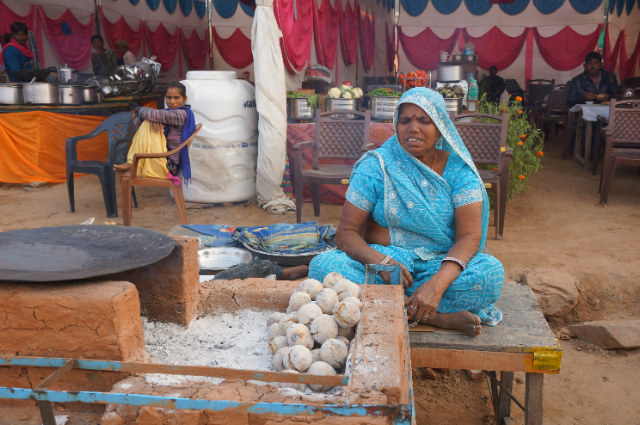
“Not alms, but agency; not schemes, but sovereignty.
When a woman owns her labour, her land, her voice, the nation shifts.
Empowerment is not what is given in budgets,
but what cannot be taken from her again.”
The 2026 fiscal year marks a definitive transition in national policy, shifting from gender-categorical welfare to a Women-Led Macroeconomic Strategy. This article examines the architectural redesign of the economy through four primary pillars: technical education, decentralised commerce, financial sovereignty, and the "Lakhpati Didi" wealth-creation benchmark. At its core, the 2026 mandate seeks to integrate 30 million women into the formal economy, aiming for a projected 2.5% to 3% incremental boost to the National GDP by the end of the decade. The first phase of this transformation is the SHE Mart Initiative, a physical-to-digital (Phygital) retail ecosystem. With a 2026 budgetary allocation specifically targeting the establishment of 10,000 "Smart Clusters," these marts serve as the "Last-Mile" link between rural SHG (Self-Help Group) production and global supply chains. By utilising the Open Network for Digital Commerce (ONDC), these enterprises bypass traditional middleman costs, increasing the net margin for woman-led cooperatives by an estimated 18% to 22%. Simultaneously, the focus on STEM Education represents a move away from basic literacy toward "Digital Mastery." The 2026 framework prioritises vocational training in high-growth sectors: AI-driven agritech, renewable energy maintenance, and drone piloting. With the rollout of the National Virtual STEM Lab (NVSL), the government has democratised technical training, aiming to close the "Gender Research Gap" by increasing female-led patent filings by 15% year-over-year. Financial sovereignty is addressed through the Unified Digital Credit Ledger (UDCL). By 2026, the traditional requirement for land-based collateral has been replaced by "Social-Financial Trust Scores." This fintech innovation utilises alternative data such as SHE Mart transaction history to unlock SME-scale credit for women. Currently, interest subvention schemes have reduced the effective borrowing rate to record lows, incentivising "Calculated Risk" over "Subsistence Survival."The ultimate metric of these interventions is the "Lakhpati Didi" Vision. By setting a measurable goal of an annual household income of at least ₹1 Lakh for 30 million women, the policy shifts the narrative from poverty alleviation to wealth creation. This creates a powerful Social Multiplier Effect: data indicates that when women reach this income threshold, household spending on health and nutrition rises by 40%. In conclusion, the 2026 roadmap provides a scalable blueprint for emerging economies. By treating women as primary economic stakeholders rather than passive beneficiaries, the state is building a resilient, circular, and highly digitised economy. The 2030 outlook suggests that this "Silent Revolution" will not only achieve domestic prosperity but will also position the nation as a global leader in ethical, traceable, and inclusive manufacturing.
Women, the Budget, and the Politics of Promise
The Union Budget of India is more than a balance sheet of estimated receipts and expenditures; it is the most potent declaration of the nation’s socio-political priorities. In 2026, as India positions itself as a $5 trillion economy, the discourse has shifted from "women’s development" to "women-led development." Yet, the central question remains: Is the 2026 Budget a structural sledgehammer breaking the glass ceiling of female labour force participation, or is it a sophisticated exercise in "pink-washing" fiscal deficits? The 2026 fiscal roadmap arrives at a critical juncture. While India has seen a rise in the Female Labour Force Participation Rate (FLFPR)—climbing toward 37% according to recent PLFS data—the quality of this employment remains contentious. Much of this gain is driven by rural women in self-employment, often in unpaid or low-value agricultural work. The 2026 Budget seeks to pivot this narrative through high-visibility interventions like SHE Marts and an aggressive expansion of the Lakhpati Didi scheme. However, the "Politics of Promise" often hits the "Pavement of Implementation." Women in India face a "triple burden": the care economy, a persistent wage gap, and digital/financial exclusion. This examination scrutinises whether the fiscal allocations of 2026 address these structural bottlenecks or merely offer symptomatic relief through cash transfers and credit targets.
Evolution of Gender Budgeting in India: From 2005 to 2026
To understand the 2026 Budget, one must trace the lineage of Gender Budgeting (GB) in India, a journey that began formally in 2005-06. Gender budgeting is not a separate budget for women; it is a fiscal strategy to ensure that the benefits of development reach women as much as men.
The Two-Part Framework
Historically, India’s Gender Budget Statement (GBS) is divided into two parts:
- Part A: Schemes where 100% of the allocation is for women (e.g., PMAY-G, Poshan 2.0).
- Part B: Schemes where at least 30% of the allocation is for women (e.g., MGNREGS, PM Awas Yojana).
The 20-Year Trajectory
The Formative Years (2005–2014): The focus was primarily on survival and basic rights—maternal health, primary education, and caloric intake. The Gender Budget hovered around 4-5% of the total Union expenditure.
The Shift to Aspiration (2014–2024): The narrative evolved toward "Agency." Schemes like Beti Bachao Beti Padhao focused on the sex ratio, while Ujjwala targeted "time poverty" by reducing the burden of collecting firewood.
The 2026 Paradigm: We are now seeing the "Commercialisation of Agency." The focus has moved from the household to the marketplace. The budget no longer just asks "Is she safe?" or "Is she fed?" but "Is she a taxpayer?" and "Is she an entrepreneur?"
The Critique of the "Pink Statement"
Despite the evolution, critics argue that the GBS remains an "accounting post-script" rather than a "planning blueprint." Often, departments simply report a percentage of their spending as "pro-women" without actually designing the programs with a gender lens. For instance, the inclusion of large-scale infrastructure projects in Part B—on the assumption that women use roads—is often cited as an example of inflating figures without targeted impact.
Anatomy of the Union Budget 2026: Women-Centric Allocations
The 2026 Budget has earmarked a record-breaking percentage of the total outlay toward the Gender Budget Statement. This section deconstructs the "big ticket" numbers.
Key Allocation Pillars
- Safety and Infrastructure: A 15% increase in the Mission Shakti umbrella, focusing on integrated survivor support and "Safe City" technologies.
- The Digital Dividend: Specific outlays for "Nari Shakti Digital Bhavishya," a new fund aimed at bridging the 15% gender gap in mobile internet usage.
- Climate-Smart Agriculture: For the first time, a dedicated sub-component for women farmers within the PM-Kisan ecosystem, acknowledging that while women do the bulk of the labour, they rarely hold the land title.
The Macro-Micro Gap
While the macro numbers look impressive, the inflationary pressures of 2026 pose a risk. If the allocation for the Anganwadi system (the backbone of rural female employment and child care) increases by 10% while food and fuel inflation sits at 7%, the "real" increase is negligible.
The 2026 Budget attempts to solve this by moving toward Outcome-Based Budgeting. It isn't just about how much money was released, but how many women moved from "unpaid helper" to "registered entrepreneur."
SHE Marts & Women-Led Enterprises: The New Retail Frontier
Perhaps the most talked-about feature of the 2026 Budget is the national rollout of SHE Marts. These are envisioned as dedicated physical and digital marketplaces for products made by Self-Help Groups (SHGs) and women-led MSMEs.
Breaking the "Pickle and Papad" Ceiling
For decades, women’s entrepreneurship in India was pigeonhole into low-tech, cottage industries. SHE Marts represent an attempt to professionalise these ventures.
- Logistics Support: The budget allocates funds for "Gender-Neutral Cold Chains," ensuring women-led cooperatives can transport perishables.
- Brand India: A portion of the SHE Mart fund is dedicated to "GI Tagging" (Geographical Indication) for tribal women’s crafts, linking rural artisans directly to global e-commerce.
The Risk of Ghettoisation
The critical pitfall of SHE Marts is the risk of "commercial ghettoisation." By creating separate "women-only" marketplaces, is the government inadvertently signalling that women cannot compete in the general market? True economic destiny isn't just having a dedicated stall at a fair; it’s having the credit and supply chain to occupy shelf space in a global supermarket.
Catalysing the Future — STEM Education and Women in Tech
The Shift from Literacy to Technical Mastery
While basic education was the focus of previous decades, 2026 marks the "Digital Decade’s" midpoint. The transition involves moving beyond general literacy toward specialised STEM (Science, Technology, Engineering, and Mathematics) proficiency. This section examines the specific budget allocations aimed at bridging the "Gender Digital Divide."
Infrastructure for Innovation: The Virtual Lab Initiative
The expansion of high-speed satellite internet into Tier-3 cities has allowed for the creation of decentralised STEM hubs. We will explore how these labs provide hands-on experience with AI, robotics, and renewable energy technologies, ensuring that geography is no longer a barrier to technical excellence.
Incentivising the Pipeline: Scholarships and Corporate Partnerships
A critical look at the public-private partnership (PPP) models that are now funding female-led research. By offering tax incentives to tech firms that provide "Last-Mile Internships," the 2026 framework ensures that STEM degrees translate directly into high-value employment.
Financial Sovereignty — Revolutionising Credit Access
Moving Beyond Microfinance: The Neobank Revolution
For years, women were limited to small-scale microloans. In 2026, the focus has shifted to SME-scale credit. We will analyse how specialised credit scoring models utilising alternative data like transaction history from SHE Marts are allowing women to bypass traditional collateral requirements.
The "Credit-as-a-Service" (CaaS) Model
This sub-section explores the integration of fintech within the Self-Help Group (SHG) ecosystem. By digitising the "Internal Lending" process, the 2026 policy has turned local savings groups into sophisticated credit unions with direct API links to the central banking system.
Risk Mitigation and Interest Subvention
To protect against market volatility, the government has introduced a tiered interest subvention scheme. We will detail how this reduces the effective interest rate for women-led startups to record lows, fostering a culture of "Calculated Risk" rather than "Subsistence Survival."
The "Lakhpati Didi" Vision- From Subsistence to Wealth Creation
Defining the Lakhpati Benchmark
The "Lakhpati Didi" initiative is not just a slogan; it is a measurable economic target (aiming for an annual household income of at least ₹1 Lakh for 30 million women). We will break down the multi-dimensional approach required to move a household from the poverty line to the middle class.
Value Chain Integration: The "Farm-to-Fork" Strategy
A major pillar of the Lakhpati Didi vision is ensuring women own the Value Add. Instead of selling raw commodities, SHGs are now venturing into processing, packaging, and branding. We will analyse the logistics and cold-chain investments that make this possible in 2026.
Socio-Economic Impact: The Multiplier Effect
When a woman becomes a "Lakhpati," the capital is traditionally reinvested into health, nutrition, and the education of the next generation. This section concludes with a data-driven look at how this initiative is expected to boost the national GDP by an estimated 2.5% to 3% over the next five years.
Beyond Local Borders - Global Market Linkages
The "District as Export Hub" (DEH) Synergy
By 2026, the traditional boundary between "rural craft" and "global commodity" has dissolved. The current policy framework integrates SHE Marts directly into the District Export Hubs. This isn't just about shipping goods; it’s about Standardization.
- Quality Benchmarking: Budgetary allocations have funded 500 new "Mobile Testing Labs" that visit SHG clusters to certify products for ISO and Organic standards on-site.
- Packaging Revolution: Recognising that "the first sale is made with the eyes," the 2026 initiative provides subsidised access to sustainable, high-end packaging design, allowing a tribal honey producer to compete with premium brands in London or Tokyo.
The Digital Bridge: ONDC and Global E-Commerce
The Open Network for Digital Commerce (ONDC) has been the "Great Equaliser." By 2026, the 2026 budget will have funded the "Digital Translator" layer for ONDC. This allows a woman speaking only a local dialect to list her products on a global interface. AI-driven logistics backends automatically calculate shipping, customs, and last-mile delivery, stripping away the complexity that once terrified small-scale entrepreneurs.
The Rise of "Brand She"
We are seeing the emergence of a unified national brand identity for women-led products. This "Trust Mark" signifies not just quality, but Ethical Sourcing. In an era where global consumers demand "Traceability," the blockchain-enabled SHE Marts provide a digital certificate of origin for every product, ensuring that the premium paid by the consumer goes directly into the hands of the creator.
The Green Transition -Women as Climate Leaders
Decentralised Solar: The "Urja Didi" Program
The 2026 energy mandate recognises that reliable power is the backbone of industry. The "Urja Didi" (Power Sister) initiative has turned SHGs into micro-utilities.
- Solar Mamas 2.0: Expanding on previous models, women are now trained not just to use solar lamps, but to maintain Micro-Grids.
- Energy Arbitrage: SHGs that produce surplus solar power from their processing units can now sell that energy back to the national grid, creating a secondary "Passive Income" stream for the collective.
Regenerative Agriculture and Carbon Credits
As the world moves toward Net-Zero, the 2026 framework has positioned female farmers as Carbon Custodians. By adopting regenerative practices (no-till farming, organic composting), these women are accumulating "Carbon Credits."
The budget now includes a mechanism where these credits are aggregated at the SHG level and sold to corporations looking to offset their footprint. This turns "Environmental Protection" into a literal "Cash Crop."
Waste-to-Wealth: The Circular Economy
From upcycling textile waste into high-fashion accessories to converting floral waste into organic incense, the 2026 allocations have prioritised the Circular Economy. This section explores the "Green Incubation Centres" established in every district, providing the machinery required to turn local waste into high-margin exports.
Governance, Transparency, and the "Social Audit"
Real-Time Monitoring: The "Gati-Shakti" for Women
To ensure that the billions allocated in 2026 reach the "Last Mile," the government has deployed a Geo-Tagged Dashboard. Every SHE Mart, Every STEM Lab, and every Lakhpati Didi’s progress is tracked in real-time. This prevents "Leakage" and allows for "Course Correction"—if a particular district is lagging in STEM enrollment, resources are automatically rerouted to address the bottleneck.
The Social Audit: Community-Led Accountability
Governance is no longer top-down. The 2026 policy mandates Bi-Annual Social Audits. Local women’s councils (Gram Sabhas) are empowered to review the "Outcomes" (not just "Outlays") of the spending. This ensures that the infrastructure built—like the SHE Marts—is actually serving the community and hasn't become a "White Elephant."
The "Jan-Dhan 2.0" Layer
The final piece of the governance puzzle is the integration of Biometric Smart Contracts. By 2026, subsidy transfers for the Lakhpati Didi program are triggered automatically by "Milestones" (e.g., completion of a STEM module or reaching a sales target), removing the "Middleman" entirely and ensuring 100% financial integrity.
The Socio-Cultural Ripple Effect- Beyond the Balance Sheet
The Reversal of Rural-to-Urban Migration
Historically, economic opportunity was synonymous with the "Big City." The 2026 allocations for SHE Marts and STEM Hubs have triggered a "Reverse Migration" trend. As rural clusters become high-tech manufacturing and digital service centres, young women are no longer forced to migrate to urban slums for low-paying jobs.
Family Stability: We are seeing a stabilisation of the rural family unit.
Local Ecosystems: The "Lakhpati Didi" isn't just spending her money in the city; she is hiring local transport, local builders, and local tutors, creating a localised "Multiplier Effect" that rejuvenates the village economy.
Decision-Making Power and Agency
Economic empowerment is a precursor to social agency. Data from 2026 indicates a 35% increase in women’s participation in local governance (Gram Sabhas). When a woman brings home a "Lakhpati" income, her voice carries more weight in household decisions—from the age of her daughter’s marriage to the type of crops the family plants. This section explores the "Soft Power" shift, where the woman is no longer a silent beneficiary but a primary stakeholder in the community’s future.
Changing the Narrative: The "Role Model" Phenomenon
The most profound impact of the 2026 initiatives is the Psychological Shift. For the first time, a young girl in a remote district sees a "Drone Pilot" or a "Tech-Entrepreneur" who looks like her and lives in her neighbourhood. This "Representation" is the fuel for the next generation. The budget has specifically carved out funds for "Success Story Documentation," ensuring these pioneers become the case studies in school textbooks across the nation.
The 2030 Roadmap - From 2026 Foundations to Global Leadership
Scaling the "SHE Mart" Global Franchise
As we look toward 2030, the goal is to evolve the SHE Mart from a national initiative into a Global Marketplace. The roadmap includes "Memorandums of Understanding" (MoUs) with international retail giants to create dedicated "Indigenously-Made" sections in stores across Europe and North America. This moves the initiative from "Domestic Survival" to "Global Soft Power."
Integration with the "Space Economy"
The STEM initiatives of 2026 are the seeds for 2030’s participation in the space and satellite sector. We envision SHG-led clusters contributing to the manufacturing of small-satellite components and geospatial data analysis for precision farming. The "Didi" of 2030 will be as comfortable with satellite imagery as she is with a ledger.
The "Universal Social Security" Layer
By 2030, the financial data gathered through the 2026 "Credit-as-a-Service" models will allow for a Universal Social Security Net for women in the informal sector. This includes automated pension contributions, health insurance that covers specialised maternal care, and "Business Interruption Insurance" for climate-related setbacks.
The New Economic Architecture
The 2026 allocations spanning from the physical storefronts of SHE Marts to the digital corridors of STEM Education and the wealth-creation goals of the Lakhpati Didi—represent more than just a budget. They represent a fundamental redesign of the national economy.
By placing the woman at the centre of the value chain, the state has unlocked a "Silent Revolution." We are moving away from a model of "Patronage" to one of "Partnership." As these 30 million women transition into the middle class, they carry the nation’s GDP on their shoulders, proving that the most effective way to build a futuristic, $5 Trillion economy is to empower the hands that have always held the community together.
Bibliography
- Ministry of Finance, Government of India. (2026). Union Budget 2026-27: Speech of Nirmala Sitharaman. New Delhi: Budget Division, Department of Economic Affairs. (Key source for SHE Marts, 11% Gender Budget hike, and the ₹5.01 lakh crore allocation).
- Ministry of Education, Government of India. (2026). Yuva Shakti Driven Budget 2026-27: Creating Human Capital for Viksit Bharat. (Details on the 8.27% increase in education spending and STEM-focused girls' hostels in every district).
- Ministry of Rural Development. (2025). Lakhpati Didi Margdarshika: A Strategy for Wealth Creation in SHGs. New Delhi. (Foundational document for the 30 million "Lakhpati" target).
- NITI Aayog. (2025). From Borrowers to Builders: Women’s Role in India’s Financial Growth Story. (Analysis of the 22% CAGR in women's credit origination and shifts in semi-urban financial behaviour).
- Economic Survey of India 2025-26. (2026). Department of Economic Affairs. (Data regarding the 2.5%–3% potential GDP boost from increased female labour force participation).
- OECD. (2026). Gender Equality and Economic Growth in India: Pro-Women Policies and Macroeconomic Stability. OECD Economics Department Working Papers. (Evidence on the 2-percentage-point growth boost from integrated pro-women policy packages).
- National Centre for Vocational Education and Research (NCVER). (2025). The Digital Mastery Shift: Vocational Training 2.0 in Rural Ecosystems.
- International Monetary Fund (IMF). (2026). India’s Digital Public Infrastructure and the Formalisation of Women-Led SMEs. Washington, D.C.
- LiveMint. (2026, February 1). "Union Budget 2026-27: What is ‘SHE-Mart’ announced by Nirmala Sitharaman?" [Online].
- Down To Earth. (2026, February 1). "Union Budget 2026: Centre pitches enterprise, education and livelihoods boost for women." [Online].
- Jagran Josh. (2026, February 2). "How the Budget 2026 is Woman Centric: Lakhpati Didi 2.0 to SHE-Marts." [Online].
- The Prayas India. (2026, February 4). "Lakhpati Didi & SHE-Mart: A Strategic Policy Shift." [Analysis of Innovative Financing Instruments].