
Photo by hasanalmasi on unsplash
True humanity lies not in the ferocity of our punishment, but in the restraint of our power.
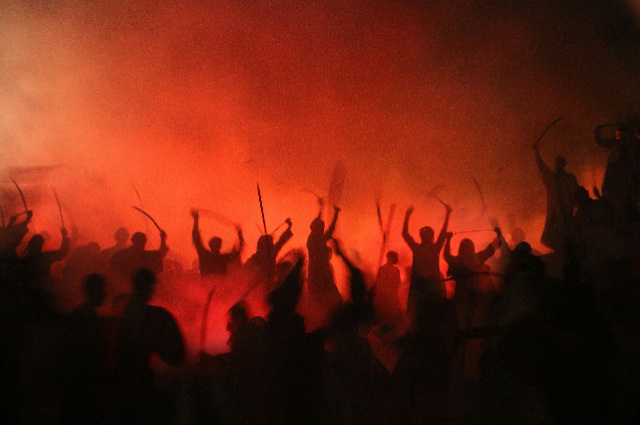
In an era where "justice" is often reduced to a hashtag or a stone thrown in anger, the role of the state as the sole arbiter of punishment is being eroded. The social contract, as envisioned by thinkers like Hobbes and Locke, traded individual vengeance for state protection. When the mob takes over, that contract is torn. We see this unravelling in the lynching of migrants, the media trials of the accused, and the collective punishment of nations. This essay will explore this collapse through the lens of recent events in Kerala, the legal vacuum in cases of media trials, and the broader failure of international humanitarian law in global conflicts like Gaza. It will conclude by arguing that the only way forward is a return to Constitutional Morality and Restorative Justice, exemplified by civil society movements that reclaim humanity from the jaws of hate.
The Anatomy of the Mob
The mob does not think; it only feels. And what it feels most often is a dangerous cocktail of moral superiority and xenophobic fear. We saw approximately this in the tragic lynching of Ram Narayan in Walayar. A man, likely disoriented and intoxicated, was not seen as a human being in need of help, but as a "Bangladeshi thief ", a convenient "other" onto whom a crowd could project its anxieties. He was beaten not for what he did, but for who they imagined him to be. This act was not merely a crime; it was a sociological breakage, where the "collective conscience" turned predatory.
This pathology has now been explicitly recognized by the state. The introduction of Section 103(2) of the Bharatiya Nyaya Sanhita (BNS), which prescribes life imprisonment or death for mob lynching, was a legislative attempt to curb this menace. Unlike the old Indian Penal Code (IPC), which treated such acts under general murder provisions, the BNS specifically names and shames the act of lynching on grounds of race, caste, or community. Yet, the Ram Narayan case proves that legislative rigour cannot cure a sociological rot. Statutes are mere ink on paper without social compliance. The law can punish the lyncher, but it cannot cure the hate that fuels him.
The Failure of State Responsibility Legally, this breakdown represents more than just criminal acts; it is a failure of the state's Doctrine of Parens Patriae (parent of the nation). When the mob attacks vulnerable individuals like Ram Narayan or Madhu in Attappady, the state abdicates its obligation to protect those who cannot protect themselves. The video of Madhu’s final moments was fragile, tied up, his hands bound by his own dhoti and held a mirror to the so-called "literate" society of Kerala. The mob that killed him believed they were enforcing order. In reality, they were dismantling Article 21 of the Constitution, which guarantees that "no person shall be deprived of his life or personal liberty except according to procedure established by law."
Furthermore, mob violence is a Constitutional Tort. As established by the Supreme Court in Nilabati Behera v. State of Orissa (1993), the state is strictly liable for failing to protect the fundamental rights of the victim. When the police fail to intervene, or when the machinery of the state is too slow to prevent a lynching, the state itself becomes complicit by omission. The compensation awarded in such cases is not just charity; it is an acknowledgement of the state's failure to uphold its sovereign promise of safety.
This violence is not limited to the uneducated or the rural. The case of Shahbas in Koduvally, where a school clash escalated to a premeditated murder using ‘Nunchaks’, a martial weapon, reveals a terrifying truth: our educational institutions are failing to teach the most basic subject, that is empathy.
When children plan murder with the cold calculation of seasoned criminals, it is a policy failure of the highest order.
It suggests that the "mob mindset", the idea that might makes right, has infiltrated even our classrooms.
Even the guardians of the law are not immune to this degradation. The shocking case of Navajith, an advocate who brutally killed his own father and badly injured his mother in Alappuzha, serves as a grim reminder. When a man trained in the logic of the courts succumbs to the primal violence of drug-induced rage, it signals a collapse of the internal moral order. A society cannot rely solely on written laws (lex scripta) if the internal discipline to obey them is lost among its citizens, including its lawyers and students.
The Court of Public Opinion / A Dangerous Judge
While physical lynching is the most visceral form of mob justice, "intellectual lynching" is its modern, digital equivalent. The principle of Ei incumbit probatio qui dicit, non qui negat (the burden of proof lies on him who asserts, not on him who denies) or "innocent until proven guilty" is the bedrock of any free republic. Yet, in cases like that of the actor Dileep, we witnessed a disturbing trend: the media trial.
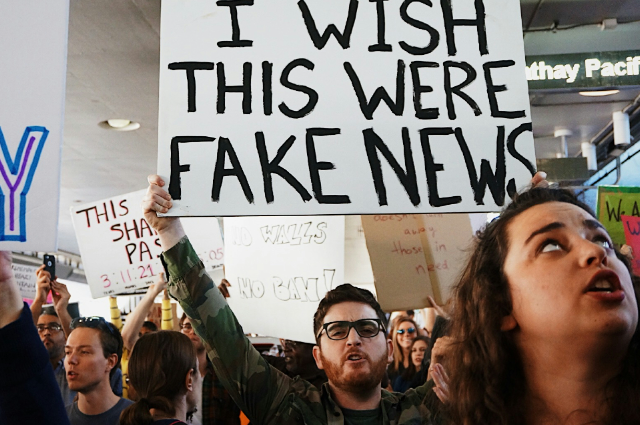
Rights in Conflict The media trial creates a "hierarchy of rights" where the Press’s Article 19(1)(a) freedom (freedom of speech and expression) cannibalises the accused’s Article 21 right to dignity and a fair trial.
In Subramanian Swamy v. Union of India (2016), the Supreme Court held that the Right to Reputation is a fundamental aspect of Article 21. A person’s reputation is "an inseparable element of his or her individual personality." By holding a parallel trial in the "digital amphitheatre," the media renders the principle of Sub Judice obsolete. The concept of Sub Judice, which that matters under judicial consideration should not be publicly discussed in a way that prejudices the outcome, has been eroded by the 24/7 news cycle which demands instant verdicts.
As noted in the landmark Sahara v. SEBI (2012) judgment, the "administration of justice" is the bedrock of order. The Supreme Court established the doctrine of the "Postponement Order", ruling that the court has the power to temporarily postpone media reporting if it creates a "real and substantial risk of prejudice" to the proper administration of justice. This is not a gag order; it is a shield for the sanctity of the trial. When public sentiment overrides evidence, we effectively substitute the rule of law with the rule of noise.
Regardless of the eventual legal outcome, where the court acquitted Dileep after an exhaustive eight-year process, the public had already delivered its verdict years prior. His social standing was decimated long before the judge banged the gavel. To systematically degrade a co-accused before the law has spoken is a violation of the legal maxim Audi Alteram Partem (no one should be condemned unheard). Policy-wise, this is catastrophic.
If public sentiment can dictate guilt, our courts become mere theatres where the outcome is predetermined by the loudest voice on Twitter.
We must have the courage to trust the judicial process, even when it moves slowly, and even when its outcomes do not satisfy our thirst for immediate retribution.
This principle extends to the most horrific of crimes. Consider the case of Farman and Arif in Pakistan, the infamous cannibals. Their crimes were digging up and eating human corpses, were so reviling that they tested the limits of human definition. The public revulsion was absolute. Yet, the state’s duty was to arrest, try, and imprison them, not to tear them apart limb from limb. The law exists to protect the accused, not because they are good, but because we are good. If we deny due process to monsters, we risk becoming monsters ourselves.
Mob Logic in Global Policy
When the logic of the mob scales up to the level of nations, it births the new biggest world war. The conflicts we see today, in Sudan, between Russia and Ukraine, and most tragically in Gaza, are all manifestations of the same tribal impulse that killed Madhu: the total dehumanisation of the "other."
Violating the Laws of War (Jus in Bello) In the Israel-Palestine conflict, we witness the "collective punishment" doctrine, where entire populations are made to pay for the crimes of a few. This is mob justice written into state policy. It violates the cardinal International Humanitarian Law (IHL) principle of Distinction, which mandates that belligerents must distinguish between combatants and civilians at all times. When a state or a mob blurs this line, treating every civilian as a potential enemy, they violate not just treaty law, but Jus Cogens, the peremptory norms of international law from which no derogation is permitted.
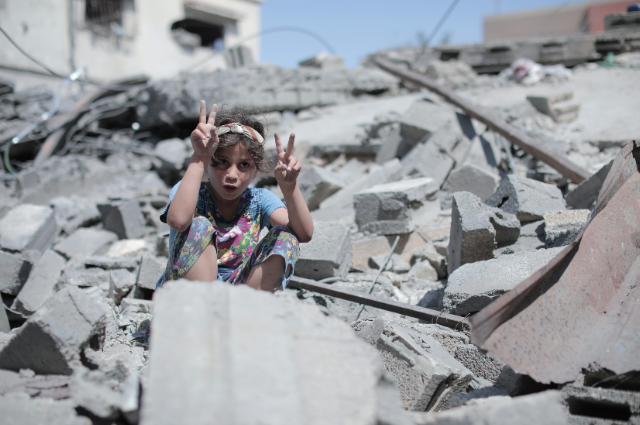
This contravenes Article 33 of the Fourth Geneva Convention, which explicitly states: "No protected person may be punished for an offence he or she has not personally committed. Collective penalties and likewise all measures of intimidation or of terrorism are prohibited." This article was drafted in the shadow of World War II to prevent exactly the kind of mass reprisals we see today.
Furthermore, the International Court of Justice (ICJ), in its recent provisional measures (South Africa v. Israel, 2024), reinforced legal obligations that are Erga Omnes (owed to the international community as a whole). The Court ordered the prevention of acts that could lead to the physical destruction of the group, emphasising that humanitarian aid cannot be denied to a civilian population. The denial of food, water, and medicine to a besieged population is a textbook example of collective punishment. We cannot condemn a mob in Palakkad for vigilantism while tacitly accepting the logic of collective reprisals on the world stage. The law must remain consistent: whether in a village court or the Hague, individual culpability must be the only standard of justice.
The wars in Sudan and Ukraine further illustrate this collapse. In Sudan, ethnic militias target civilians based on tribe, echoing the "us vs. them" binary of the mob. In Ukraine, the bombardment of civilian infrastructure blurs the lines of military necessity. In all these cases, the "fog of war" becomes a cover for the abandonment of law.
The Counter-Narrative: "With Humans"
However, to say that humanity is lost would be factually incorrect. Against the darkness of the mob, we have luminous examples of what a "literate" justice looks like. We see it in the Kerala Yatra (January 2026), led by the Grand Mufti of India, Sheikh Abubackar Ahmed, popularly known as Kanthapuram A.P. Aboobacker Musliyar.
Transformative Constitutionalism Marching 16 days from Kasaragod to Thiruvananthapuram, the journey carried a singular, powerful theme: "With Humans" (Manushyarkkoppam). It was not a march for a religion, a caste, or a political party. It was a reclaiming of the public space for humanity itself. In an era where leaders often divide to rule, a 94-year-old cleric walking to unite people reminds us of the concept of Transformative Constitutionalism. This legal theory, championed by scholars and judges, posits that the Constitution is not just a document for governance, but a tool to transform a stratified, feudal society into an egalitarian one. The march was an act of civil society practising this transformation, using the constitutional ideal of Fraternity to dissolve the rigid hierarchies of hate.
This spirit of "being with humans" is practical, not just poetic. It aligns with the theory of Restorative Justice, which focuses on repairing harm rather than just punishing the offender. We see this in the massive collective effort to save Abdul Rahim. Here was a man convicted in a foreign land (Saudi Arabia), facing the sword. The requirement was a staggering ₹34 crore in blood money (Diya). The "mob" could have ignored him; he was just one driver, and the sum was impossible. Instead, millions of people, including Hindus, Muslims, Christians, and atheists, pooled their resources to buy the life of a stranger.
This massive collective action was a utilisation of the law (the Diya provision in Islamic Sharia, recognised by the Saudi legal system) to save a human life. It proved that the collective can be a force for salvation, not just destruction.
It was Restorative Justice on a global scale, the community stepping in to heal a breach that the individual could not repair alone.
We see this same grace in the intervention of the same leader, Kanthapuram A.P. Aboobacker Musliyar, for Nimisha Priya, a Hindu nurse on death row in Yemen. A Muslim cleric intervening for a Hindu woman in a foreign land destroys the narrative of communal hatred that fuels so much mob violence. It proves that our shared humanity is thicker than the ink of our religious labels. It is a rejection of the "silo-isation" of empathy, where we only care for "our own."
Conclusion
History offers us the ultimate precedent for this higher form of justice. When Prophet Muhammad ﷺ entered Mecca victorious, he held the lives of the Quraysh, who were his tormentors, the people who had boycotted, starved, and killed his followers, in his hands. By the tribal laws of the time, a massacre was expected. Public opinion would have demanded revenge. Instead, he declared, "Go, you are free."
This was not weakness; it was the supreme strength of valid authority.
Rule of Law vs. Rule by Law Real justice is not what we do when we are weak and seeking redress; it is what we do when we are powerful and could choose revenge. We must distinguish between the Rule of Law and Rule by Law. The mob operates on Rule by Law, using violence as a tool to enforce their transient, emotional view of justice. The Constitution and figures like the Prophet operate under the Rule of Law, in which power is subject to enduring principles of fairness and restraint.
As we navigate an era of polarisation, we must reject the seductive simplicity of the stone-throwing mob. We must uphold Constitutional Morality, which is the adherence to the core values of the Constitution, not just its text. We must reject Vigilantism in all its forms, whether physical or digital. We must stand with the victim, yes, but we must also stand with the Presumption of Innocence. We must heed the message of the Kerala Yatra and choose to stand "With Humans." For if we burn down the court to kill the criminal, who will protect us when the fire turns our way?
References
- Statute: Bharatiya Nyaya Sanhita (BNS), 2023 - Section 103(2) (Punishment for Mob Lynching).
- Supreme Court of India: Tehseen S. Poonawalla v. Union of India (2018) - Guidelines on Mob Lynching and Vigilantism.
- Supreme Court of India: Nilabati Behera v. State of Orissa (1993) - Constitutional Tort and State Liability.
- Supreme Court of India: Sahara India Real Estate Corp. Ltd. v. SEBI (2012) - Postponement Orders and Sub Judice.
- Supreme Court of India: Subramanian Swamy v. Union of India (2016) - Right to Reputation as part of Article 21.
- Geneva Convention: Article 33, Convention IV (Prohibition of Collective Punishment).
- ICJ Ruling: Application of the Convention on the Prevention and Punishment of the Crime of Genocide in the Gaza Strip (South Africa v. Israel), Provisional Measures, 2024.
- Media Report: The Hindu, "Migrant worker lynched in Walayar," December 2025.
- Media Report: Mathrubhumi, "Attappady Madhu Lynching Verdict," 2018/2023.
- Media Report: The News Minute, "Kerala raises ₹34 crore for Diya money," 2024.
- Media Report: Siraj Daily, "Kanthapuram AP Aboobacker Musliyar's Kerala Yatra - Theme: With Humans," January 1-16, 2026.