
Introduction
Football is far more than a global obsession; it is a profound medium for developing the social architecture of the human mind. In recent years, the sport has seen an impressive resurgence in India, fueled by the historic visit of the legendary Lionel Messi. This visit was not simply a sporting event but a cultural development that left an indelible mark on fans, particularly in football hubs like Kolkata. While the visit sparked various debates and discussions, its most significant impact was highlighting the deeper values of the "beautiful game."
Beyond the goals and the glory, football provides a unique "value-added learning" environment.
By integrating regular practice, the influence of world-class icons, modern psychological insights, and spiritual teachings, this essay explores how football serves as a vital training ground for the group work skills essential for life in the modern world.
The Training Ground: Role Clarity and Collective Effort
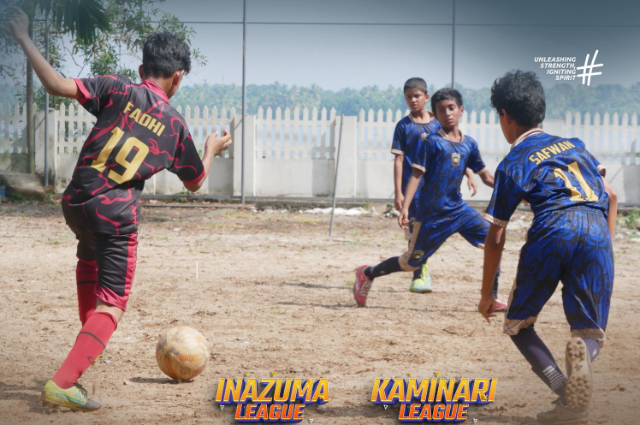
The foundation of effective group work is laid during the gruelling hours of team practice. On the pitch, players quickly realise that individual brilliance is a raw resource that only becomes functional when refined through coordination. Training sessions are laboratories for "role clarity."
Every player—whether a goalkeeper, a sturdy defender, or a clinical striker—has a specific duty.
As modern sports psychology notes, a team functions best when every member understands their responsibility and trusts their peers to fulfil theirs.
This concept is supported by the Football Pipelines Journal, which suggests that group training fosters a "shared awareness." Through repetitive drills and match simulations, players develop a visceral understanding of their teammates’ movements. They learn to anticipate where a pass will land or when a defender will slide in to cover. This isn’t just physical training; it is a cognitive exercise in trust and discipline. Players learn that arriving on time, following a coach’s tactical map, and maintaining fitness are not just personal choices but duties to the group.
Icons of Interdependence: Learning from Messi and Ronaldo
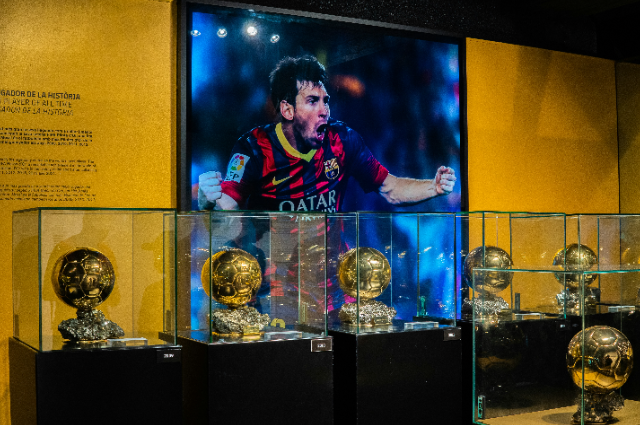
Even the greatest individual talents in history admit that they are nothing without the collective. Lionel Messi, often cited as the greatest of all time, exemplifies this humility. Messi has frequently stated that he is lucky to be part of a team that "makes him look good," insisting that his successes belong as much to his teammates as they do to his own hard work.
This altruistic approach was the engine behind Argentina’s 2022 World Cup victory. Instead of playing as a solo star, Messi acted as a catalyst, encouraging younger players and trustingly integrating into the team’s strategy. (FIFA World Cup 2022 Highlights at 6:50).
Similarly, Cristiano Ronaldo demonstrates that leadership is a form of discipline that elevates the group. While known for his scoring records, Ronaldo’s former teammates often speak of his "leading by example" mentality. They describe how he is the first to arrive and the last to leave the training ground, creating a culture of excellence that his teammates feel compelled to follow. A study by CommerceCX on Ronaldo’s leadership highlights a pivotal moment where he chose to pass to a teammate rather than take a difficult shot himself—a clear indicator that true greatness lies in prioritising the team’s success over personal vanity. (Teammates on Ronaldo’s Discipline at 3:47).
The Psychology of Connection and Mutual Support
Effective group work is as much about emotional intelligence as it is about physical skill. Modern psychology, specifically the work of Emma Seppälä and Nicole K. McNichols, highlights "Self-Determination Theory," which suggests that people perform at their peak when they feel a sense of "relatedness" or connection. In football, this translates to how teammates treat one another after a mistake.
If a player misses a crucial goal and his teammates blame him, the team’s unity fractures. However, if they offer support and encouragement, they build "psychological safety." This environment allows players to take creative risks and grow. Furthermore, the concept of a "Growth Mindset," popularised by Carol Dweck, is perfectly mirrored in football. When teams view a lost match not as a failure but as a collective "learning moment," they become more resilient. This emotional bond—the ability to share both the weight of defeat and the joy of victory—is what transforms a group of players into a unified team.
Practical Steps to Building Synergy
Good group work is a deliberate process. Based on educational and sociological principles, there are four key steps that football teams use to maintain harmony:
- Respectful Communication: As psychologist Lev Vygotsky noted, coordination improves through social interaction. On the field, clear and polite communication—calling for the ball or offering tactical warnings—is the "glue" of the team.
- Unwavering Trust: Trust is the belief that your teammate will fulfil their role. This reduces "selfish play" and allows for more complex, successful strategies.
- Support During Failure: Treating errors as learning opportunities rather than reasons for criticism maintains the group’s morale and confidence.
- Shared Discipline: Following rules and respecting the coach’s decisions ensures that the group functions as a single, orderly unit rather than a chaotic assembly of individuals.
Addressing the Paradox of Individualism
A common counter-argument is that emphasising group work might stifle individual talent. However, the opposite is true. Teamwork provides the structure that allows individual brilliance to shine. A striker cannot score without a midfielder’s vision; a goalkeeper’s save is only meaningful if the defence can clear the ball. Discipline and rules do not limit creativity; they create a safe environment where creativity can flourish without the fear of the system collapsing.
Spiritual Foundations: The "Brick" Metaphor
The principles of football echo timeless spiritual wisdom. In Islamic tradition, the Prophet Muhammad ﷺ emphasised the strength of the collective, stating, "The hand of Allah is with the group" (Sunan al-Tirmidhi). He beautifully compared the believers to "bricks of a building, each part strengthening the other" (Sahih al-Bukhari). This metaphor is a perfect description of a football squad. No brick is more important than the building itself, yet the building cannot stand if one brick is missing or weak. Each player, like a brick, has a unique position that provides structural integrity to the whole.
Learning Through the Game
My own time on the school football team has been my most significant classroom. I recall a specific match where the pressure was suffocating and we were losing hope. I found myself in a position to take a shot, but I saw my teammate in a better opening. In that split second, I chose to trust him and passed the ball.
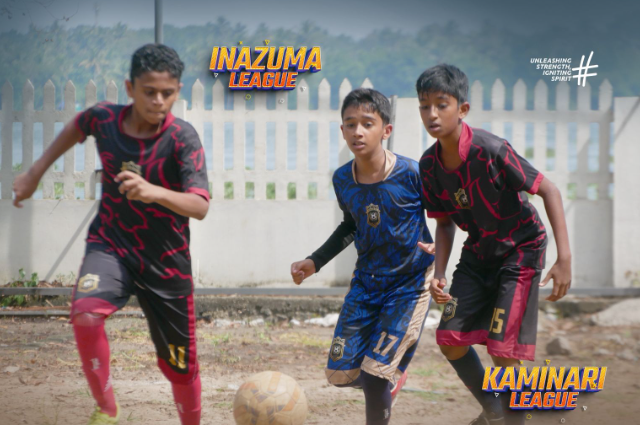
He scored, and the energy of the entire team shifted instantly. We didn’t just win the match; we won a deeper understanding of each other. That moment taught me that success is a shared commodity—it is much sweeter when it is the result of a collective "pass" rather than a solo "run."
Conclusion
Ultimately, football is a powerful rehearsal for the challenges of adult life. Through the rigor of practice, the inspiration of global icons, and the application of psychological and spiritual principles, the game teaches us that we are at our best when we work together. It trains us to communicate, to trust, and to lead with empathy. These skills are not confined to the grass of the pitch; they are the very tools needed to succeed in schools, workplaces, and as compassionate members of society. By learning the art of group work through football, we do more than just improve our game; we become better human beings, ready to contribute to a world that needs cooperation more than ever.
Reference
- Dweck, C. S. (2006). Mindset: The New Psychology of Success. Random House.
- Seppälä, E., & McNichols, N. K. (2022). Social Connection and Peak Performance: A Study on Self-Determination Theory.
- CommerceCX (2023). "Leadership and Teamwork: Lessons from Cristiano Ronaldo."
- Football Pipelines Journal. "The Cognitive and Social Benefits of Group Football Training."
- Sahih al-Bukhari. Hadith 481; Sahih Muslim.
- Sahih al-Bukhari. Hadith 2585. (The "Building Bricks" Metaphor).
- FIFA (2022). "World Cup Highlights: Messi’s Leadership in Action." YouTube.
- About CR7. Ronaldo’s Teammates Share Stories About His Discipline and Work Ethic.