
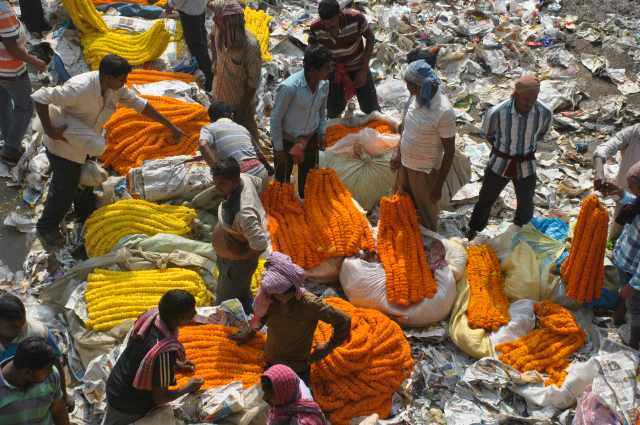
The smell of rotting waste hangs in the narrow lanes of Old Delhi. Piles of garbage spill into drains and block the footpaths of busy markets, making everyday movement difficult for residents and shopkeepers alike. What we see on the streets is not just an eyesore; it is a poor waste management system that is harming people’s health, polluting water sources, adding to climate change, and weakening the promise of a clean India under the Swachh Bharat mission.
Rapid urban growth, gaps in policy implementation, lack of proper infrastructure, and deep social and economic inequalities have pushed municipal systems beyond their limits. The result is a crisis that goes far deeper than overflowing bins, revealing long-standing structural problems that demand urgent attention.
Garbage lies scattered along the streets, and its smell hangs in the air of the narrow lanes. Amid this, the promise of a clean country feels distant, quietly waiting for care, action, and responsibility.
Historical and Policy Context: How India Reached Here
When Waste Was an Afterthought (Before 2000)
For a long time, waste management in India was not treated as a serious issue. It was seen as part of routine municipal sanitation work- sweeping streets, clearing drains, and moving garbage away when it became visible. There was little planning, limited infrastructure, and almost no long-term strategy to deal with growing waste.
The First Real Framework (2000-2013)
A shift began in 2000 with the introduction of the Municipal Solid Waste (Management and Handling) Rules.
This was the first time India had a national policy focused specifically on solid waste.
- Waste management became a regulated activity, not just a municipal chore
- Cities were expected to improve collection, transportation, and disposal
- However, implementation remained weak and uneven across states
Cleanliness Becomes a National Mission (2014–2019)
The launch of the Swachh Bharat Mission in 2014 marked a major turning point. Cleanliness moved from policy documents into public conversation.
- Separate programmes were created for urban and rural India
- Cities focused on ending open defecation and improving waste management
- By 2019, India was declared open-defecation-free
While this was a major achievement, concerns remained about whether these gains could be sustained over time.
More Detailed and Shared Responsibility (2016 onwards)
Waste policies became more specific and stricter.
- The Solid Waste Management Rules, 2016, expanded responsibilities to citizens, bulk waste generators, and local bodies
- The Plastic Waste Management Rules introduced Extended Producer Responsibility, making companies responsible for plastic waste even after use.
- The E-Waste Management Rules placed collection and recycling duties on manufacturers.
On paper, waste management became a shared responsibility, not just the government’s burden.
The Reality Check in 2025
Despite stronger policies, everyday reality tells a different story.
- Landfills continue to overflow
- Rivers and lakes are polluted by untreated waste
- Garbage burning adds to air pollution
- Municipal bodies struggle with poor enforcement, weak infrastructure, and limited coordination.
Reports from agencies like the CPCB and CAG repeatedly highlight the same problem: strong policies exist, but execution on the ground remains inadequate.
Policies may be written on paper, but until action fills the streets, India’s dream of cleanliness remains just a promise waiting to be kept. Paper policies shine, but the streets remain the true measure of a clean nation.
Current State of Waste Generation and Composition in India – 2025
Rapid Increase in Waste:
Daily municipal solid waste (MSW) has grown from 145,000 tonnes in 2020 to over 175,000 tonnes in 2025. Urban areas contribute ~65% of total waste. Major cities like Delhi, Mumbai, Bengaluru, and Chennai produce more than 10,000 tonnes per day each. The growth reflects rising urbanization, population, and consumerism.
Waste Composition – What’s in the Garbage?
The composition varies regionally but generally includes Organic waste [45–60% (food scraps, garden waste)], Recyclables [20–30% (plastic, paper, metal, glass)], Inert materials [15–20% (dust, rubble, debris)], and hazardous & biomedical waste [1–2%].
- Plastic waste: India produces 3.4 million metric tons annually. Only 60% is collected, and 30% recycled effectively. Remaining 40%, including non-recyclable plastics, ends up in landfills, drains, and the environment.
- Biomedical waste: Surged post-COVID-19 from 700 tonnes/day in 2020 to 1,200 tonnes/day in 2025. Improper segregation and illegal dumping remain widespread in healthcare facilities.
- E-waste: India is the third-largest e-waste generator globally (~3.2 million tonnes/year). Only 25% processed formally. Most is handled informally through open burning or unsafe methods, releasing lead, mercury, and other toxic substances.
Waste generation is rising faster than infrastructure can handle. Collection and recycling rates are still low, leaving large amounts in landfills or the environment. Without urgent action, these trends threaten public health, environmental safety, and urban sustainability. Mountains of garbage are growing, and so is the cost of inaction.
Key Failure Points in Waste Management – India, 2025
Collection and Transportation: The First Bottleneck
One of the most obvious gaps in India’s waste management system is incomplete and inefficient collection. While big cities manage to collect 70–90% of waste, smaller towns and peri-urban areas often struggle to reach even half of it. Many households in informal settlements, slums, and newly developed colonies remain entirely outside formal collection routes.
Even where collection exists, transportation is outdated and inadequate. Municipalities face shortages of compactor trucks, forcing multiple trips that delay waste movement. In several cities, uncovered vehicles spill waste on the streets, attracting pests and creating public health risks.
Poor Segregation at Source: The Missing Link
Modern waste management relies on separating wet, dry, and hazardous waste at the source. In 2025, fewer than ten major cities have achieved mandatory segregation at the household level. Mixed waste flowing into collection systems reduces the efficiency of composting, recycling, and treatment facilities. Contamination of recyclable materials makes formal recycling economically unviable and increases the reliance on landfills.
Lack of Processing Infrastructure: Waste Without a Home
India’s installed waste processing capacity handles less than half of the daily waste generated. Cities like Delhi and Mumbai have waste-to-energy plants, but many underperform due to feedstock contamination and high operational costs. Composting facilities remain underutilized, with decentralized composting models failing to gain traction due to low public participation and limited municipal incentives.
Recycling infrastructure is largely informal. Over 80% of recycling is carried out by waste dealers and ragpickers, working without safety gear or fair compensation. Formal recycling plants struggle to compete due to irregular access to sorted waste streams, leaving a vast portion of recyclable material untreated.
Landfill Mismanagement: Mountains of Neglect
Landfills continue to serve as the default option for disposal. Out of over 3,000 dumpsites in India, only 90 meet scientific management standards. The rest are unlined pits that contaminate groundwater, release methane, and pose long-term environmental hazards.
Some landfills have become infamous environmental disasters. Ghazipur in Delhi, towering over 65 meters, has been legally prohibited from receiving new waste since 2020, yet dumping continues, causing fires, toxic air, and soil contamination. Deonar in Mumbai and Kodungaiyur in Chennai face similar crises. Municipal waste contributes roughly 11% of India’s methane emissions, aggravating climate change.
Inequity and Informal Labor: The Hidden Cost
Waste management in India is deeply unequal. An estimated 1.5 million waste pickers, mostly women from marginalized communities, work without legal recognition, health coverage, or safety gear. They scavenge through mixed waste, facing respiratory illnesses, injuries, and exposure to pathogens daily.
While organizations like NSWAI and various NGOs advocate for integrating informal workers into formal systems, progress is slow. By 2025, only a handful of cities have successfully unionized or provided alternative livelihoods for waste pickers, leaving millions exposed to hazardous conditions.
When collection fails, segregation is ignored, and workers remain unprotected, garbage becomes more than waste; it becomes a warning.
Public Health and Environmental Consequences of Waste Mismanagement – 2025
Air Pollution: Invisible Threats in the Air
Open burning of waste, a common practice in villages and low-income urban neighbourhoods, releases harmful substances like particulate matter (PM2.5), dioxins, and furans. By 2025, cities such as Kanpur, Delhi, and Ahmedabad experience spikes in air pollution during garbage-burning seasons.
The impact on human health is immediate and alarming. Residents living near landfills report higher rates of asthma, bronchitis, and skin ailments. Research by the Public Health Foundation of India in 2024 highlighted that children living within 1 km of dumpsites have 2.3 times higher respiratory infections compared to the national average. The smoke rising from burning waste is more than an eyesore; it is a silent killer in the air we breathe.
Water and Soil: Poison Beneath Our Feet
Unlined dumpsites leak toxic leachate, contaminating groundwater with heavy metals like lead and chromium and organic pollutants. In industrial and urban zones such as Vapi (Gujarat) and Pallikaranai (Chennai), groundwater tests show levels far exceeding safe limits, making water unsafe for drinking or irrigation.
Rivers are no refuge. The Ganges, Yamuna, and Godavari carry tons of plastic and untreated waste into the ocean each year, feeding marine pollution and introducing microplastics into the food chain. Waste that starts in our streets ends up choking rivers, oceans, and aquatic life, with long-term consequences for both humans and wildlife.
Biodiversity and Climate: A Broader Cost
Mismanaged waste extends its harm to the natural world. Birds, fish, and livestock ingest plastic, causing mortalities and introducing toxins into the food chain. Encroachment of landfills on green spaces and wetlands destroys habitats, pushing ecosystems to the brink.
Decomposing organic waste emits methane, a greenhouse gas 28 times more potent than carbon dioxide over 100 years. India’s municipal waste sector alone releases an estimated 70 million tonnes of CO2-equivalent annually, roughly equal to the emissions of 15 million cars. Every ton of uncollected and mismanaged waste adds to global warming, making waste management not just a local issue, but a planetary one.
From the smoke we inhale to the water we drink, from rivers to forests and beyond, poor waste management touches every part of life. By 2025, the consequences are clear: public health is at risk, ecosystems are collapsing, and the climate is under pressure. Addressing waste mismanagement is no longer optional; it is a public health and environmental imperative.
Every ton of uncollected garbage is a hidden threat to health, ecosystems, and the climate. India’s waste crisis is more than trash. It is a ticking public health and environmental emergency.
Governance and Institutional Challenges in Waste Management – 2025
A Maze of Agencies: Coordination Gone Wrong
Waste management in India is handled by a tangle of agencies. The Ministry of Housing and Urban Affairs (MoHUA) oversees municipal solid waste, State Pollution Control Boards (SPCBs) monitor industrial and hazardous waste, while Urban Local Bodies (ULBs) and private contractors manage collection and processing.
In theory, these multiple stakeholders should complement each other, but in practice, jurisdictional overlaps and a lack of data sharing create silos. Efforts to integrate municipal, industrial, and hazardous waste management are often stalled, leading to fragmented strategies and missed opportunities for efficiency.
Underfunding and Financial Constraints
Municipal budgets rarely reflect the scale of the problem. On average, only 5–10% of city budgets are allocated to sanitation and waste management. The 15th Finance Commission recommended higher devolution of funds to ULBs, but inconsistent disbursement means cities continue to operate with tight resources.
Even when private investment is encouraged through public-private partnerships (PPPs), results often fall short. Many contracts fail due to poor design, lack of transparency, and community opposition. High-profile incineration projects in Delhi and Bengaluru, for example, have faced protests and legal hurdles over pollution concerns.
Public Awareness: The Missing Link
Policies alone cannot solve waste management; citizen participation is essential. Yet, public engagement remains low. A 2024 survey by the Centre for Science and Environment (CSE) revealed that only 28% of urban households segregate waste at home. Reasons include lack of awareness, inconvenience, or scepticism about municipal collection.
Beyond awareness, social stigma around waste work discourages involvement, while poor civic education limits community participation in local initiatives. Without an active, informed public, even the best infrastructure and policies fail to achieve their potential.
In 2025, India’s waste management crisis is less about vision and more about execution. Weak governance, fragmented responsibilities, insufficient funding, and low public participation combine to stall progress. Addressing these institutional challenges is as crucial as improving infrastructure or technology, because without coordinated action, even the best plans remain paper promises.
A clear vision exists, but without coordination, funding, and public support, it remains trapped on paper. Fragmented agencies, tight budgets, and low citizen participation have turned India’s waste policies into a promise unfulfilled. Governance gaps and institutional hurdles prove that solving India’s waste crisis requires more than rules. It demands action from all sides.
Creative and Transformative Solutions for India’s Waste Crisis – 2025
The Waste Picker’s Cooperative Revolution
Imagine a world where the 4 million informal waste pickers in India are no longer invisible. The vision of the “Swachh Sthree & Shramik Sahakar Mandal” seeks to formalize this workforce into a national cooperative union, giving them dignity, security, and a stake in India’s recycling economy.
Innovations at the Heart of the Cooperative
Every member of the cooperative is empowered with tools for efficiency and accountability:
- A digital ID for access to municipal contracts and benefits.
- Health insurance and social security coverage recognize the risks they face daily.
- A smart recycling cart equipped with solar-powered scales and GPS, enabling precise waste tracking.
The cooperative also harnesses technology and transparency:
- Direct contracts with municipalities and brands, bypassing intermediaries.
- Blockchain-based micro-dividends, ensuring fair profit sharing and financial inclusion.
Impact: Transforming Lives and Cities
This cooperative model doesn’t just improve recycling efficiency; it elevates waste work into recognized, organized labor, strengthens grassroots governance, and provides millions of workers with social and economic security.
Learning from Global Examples
The model draws inspiration from Brazil’s CooperMuda, where waste pickers are organized into successful cooperatives. Adapting such a framework for India could revolutionize urban waste management while uplifting vulnerable communities.
The Edible Packaging Revolution
Imagine a world where the wrapper around your sandwich is part of your meal. India’s fight against plastic could take a bold leap forward through collaboration with food tech startups, replacing single-use plastic with edible, biodegradable packaging made from seaweed, rice, or milk proteins.
How It Could Work
This revolution isn’t just about materials. It’s about culture, policy, and public engagement:
- Mandated adoption in high-footfall areas such as railway stations, airports, and street vendors, ensuring visibility and impact.
- Subsidies for producers, lowering costs, and encouraging innovation in edible packaging.
- Public taste-testing festivals, turning adoption into an experience rather than a chore.
A Creative Twist
The campaign “Chew the Wrap” invites people to literally eat their packaging after use, making sustainability fun, interactive, and memorable.
Branding That Sticks
Every edible wrapper carries the tagline: “The Last Plastic You’ll Ever Eat, positioning the product as both a solution and a statement against plastic pollution.
Waste-to-Internet: Bandwidth for Trash
Imagine a future where discarding waste could earn you Wi-Fi. In rural and peri-urban India, the Waste-to-Internet initiative transforms e-waste and plastic into digital access, tackling both environmental and social challenges simultaneously.
How It Works
The program introduces “Digital Dhabas”—community kiosks where citizens can exchange verified quantities of waste for Wi-Fi vouchers. Telecom giants like Jio and Airtel partner in the initiative, providing connectivity for 1–2 hours per verified deposit.
This model creates a win-win system: communities benefit from clean surroundings, and residents, especially youth, gain internet access for education, social engagement, and digital literacy.
Creative Synergy
The initiative is more than a transaction. By linking waste collection with digital literacy programs, it encourages young people to participate actively in sustainability efforts while acquiring critical 21st-century skills.
India’s waste management failures in 2025 are not a sign of inevitable collapse, they are a reflection of outdated thinking. The crisis is bigger than budgets or regulations; it calls for a radical reimagining of what waste is and what it can become. With creativity, empathy, technology, and cultural insight, India can turn its trash into energy, art, livelihoods, and even sources of spiritual renewal.
The ideas outlined here are The Waste Picker’s Cooperative Revolution, The Edible Packaging Revolution, and Waste-to-Internet: Bandwidth for Trash. These are not fantasies. They are blueprints for a future where every discarded item spark innovation. India, with its vast informal workforce, rich traditions, and energetic youth, is uniquely positioned to lead a waste renaissance.
The question is no longer whether India can manage its waste. The real challenge is whether it can inspire the world by turning trash into treasure.
From waste to wonder, India can show the world that garbage is only the beginning of creativity. Every discarded item holds a spark of possibility. India just needs to light it.