
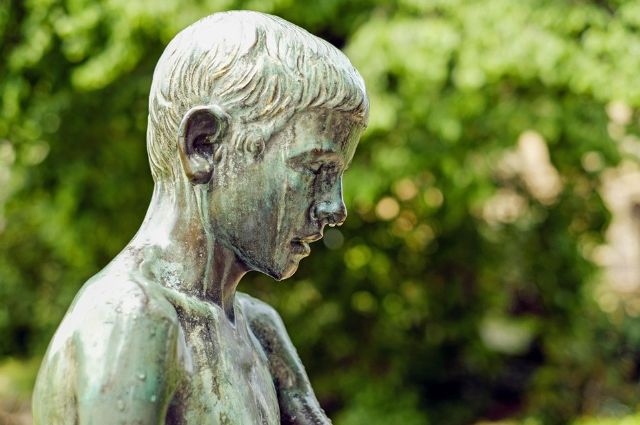
Image by Ilona Frey from Pixabay
Christmas is supposed to be a season of light—a time when homes glow with candles, churches overflow with songs, and families gather in celebration, gratitude and love. But in our little community, one Christmas became a day that many of us would never be able to remember without sorrow.
It happened on 25 December, when the whole community was immersed in Christmas celebrations. People had gathered at the church, singing carols, sharing food and celebrating the joy of the season. Amid the laughter and festivities, a nine-year-old boy left the gathering and returned home.
He did not know that something terrible awaited him there.
When he reached his house, he encountered his own uncle, who had allegedly entered the house with the intention of stealing. What happened next turned a day of celebration into a nightmare. The little boy was brutally killed, his head crushed with a heavy tree trunk.
A child who should have been thinking about Christmas sweets, new clothes and presents was instead robbed of his life.
The news spread through the community like a dark cloud. The Christmas songs that had filled the air seemed suddenly meaningless. Behind every closed door was disbelief; behind every conversation was grief. It was difficult to comprehend how a child so young could become the victim of such violence, and even more difficult to accept that the person responsible was someone from his own family.
At that time, I was serving in the Students' Union. As young people who felt the weight of what had happened, we could not simply remain silent. We organised a candlelight ceremony in memory of the little boy. We stood together with candles in our hands—small flames against the darkness that had fallen over our community.
Those candles represented more than remembrance. They represented our grief, our outrage and our longing for justice.
Yet, as time passed, another painful chapter unfolded.
The person responsible for the child's death was his own uncle. Because of the family relationship and the deeply rooted customs and expectations of our society, the family eventually chose to forgive him. The matter was settled within the family, and the man was allowed to live freely.
For some, forgiveness may have brought a sense of closure. But for many of us who had witnessed the pain surrounding that little boy's death, it left behind an uncomfortable question:
Can forgiveness heal a wound when justice has never been allowed to speak?
I often think about that Christmas. The contrast still haunts me—the church filled with celebration while, somewhere away from the festivities, a child's life was being violently taken away. A day meant to celebrate the birth of Christ became, for our community, a day marked by death and grief.
What troubles me most is not only the brutality of the crime, but the silence that followed. The traditions and taboos of society seemed to weigh heavier than the cry for justice. The fact that the accused was a relative changed the course of what followed. Compassion for the family, fear of social consequences and the desire to preserve relationships seemed to take precedence over the question of accountability.
I do not write this story to condemn a family that chose forgiveness. Nor do I claim to know the depth of their pain or the reasons behind their decision. Forgiveness is deeply personal, and grieving families often make choices outsiders cannot fully understand.
But I write because a child's life should not become a forgotten footnote simply because his death occurred within a family.
He was only nine.
He deserved to grow up. He deserved to go to school, make friends, quarrel with his siblings, dream about his future and celebrate many more Christmases. He deserved the ordinary life that was taken from him in a single, horrifying moment.
Years may pass, but some memories refuse to fade.
I still remember those candles.
I remember standing among others, holding a small flame for a child whose own light had been extinguished far too soon. We lit those candles because darkness had taken something from us, and we wanted, even for a moment, to believe that light could overcome it.
But perhaps the greatest tragedy was that the candles eventually went out, while the questions remained.
What does justice mean when society chooses silence?
What happens when family ties become stronger than accountability?
And what becomes of a child's memory when everyone else learns to move on?
That Christmas taught me something I'll never forget: not every darkness comes from the absence of light. Sometimes, darkness survives because people are afraid to let the light expose what lies within it.
And somewhere in the memory of our community remains a nine-year-old boy who should have been celebrating Christmas with us.
Instead, we remember him by candlelight.