
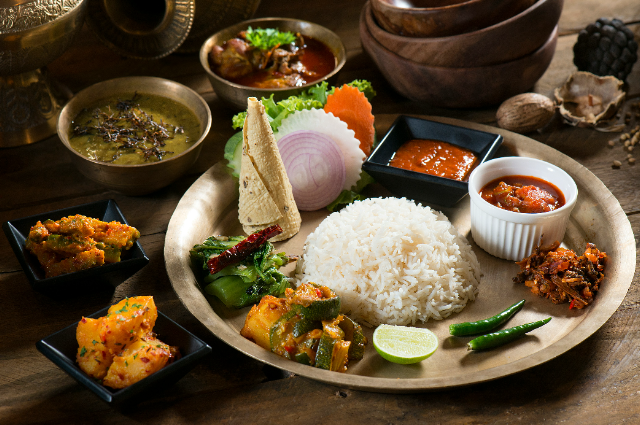
In recent years, discussions around food in India—especially the debate between vegetarian and non-vegetarian diets—have become more visible and, at times, more sensitive. Questions about what people eat, particularly concerning meat and beef, are often linked not just to personal choice but also to religion, culture, and identity. These conversations are no longer limited to homes or local communities; they are now widely shaped by social media, films, and public commentary. As a result, opinions can sometimes become polarised, with strong views on what is considered “acceptable” or “appropriate” food.
At the same time, India is known for its immense diversity. Across different regions, religions, and communities, food practices vary greatly. What is common in one part of the country may be unusual in another. Coastal areas may have diets rich in fish and seafood, while some inland regions have a higher number of vegetarian communities. Within religions, too, there is no single uniform practice. People often follow dietary habits influenced by family traditions, local culture, and personal beliefs.
Because of this diversity, it is important to approach the topic with care and understanding. Food is not just about nutrition; it is deeply connected to identity, history, and everyday life. Simplifying it into strict categories or judging others based on their choices can overlook this complexity.
This article aims to explore the subject in a balanced and factual way. By looking at historical developments, religious texts, and modern data, it seeks to provide a clearer picture of how food habits have evolved and why they differ across communities. The intention is not to support or criticise any particular viewpoint, but to encourage a more informed and respectful understanding of a topic that affects millions of people in different ways.
Food and Identity in India
In India, food is closely connected to identity in ways that go far beyond basic nutrition. What people eat is often shaped by a combination of culture, religion, and family traditions, making food an important part of how individuals and communities understand themselves. Meals are not only about sustenance; they carry meanings, values, and a sense of belonging that is passed down through generations.
Culturally, food reflects the history and lifestyle of a community. Traditional dishes are often linked to local ingredients, climate, and occupations. For example, communities living near the coast have easy access to fish and seafood, which naturally become a regular part of their diet. In contrast, inland regions, especially those dependent on agriculture, may have diets centred around grains, vegetables, and dairy products. Over time, these patterns become cultural norms, shaping what is considered “usual” or “traditional” in a particular area.
Religion also plays a significant role in influencing food habits. Different religious traditions may encourage or discourage certain types of food based on beliefs about purity, non-violence, or ritual practices. However, even within the same religion, practices can vary widely depending on region and community. This shows that religious influence on food is not always uniform but often interacts with local customs and interpretations.
Family traditions further reinforce these patterns. From a young age, individuals are introduced to specific foods at home, along with the values attached to them. Festive meals, daily cooking habits, and even rules about what can or cannot be eaten on certain days all contribute to shaping a person’s food identity. These practices are often followed not only out of belief but also out of respect for family and heritage.
Because of this deep connection, food choices can sometimes become socially sensitive. What one person sees as normal or acceptable may be viewed differently by another. In public discussions, especially on social media or in films, food is sometimes used as a symbol to represent larger ideas about culture, morality, or identity. This can lead to misunderstandings or judgments, especially when diverse practices are viewed through a single perspective.
Understanding food in India, therefore, requires looking beyond the plate. It is not just about what people eat, but about who they are, where they come from, and the traditions they carry with them. Recognising this complexity can help create a more respectful and inclusive conversation around food and identity.
Historical Background: Diet in Ancient India
Understanding food practices in ancient India requires looking at a long and complex history rather than a single, fixed pattern. In the early Vedic period (roughly 1500–500 BCE), available textual and archaeological evidence suggests that diet included a variety of foods, and practices were shaped by environment, occupation, and ritual life. One notable feature of this period was the presence of animal sacrifice in certain religious rituals. Texts such as the Rigveda mention offerings made to deities, which in some cases included animals. These sacrifices were part of a broader ritual system and were not necessarily a daily or universal practice for all people.
Alongside ritual use, there is also evidence that meat consumption existed in parts of society. References in Vedic literature indicate that different types of food, including meat, dairy, grains, and fruits, were part of the diet. However, it is important to note that these practices were not uniform across all communities. Diet likely depended on factors such as geography, availability of resources, and social roles. For example, pastoral communities may have had greater access to animal products, while agricultural groups relied more on crops.
As time progressed, dietary practices began to evolve. Later Vedic and post-Vedic texts show a gradual shift in attitudes toward food, especially concerning the idea of non-violence, or ahimsa. This shift did not happen suddenly but developed over centuries, influenced by philosophical and social changes. During this period, there is increasing emphasis in some texts on restraint, moderation, and the ethical implications of harming living beings.
The diversity of food practices continued into the epic and classical periods, reflected in texts like the Mahabharata and the Ramayana. These texts contain a range of references that suggest different dietary norms coexisted. Some passages highlight ascetic ideals and avoidance of meat, while others describe hunting, feasting, or ritual consumption. This variety indicates that there was no single, universally followed dietary rule even within the same cultural framework.
Over time, regional differences became more pronounced. Climate, agriculture, and trade influenced what foods were commonly available and consumed. Coastal regions, for instance, had access to fish and seafood, while inland areas depended more on grains, legumes, and dairy. These patterns contributed to the development of distinct food cultures across the subcontinent.
It is also important to recognise that social groups may have followed different practices. What was acceptable in one community might not have been in another. Dietary customs were shaped by a combination of practical needs, evolving beliefs, and local traditions.
In summary, the historical background of diet in ancient India shows a gradual and varied evolution rather than a single fixed model. Early evidence points to the presence of both animal sacrifice and meat consumption, while later developments introduced new ideas that influenced dietary choices. Across different regions and communities, practices remained diverse, reflecting the complexity of Indian society over time.
Religious Texts and Interpretations
Religious texts have played an important role in shaping ideas about food in India, but their messages are often complex and open to interpretation. Texts such as the Mahabharata, the Ramayana, and the Manusmriti contain a wide range of references to food practices. Rather than presenting a single, uniform rule, these texts reflect different perspectives that have been understood in various ways over time.
One important concept that appears across many traditions is ahimsa, or non-violence. Several passages in these texts praise the idea of avoiding harm to living beings and present it as a moral or spiritual ideal. For example, in parts of the Mahabharata, there are discussions that highlight compassion and restraint, suggesting that abstaining from meat can be seen as a virtuous practice. Such teachings have influenced many communities to adopt vegetarian diets, especially as part of a broader commitment to non-violence and ethical living.
At the same time, other passages within the same or related texts allow for the consumption of meat under certain conditions. In the Mahabharata and the Manusmriti, there are references to meat being permitted when it is part of a ritual or has been prepared according to specific religious guidelines. These contexts often involve offerings to deities or ancestors, after which the food may be consumed. In such cases, the act of eating meat is framed within a structured ritual process rather than as an everyday activity.
The Ramayana also contains varied references that have been interpreted differently by scholars and followers. Some sections describe lifestyles that emphasise simplicity and restraint, while others include descriptions of hunting or the preparation of different types of food. These references are often understood in relation to the setting and circumstances of the narrative, rather than as direct instructions for all individuals.
Because of these differing passages, it becomes clear that religious texts do not always present a single, consistent message regarding diet. Instead, they reflect a range of ideas that developed over time and were influenced by social, cultural, and philosophical contexts. This has led to diverse interpretations among different traditions and communities.
For some groups, the emphasis on ahimsa has been central, leading to a strong preference for vegetarianism as an expression of spiritual discipline. For others, the allowance of meat in specific contexts is seen as part of a legitimate and historically grounded practice. In many cases, people follow a combination of these ideas, such as avoiding meat on certain days or during religious periods while consuming it at other times.
It is also important to consider that these texts were composed over long periods and often include contributions from multiple authors or traditions. As a result, they naturally contain layers of thought that may not always align perfectly. Rather than viewing this as a contradiction in a negative sense, it can be understood as a reflection of a dynamic and evolving tradition.
Interpretation plays a key role in how these texts are understood today. Scholars, religious leaders, and communities may emphasise different passages based on their perspectives and values. Cultural practices, regional traditions, and historical experiences all influence how these teachings are applied in daily life.
In this context, it is helpful to approach these texts with an awareness of their complexity. They offer insights into a wide range of beliefs and practices, rather than a single fixed rule. Recognising this diversity allows for a more balanced understanding of how food and religion are connected in India, without reducing the discussion to simple or absolute conclusions.
Influence of Philosophical Movements
The development of food practices in India cannot be understood without considering the influence of major philosophical movements, particularly those associated with Mahavira and Gautama Buddha. Both played a significant role in shaping ideas about non-violence and ethical living, which gradually affected dietary choices across different communities.
A central principle in these traditions is ahimsa, or non-violence toward all living beings. In Jainism, as taught by Mahavira, this idea is followed in a very strict and disciplined manner. Avoiding harm is considered essential not only in actions but also in daily habits, including food. As a result, vegetarianism became a core aspect of Jain practice, reflecting a deep commitment to minimising harm in all forms.
Buddhism, founded by Gautama Buddha, also emphasises compassion and non-violence, though its approach to diet has historically been more flexible. Early Buddhist teachings suggest that monks were expected to accept what was offered to them as alms, without demanding specific types of food. At the same time, the broader ethical framework encouraged kindness toward living beings, which over time contributed to the spread of vegetarian values in many Buddhist communities.
These philosophical ideas did not remain limited to Jain and Buddhist followers alone. Over centuries, they interacted with existing traditions within Hindu society, influencing attitudes toward food and ethics. The growing emphasis on ahimsa began to shape how certain groups understood purity, discipline, and spiritual practice. As a result, vegetarianism became more widely respected and, in some cases, adopted as an ideal way of life.
It is important to note that this shift was gradual and varied across regions and communities. The adoption of vegetarian practices was not imposed uniformly, nor did it replace earlier traditions entirely. Instead, it developed alongside existing customs, leading to a diversity of practices. Some communities embraced strict vegetarianism, while others continued to include meat in their diets under specific conditions.
Cultural and social factors also played a role in this process. As vegetarianism became associated with ideas of self-control, purity, and moral discipline, it gained a certain level of social and spiritual value. Over time, these associations influenced how people perceived different types of food and the choices they made in their daily lives.
At the same time, many communities continued to follow mixed practices, balancing older traditions with newer influences. This reflects the broader pattern seen throughout Indian history, where different ideas coexist and adapt rather than completely replacing one another.
In summary, the teachings of Mahavira and Gautama Buddha contributed significantly to the growing importance of non-violence in Indian thought. Their influence encouraged the spread of vegetarian values, which were gradually adopted by various communities in cultural and spiritual ways. This process was neither sudden nor uniform, but part of a long and evolving interaction between philosophy, religion, and everyday life.
Caste, Economy, and Social Factors
Food practices in India are shaped not only by religion and culture but also by social structures such as caste and economic conditions. These factors have historically influenced what people eat, how food is perceived, and how dietary habits are connected to identity and social position. Understanding this aspect requires a careful and sensitive approach, as it involves deeply rooted social realities.
Different caste groups have often followed distinct food practices, which over time became markers of social identity. In some communities, vegetarianism came to be associated with ideas of purity and discipline, while in others, the consumption of meat was a normal and accepted part of daily life. These differences were not only based on belief but also shaped by historical roles, occupations, and access to resources.
The economic dimension plays an important role in this context. Access to certain types of food depends on affordability, availability, and local conditions. For example, maintaining a strictly vegetarian diet in some regions may require access to a variety of grains, vegetables, and dairy products, which may not always be equally available to everyone. On the other hand, in areas where livestock or fishing are common, animal-based foods may be more accessible and form a regular part of the diet. Over time, such practical factors contributed to the formation of food habits that became associated with specific communities.
The connection between food and social divisions has been discussed by thinkers such as B. R. Ambedkar. He observed that food habits could act as a basis for social separation, particularly when they are linked to ideas of purity and impurity. According to his analysis, distinctions between those who follow vegetarian diets and those who consume meat—and more specifically, differences related to certain types of meat—have, at times, contributed to social boundaries between groups. These distinctions were not only about personal choice but also about how communities perceived and categorised one another.
It is important to approach this topic with care, recognising that these patterns developed over long periods and were influenced by multiple factors. While food practices may reflect social divisions, they are also shaped by practical realities, cultural traditions, and individual preferences. Not all individuals within a particular caste or economic group follow the same dietary habits, and there is considerable variation within communities.
In modern times, these boundaries have become more fluid in many places, with increasing interaction between communities and changing lifestyles. Urbanisation, education, and economic mobility have contributed to a broader range of food choices for many people. At the same time, traditional practices continue to hold significance for others, reflecting the ongoing balance between continuity and change.
Overall, the relationship between caste, economy, and food in India is complex and layered. It highlights how dietary habits are influenced not just by belief, but also by access, history, and social context. Recognising this complexity can help foster a more respectful understanding of different food practices, without reducing them to simple categories or judgments.
Modern Data and Surveys
In addition to historical and cultural perspectives, modern surveys provide useful insights into food habits in India. Organisations such as the Pew Research Centre and various national studies have attempted to understand dietary patterns across the country. While the exact numbers may vary, a broad trend that emerges from many surveys is that a significant portion of the Indian population consumes some form of non-vegetarian food.
For example, data from the Pew Research Centre suggests that a majority of Indians are not strictly vegetarian, although the proportion differs across communities. Some surveys estimate that around half or more of the population includes meat, fish, or eggs in their diet, while others show even higher percentages depending on how “non-vegetarian” is defined. These variations highlight the importance of understanding how data is collected and interpreted.
One of the key patterns observed in these surveys is regional variation. In coastal states such as Kerala, West Bengal, and parts of the Northeast, non-vegetarian diets are more common due to the availability of fish and other animal-based foods. In contrast, certain northern and western states, such as Rajasthan and Haryana, tend to have a higher proportion of vegetarian populations. These differences are closely linked to geography, agriculture, and long-standing cultural practices.
Caste and community background also influence dietary habits. Surveys often show that some social groups report higher levels of meat consumption than others. However, it is important to note that these are general trends rather than fixed rules, as there is considerable diversity within each group. Economic factors, education, and urbanisation can also affect food choices, sometimes leading to changes in traditional patterns.
Gender differences are another aspect highlighted in modern data. Several surveys indicate that men are more likely to consume meat compared to women, while women are more likely to report vegetarian or restricted diets. The reasons for this difference may include cultural expectations, health considerations, and social norms, though these factors can vary widely across regions and communities.
At the same time, it is important to recognise the limitations of survey data. Many studies rely on self-reported information, which can be influenced by social perceptions or personal definitions of what counts as vegetarian or non-vegetarian. For instance, some individuals may identify as vegetarian but still consume eggs, while others may avoid certain types of meat but not all. Additionally, dietary habits can change over time, making it difficult for surveys to capture a complete and static picture.
Overall, modern data provides a helpful but incomplete view of food practices in India. It confirms the presence of wide diversity in dietary habits, influenced by region, caste, gender, and other social factors. At the same time, the variations and limitations in data remind us that food practices are complex and cannot be fully understood through numbers alone.
Regional Differences in Food Habits
Food habits in India show clear regional patterns, shaped largely by geography, climate, and agriculture. One of the most noticeable differences is between coastal regions and inland areas. In coastal states, where rivers, seas, and backwaters are easily accessible, fish and other seafood are a regular part of the diet. Meat consumption is also relatively common in many of these regions, as local ecosystems support fishing and livestock-based food practices. Over time, these habits have become deeply integrated into regional cuisines and cultural traditions.
In contrast, many northern and western parts of India have a higher proportion of vegetarian populations. States such as Rajasthan, Haryana, and parts of Gujarat are often associated with diets that rely more on grains, dairy products, and vegetables. This pattern is influenced by the agricultural conditions of these regions, where crops like wheat, millet, and pulses are widely grown, while access to seafood is limited. Dairy products such as milk, ghee, and curd also play an important role in everyday meals, contributing to the development of rich vegetarian cuisines.
A useful comparison can be seen between Kerala and Rajasthan. In Kerala, located along the southwestern coast, fish is a staple food, and many communities include meat in their regular diet. The presence of coconut, spices, and a humid climate also shapes the type of dishes prepared. In Rajasthan, on the other hand, the dry climate and limited water resources have historically influenced food choices, leading to a cuisine that makes extensive use of grains, lentils, and preserved foods. Vegetarian dishes are more common, though non-vegetarian food is also present in certain communities.
These regional differences show that food habits are closely linked to what is available and sustainable in a particular environment. Geography determines not only the ingredients but also the cooking methods and meal patterns. Over generations, these practical choices become cultural traditions, forming a strong connection between place and diet.
Understanding these variations helps highlight that there is no single “Indian diet.” Instead, food practices across the country reflect a wide range of local conditions and histories, shaped by both natural and social factors.
Religion vs Culture: Where is the Line?
When discussing food practices in India, it is often difficult to clearly separate religion from culture. While religious teachings may provide certain guidelines about what is encouraged or discouraged, everyday food habits are frequently shaped just as much—if not more—by cultural traditions. Understanding this difference helps explain why people within the same religion may follow very different diets.
Religious rules are usually found in scriptures or teachings that outline ideals such as non-violence, purity, or discipline. These guidelines can influence how individuals think about food, especially during rituals, festivals, or specific periods of observance. However, the way these rules are interpreted and practised can vary widely. Not everyone follows religious instructions in the same way, and some may adapt them based on personal understanding or circumstances.
Cultural habits, on the other hand, develop over time within families and communities. These include everyday cooking practices, preferred ingredients, and customary meal patterns. For many people, these habits feel natural because they are learned from childhood and reinforced through daily life. As a result, food choices are often guided more by what is familiar and socially accepted than by direct reference to religious texts.
In practice, many individuals follow traditions that are a blend of both religion and culture. For example, someone may avoid certain foods on specific days or during festivals, not only because of religious beliefs but also because it is a family custom. Similarly, some food practices continue even when people may not be fully aware of their original religious or historical basis.
Family plays a central role in shaping these habits. The meals prepared at home, the rules followed by elders, and the way food is discussed all influence a person’s preferences and choices. Society also has an impact, as people often adapt their habits based on social settings, community expectations, and peer influence. In addition, the environment—such as the availability of ingredients and local cuisine—affects what is practical and accessible.
Overall, the line between religion and culture in food practices is not always clearly defined. Instead, the two are closely connected and often overlap in everyday life. Recognising this helps create a more nuanced understanding of why people eat what they do, without assuming that all choices are strictly religious or purely cultural.
Politics and Public Narratives
In contemporary India, food has increasingly become part of political debates and public narratives. Discussions about vegetarian and non-vegetarian diets, as well as specific issues related to certain types of meat, are sometimes framed within broader political conversations. These discussions often extend beyond personal choice and enter the realm of identity, values, and public perception.
The media also play an important role in shaping how these topics are presented and understood. News coverage, films, and social media platforms can highlight particular viewpoints, sometimes simplifying complex issues into easily shareable messages. In doing so, food can become a symbol used to represent larger ideas about culture, tradition, or social norms. While this can bring attention to important questions, it can also lead to partial or selective representations of reality.
Political messaging related to food is not always uniform across the country. It may vary depending on regional contexts, local cultures, and the concerns of different communities. For example, in some areas, food-related discussions may focus more on cultural identity, while in others, they may be connected to economic or agricultural issues. These differences reflect the diversity of India itself, where local conditions often shape the way broader topics are discussed.
It is important to approach this subject without placing blame on any one group or perspective. Public discourse around food is influenced by many factors, including historical experiences, social structures, and current events. Different individuals and communities may respond to these influences in different ways, leading to a wide range of opinions and viewpoints.
At the same time, the complexity of these discussions should not be overlooked. Food is a deeply personal and cultural matter, but when it becomes part of public debate, it can take on additional meanings that go beyond everyday life. Understanding this requires recognising that multiple perspectives can exist at the same time, and that these perspectives are shaped by a combination of belief, experience, and context.
Overall, the role of politics and media in shaping food-related narratives highlights the need for careful and balanced understanding. Rather than viewing the issue in simple terms, it is helpful to consider the broader context in which these discussions take place, acknowledging both their diversity and their complexity.
Ethical and Environmental Perspectives
Food choices are often discussed not only in cultural or religious terms, but also from ethical and environmental perspectives. These viewpoints add another layer to the conversation, as individuals consider the broader impact of what they eat.
One common argument in favour of vegetarian diets is based on concern for animal welfare. The idea of reducing harm to living beings is closely linked to the principle of non-violence, which many people find meaningful in both ethical and philosophical terms. From this perspective, avoiding meat is seen as a way to align daily habits with values of compassion and responsibility toward other forms of life.
Environmental considerations also play an important role in discussions about diet. Some studies suggest that large-scale meat production can have a higher environmental impact compared to plant-based food systems, particularly in terms of land use, water consumption, and greenhouse gas emissions. As a result, some individuals choose vegetarian diets as a way to reduce their environmental footprint. However, it is also important to note that the environmental impact of food can vary depending on farming practices, local ecosystems, and levels of consumption.
At the same time, non-vegetarian diets are often supported from different perspectives. For many communities, consuming meat is part of long-standing cultural traditions and regional cuisines. These practices have developed over generations and are closely tied to local environments and ways of life. In some areas, especially where agriculture is limited, or where livestock and fishing are common, animal-based foods are an important and practical source of nutrition.
Nutritional considerations are also part of this discussion. Meat, fish, and other animal products can provide essential nutrients such as protein, iron, and certain vitamins, which are important for health. While these nutrients can also be obtained from plant-based sources, doing so may require careful planning and access to a variety of foods, which may not always be equally available to everyone.
A balanced view recognises that both perspectives have valid concerns and reasons behind them. Ethical, environmental, cultural, and nutritional factors all influence food choices in different ways. Rather than viewing one approach as universally better than the other, it may be more helpful to understand the context in which these choices are made.
In this sense, discussions about diet can benefit from mutual respect and openness. Acknowledging different viewpoints allows for a more thoughtful and inclusive conversation, where individuals can make informed choices based on their own values, needs, and circumstances.
The discussion around food practices in India reflects a much larger story of diversity, history, and social complexity. Across regions, religions, and communities, dietary habits have developed in different ways, shaped by a combination of geography, tradition, belief, and practical needs. From ancient texts to modern surveys, the evidence shows that there has never been a single, uniform approach to food in India. Instead, a wide range of practices has coexisted over time.
This diversity is an important part of the country’s cultural fabric. In some communities, vegetarianism is closely linked to ethical or spiritual values, while in others, non-vegetarian diets are a natural part of daily life and tradition. Regional differences further add to this variety, with local environments influencing what is available and commonly consumed. Social and economic factors, along with family traditions, also play a role in shaping individual choices.
Because of this complexity, it is difficult to define one “correct” way of eating that applies to everyone. Food practices are deeply personal and often connected to identity, making them meaningful in ways that go beyond simple preference. At the same time, public discussions about food can sometimes simplify these differences, overlooking the many factors that influence how and why people eat what they do.
Recognising the diversity of food practices can help create a more balanced and respectful understanding. Instead of viewing differences as contradictions or conflicts, they can be seen as part of a broader cultural landscape where multiple perspectives exist side by side. This approach allows for a more inclusive conversation, where individuals are not judged solely based on their dietary choices.
In the end, the topic of food in India highlights the importance of empathy and openness. Whether shaped by religion, culture, environment, or personal values, food choices are an integral part of people’s lives. Approaching these differences with respect can contribute to a more thoughtful and harmonious society, where diversity is acknowledged and valued rather than misunderstood.
References:
- Mahabharata on Meat-Eating (Anushasana Parva Chapter 116): sacred-texts.com
- Sanctified Meat in Mahabharata (quoting Manu): sacred-texts.com
- Vyasa Samhita on Brahmin Meat Consumption: archive.org
- Manusmriti Chapter 5 Verse 27 on Ritual Purity: wisdomlib.org
- Saraswat Brahmins and Fish in Konkan: deccanherald.com
- Significance of Fish in Bengali Weddings: ndtv.com
- Indian Temples Famous for Non-Vegetarian Prasad: indiatimes.com
- Mahabharata Vana Parva (Chapter 256) on Deer and Yudhishthira: sacred-texts.com
- Swami Vivekananda on Ramayana and Meat Consumption: swamivivekananda.guru
- Valmiki Ramayan Ayodhya Kanda (Sarga 52): sanskritdocuments.org
- Krishna and Arjuna in Mahabharata Udyoga Parv (Chapter 58): sanskritdocuments.org
- Valmiki Ramayan on Roasted Meat (Sarga 96): valmikiramayan.net
- Brihadaranyaka Upanishad (Chapter 6) on Progeny and Diet: wisdomlib.org
- History of Meat-Eating in India: scroll.in
- Dr. B.R. Ambedkar on Food Restrictions: mea.gov.in
- BBC on Indian Non-Vegetarian Survey: bbc.com
- Statista Global Country Ranking on Vegetarian Share: statista.com
- Pew Research Center on Religion and Food in India: pewresearch.org
- The Food Habits of a Nation: thehindu.com
- BJP Kerala Candidate on Beef: indianexpress.com
- BJP Tripura Manifesto 2023: bjp.org
- National Family Health Survey 5 (NFHS) on Non-Veg Trends: indianexpress.com
- Sudha Murty on Pure Vegetarianism Abroad: indianexpress.com