
Introduction — A Humble Idea with a Big Dream
In the annals of entrepreneurial lore, few stories are as captivating as that of Airbnb — a company that reshaped the very idea of travel, hospitality, and community. What started as a desperate effort by two young roommates to pay rent evolved into a global tech powerhouse that has transformed how millions experience the world. Today, Airbnb is valued at over $100 billion and has listings in more than 220 countries — but its journey began with a simple question: Can strangers really feel at home in someone else’s house?
This is the story of how Brian Chesky, Joe Gebbia, and Nathan Blecharczyk turned that question into one of the most influential companies of the 21st century. It is a tale of creativity, resilience, setbacks, unconventional marketing, and relentless belief in an idea that many initially dismissed as crazy.
Chapter 1: The Spark — A Rent Problem and a Simple Insight
In late 2007, Brian Chesky and Joe Gebbia were young graduates from the Rhode Island School of Design (RISD), both living in San Francisco and struggling to make ends meet. With rent due and bank accounts nearly empty, an upcoming design conference in San Francisco presented an unexpected business insight.
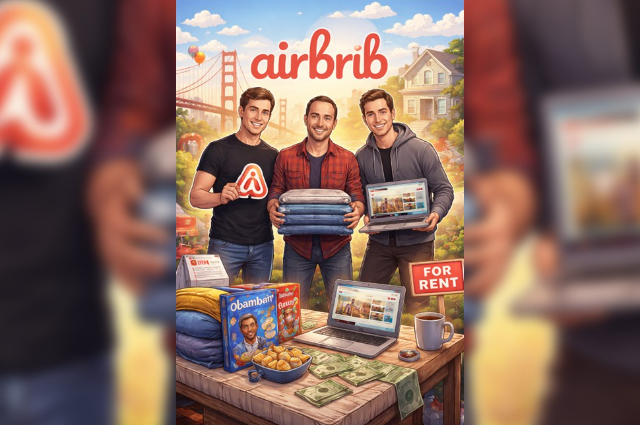
Hotels in the city were nearly sold out due to the event, leaving many attendees without lodging. Gebbia suggested a daring idea: why not offer air mattresses on the floor of their living room to visitors who couldn’t find a hotel? Add a bit of breakfast in the morning, and perhaps they could earn enough to ease their financial strain.
They bought three inexpensive airbeds, placed them in their loft, and called their weekend venture Airbed & Breakfast. They created a basic website called airbedandbreakfast.com. Their first guests — a mix of design professionals — stayed at $80 per night, enjoyed simple hospitality, and even became early advocates for the idea.
This modest experiment yielded more than just money for rent; it validated something far bigger: there was a real need for alternative lodging — and people were willing to trust strangers’ homes if the experience felt authentic and comfortable.
Chapter 2: Early Struggles — The Long Road to Belief
Despite that first weekend’s modest success, turning the air mattresses concept into a scalable business was far from straightforward.
A Fledgling Website and Scepticism
The early Airbed & Breakfast site was rudimentary, and initial reactions from the tech and investment world ranged from bemusement to outright scepticism. Many potential investors laughed at the idea of strangers renting space in someone’s home. In a culture still deeply rooted in hotel bookings and travel agencies, the notion of peer-to-peer home sharing seemed strange and risky.
To make matters worse, the founders found themselves accumulating personal debt, relying on maxed-out credit cards to keep the company alive. They realised they needed a technological edge — someone who could build the platform into a usable, scalable site. That’s when Nathan Blecharczyk, Gebbia’s former roommate and a talented programmer, joined the team as the third co-founder.
Pivoting and Refining the Concept
With Nathan on board, the founders experimented with different business directions. At one point, they attempted a roommate–matching service, but that idea quickly proved redundant in a market already served by existing platforms. So, they returned to their original concept, refining it with a sharper focus on short-term stays and genuine hospitality.
But three friends in a city with a handful of bookings was still far from a company of global scale. Growth was slow. Traction was limited. And investors continued to show little interest. That’s when they turned to an unconventional marketing stunt that would change everything.
Chapter 3: The Cereal That Saved a Startup
In 2008, as the U.S. presidential election heated up, the founders saw an opportunity to raise much-needed funds. They created novelty cereal boxes inspired by the election candidates, calling them “Obama O’s” and “Cap’n McCains.” They printed and assembled the boxes themselves, filled them with generic cereal, and sold them at a premium — each box retailing for around $40.
The stunt was a mix of creativity, resourcefulness, and sheer hustle. The cereal boxes sold quickly — with profits totalling around $30,000 — and the unusual story caught media attention. It wasn’t just the money that mattered; the stunt demonstrated the founders’ determination and ingenuity, qualities that ultimately caught the eye of Paul Graham, co-founder of the prestigious startup accelerator Y Combinator.
Graham invited them to join the accelerator’s winter 2009 program, offering $20,000 in seed funding in exchange for a small equity stake. More importantly, Y Combinator provided mentorship — pushing the founders to refine their product, understand user behaviour, and focus on genuine customer needs.
Chapter 4: The “Do Things That Don’t Scale” Revelation
One of the key lessons the founders learned during their time at Y Combinator was famously summarised by Paul Graham: “Do things that don’t scale.” This advice became a guiding principle for the early growth of Airbnb.
The team realised that to build something truly valuable, they needed to understand users intimately — even if that meant performing tasks that didn’t make sense at first as the company grew. They travelled to New York, met hosts in person, photographed their listings themselves, and talked to them about their experiences.
This obsessive focus on quality and personalisation helped the company solve key issues in its service. Crisp, attractive photos helped listings stand out. Personal conversations revealed what hosts and guests truly cared about. These early efforts laid the groundwork for trust — a vital ingredient in a business built on welcoming strangers into one’s home.
Chapter 5: Growth — From Tens to Millions
With the fundamentals improving and momentum building, Airbnb’s growth accelerated. By March 2009, the platform had around 10,000 users and 2,500 listings — a dramatic improvement from its early days.
In 2009, the company also rebranded from Airbed & Breakfast to the sleeker and more inclusive name we know today: Airbnb. This refined identity better captured the broader vision of hosting entire apartments, homes, and unique stays — not just air mattresses.
The climb wasn’t linear or easy. The founders faced tough questions about trust, safety, and scalability. Many potential users were still wary of staying in strangers’ homes, and markets varied widely in how quickly they adopted the concept. Yet the platform’s appeal grew as more hosts saw the financial benefits and travellers increasingly prioritised authentic local experiences over traditional hotels.
Chapter 6: Becoming a Global Phenomenon
By 2011, Airbnb had achieved over a million nights booked, an extraordinary milestone for a company that once struggled for two bookings at its first official launch. In the years that followed, Airbnb expanded internationally, added mobile apps, and continued to innovate in user experience and platform features.
Airbnb’s influence quickly transcended mere travel bookings. It became a symbol of the sharing economy, alongside services such as Uber or Lyft — platforms that leveraged technology to connect people directly and monetise underused assets like spare rooms and seats in cars.
In December 2020, Airbnb conducted one of the largest initial public offerings (IPOs) of the year, priced at $68 per share — a valuation exceeding $100 billion. On its first day of trading, the stock nearly doubled, cementing Airbnb’s place among the most successful tech companies in history.
Chapter 7: Resilience Through Crises
Airbnb’s ascent did not make it immune to global challenges. In early 2020, the COVID-19 pandemic brought international travel to a near-standstill. Bookings plummeted by over 70%, forcing the company to make difficult decisions, including laying off around 25% of its workforce.
Yet even in crisis, Airbnb demonstrated resilience. The company shifted its focus to local travel, longer stays, and online experiences — virtual tours and activities hosted by locals — to keep engagement alive during lockdowns. In 2022, Airbnb reported its first full-year profit after cutting costs and adjusting its strategy.
Chapter 8: Legacy and Impact
Today, Airbnb stands as more than a business; it is a cultural phenomenon. It reshaped how people think about travel, community, and belonging. For travellers, it opened doors to experiences beyond hotel lobbies and standardised rooms — offering immersion in real neighbourhoods and local life. For hosts, it created a way to earn income from unused space while connecting with global visitors.
But Airbnb’s rise hasn’t been without controversy. Critics argue that widespread short-term rentals have contributed to housing shortages and inflated rent prices in some cities. Regulators in places like Paris and New York have grappled with how to balance tourism with housing needs.
Still, the company’s enduring legacy lies in its visionary rethinking of hospitality — backed by a story that inspires entrepreneurs worldwide.
Conclusion — Lessons from the Airbnb Journey
The story of Airbnb embodies several universal lessons for aspiring entrepreneurs:
- Start With a Real Problem Chesky and Gebbia didn’t begin with a polished startup idea; they began with a problem they personally faced — rent. Their solution grew organically from real need.
- Persistence Beats Scepticism
Countless investors initially rejected the idea. But refusal only sharpened their resolve, leading them to pivot, refine, and hustle harder. - Do Things That Don’t Scale
Personal involvement in early phases — from photographing listings to meeting users — helped them build trust and understand customer needs deeply. - Creativity Can Be a Lifeline
Selling election-themed cereal wasn’t just a quirky stunt — it was a creative lifeline that helped propel the company into an accelerator and ultimately into investors’ radar. - Resilience in Crisis Defines Leaders
Airbnb’s rebound after the pandemic illustrates that adaptability — not just growth — is key to enduring success.
Reflection
Airbnb’s founding story is not just a business case study — it is a human story of ingenuity and belief. It reminds us that even the most unconventional ideas can change industries and enrich lives if pursued with passion, creativity, and resilience.
For aspiring founders, the message is clear: when you solve real problems, listen to your users, and persist through setbacks, ordinary beginnings can lead to extraordinary outcomes.