
Martin Luther King Jr. once said,
"The silence of the good people is more dangerous than the brutality of the bad people."
So I decided to write about one man who refused to be silent in the middle of terror.
While our world is filled with heroes, only a few of their stories ever reach us. So I decided to write one myself, a story about one of the greatest men who ever lived, and one of the greatest rescues ever done.
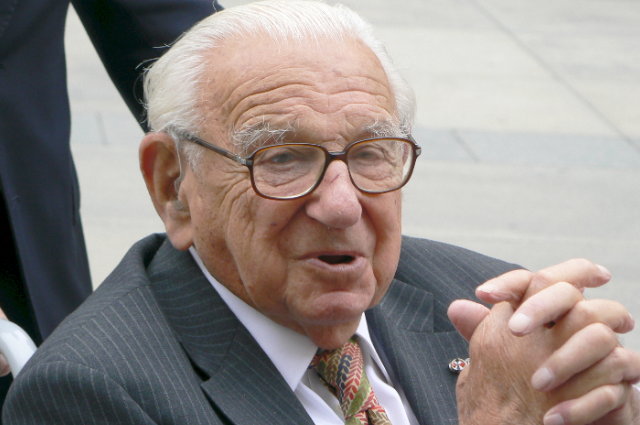
This is the story of Sir Nicholas Winton, an ordinary man who did extraordinary things.
Why Nicholas Winton?
So, what's so special about him, you ask?
He saved lives, not 1, not 2, not even 100. He saved 669 children and gave them a life, a hope, a future.
While the world rocked on the brink of chaos, Winton staged a desperate, not to mention an "impossible" rescue mission to pull 669 children away from the approaching shadow of the Holocaust.
This is the story of a man who proved that one person doesn't need a uniform to be a hero; they only need a heart that refuses to look away.
The Holocaust
Before we begin, it is vital that you know about the Holocaust, so you understand the intensity of this rescue. This was not a random rescue. This was a carefully planned response amidst the terror of World War II.
The Holocaust was a period during World War II when the Nazi government in Germany organized a plan to target and kill Jewish people across Europe. Because of this state-led violence, more than six million Jews were murdered. Not just men, but women, and children too. This was also referred to as the Shoah, which means catastrophe.
While Europe had a long history of discrimination against Jewish people, it became most extreme in Germany under Adolf Hitler’s rule from 1933 to 1945. As soon as he took total control, Hitler started an organised campaign to take away their rights.
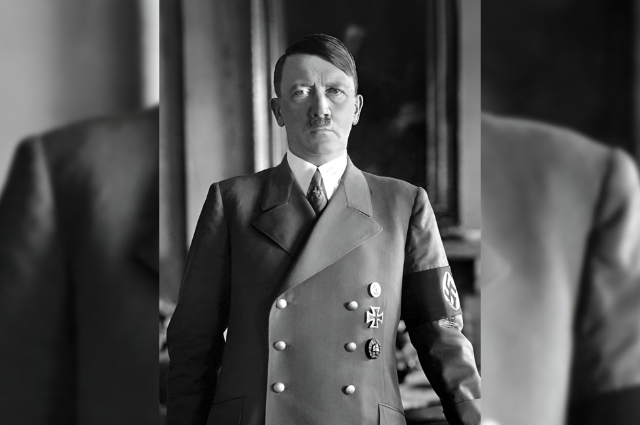
Jewish people were forced out of their jobs in schools, courts, and the military. The government seized their property, shut down their businesses, and even attacked their places of worship (synagogues). It was a deliberate effort to strip an entire group of people of their livelihoods, their safety, and their place in society.
After a time, the violence started to escalate from vandalism and discrimination to murder. The Nazi started with bullets and then moved to using toxic gases to kill the Jews, as the former method was considered inefficient and time-consuming.
Now, with this new approach, they decided to kill a large number of people at once, and this includes not just the Jews, but several other groups of people as well, like the Russian POWs, people with disabilities, and several other groups.
The killings were carried out not just in Germany. It may have originated in Germany, but it spread across Europe, particularly in areas under Hitler's rule.
Not just the Jews, but anyone who helped them would also meet the same fate. As The National WWII Museum notes in its article 'The Holocaust,' “To hide a Jew was to put one’s life, and the lives of one’s family, at risk. If caught, those hiding Jews were imprisoned or killed”.
So I hope you get the idea and the intensity of the situation. The inhuman, barbaric, disgusting things and the terror that were going on while several people, like Nicholas Winton, risked their lives to save others.
Early Life
Nicholas Winton, born Nicholas Wertheim on May 19, 1909, in Hampstead, London, to German Jewish parents who anglicised their name and converted to Christianity, grew up in a middle-class family with an elder sister and younger brother.
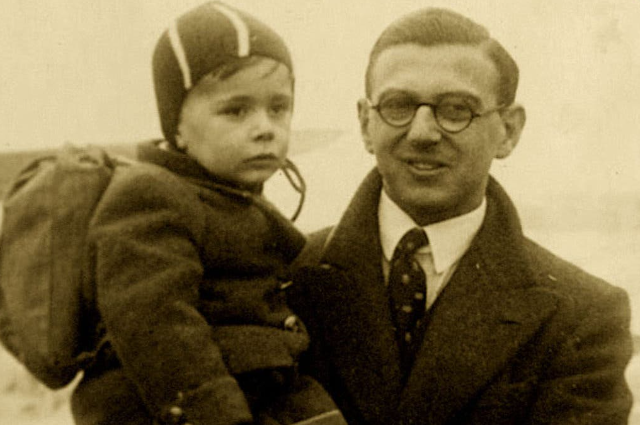
He attended Stowe School from 1923 to 1926, excelling in fencing but leaving without qualifications.
Following his father’s advice, Winton began his career as a banking clerk, a path that took him across Europe to major financial hubs in London, Hamburg, Berlin, and Paris. This international training gave him a deep understanding of the continent’s landscape just as the Great Depression began to reshape the world.
Though the economic crisis eventually cut his overseas training short, he returned to the UK with a French banking qualification in hand. By the mid-1930s, he had transitioned into the stock and shares sector, establishing himself as a focused and capable stockbroker at the London Stock Exchange.
Sir Winton was not just a stockbroker but an enthusiastic socialist who cared deeply about social justice.
After witnessing the devastating impact of the Great Depression on British families, he moved into political circles, joining the Labour Party and befriending influential figures like Aneurin Bevan and Jennie Lee.
Through these connections and his friend Martin Blake, he became part of a left-wing circle that realised that Hitler’s promises of peace were not to be trusted.
These lively, urgent discussions about Hitler’s true intentions gave him a rare, clear-eyed understanding of the Nazi threat; a perspective that would soon prove vital as the crisis in Czechoslovakia began to unfold.
The Great Rescue
In December 1938, at the age of 29, Winton was planning to take a winter sports (skiing) holiday in Switzerland. Right before he was set to go, Winton got a letter from his friend, Martin Blake.
Blake was already in the city of Prague, working with the British Committee for Refugees from Czechoslovakia that was trying to help people escaping from Czechoslovakia. The letter contained an invitation:
"I have a most interesting assignment, and I need your help. Don't bother bringing your skis."
This last-minute invite from his friend is the first reason that Winton came face-to-face with the ongoing crisis.
He cancelled his skiing holiday and travelled to Prague to see the situation for himself. The place was overflowing with refugees after Germany had captured the Sudetenland, a mostly German-speaking area of Czechoslovakia.
Upon arrival, he was sent by Doreen Warriner to visit several refugee camps. While Blake and Warriner focused on helping adults find safety, Winton saw that the children were being left behind. He realised he had to act immediately to save them; he simply couldn't stay silent while they were in danger.
Initially, the British government provided permission to allow a limited number of children from Germany and Austria, and this rescue programme was called the Kindertransport.
Winton asked the British government to allow Czech children to come into the UK as well, and the necessary permission was granted, but on two conditions.
- Each child must have a host family that will care for them until they are 18
- Each child needed a £50 deposit from their family.
So Winton, along with other volunteers like Doreen Warriner, Trevor Chadwick, and his own mother, started to help these children evacuate the country and find a safe place in Britain.
After spending three weeks in Prague, he returned to Britain in January 1939, just two months before the German occupation, to immediately launch his rescue project.
The rescue operation of this scale was not an easy task. It required immense planning, and most importantly, the conditions put forth by the government had to be met: A foster family willing to accept the children and £50 per child.
A very few children had relatives in Britain, but a majority of them had no one, except their parents, who, unfortunately, were not able to come with them.
So, Sir Winton began writing to newspapers and magazines, pleading for families to open their homes and for donors to help with the money. Many groups and kind strangers stepped up to help where they could.
Like this, he was able to arrange evacuation for 669 children to be able to come to Britain. With the paperwork finally ready and the money raised, the rescue began.
In March 1939, the first group of children started their journey to safety. There were a total of 9 trains scheduled for evacuating the children.
As mentioned above, the first group departed in March, and the 8th group departed in August.
Unfortunately, the last train scheduled for September was unable to leave, as Germany invaded Poland, eventually resulting in the start of the Second World War.
This last transport had the highest number of children, nearly 250 of them, but it is unclear what happened to them, and they are most likely presumed dead. It is believed that they could have been sent to some sort of concentration camp.
Many hoped that when the war was over, they could be back together with their families again. But sadly, a majority of them died in the ongoing conflict.
Just think about it, if people like Winton, Trevor, Doreen, Martin, etc, did not intervene, these children would have met the same fate as their parents.
The Scrapbook That Changed Everything
By the end of 1939, a volunteer who worked with Winton on the rescue project, W.M. Loewinsohn, put together a special scrapbook. It was filled with letters, reports, photos, and records of their work. He gave it to Winton as a souvenir to remember what they had achieved.
Winton then took part in the war, married, had children, and retired while continuing to do voluntary work.
For fifty years, that book stayed hidden away. Even his own wife was unaware of her husband's heroics until she stumbled upon the scrapbook by accident.
But half a century later, it became the spark that finally brought the story of the children's rescue to the entire world, through an article in the Sunday People and the BBC’s television show “That’s Life!”, where he met many of the children he had helped save after a really long time.
Recognitions
His extraordinary bravery did not go unrecognised; in the years that followed, he was bestowed with numerous honours for his life-saving work. Some of these honours include:
- Being appointed a Member of the Order of the British Empire (MBE)
- Knighthood for his services to humanity
- Pride of Britain Award
- Being named a British Hero of the Holocaust by the British Government.
- Order of Tomáš Garrigue Masaryk
- Cross of Merit of the Minister of Defence, Grade I
- Nobel Peace Prize nomination
- Order of the White Lion, the Czech Republic’s highest honour.
as well as a few others.
Conclusion
So here we are at the end of one of the greatest stories that was ever told, one of the greatest men who ever lived.
Today, there are more than 6,000 people across the globe who are alive because of Sir Nicholas Winton. They are the children, grandchildren, and great-grandchildren of the refugees he saved from the Nazis in 1939.
While some of these descendants are well aware of his heroism, many others have no idea that their very existence is owed to him.
Sir Nicholas Winton’s legacy isn’t found in the medals he eventually wore, but in the 6,000 descendants walking the Earth today because of his refusal to be a bystander.
This story of Sir Nicholas Winton reminds us of one thing:
"All the darkness in the world cannot extinguish the light of a single candle."
Even in our darkest hours, one person can still light the way home.
References
- The National WWII Museum. "The Holocaust" Published May 8, 2024. Accessed March 12, 2026.
- https://encyclopedia.ushmm.org/
- https://en.wikipedia.org
- https://www.annefrank.org
- https://hmd.org.uk
- https://en.wikipedia.org
- https://en.wikipedia.org
- https://www.bbc.co.uk
- https://www.theguardian.com
- https://www.nicholaswinton.com
- https://www.nicholaswinton.com
- https://www.nicholaswinton.com
- https://www.holocaust.org
- https://www.worldjewishcongress.org
- https://www.historyextra.com