
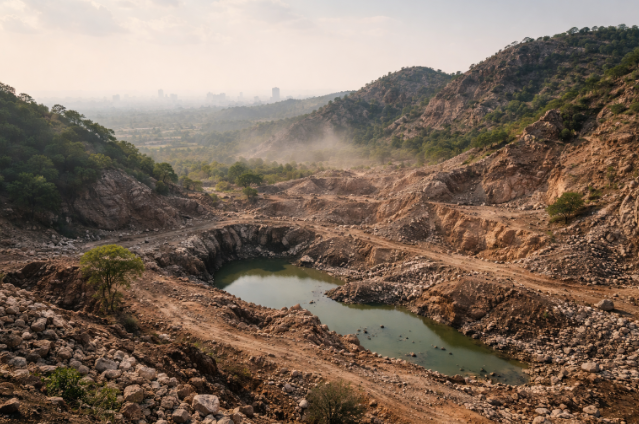
Climate Suicide is a term which refers to a change in climate that leads to increasing of pollution, global warming, increasing of heat due to changes in climate. Climate change is not a normal thing, indeed it’s a big problem. The changing climate has raised the number of suicidal attempts due to the failure of work in day-to-day life.
The Human Impact of Climate Change
There are many reasons why India faces environmental problems today, such as air pollution, water scarcity, deforestation, and climate change.
Pollution in the air has risen due to rising of the vehicles and the rise in industries. Pollution in the air has made people sick including many diseases.
Climate changes is unseasonal which leads to global warming, unseasonal rain, which leads to water scarcity and damage to crops, due to which farmers committing suicide due to the loss of crops.
People are cutting down the trees, leading to the decreasing of their life. Deforestation makes the climate worse and leads to the loss of life. A major group affected by these changes is farmers. Climate change is unseasonal, which leads to global warming, unseasonal rain, which leads to water scarcity and damaging of the crops. This devastation of agriculture is directly linked to farmer distress, due to which farmer’s commits suicide due to loss of the crops.
A Major Blind Spot
The document highlights a significant, specific regional concern by asking the question: Why the Aravalli Crisis is India’s Biggest Environmental Blind spot.
Why the Aravalli Crisis is India’s Biggest Environmental Blind Spot.
The Aravalli Crisis
More details on its environmental impact and why it is considered a "blind spot" in India.
The Aravalli Crisis: India's Environmental Blind Spot
The Aravalli Mountain Range is one of the world's oldest fold mountain systems, stretching across Gujarat, Rajasthan, Haryana, and Delhi. The "Aravalli Crisis" refers to the severe environmental degradation of this range, which is critical to the ecological stability of North India.
Why the Aravallis are Vital
The Aravallis are often called the "green lungs" of northern India and a "natural shield" for the National Capital Region (NCR). Their ecological value is immense and encompasses several life-support functions:
- Preventing Desertification: The range acts as a linear, natural barrier that slows the eastward march of the Thar Desert toward the fertile Indo-Gangetic plains.
- Water Recharge: The hills are crucial for groundwater recharge, channelling rainwater underground to replenish aquifers in a chronically water-stressed region.
- Climate & Air Quality Moderation: They play a vital role in climate regulation and help moderate air pollution, which is essential for residents of the NCR.
- Biodiversity: They support forests, scrubland, and grasslands, providing habitat for wildlife like leopards, hyenas, and nilgai.
The Core Threat: Mining and Definition Ambiguity
The Aravallis have faced decades of ecological stress due to unregulated mining, unorganized urbanization, and weak enforcement of environmental laws.
Mining: Despite restrictions since the early 1990s, illegal and unregulated mining has caused forest loss, flattened hill slopes, and led to a sharp fall in groundwater tables. The dust from mining and stone-crushing units contributes significantly to the air quality crisis in the NCR.
The Definition Crisis: A central challenge has been the absence of a uniform legal definition, allowing states to use varying criteria for protection, which created regulatory loopholes. The recent Supreme Court-backed adoption of a uniform definition—often based on a minimum elevation of 100 meters above local relief—has triggered intense controversy and protests.
Environmental Concern: Critics argue that relying only on height constitutes scientific reductionism and could exclude large tracts of ecologically critical low-relief features (like ridges and recharge zones) from protection, opening them up to commercial activity and destruction. Many fear this legal precision could lead to ecological blindness and accelerate the desert's expansion toward Delhi.
The crisis highlights the deeper tension in India's environmental legal order between the constitutional duty to protect the environment and administrative convenience.
The Aravalli range is one of the oldest mountain ranges in the world. It stretches across Rajasthan, Haryana, Gujarat, and Delhi. The Aravallis play a crucial role in maintaining ecological balance. However, they have been neglected and exploited for decades, making them one of India’s biggest environmental blind spots.
The Aravallis act as a natural barrier against desertification by preventing the spread of the Thar Desert. They help regulate regional temperature, recharge groundwater, and support biodiversity. Illegal mining, deforestation, and rapid urban expansion have severely damaged this fragile ecosystem.
Illegal mining is one of the biggest threats to the Aravalli range. Hills are destroyed for stones, sand, and minerals. This weakens soil structure, causes erosion, and reduces the land’s ability to retain water. As a result, nearby regions suffer from water scarcity and rising temperatures.
Urbanisation has further worsened the crisis. Cities like Delhi, Gurugram, and Faridabad have expanded into forest areas. Roads, housing projects, and commercial buildings have replaced green cover, increasing air pollution and heat levels.
The destruction of the Aravallis has also affected groundwater recharge. Concrete surfaces prevent rainwater from entering the soil, lowering water tables and increasing dependence on water tankers.
Climate change has intensified the Aravalli crisis. Earlier, these hills helped cool the region. Their destruction has resulted in intense heatwaves affecting health, agriculture, and daily life.
Despite court orders and environmental laws, protection of the Aravallis remains weak due to poor enforcement. Environmental conservation is often ignored in the name of development.
The destruction of the Aravallis can be called climate suicide. Destroying natural systems for short-term gains harms long-term survival. These ecosystems cannot be restored easily once damaged.
Strong action is required to prevent further damage. Declaring the Aravalli range as an ecologically sensitive zone, stopping illegal mining, promoting afforestation, and raising public awareness are essential steps.
In conclusion, climate suicide is a reality. The Aravalli crisis shows how ignoring nature leads to irreversible damage. Protecting the Aravallis is necessary for environmental stability, human health, and future generations.
References
- Intergovernmental Panel on Climate Change (IPCC) Reports
- Ministry of Environment, Forest and Climate Change, Government of India
- Centre for Science and Environment (CSE), India
- World Health Organization (WHO)