
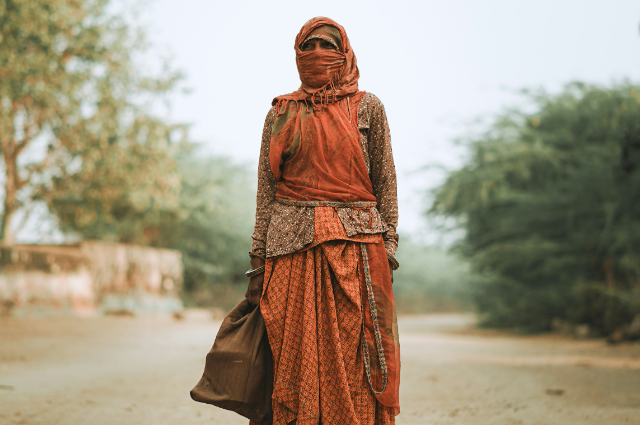
The violence in the village has been running for ages; the brutality in the village is not usual. Life in the village is so rough when it comes to violence. The barbarity in the village is enlarged, and the reason for the cruelty in the village is due to many reasons. Caste divisions, land disputes, caste discriminations, fights associated with property papers, expulsion of communities and such fights may lead to burning of houses, some end up with armed clashes, murders, etc.
Analysing the Breakdown of Law and Order in Indian Rural Body Polls
Elections in India are tragic. Rural elections in India have been characterised by violence. Rural elections are persistent and constant, with violence, intimidation. Such types of brutality can be seen in major parts of West Bengal and Punjab. States like Bengal and Punjab have a high ratio of violence compared to other states.
Law and Order during elections has a high level of roughness among the political members and the rest people of the rural community. Political violence sometimes erupts around local body elections. The recent activity held in West Bengal panchayat elections in 2023 and the experience was infamous, which led to the deaths of 40 people.
Some common incidents happening at the time of the Indian Polls are seizing the ballot papers. Voters get frequent menacing, and they get scared to vote. There is an inherent prejudice in the state police and administration. They often come in support of allegations. After the polling day, the fight continues like throwing stones at houses, and an elected member gets an appreciation-winning moment.
Controlling the panchayat in the village is very crucial because there is more political power and the partiality between the parties, and the competition leads to conflict. Manipulation increases the fights between other people.
Some violence leads to damage to property. The right to vote freely can be compromised by the intimidation of voters, especially from weaker sections of society, by powerful local figures.
A narrative analysis of how local political disputes manifest in pre-election violence and intimidation tactics, leading to a climate of fear in rural electoral processes.
The cranny centre of this learning manages to rural public violence as a social storyteller, where aggression comes in the form of political dominance. In village disputes related to politics are highly interlaced with caste discrimination, land ownership, rivalries between families, and the bloody bond between families turns into big fights.
Such tensions can be seen very clearly during the rural elections. There comes a manipulative behaviour in a person who cannot be judged easily and carries a high political power. While we see this study through the story perspective, historically, how things look and how we think they should be. Violence can be seen during elections in the form of snatching the polling booth polls, getting threatening calls from a politically powerful person, and it creates a scenario of scarcity, which results even before the results are out. Constant motifs are complaints made forcefully within rural polls. The examination of this study shows how the rural body polls threats doesn’t act physically, but as a warning.
The rising number of crime incidents and political intimidation reported in Jalandhar (Punjab) and other areas ahead of recent rural body elections.
The nearby incidents during elections in Jalandhar, Punjab, clearly demonstrate the frightening moments that happened before the elections. The AAM (Aam Aadmi Party) was denounced by the opposition party. Various incidents occurred during the pre-election in Punjab, Jalandhar, such as booth snatching, ballot paper snatching, and rivalry between the parties. The reported states were Jalandhar, Tarn Taren, Makassar, Barnala, Gurdaspur, and Amritsar.
An incident occurred just before the day of the election. It was a relative of a former BJP leader who was 16 years old and an MLA of Aam Aadmi Party who was skewered in Jalandhar. Another incident occurred in the Nila Mahal, where gunfire occurred. This incident was marked by the opposition party, relating to the fear of elections coming nearby.
The elections were held in December 2025, resulting in exclusively lower votes. As the results were very low so the SEC State Election Commission ordered an election poll to 16 booths across six districts, including Jalander, resulting in technical irregularities. The order was rejected by the Raj Kamal Chaudhari, who State Election Commissioner was accepting the fact that the actions were taken necessarily.
The incidents The elections for Zila Parishad and Block Samitis, held on December 14, 2025, became a political flashpoint rather than a routine exercise in grassroots democracy. The climate of fear and lack of faith in the impartiality of the process was blamed for the lowest voter turnout since 2008.
In Jalandhar district, while the State Election Commission and some local officials claimed polling was largely peaceful with only minor glitches, specific law and order concerns were highlighted by the opposition immediately preceding the polls.
The analysis of violence in Indian rural body polls reveals a troubling disjunction between democratic ideals and lived political realities in village spaces. Pre-election intimidation, coercion, and localised conflicts expose how law and order often collapse under entrenched power structures, transforming elections into contested arenas of fear rather than participation. Through a narrative lens, these incidents emerge not as isolated disruptions but as recurring stories of dominance, silence, and enforced compliance.
The case of Jalandhar and similar regions demonstrates how electoral violence becomes normalised within rural political culture, undermining public trust in democratic institutions and legal safeguards. When intimidation replaces dialogue and coercion substitutes consent, the electoral process loses its legitimacy. This study underscores the urgent need to recognise rural electoral violence not only as a governance failure but as a cultural and narrative crisis—one that reshapes how democracy is experienced, remembered, and reproduced in village life. Addressing this breakdown requires stronger institutional accountability alongside a reimagining of rural political participation rooted in safety, agency, and genuine democratic voice.
. . .
References:
- Kanchan Vasdev, amid clashes, booth capturing, Punjab sees 48% turnout in rural elections — The Indian Express (2025).
Reports violence, booth capturing, low turnout, and redpolls in Punjab’s rural body elections - Only 48% Turnout in Punjab’s Rural Body Polls, Opposition Alleges Violence — NDTV News (2025).
Documents allegations of intimidation, administrative manipulation, and electoral violence by major parties. - “Punjab Gripped By Fear”: Opposition Ahead of Rural Body Polls — NDTV News (2025).
Pre-election crime and panic in Jalandhar cited as evidence of a tense law-and-order climate. - The Subnational Electoral Coercion in India (SECI) Data Set, 1985–2015 — Electoral Studies.
Provides an academic dataset and analysis framework on electoral coercion and violence in Indian elections. - Pre-poll tensions not new in Punjab as rural elections show recurring clashes and irregularities — The Indian Express (2025).
Contextualises recurring violence and disruption in rural polls over multiple election cycles.